
Operating Intelligence Insights.
Practical guidance for founders, COOs, and operators on revenue operations, margin intelligence, forecasting, and building data-driven businesses.
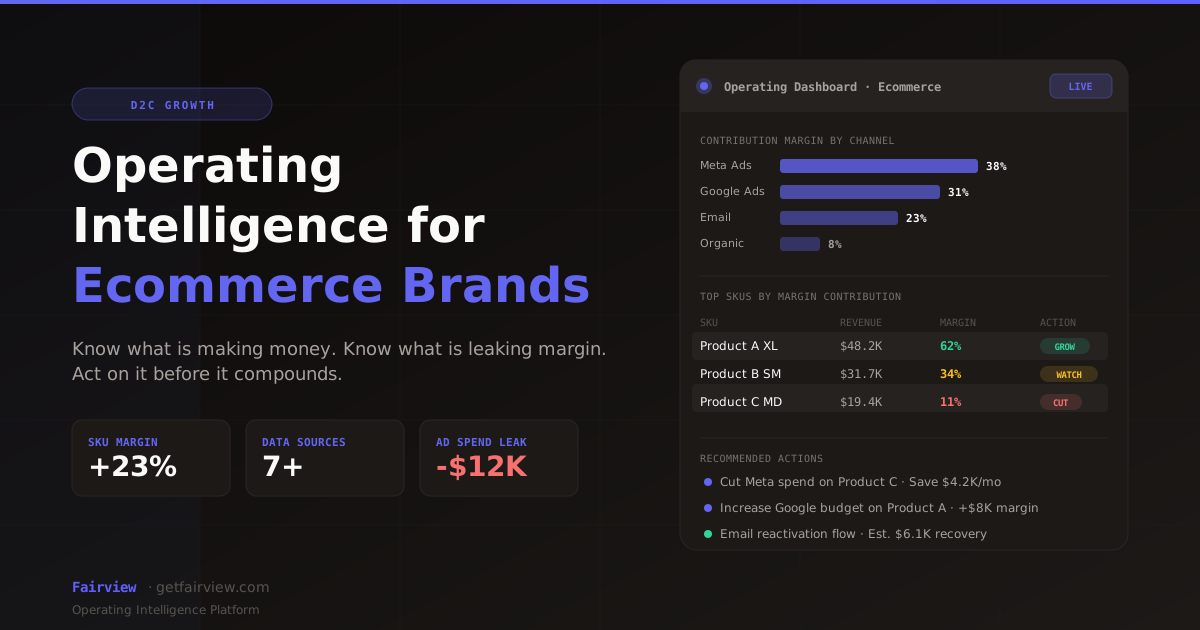
Latest posts
247 postsNo posts in this category yet.
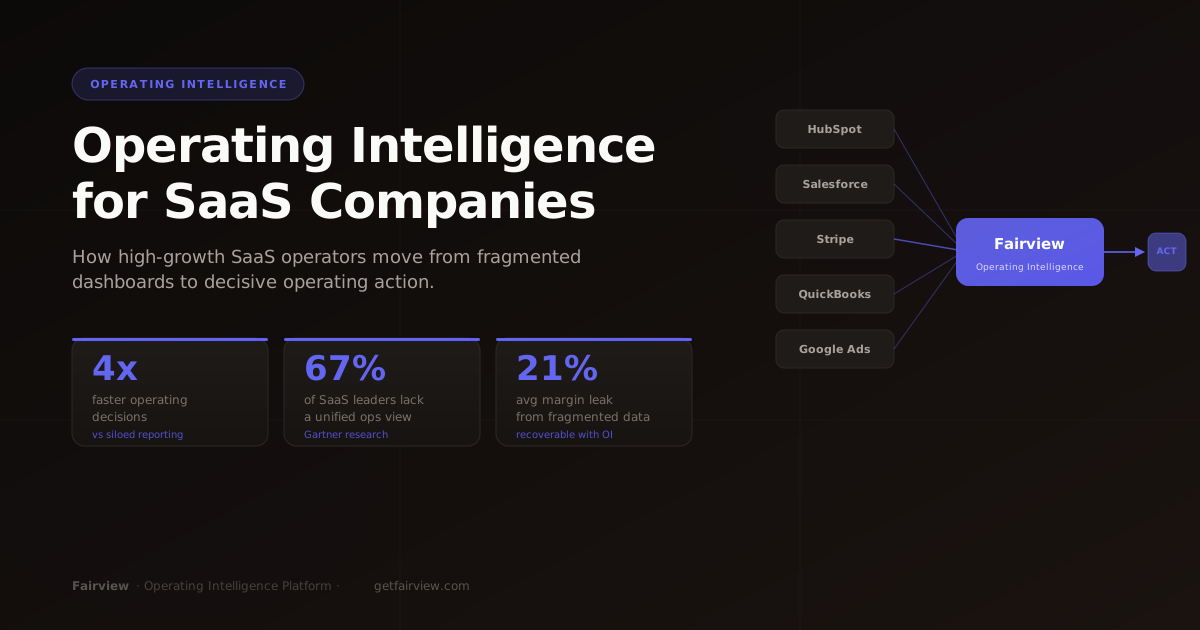
Operating Intelligence for SaaS Companies
Operating intelligence for SaaS companies: what it is, how it differs from BI, the 5 core metrics, and how high-growth teams use it to act on data faster.
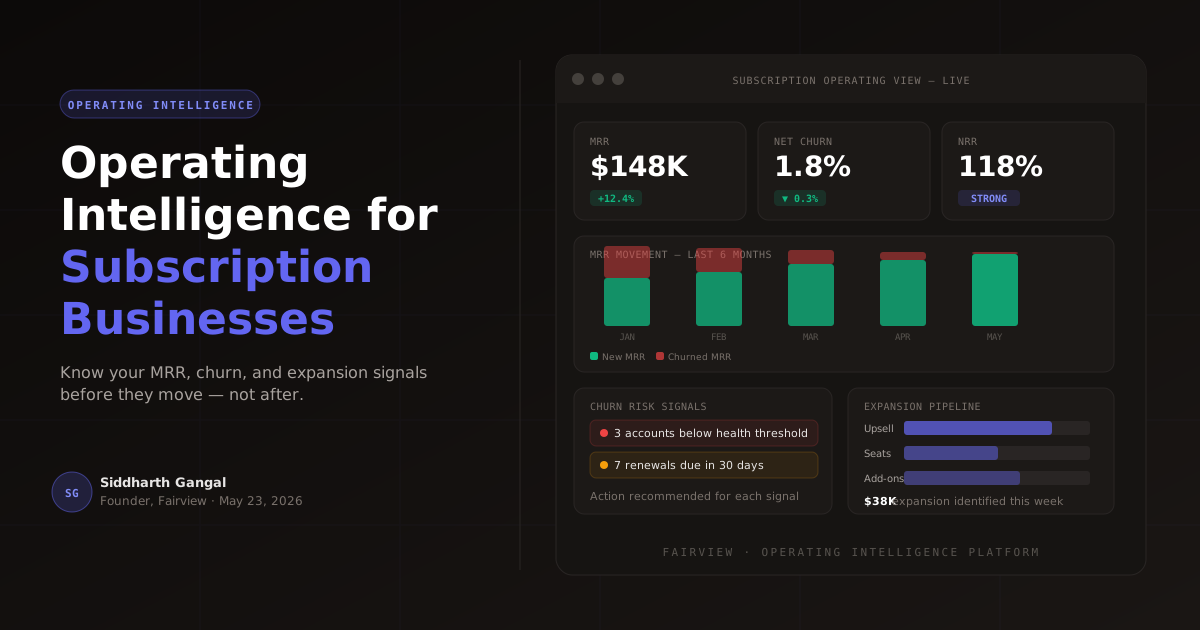
Operating Intelligence for Subscription Businesses
Operating intelligence for subscription businesses: the 7 metrics to track in real time, how to read MRR movement, predict churn early, and find expansion revenue inside your base.
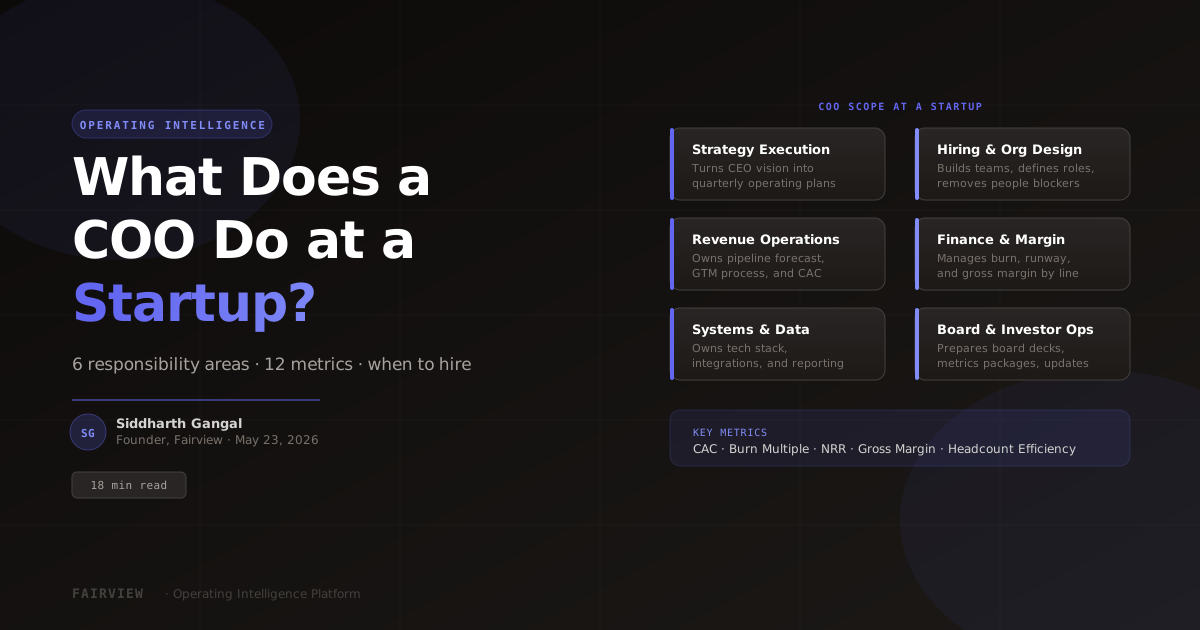
What Does a COO Do at a Startup?
What a startup COO actually does: 6 responsibility areas, 12 metrics they track, how the role differs from enterprise, and when to make the hire.
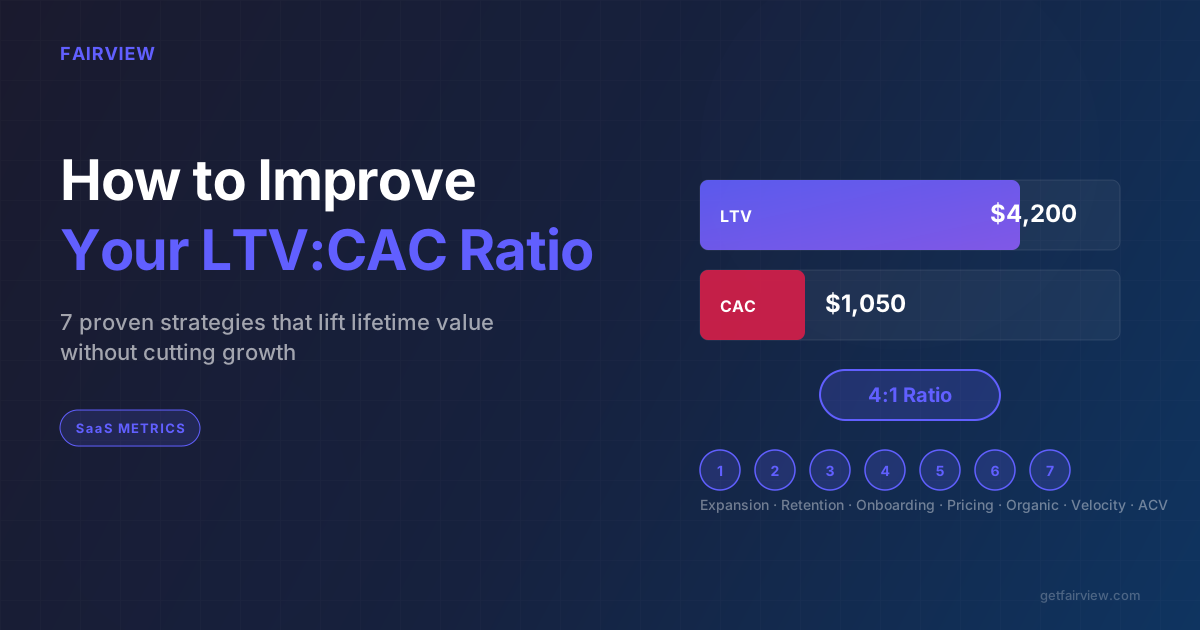
LTV:CAC Ratio: How to Improve It — 8 Proven Levers
Improve your LTV:CAC ratio with 8 proven levers: reduce churn, drive expansion revenue, raise margins, cut CAC by channel, and hit 3:1 minimum — with benchmarks.
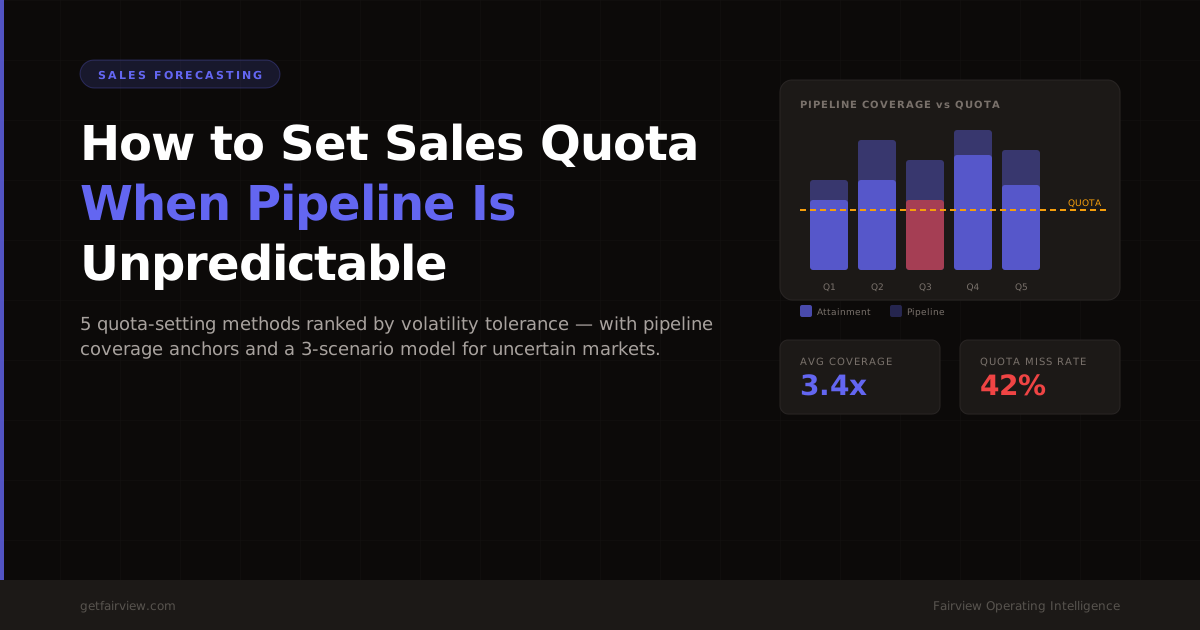
How to Set Sales Quota with Unpredictable Pipeline
Set sales quotas that hold up when pipeline is volatile. 5 methods ranked by volatility tolerance, pipeline coverage anchors, and a 3-scenario quota model.
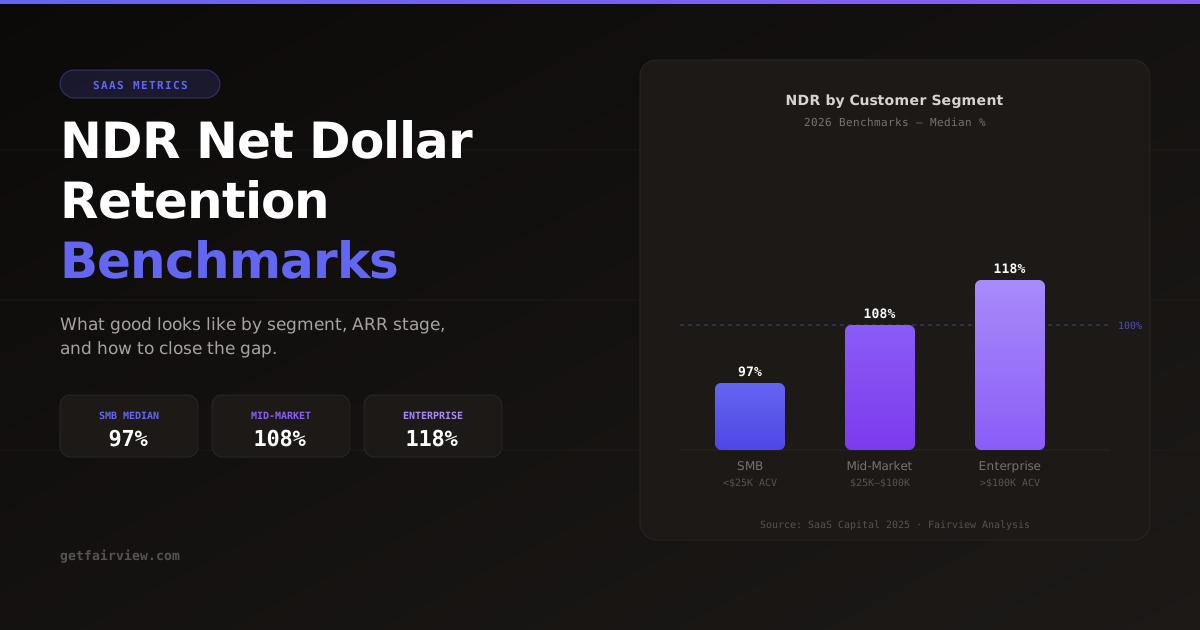
NDR Net Dollar Retention Benchmark: 2026 Guide
NDR benchmarks for SaaS by segment and ARR stage: SMB median 97%, mid-market 108%, enterprise 118%. Formula, drivers, and how to improve your NDR fast.
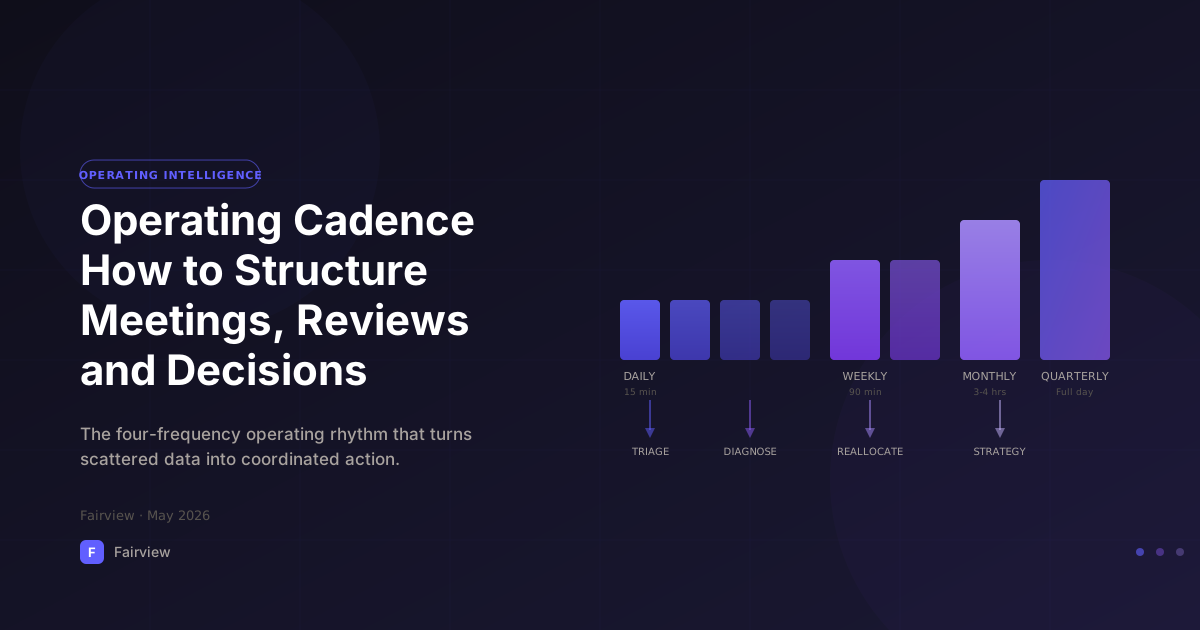
Operating Cadence: Meetings, Reviews & Decisions
Build an operating cadence that turns meetings into decisions. The 4-tier rhythm — daily, weekly, monthly, quarterly — with agendas, decision rights, and metrics.
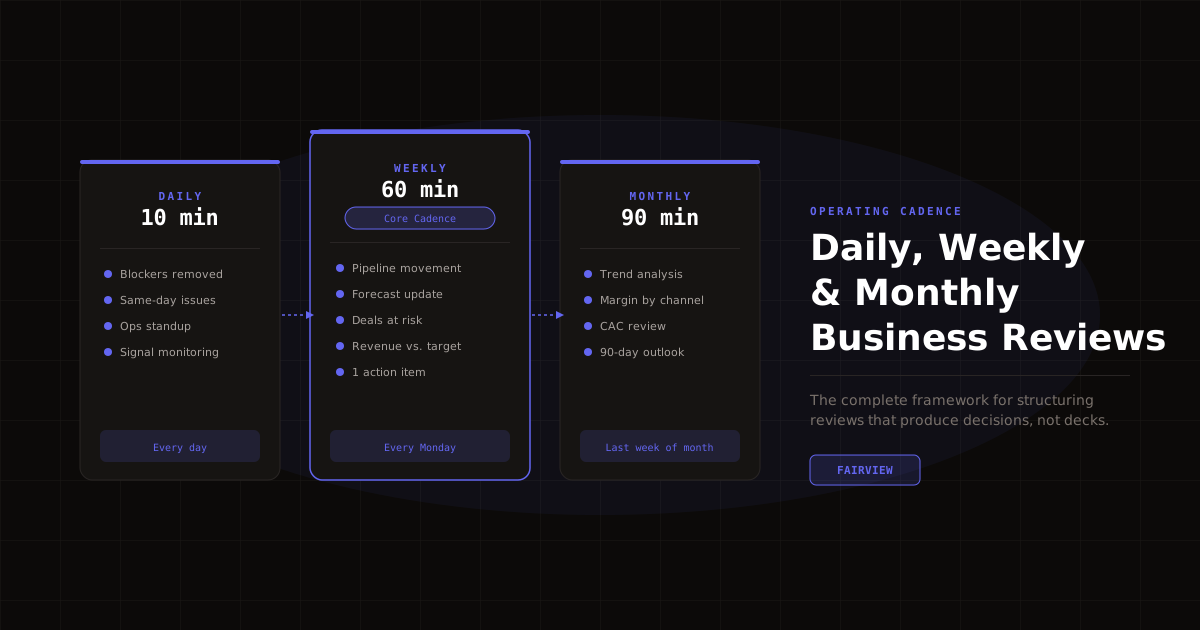
Daily, Weekly & Monthly Business Reviews: The Complete Framework
Build a review cadence that produces decisions, not decks. Agendas, metrics, and owners for daily, weekly, and monthly business reviews.
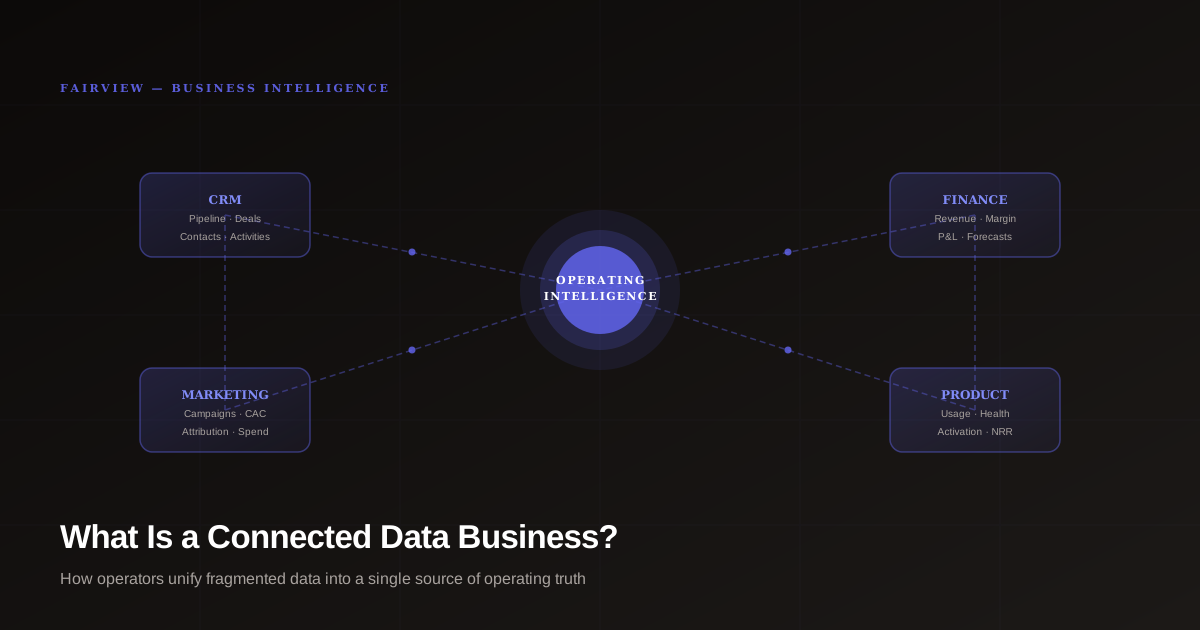
What Is a Connected Data Business?
A connected data business unifies CRM, finance, marketing, and product data into one operating layer. Learn the definition, benefits, architecture, and how to build one.
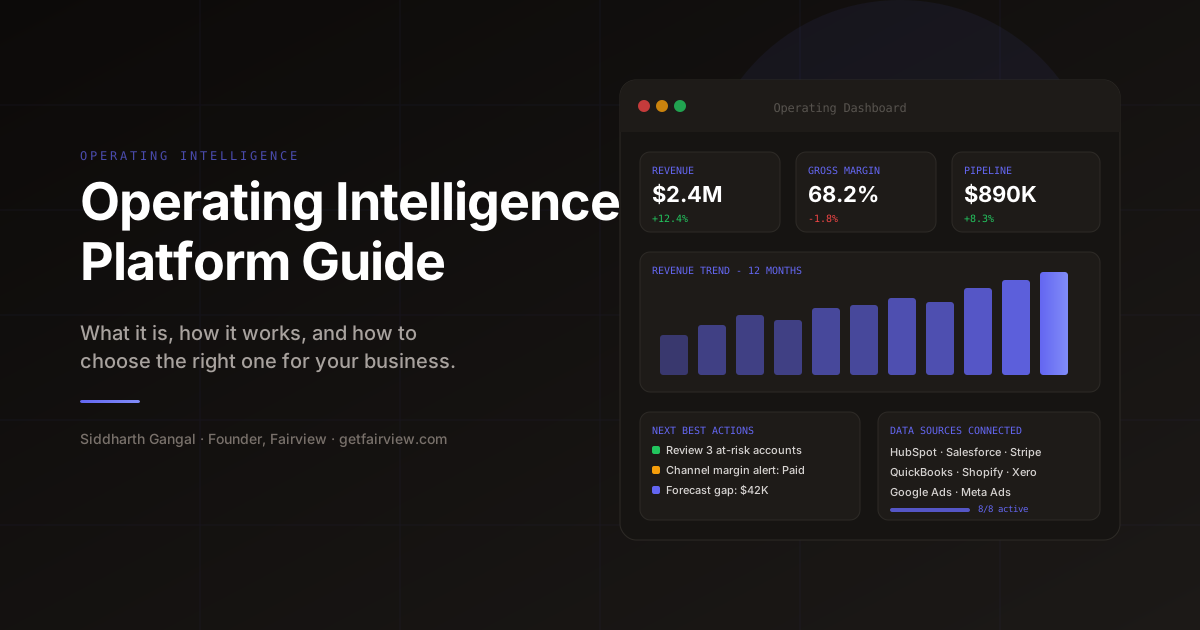
Operating Intelligence Platform Guide
What an operating intelligence platform is, how it differs from BI, the core features to evaluate, and how to choose the right one for your business stage.
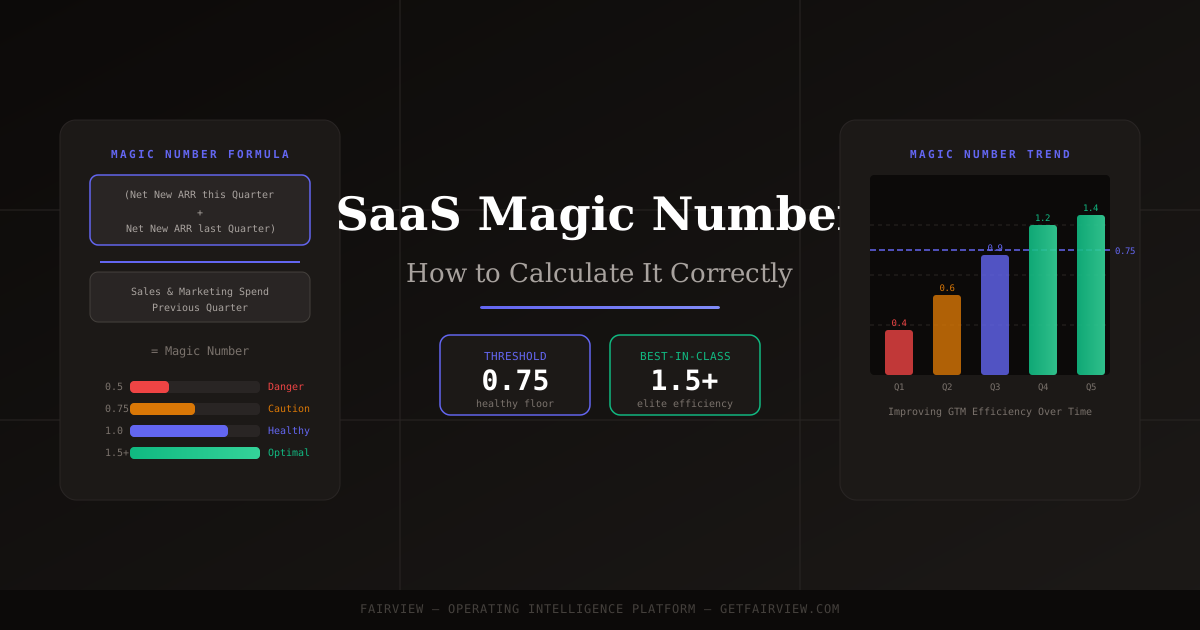
SaaS Magic Number: How to Calculate It
The SaaS magic number measures GTM efficiency. Learn the exact formula, what counts as good, common calculation errors, and how to improve a low score.
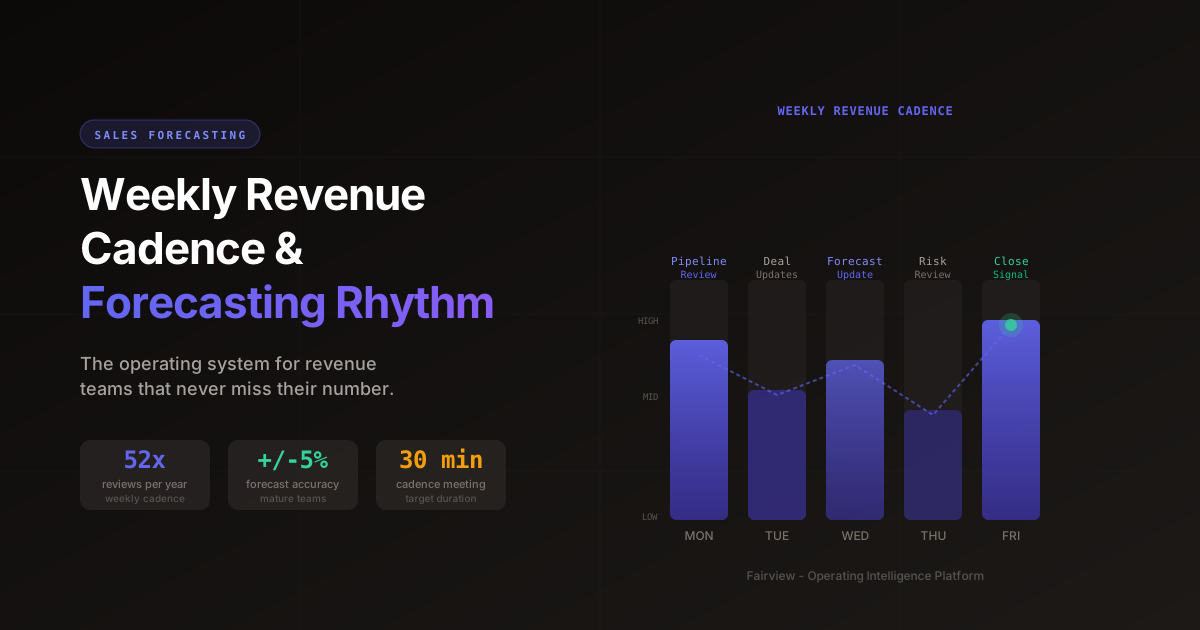
Weekly Revenue Cadence: Forecasting Rhythm
Build a weekly revenue cadence that sharpens forecast accuracy. Covers meeting structure, metrics, pipeline review, and variance tracking for operators.
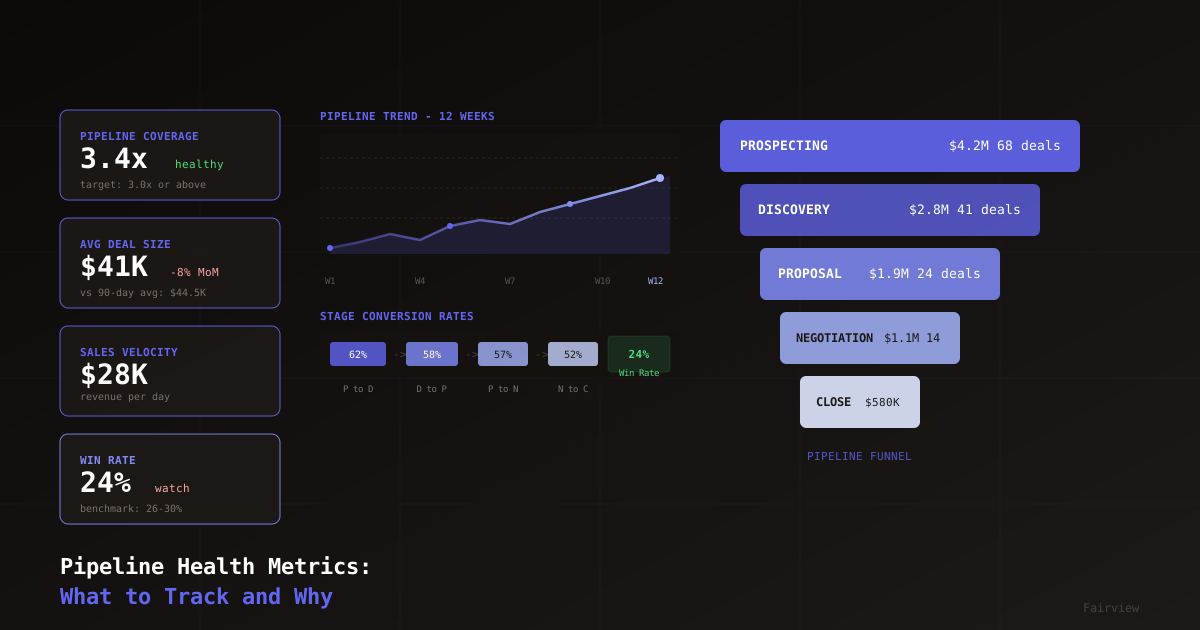
Pipeline Health Metrics: What to Track
The 9 pipeline health metrics that predict revenue outcomes: coverage ratio, velocity, stage conversion, deal age, and more. With benchmarks and a scoring framework.
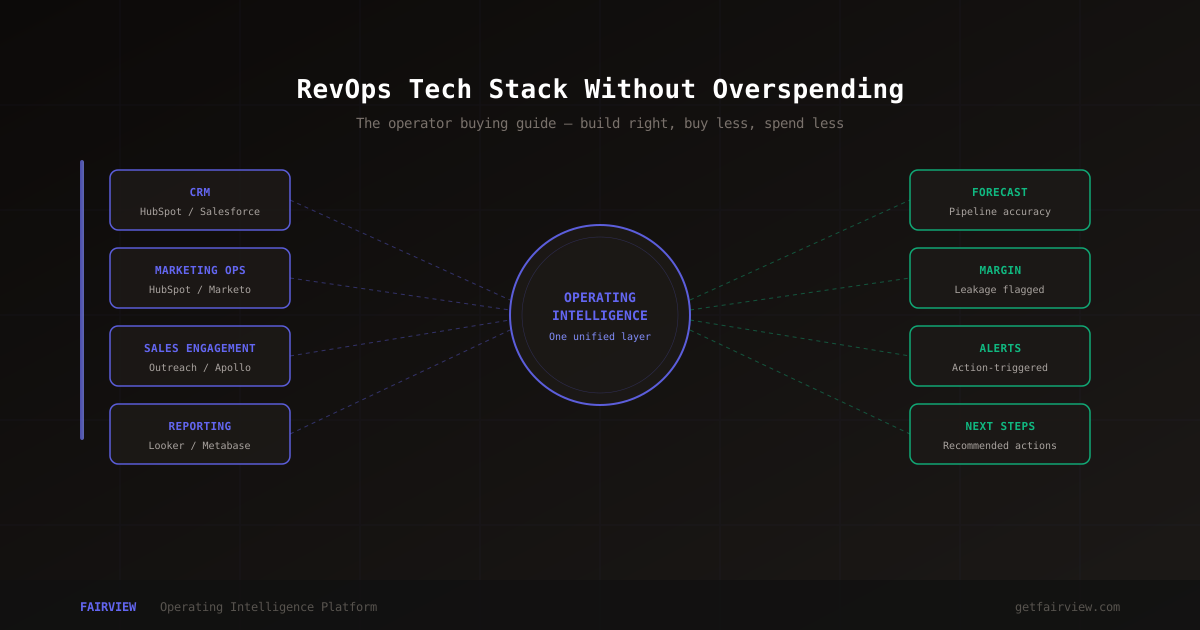
RevOps Tech Stack Without Overspending
Build a RevOps tech stack without overspending: 5 core tool categories, ARR-stage budget benchmarks, a stack audit framework, and a smart buying sequence.

What Is Sales Forecasting? Definition, Methods & Guide
Sales forecasting defined: how it works, 6 core methods, accuracy benchmarks by stage, and how to build a process that finance and the board trust.
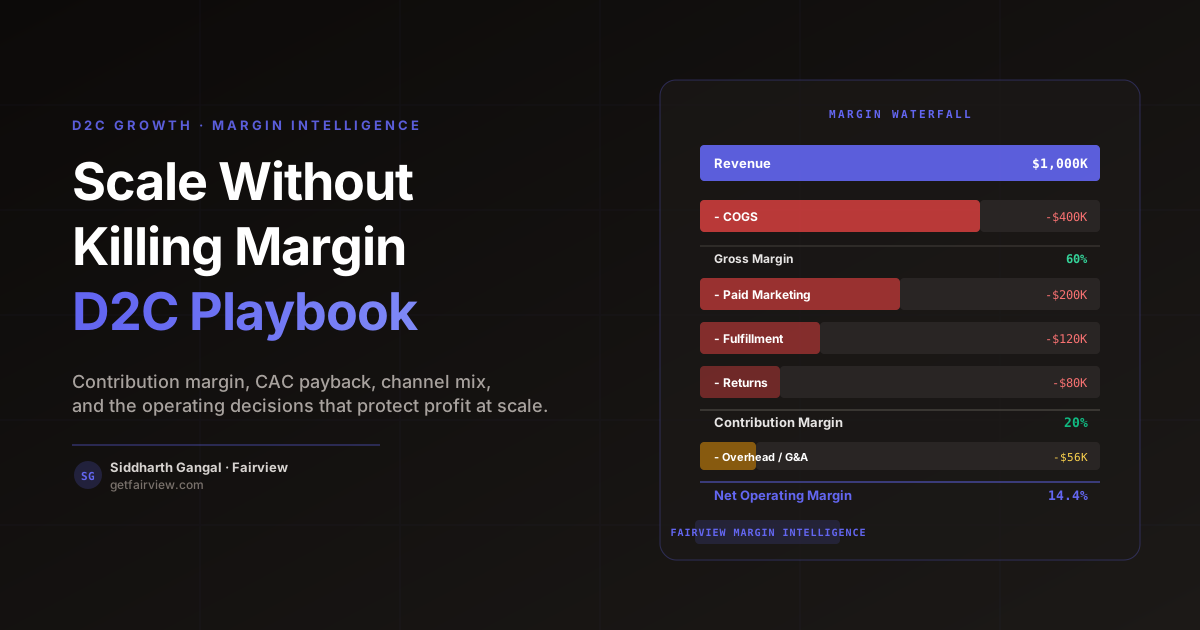
How to Scale a D2C Brand Without Killing Margin
How to scale a D2C brand without killing margin: contribution margin targets, CAC payback benchmarks, channel mix strategy, and the operating decisions that protect profit at scale.
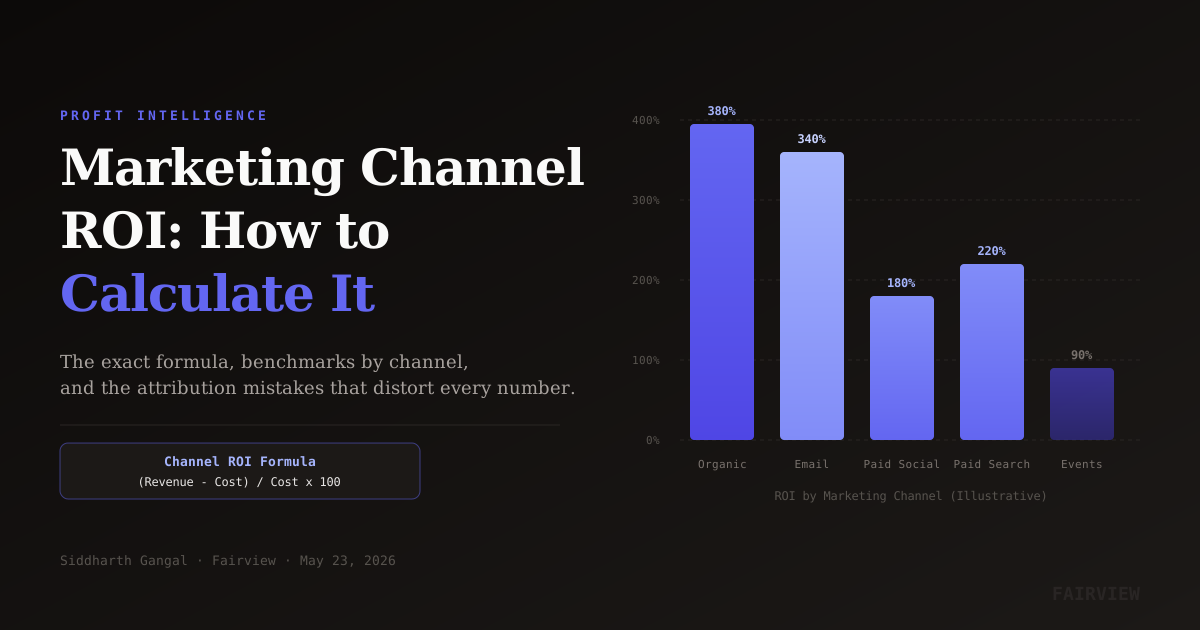
Marketing Channel ROI: How to Calculate It
The exact formula for marketing channel ROI, how to attribute revenue correctly by channel, benchmarks by channel type, and the 5 mistakes that distort every calculation.
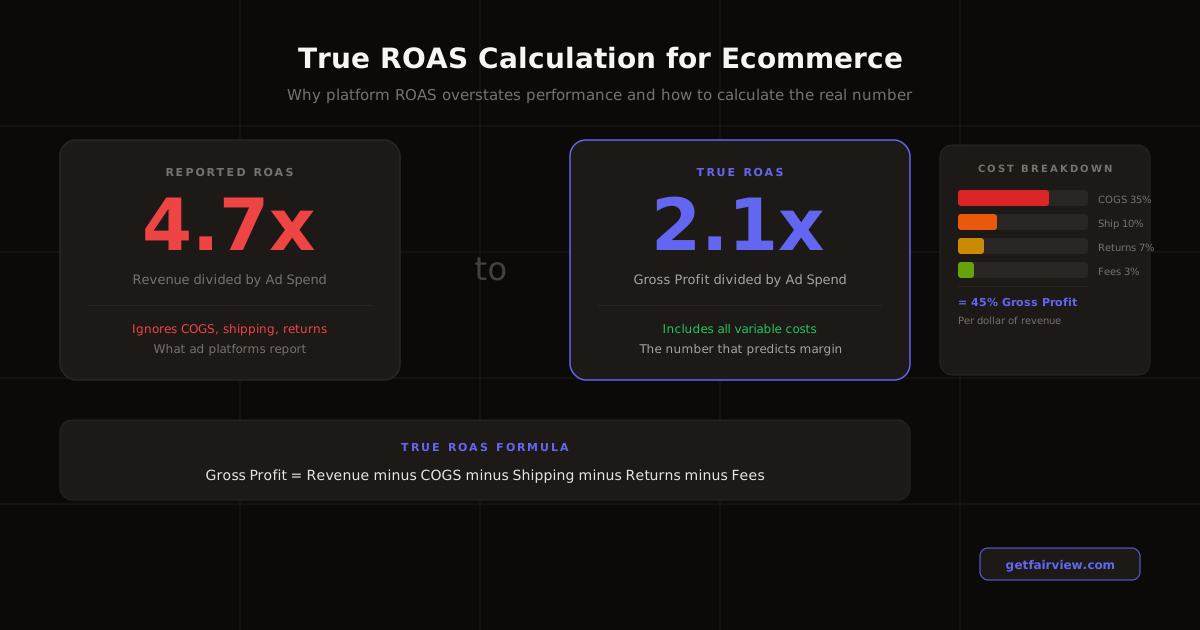
True ROAS Calculation for Ecommerce: The Complete Formula
True ROAS calculation for ecommerce: exact formula, 5 cost adjustments, break-even ROAS by margin tier, and channel-level targets that align with profit goals.
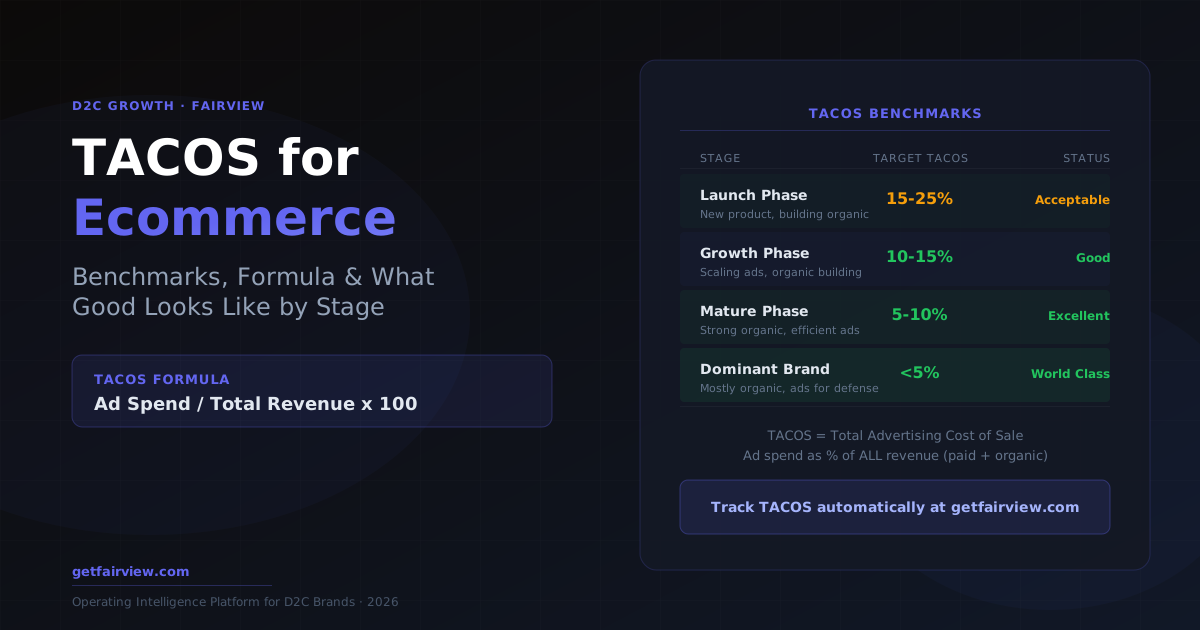
TACOS for Ecommerce: What Is Good, Benchmarks by Category, and How to Improve It
TACOS (Total Advertising Cost of Sale) for ecommerce explained: the exact formula, what counts as good by product stage and category, how it differs from ACOS and MER, and how to lower it without sacrificing growth.
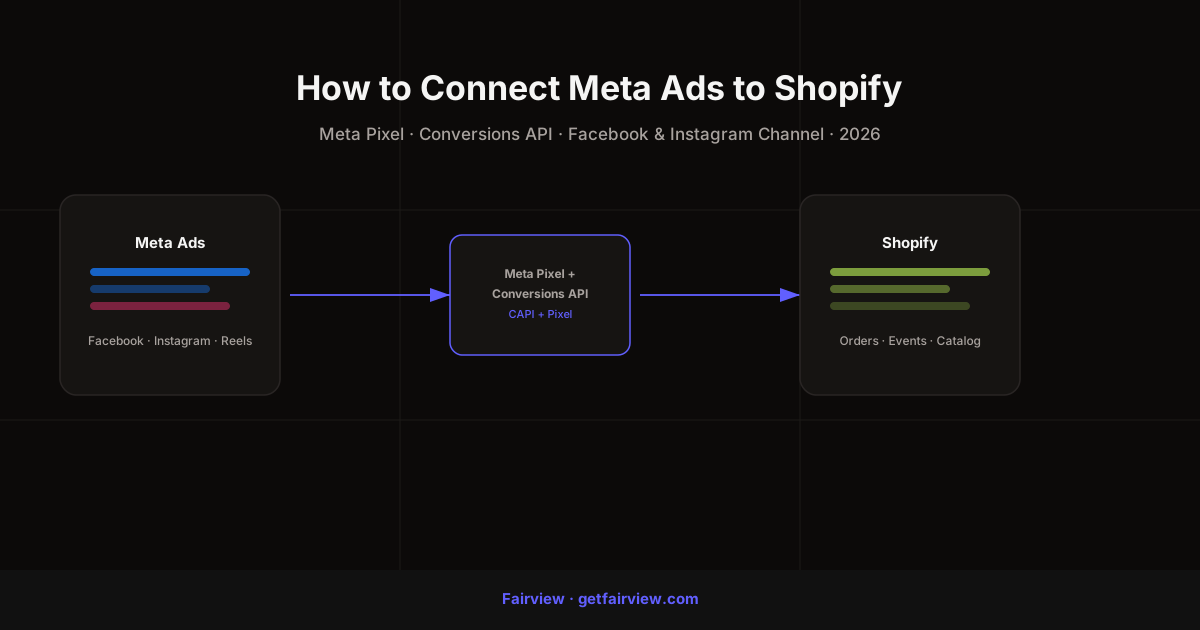
How to Connect Meta Ads to Shopify: Complete Guide 2026
Connect Meta Ads to Shopify using the Facebook and Instagram channel. Meta Pixel, Conversions API, data sharing levels, and fixes for tracking errors.
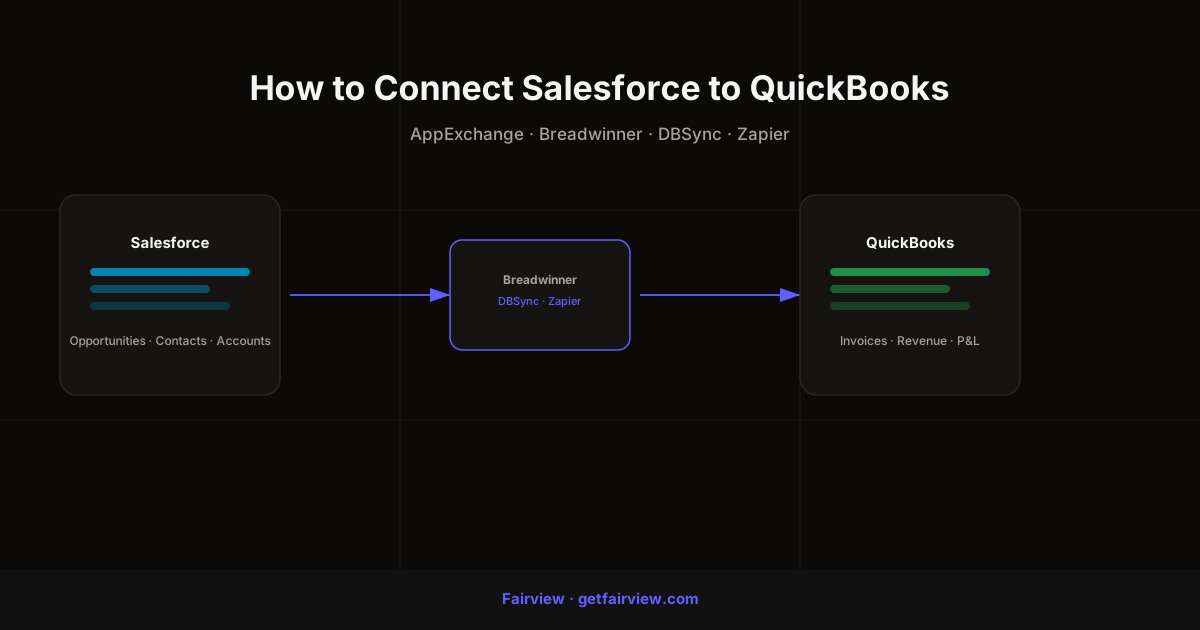
How to Connect Salesforce to QuickBooks: Step-by-Step
Connect Salesforce to QuickBooks using AppExchange apps. Covers Breadwinner, DBSync, Zapier, field mapping, and fixes for sync errors.
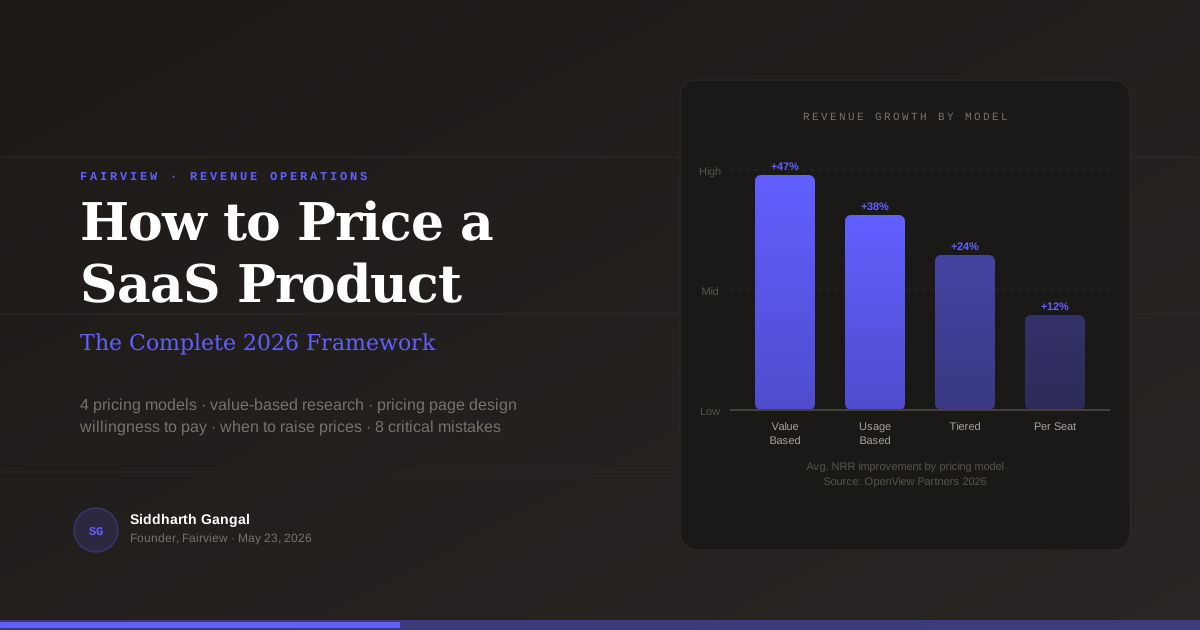
How to Price a SaaS Product: The Complete 2026 Framework
Four pricing models, value-based vs cost-plus research, willingness-to-pay methodology, pricing page design, free trial vs freemium, when to raise prices, and eight mistakes that destroy SaaS growth margins.
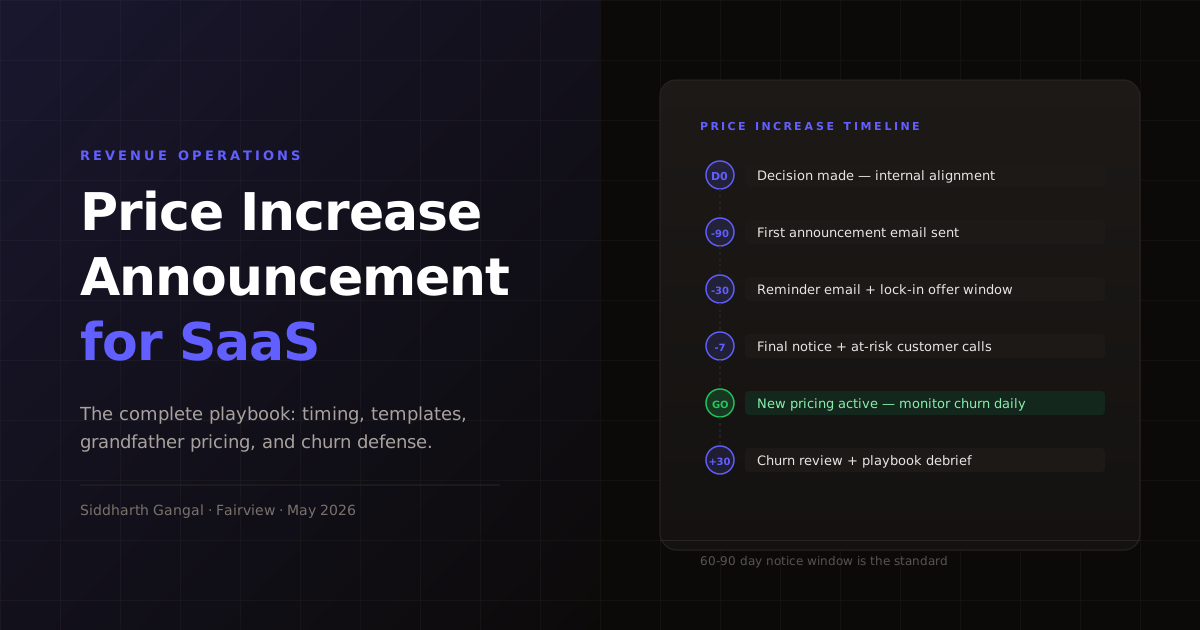
Price Increase Announcement for SaaS: The Complete Playbook
When to raise prices, how much, grandfather vs migration decisions, a 90-day communication timeline, three email templates, an at-risk customer playbook, and how to measure churn impact after the change.
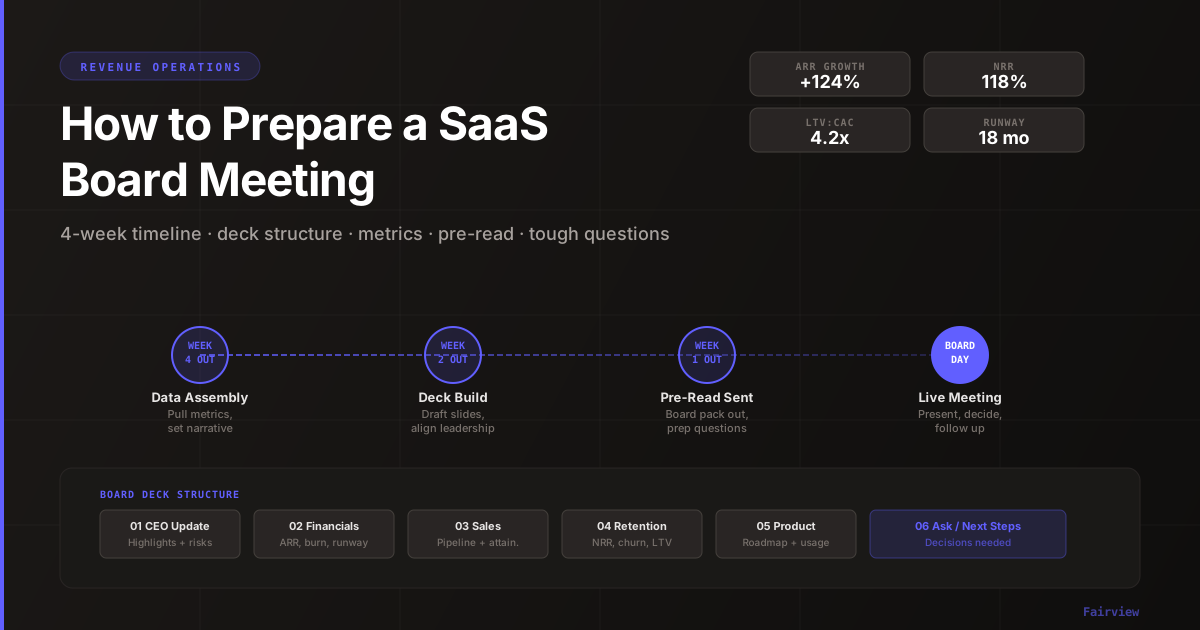
How to Prepare a SaaS Board Meeting: The Complete Playbook
A 4-week preparation timeline, the six-section deck structure every investor expects, the exact metrics to present, pre-read strategy, and a system for handling the questions that make founders sweat.
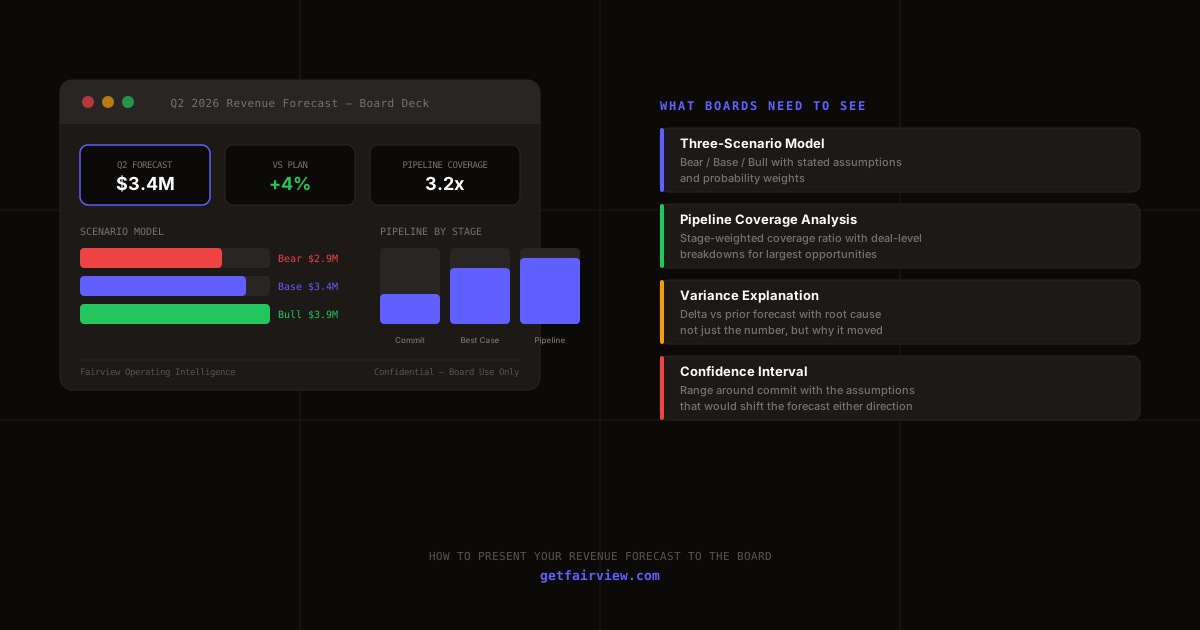
How to Present a Revenue Forecast to the Board
Three-scenario model, stage-weighted pipeline coverage, confidence intervals, variance attribution, and the Q&A answers that turn a skeptical board into a confident one.
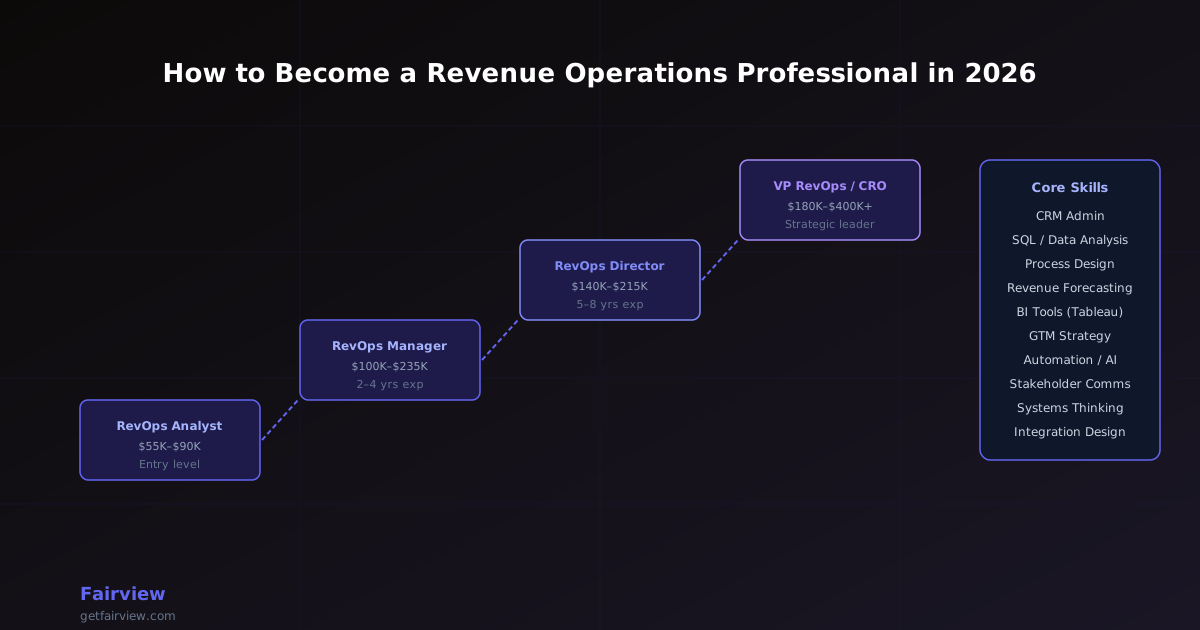
How to Become a Revenue Operations Professional in 2026
RevOps is one of the fastest-growing roles in B2B. Here is the career path, skills, certifications, salary benchmarks, and transition strategy for 2026.
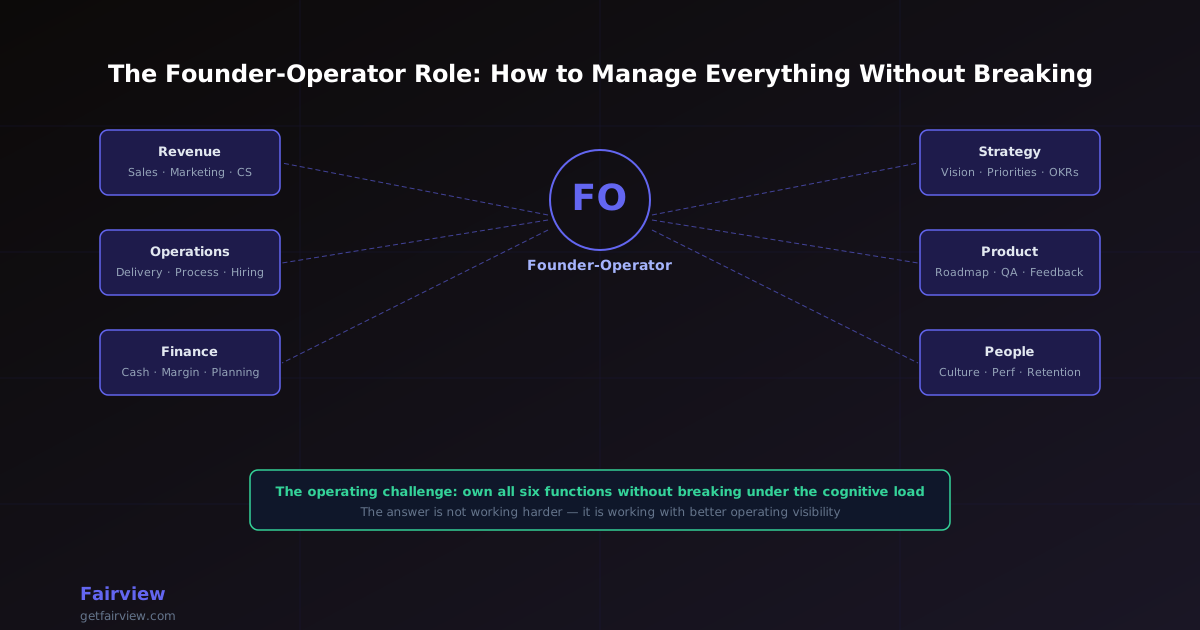
The Founder-Operator Role: How to Manage Everything Without Breaking
The founder-operator owns vision and execution simultaneously. Here is the operating model, metrics structure, and cognitive management practices that make the role sustainable.
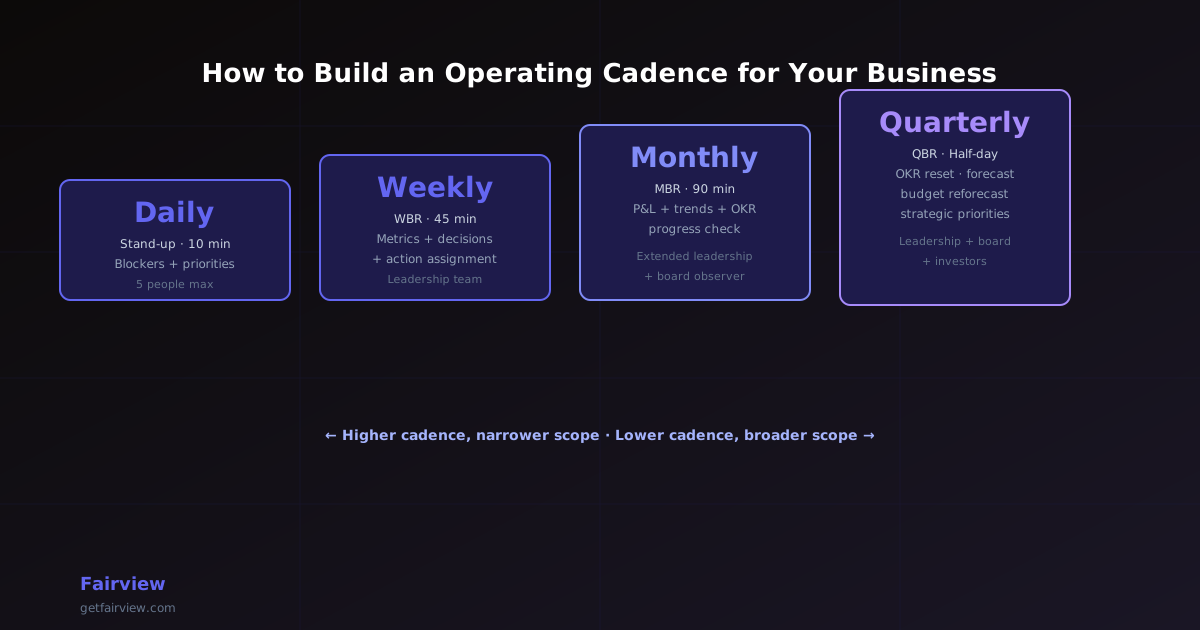
How to Build an Operating Cadence for Your Business
An operating cadence is the structured rhythm of meetings and reviews that keeps your business aligned. Here is how to design one that produces decisions, not just check-ins.
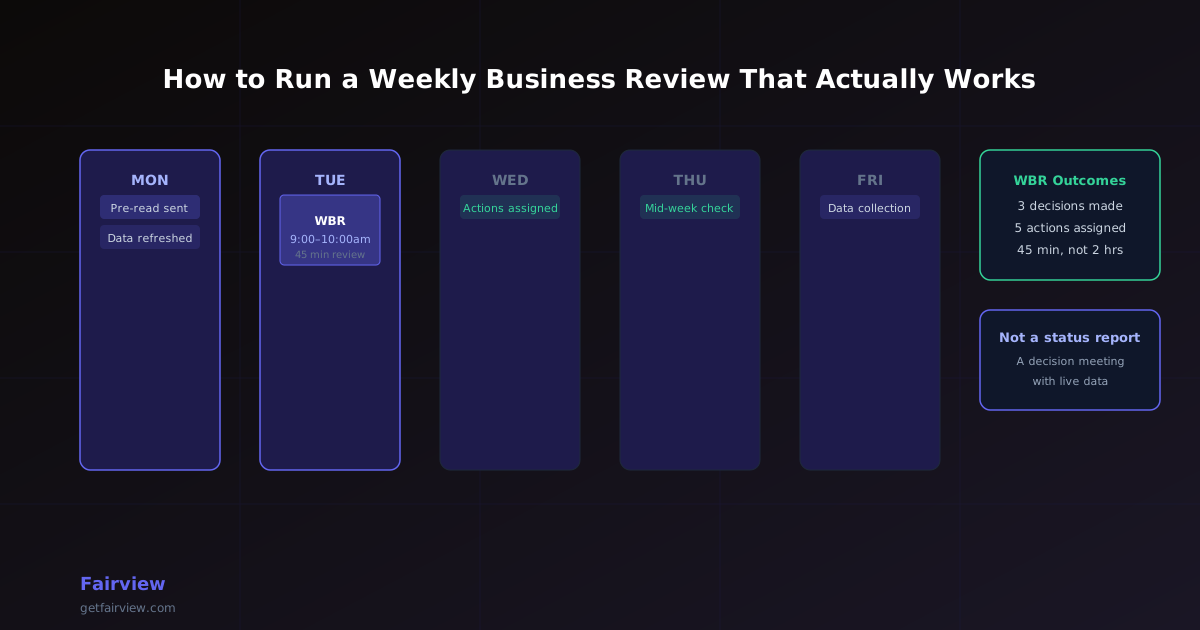
How to Run a Weekly Business Review That Actually Works
A weekly business review should produce decisions, not status updates. Here is the exact structure, agenda, metrics, and facilitation approach that makes WBRs worth running.
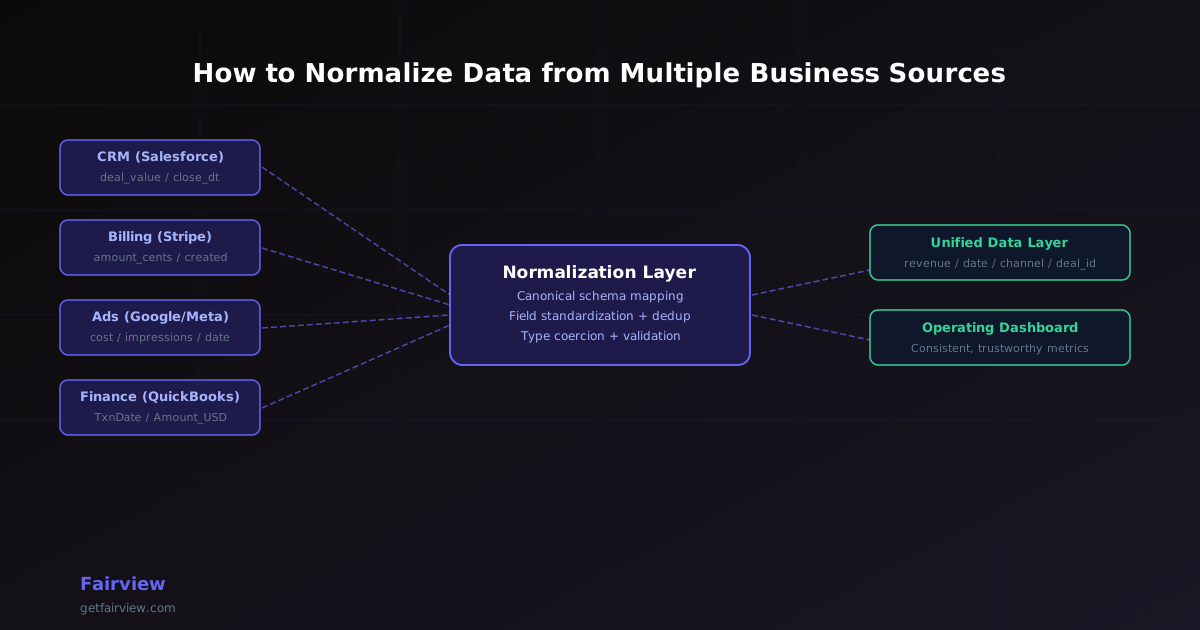
How to Normalize Data from Multiple Business Sources
Data normalization across CRM, billing, ads, and finance systems is the foundation of reliable reporting. Here is the step-by-step process operators use to build a clean, unified data layer.
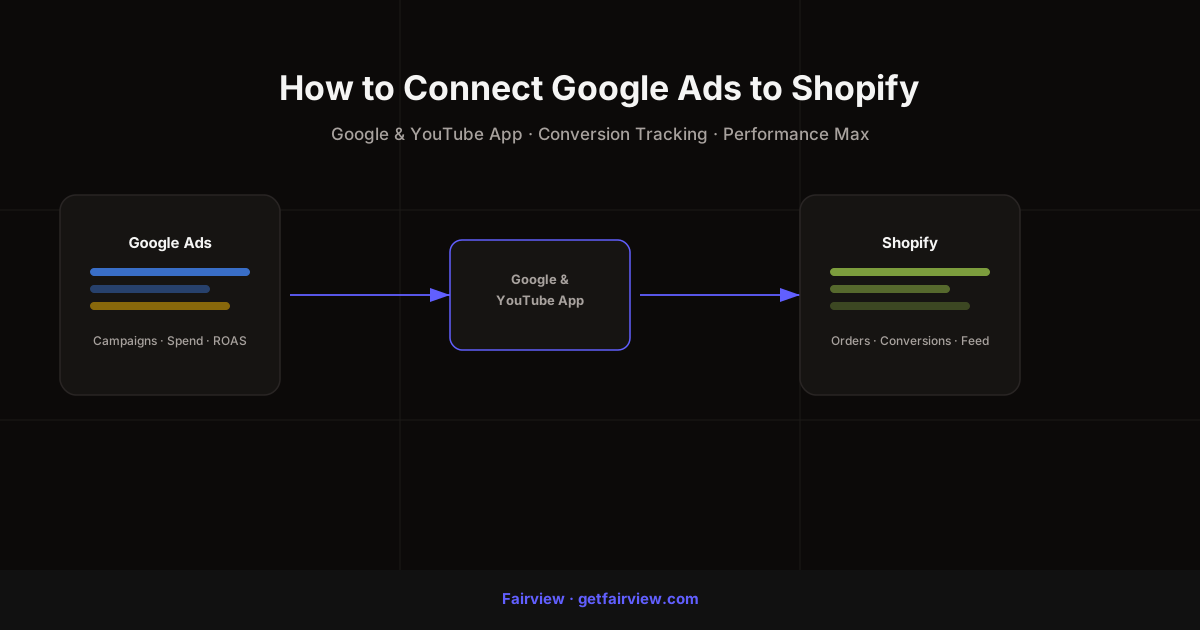
How to Connect Google Ads to Shopify: Complete Guide
Connect Google Ads to Shopify using the Google and YouTube app. Conversion tracking, Performance Max, enhanced conversions, and fixes for common attribution errors.
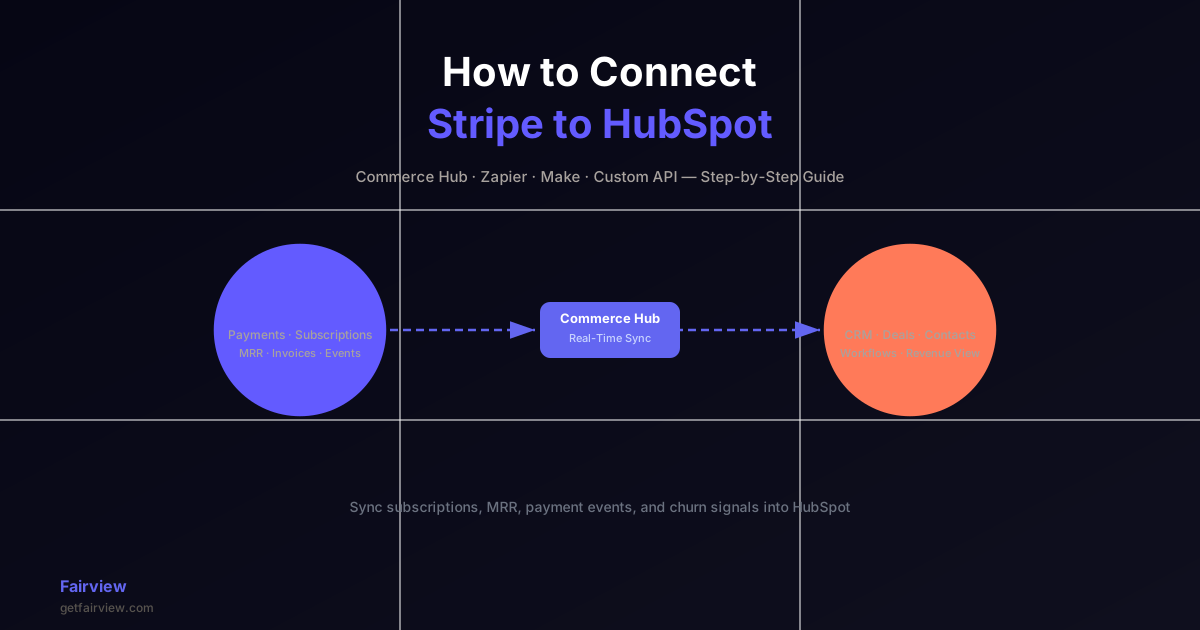
How to Connect Stripe to HubSpot: Step-by-Step Guide
Connect Stripe to HubSpot using Commerce Hub. What data syncs, the revenue workflows it enables, and how to fix the five most common configuration errors.
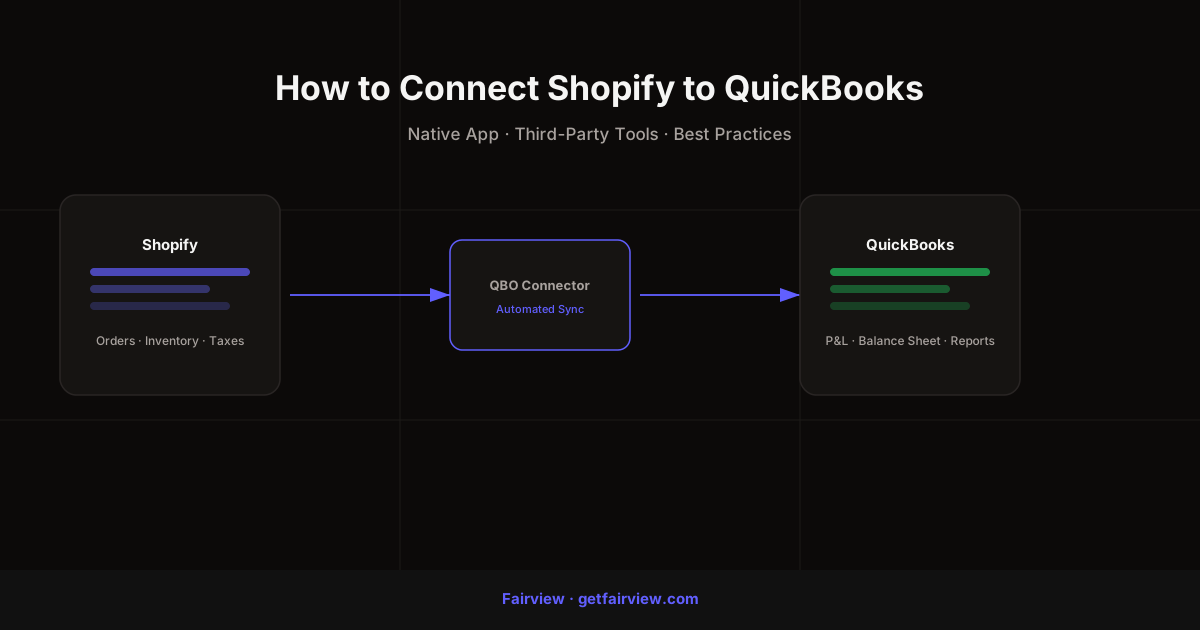
How to Connect Shopify to QuickBooks: Complete Guide
Step-by-step guide to connect Shopify to QuickBooks Online. Covers the native QBO connector, A2X, Synder, account mapping, and the common errors that break reconciliation.
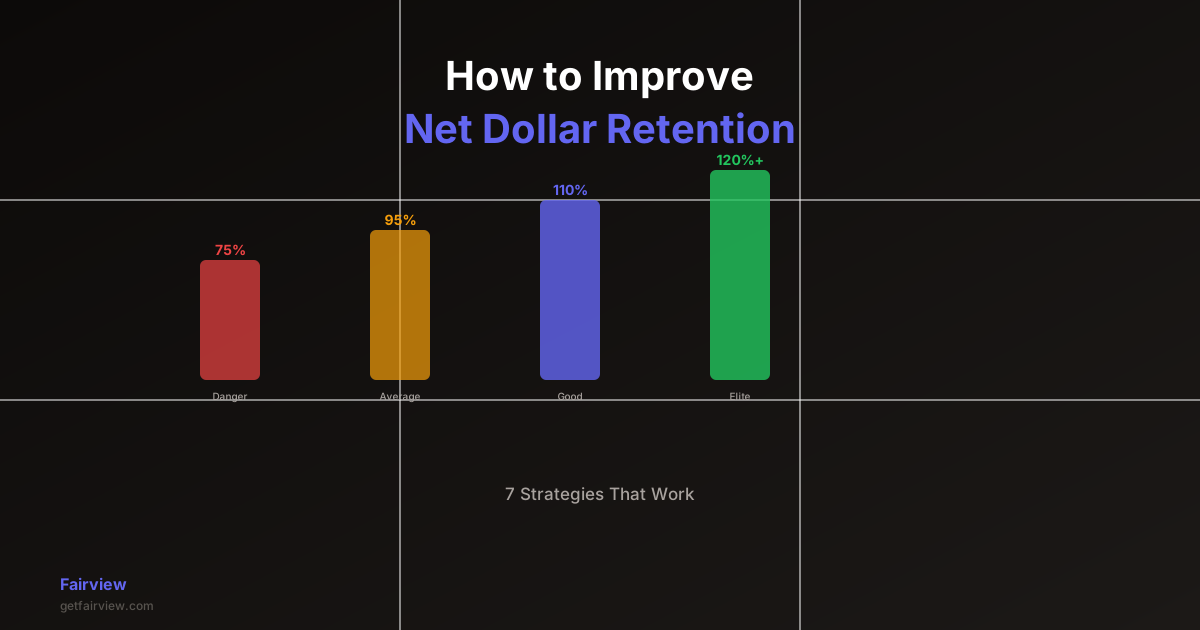
How to Improve Net Dollar Retention: 7 Strategies That Work
Net dollar retention measures revenue growth from existing customers. Learn 7 proven strategies to improve NDR through expansion, churn reduction, and pricing optimization.
How to Implement Multi-Touch Attribution: A Practical Guide
Multi-touch attribution assigns revenue credit across every touchpoint in the buyer journey. This guide covers model selection, data requirements, and implementation steps.
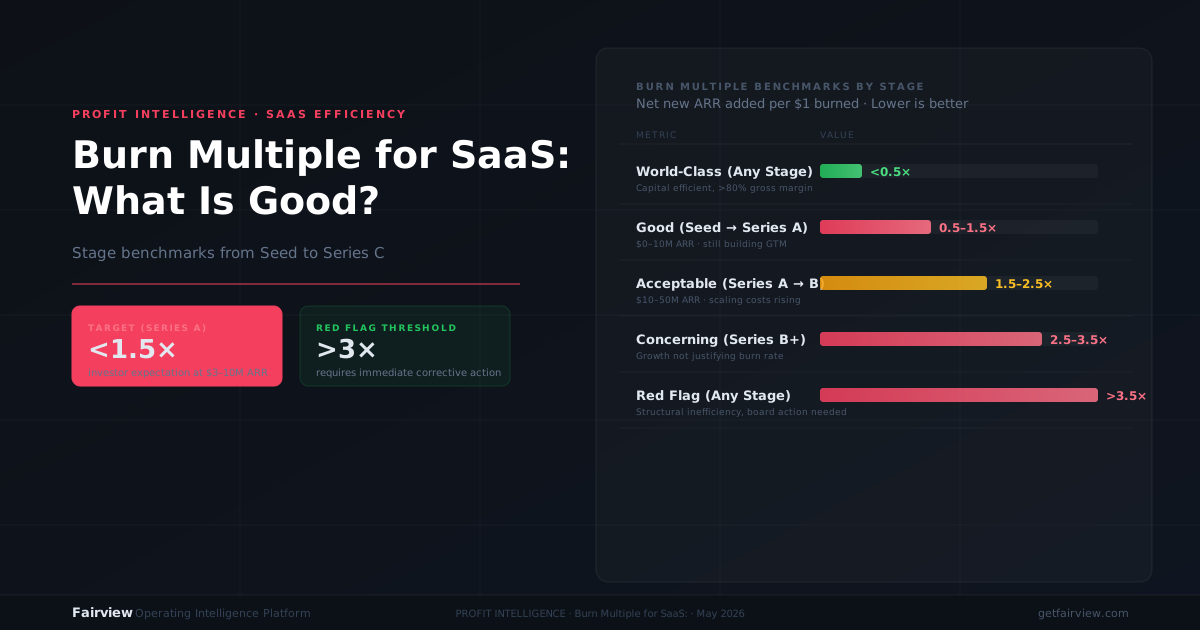
Burn Multiple for SaaS: What Is Good, Benchmarks by Stage
What is a good burn multiple for SaaS? Stage-by-stage benchmarks from seed to Series C, the formula, common causes of a high number, and how to improve it.
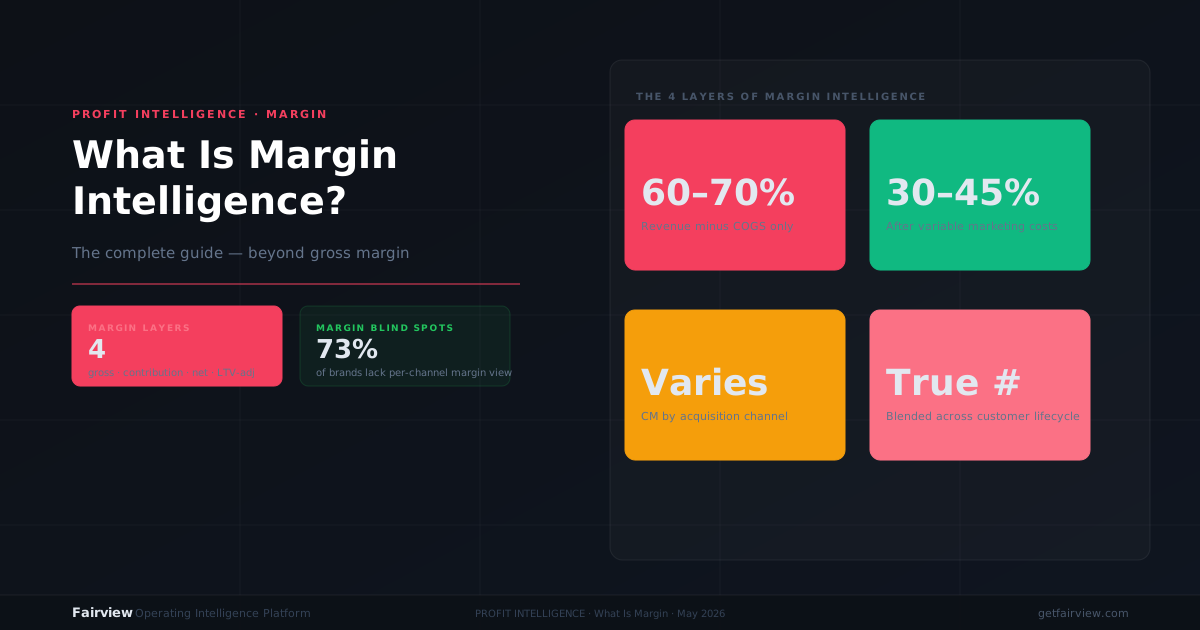
What Is Margin Intelligence? The Complete Guide
Margin intelligence is the practice of tracking true profit at every layer — by product, channel, customer, and campaign. Learn what it is, how it works, and why gross margin alone is not enough.
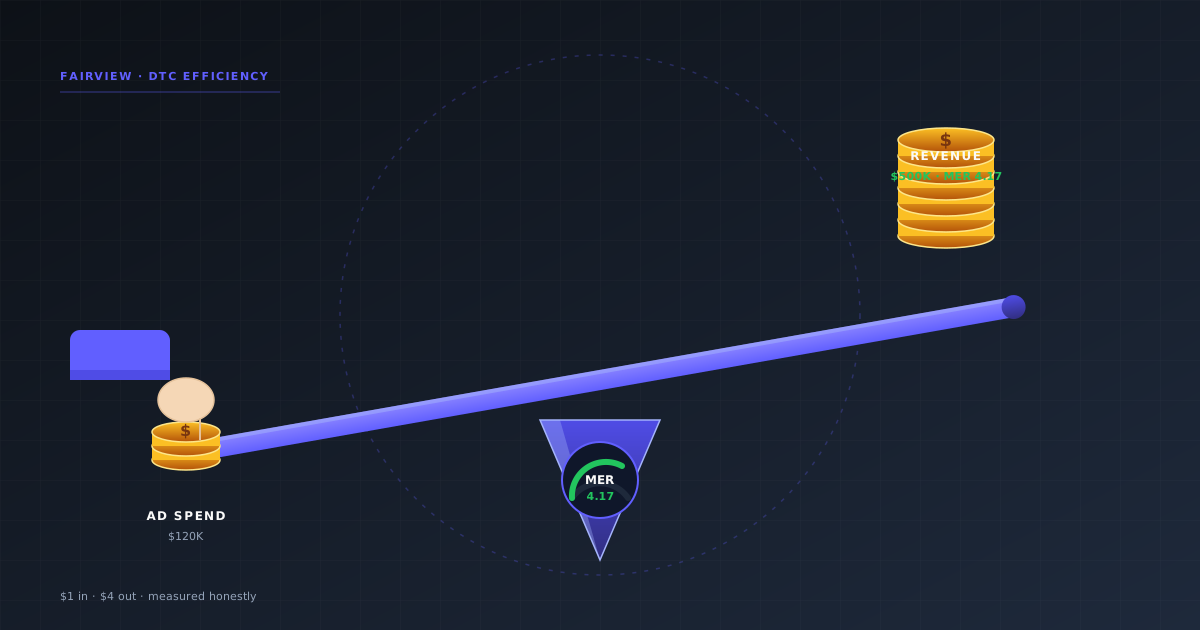
Ad Spend Efficiency for D2C Brands: Metrics and Benchmarks
MER, True ROAS, nCAC, and contribution margin per channel — the 5 ad efficiency metrics D2C brands must track. 2026 benchmarks by channel included.
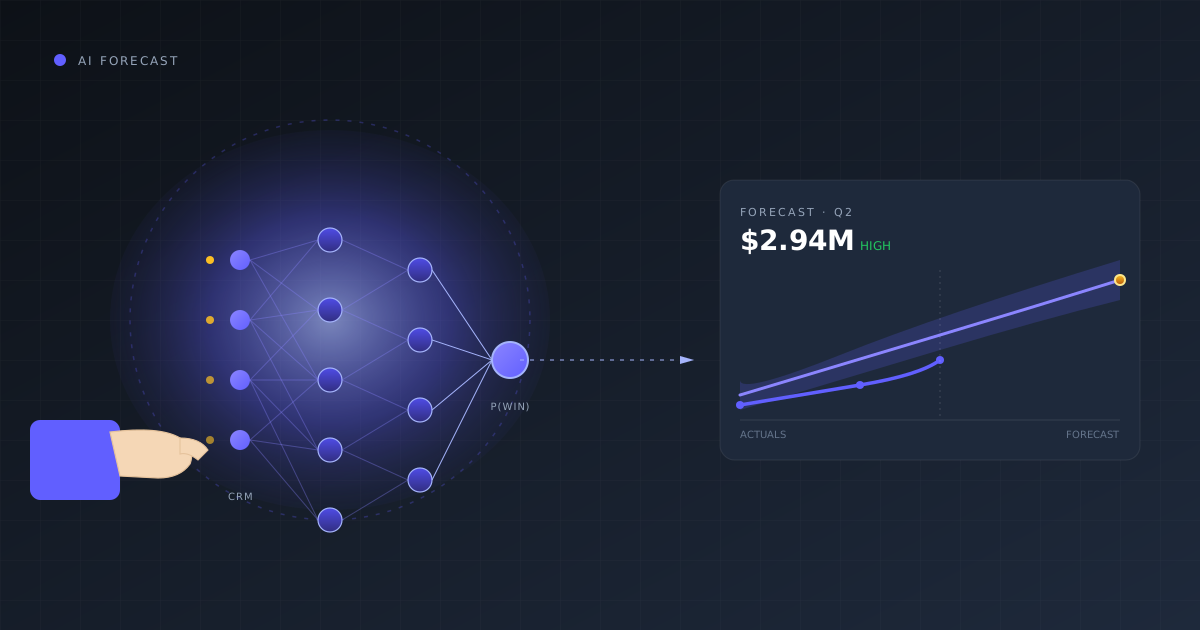
AI Sales Forecasting: How It Works and When to Trust It
AI sales forecasting uses machine learning to predict revenue with 5–8% error rates vs 20%+ for manual methods. Here is how it works and when to adopt it.

AI vs Human Analysis: When to Trust the Machine
AI outperforms humans on pattern recognition, speed, and consistency. Humans outperform AI on context, judgment, and novel situations. Here is when to trust each.
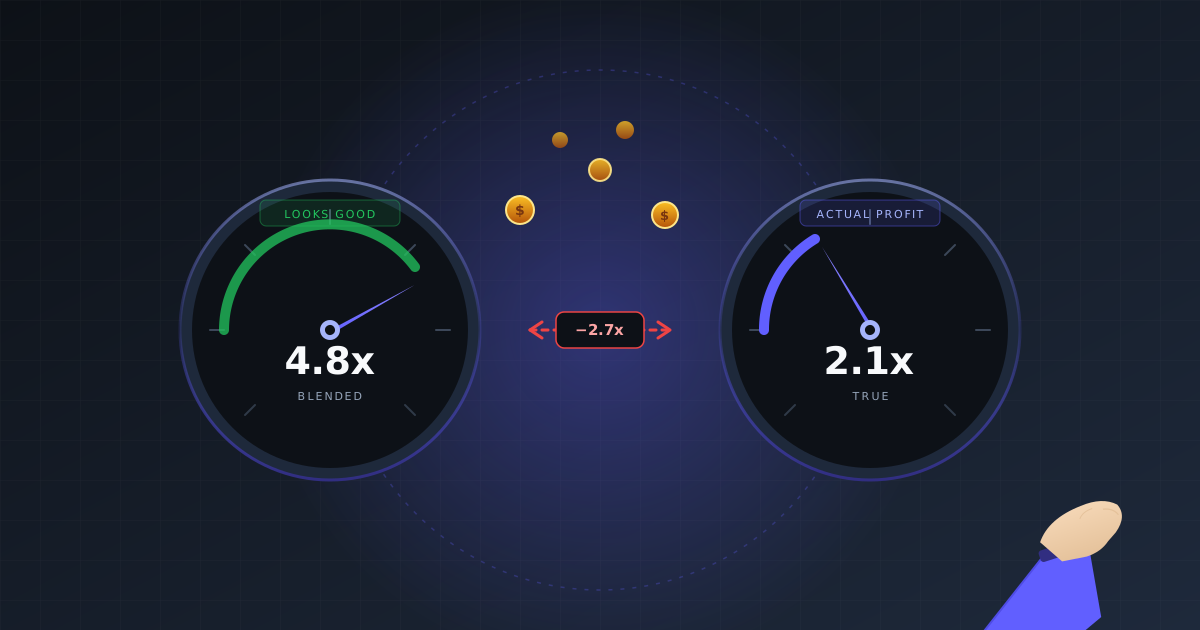
Blended ROAS vs True ROAS: Which Number Should You Trust?
Platform ROAS is inflated. Blended ROAS is honest. True ROAS corrects for attribution. Here is how each works and which to optimize for.
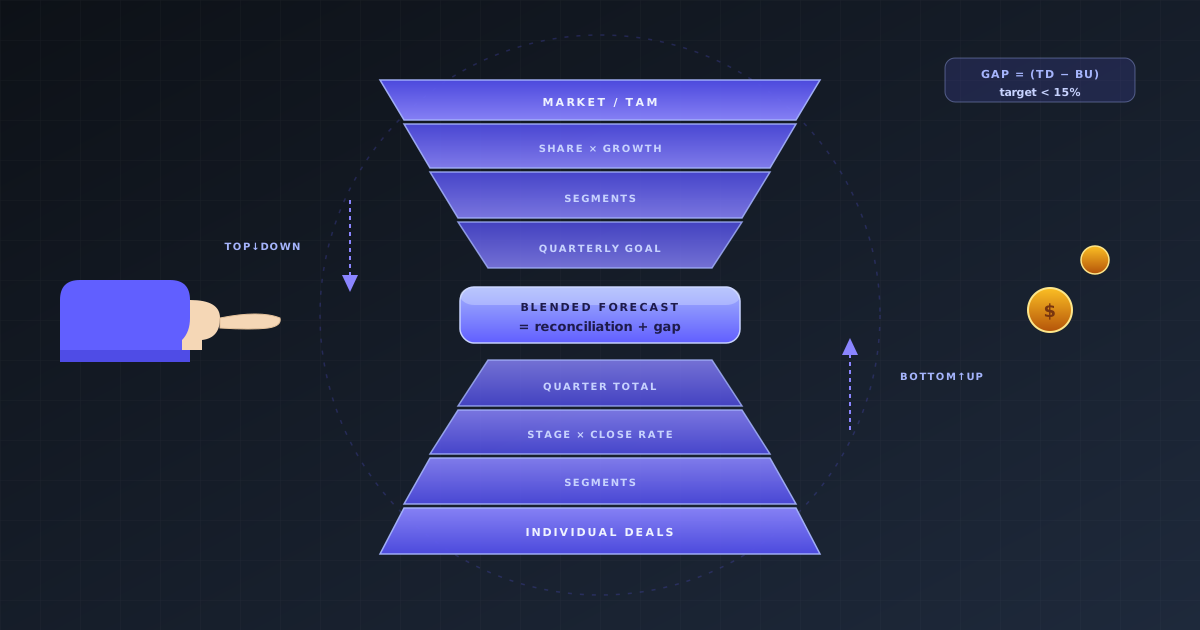
Bottom-Up vs Top-Down Forecasting: Which Is More Accurate?
Bottom-up forecasting is more accurate for near-term revenue. Top-down is better for strategic planning. Here is how to use both — and when to trust each.
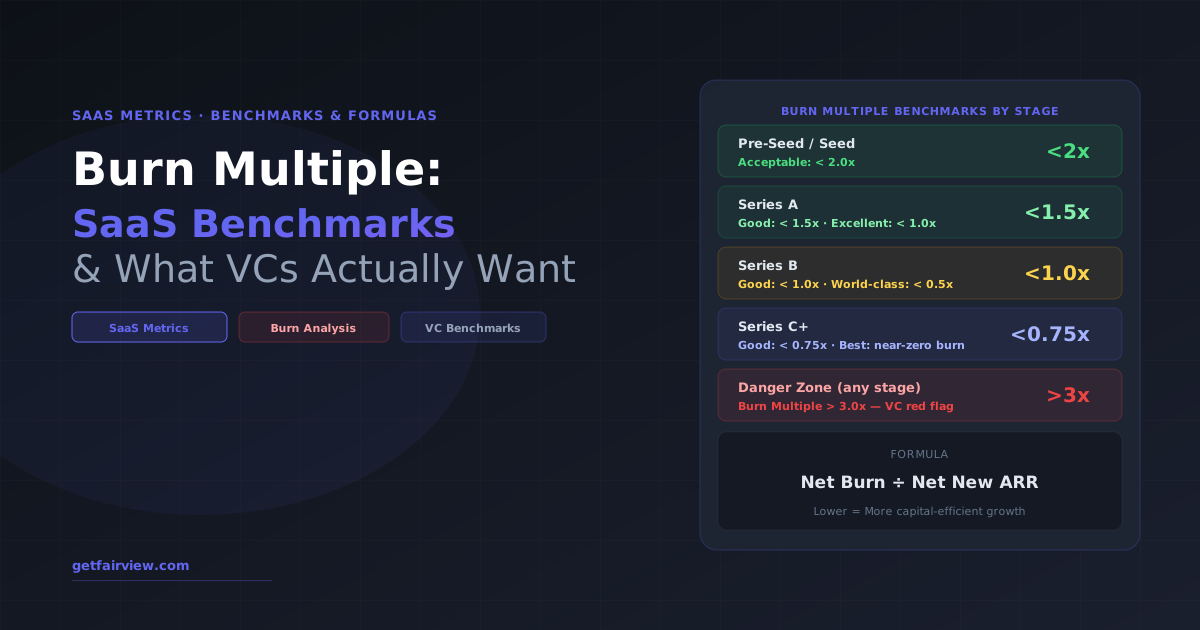
Burn Multiple: SaaS Benchmarks, Formula, and What VCs Actually Want
Burn multiple is the capital efficiency metric every SaaS VC uses. Learn the formula, 2026 benchmarks by funding stage, and how to improve your number before your next raise.
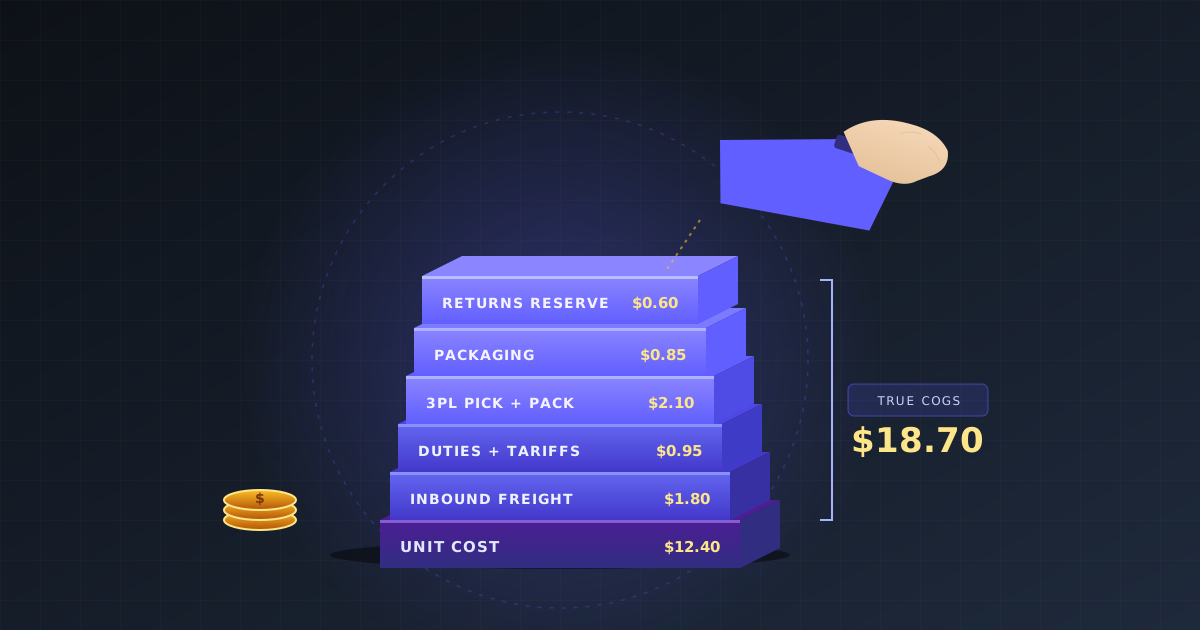
COGS Tracking for Ecommerce: What to Include (and What to Skip)
Ecommerce COGS includes product cost, inbound freight, packaging, fulfillment, and returns — but not marketing or salaries. Here is the complete breakdown with benchmarks by category and a per-order calculation method.
Cohort Analysis for Ecommerce: A Step-by-Step Guide
How to do cohort analysis for ecommerce step by step — build acquisition, behavioral, and revenue cohort tables, interpret the retention curve, and act on the data to improve LTV.
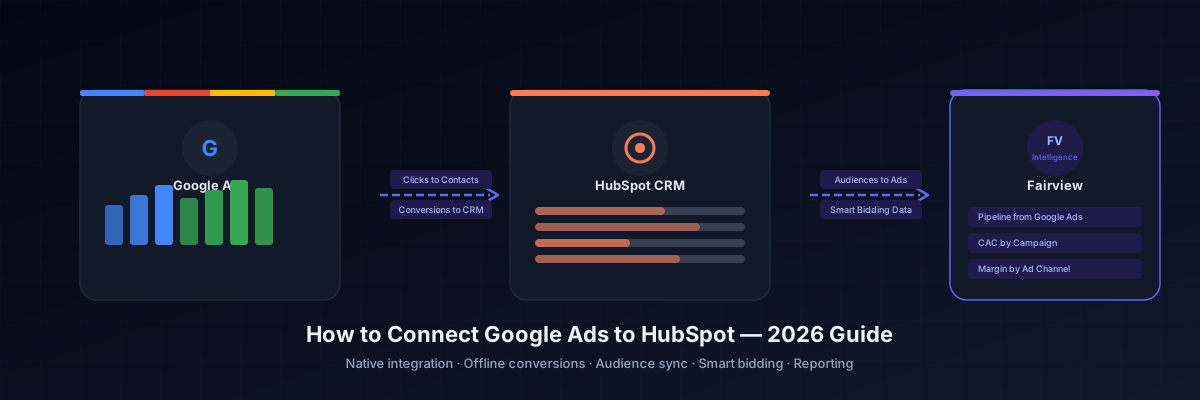
How to Connect Google Ads to HubSpot (2026 Guide)
Connect Google Ads to HubSpot in minutes using the native integration. This guide covers account setup, offline conversion tracking, audience sync, smart bidding with CRM data, and troubleshooting the five most common errors.
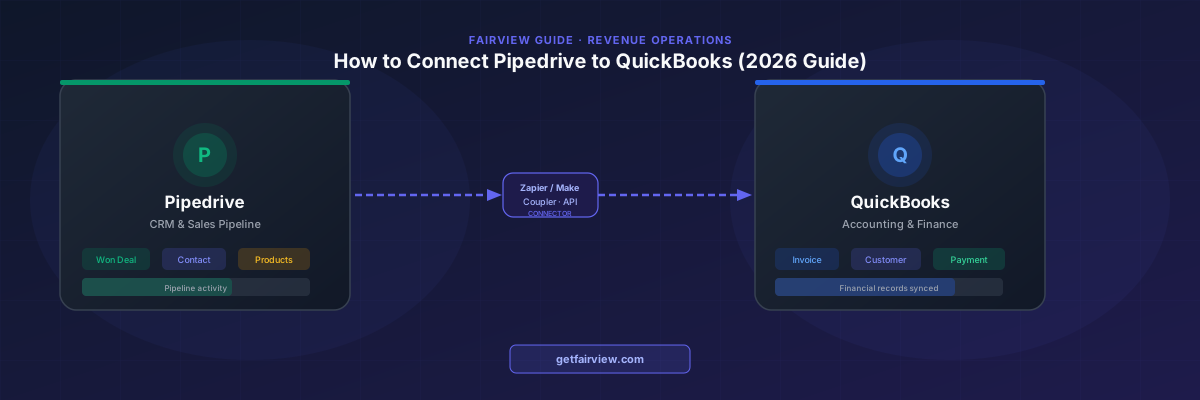
How to Connect Pipedrive to QuickBooks (2026 Guide)
Connect Pipedrive to QuickBooks using the native integration, Zapier, or Make. Automate invoice creation on deal close, sync contacts to QuickBooks customers, and eliminate manual data entry between your CRM and accounting system.
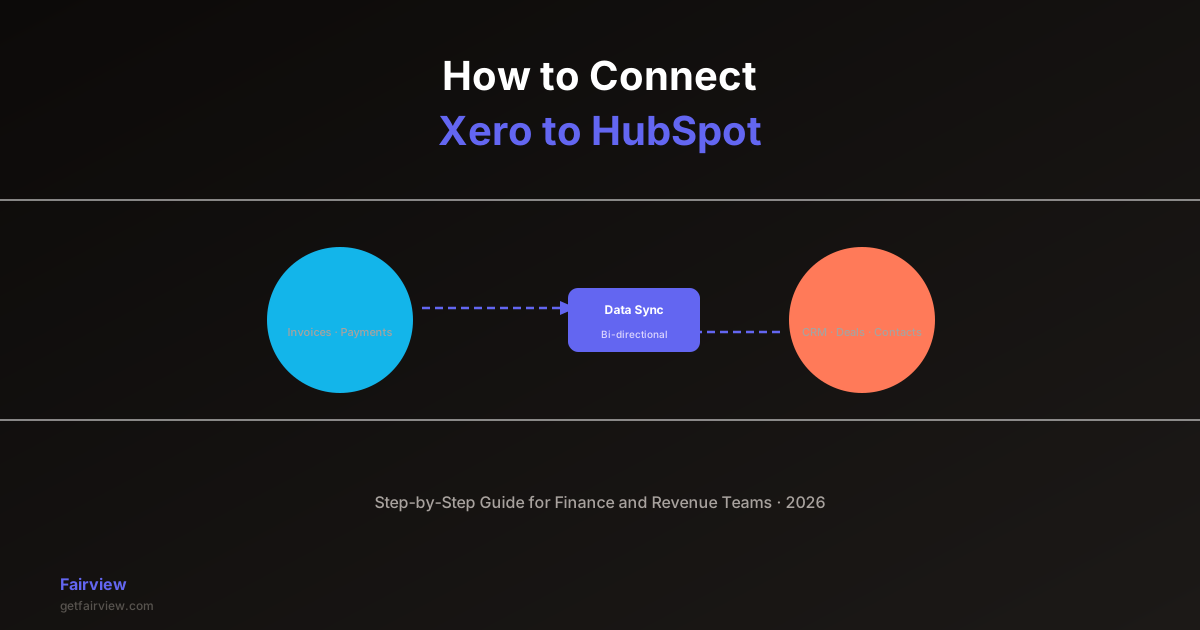
How to Connect Xero to HubSpot (2026 Step-by-Step Guide)
Learn how to connect Xero to HubSpot using the native Data Sync integration, Zapier, or Make. Sync invoices, contacts, payments, and trigger HubSpot workflows from Xero invoice status changes.
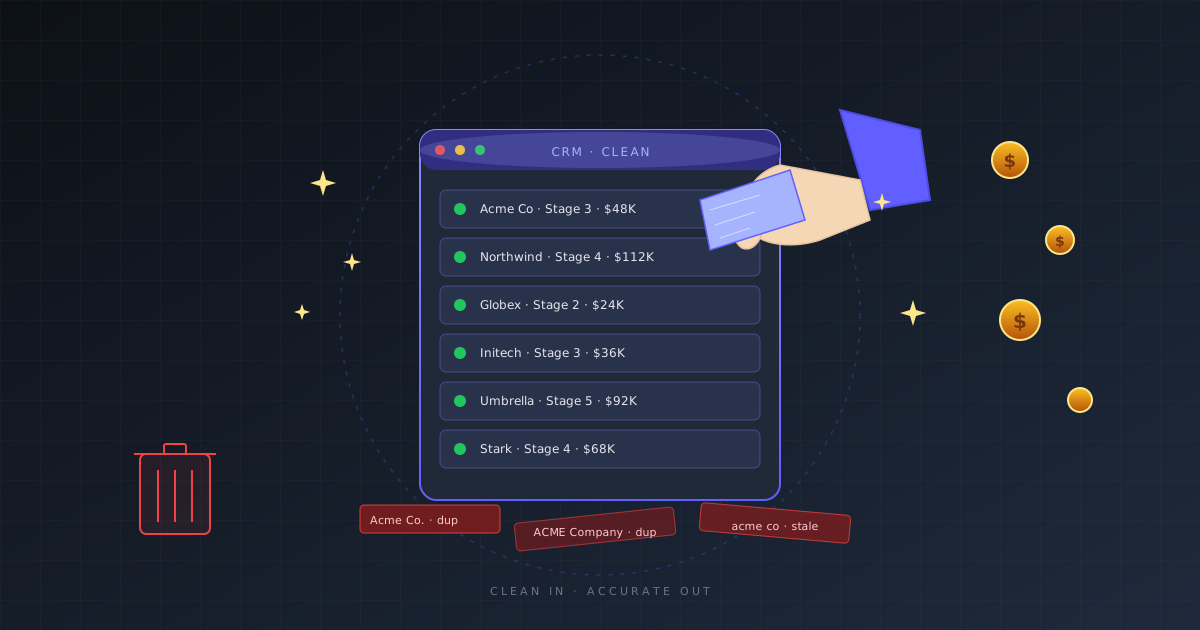
CRM Hygiene: How to Keep Your Pipeline Data Accurate
Bad CRM data costs reps 30+ minutes daily and destroys forecast accuracy. Here are the 10 hygiene rules, a 60-minute audit process, and automation playbook for RevOps.
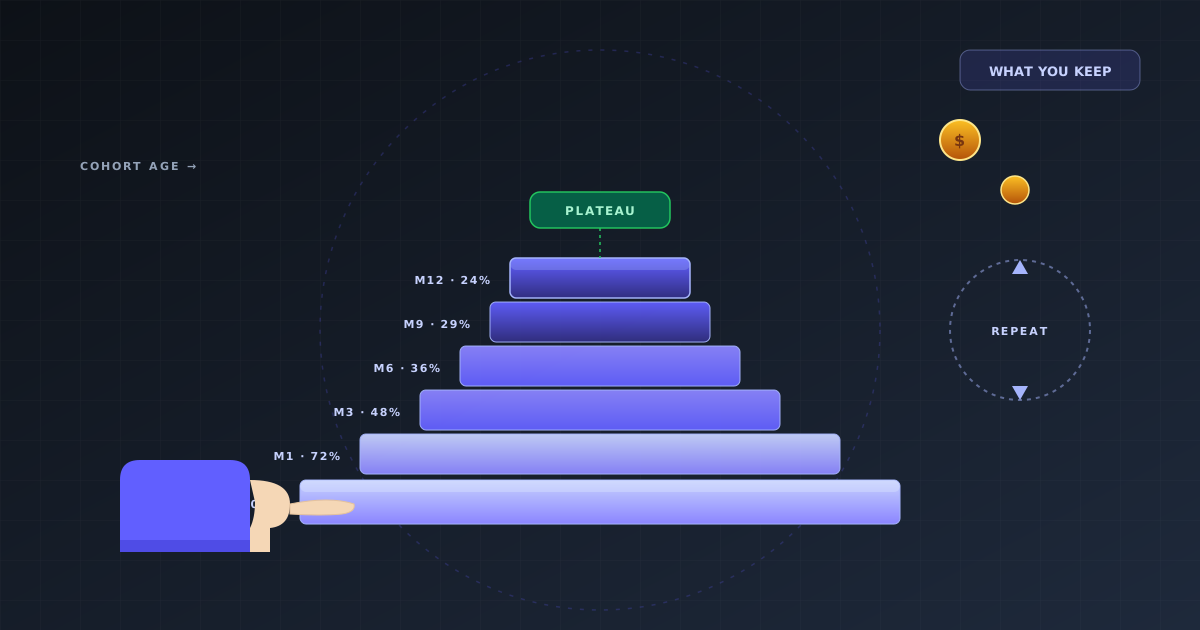
Customer Retention Metrics for Ecommerce: What to Track
The 8 ecommerce retention metrics that matter: repeat purchase rate, cohort retention, churn rate, RFM, and LTV by channel. 2026 benchmarks by category.
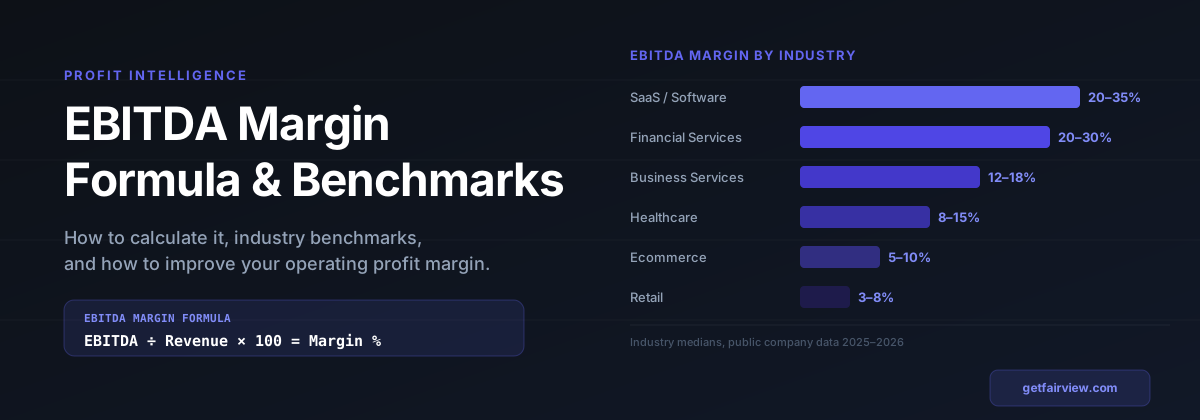
EBITDA Margin: Formula, How to Calculate, and Benchmarks by Industry
EBITDA margin formula, step-by-step calculation guide, industry benchmarks for SaaS, ecommerce, and services, plus 6 proven ways to improve it. Updated for 2026.
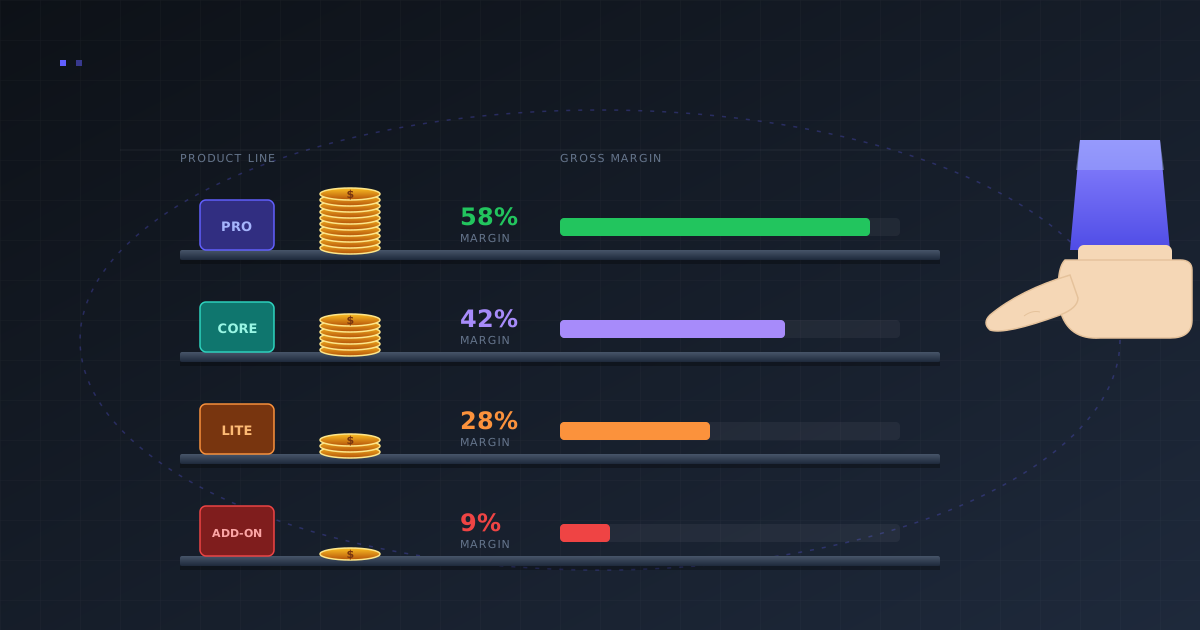
How to Track and Improve Gross Margin by Product Line
Blended gross margin hides underperforming SKUs. Here is how to track gross margin by product line, find margin leaks, and improve profitability by product.
How to Hire Your First RevOps Manager
Job description template, interview questions, compensation benchmarks, and the exact process to hire a RevOps Manager who actually drives revenue alignment.
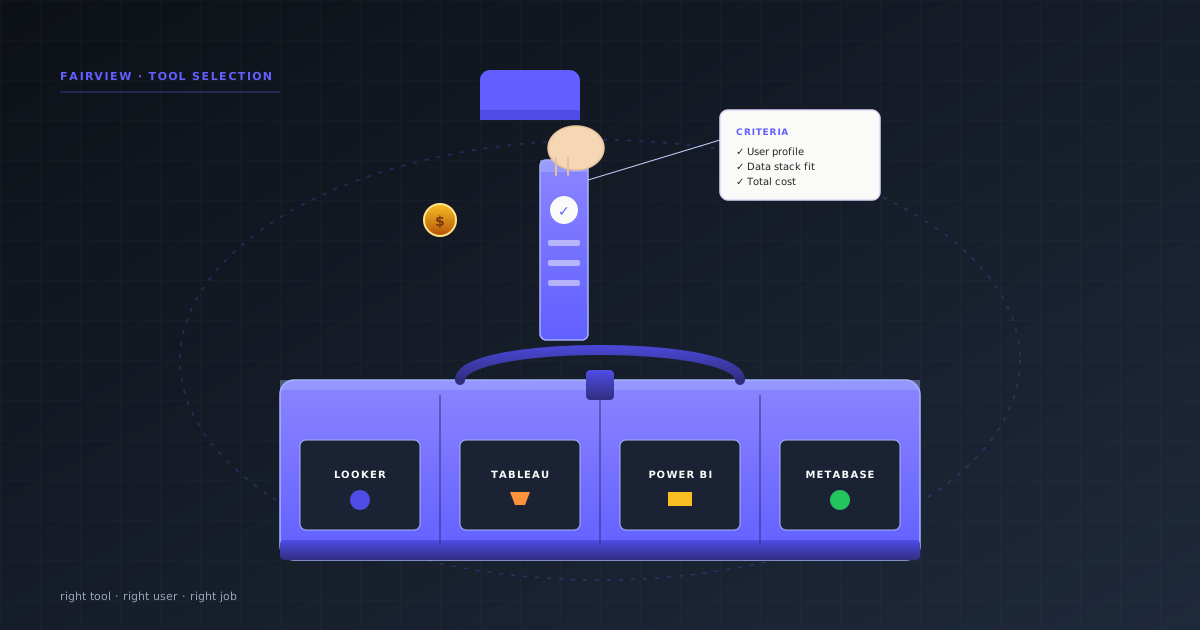
How to Choose a BI Tool for Your B2B Business (2026 Guide)
7 evaluation criteria, a tool comparison table, and a 6-week selection framework for B2B teams choosing a business intelligence platform in 2026.
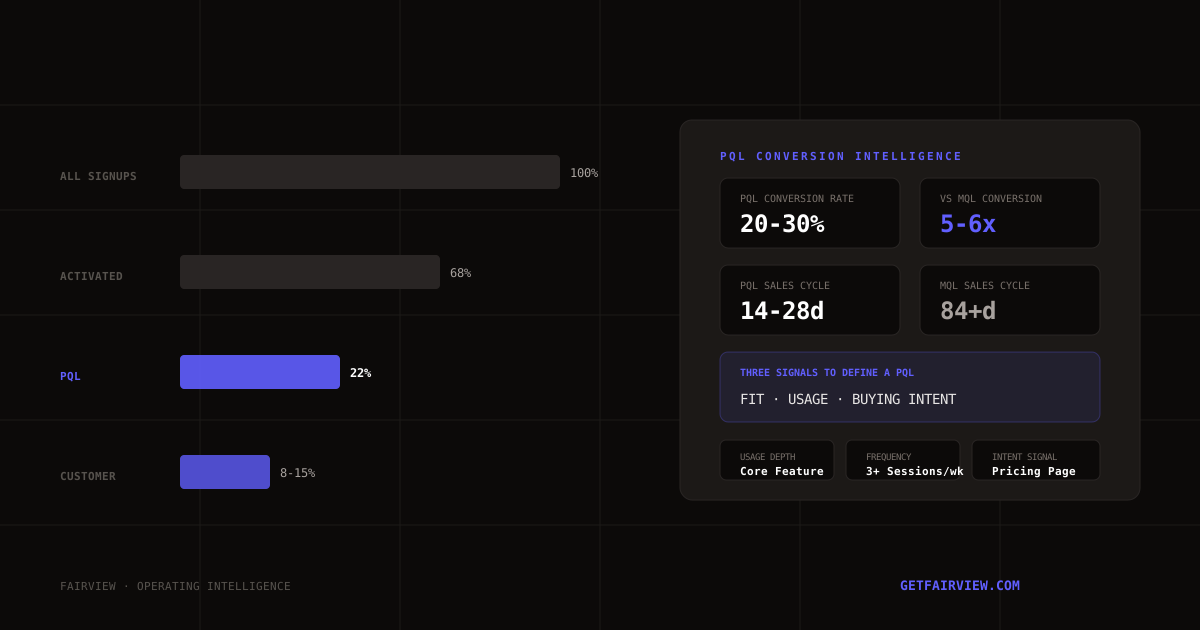
How to Define Product Qualified Leads (PQLs) in SaaS
A PQL is a free or trial user who has demonstrated purchase intent through specific in-product actions. PQLs convert at 5–6x the rate of MQLs. This guide covers PQL criteria, scoring models, sales routing, and how to measure conversion.
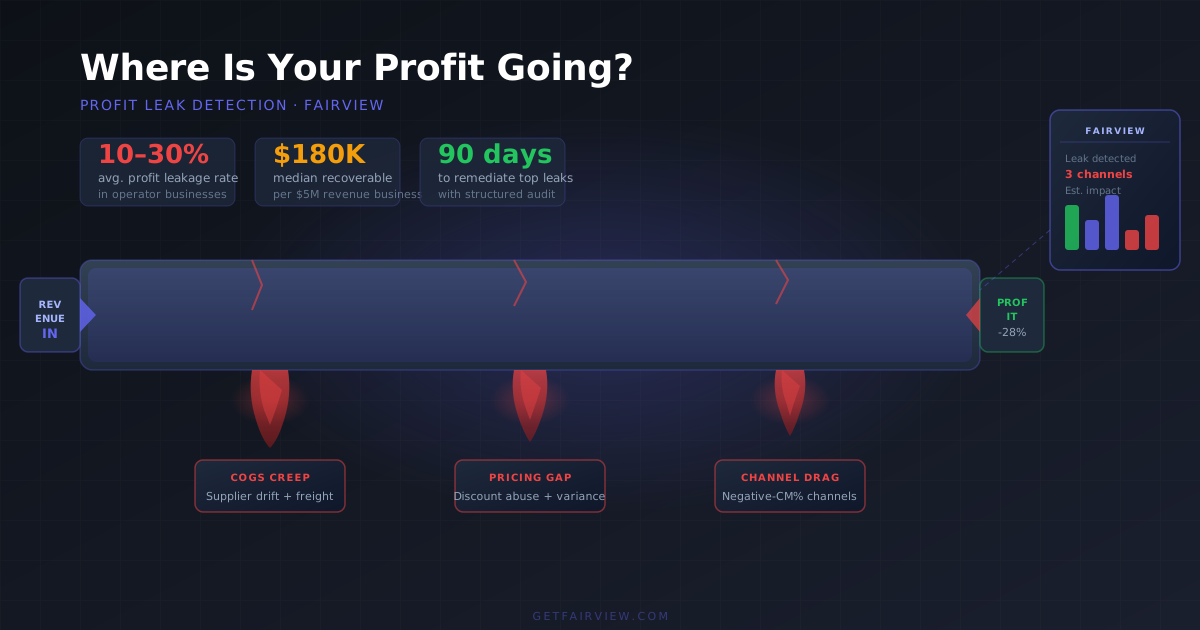
How to Find Where Your Business Is Leaking Profit
Most businesses leak 10–30% of profit through hidden cost drift, channel inefficiency, and pricing gaps. Here is how to find and fix every leak.
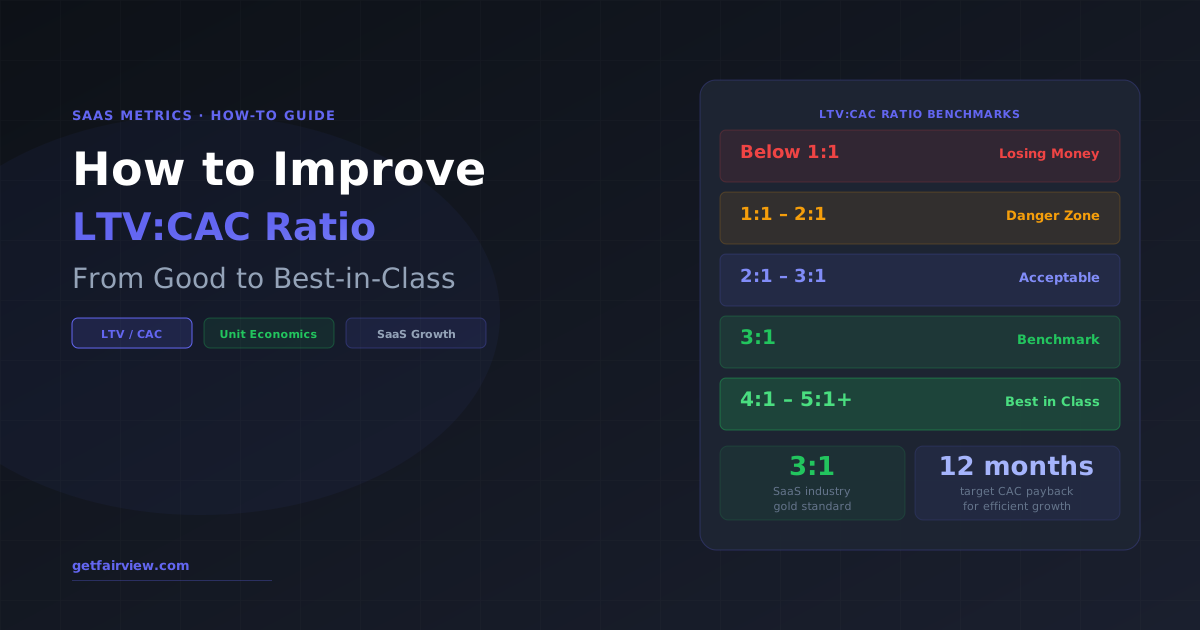
How to Improve Your LTV:CAC Ratio: 7 Proven Strategies
Your LTV:CAC ratio tells you how efficiently you grow. Learn what 3:1 means, why most teams measure it wrong, and 7 proven strategies to push it above 4:1.
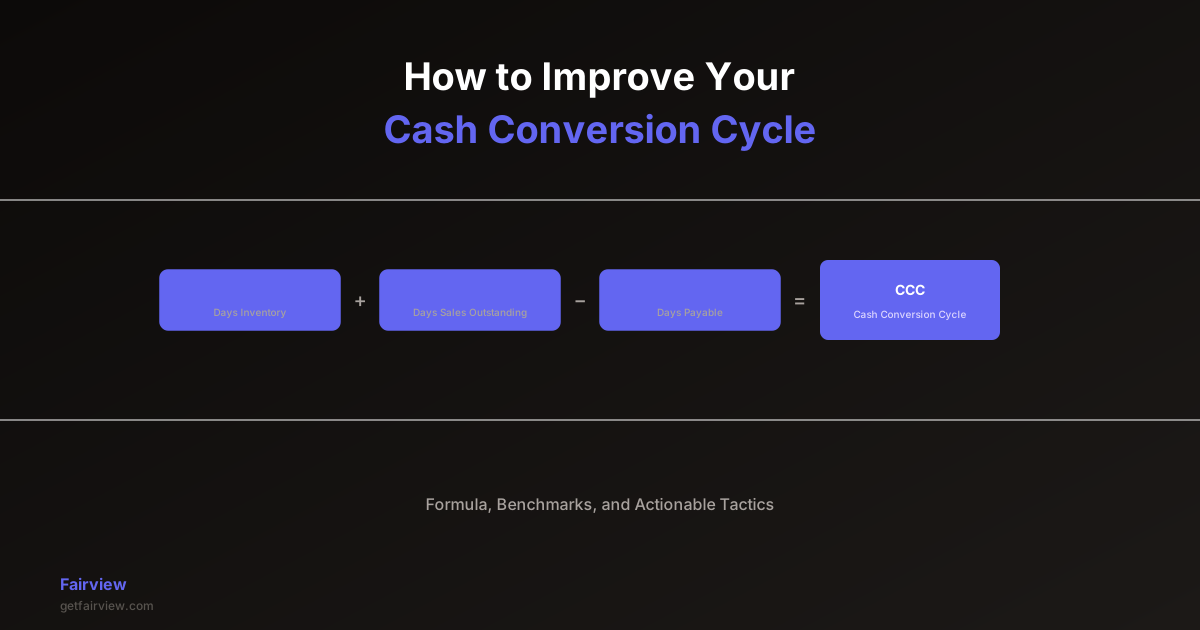
How to Improve Your Cash Conversion Cycle (CCC): A Practical Guide
The cash conversion cycle (CCC = DIO + DSO minus DPO) measures how long your capital sits locked in operations before returning as cash. Learn the formula, benchmarks by industry, why negative CCC is optimal, and 8 strategies to reduce yours.
How to Improve Inventory Turnover in Ecommerce: Benchmarks and 7 Proven Tactics
Inventory turnover measures how many times you sell through stock each year. Target range for most ecommerce categories is 4–8x. This guide covers the formula, benchmarks by category, 7 proven tactics to improve turns, and the turnover-vs-stockout trade-off.
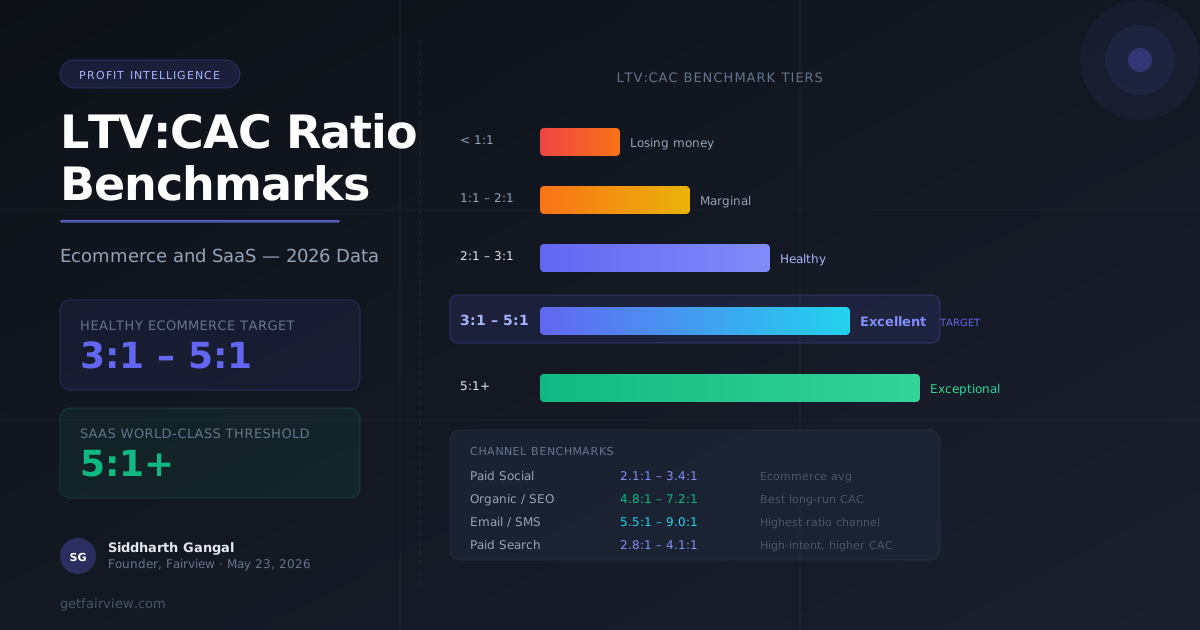
LTV:CAC Ratio Benchmarks for Ecommerce and SaaS (2026)
LTV:CAC ratio benchmarks by industry and stage. Ecommerce targets 3:1–5:1. SaaS targets 3:1+. Formulas, channel breakdowns, and improvement tactics.
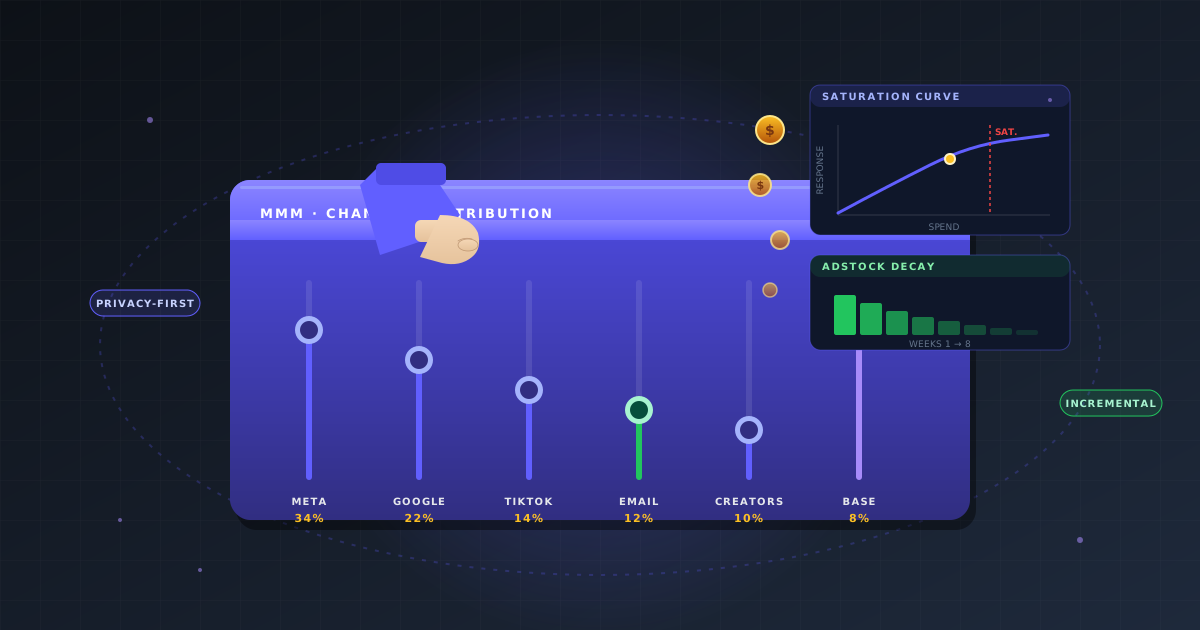
What Is Marketing Mix Modeling? A Guide for D2C Brands
Marketing mix modeling (MMM) uses regression analysis to show what percentage of revenue each channel drives — without cookies or platform data. Here is how D2C brands implement it.
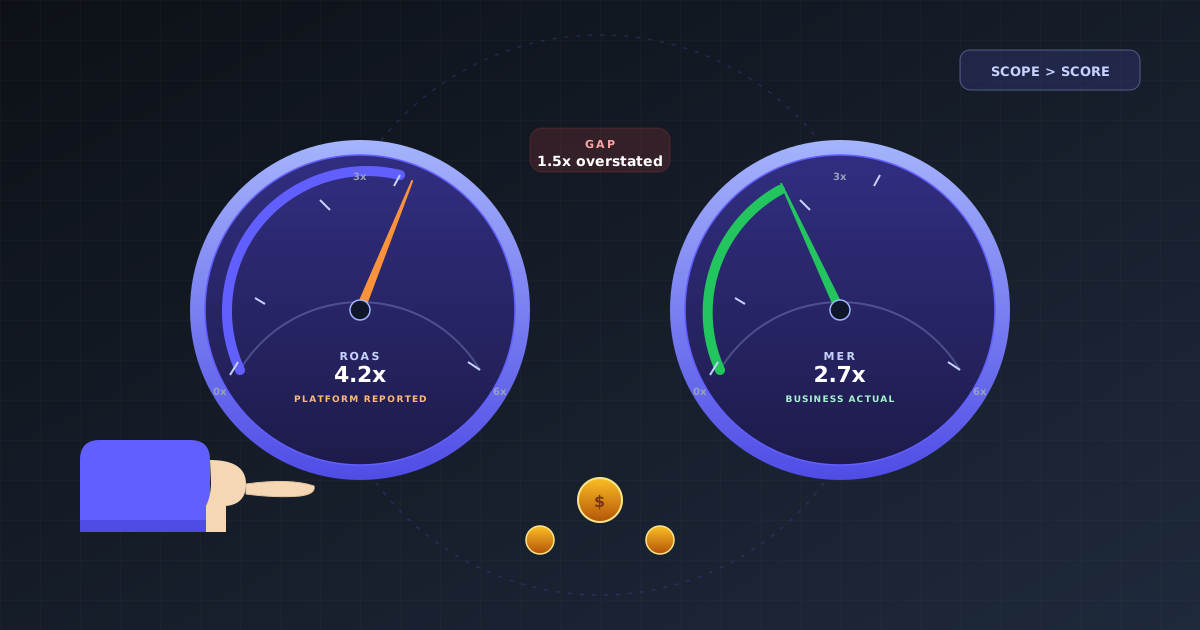
MER vs ROAS: Which Metric Should D2C Brands Use?
MER measures total marketing efficiency. ROAS measures channel performance. D2C brands need both — but for different decisions. Here is when to use each.
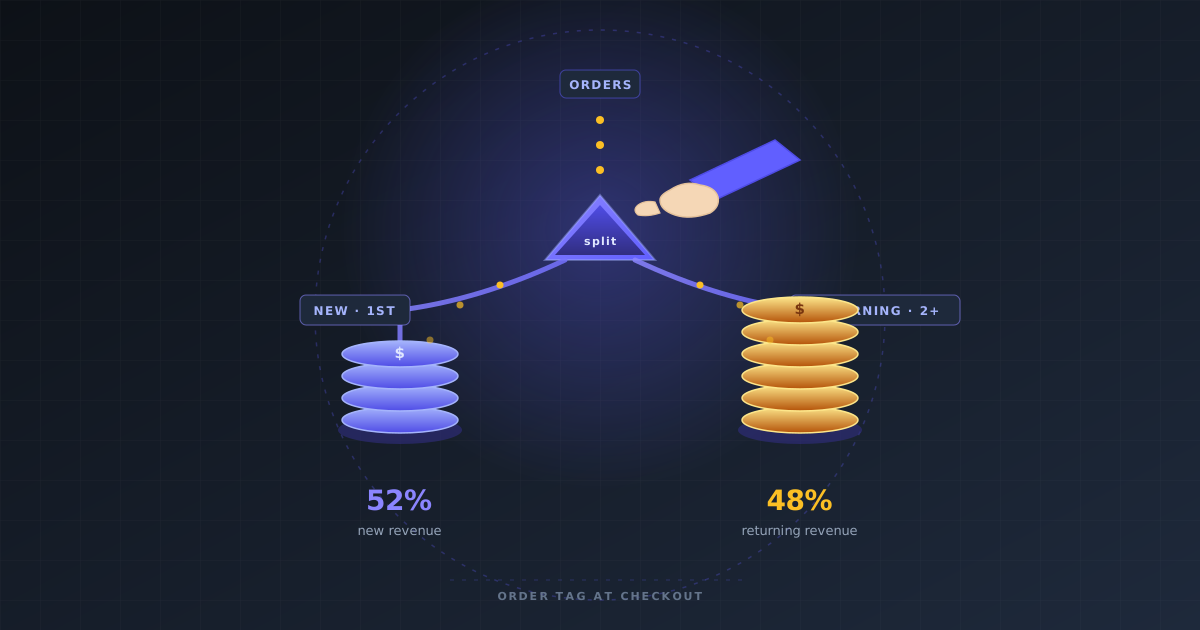
How to Track New vs Returning Customer Revenue
Track the new vs returning customer revenue split to diagnose retention vs acquisition balance. Benchmarks by brand stage, Shopify setup guide, and decision framework.
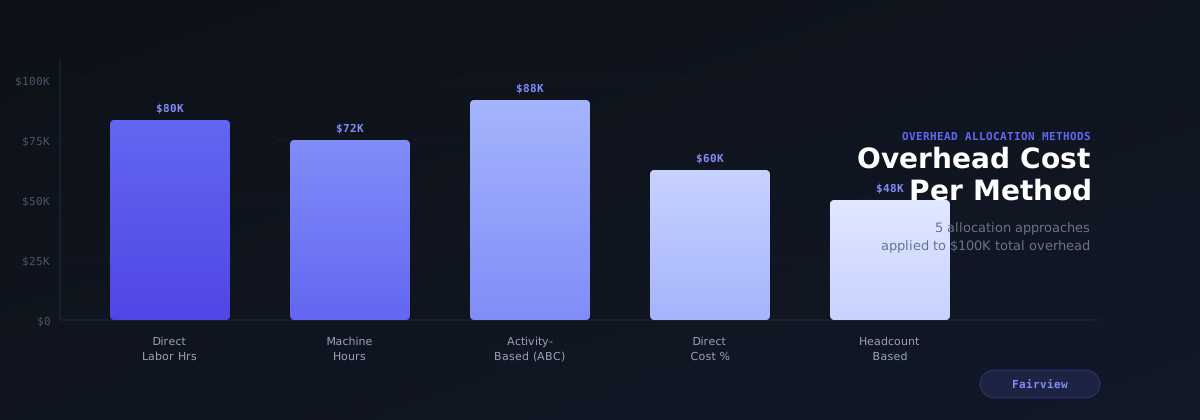
Overhead Allocation Methods: The Complete Guide for Operators
Overhead allocation methods distribute indirect costs — rent, utilities, supervision, shared services — across products, customers, and business units. The five core methods, worked examples, and how your choice affects pricing decisions and true profit visibility.
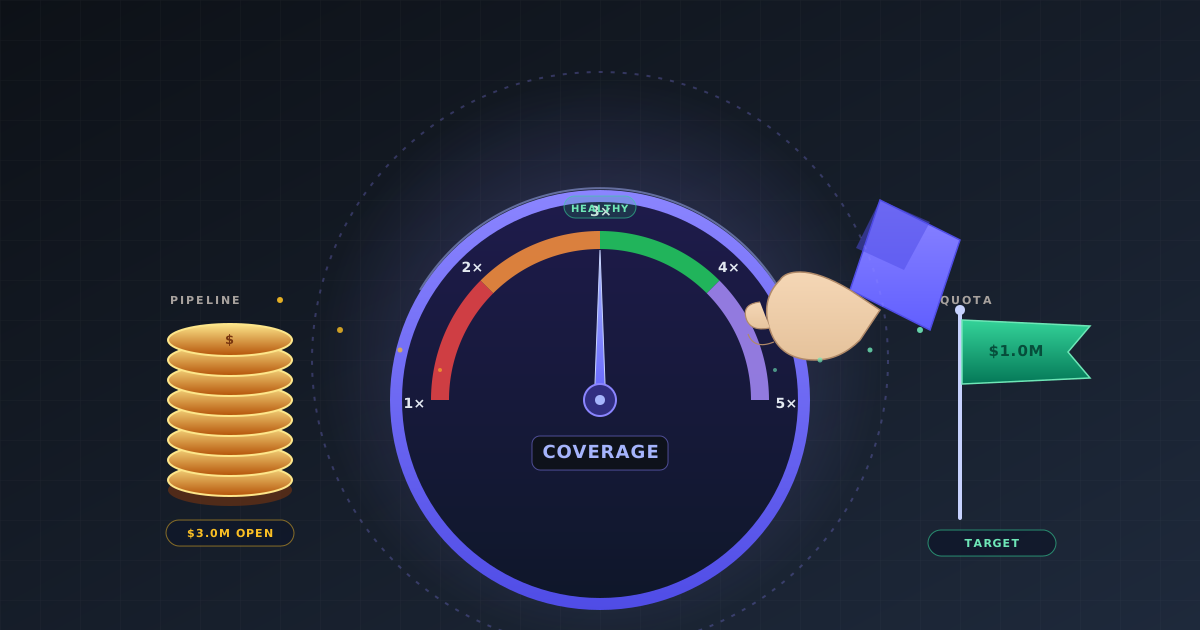
Pipeline Coverage Ratio: What It Is and What to Target
Pipeline coverage ratio measures if you have enough pipeline to hit your revenue target. The 3× standard depends on win rate. Here are the real benchmarks and how to calculate it.
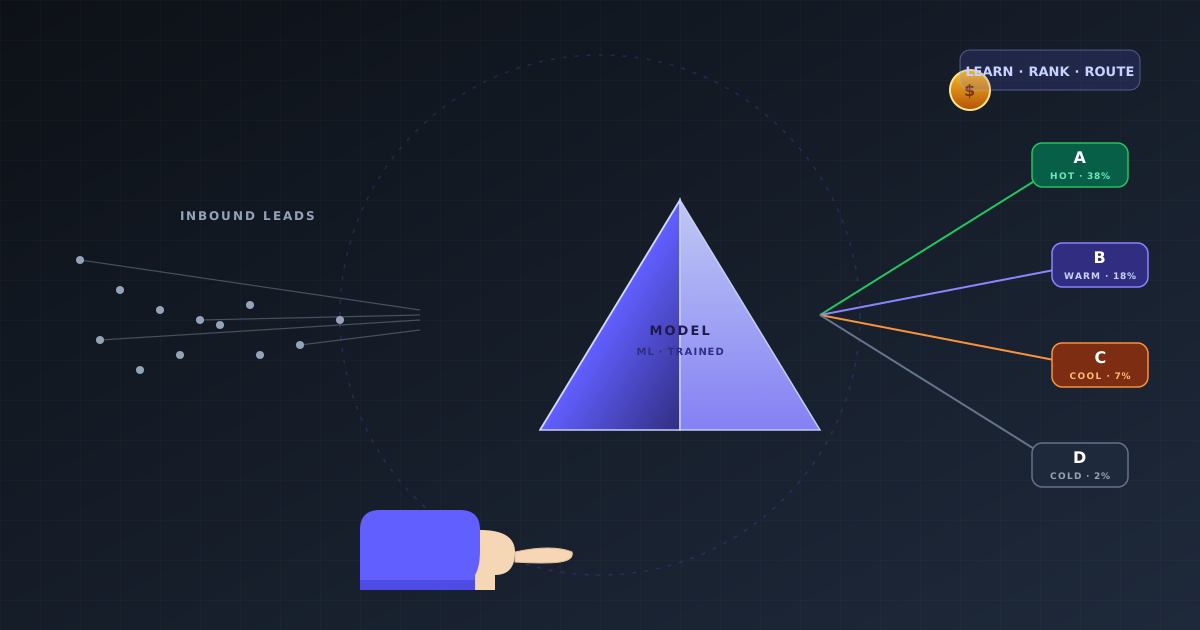
Predictive Lead Scoring: A Guide for RevOps Teams
Predictive lead scoring uses ML to rank leads by close probability. This guide covers how it works, the data inputs that matter, implementation steps, and ROI metrics for RevOps teams.
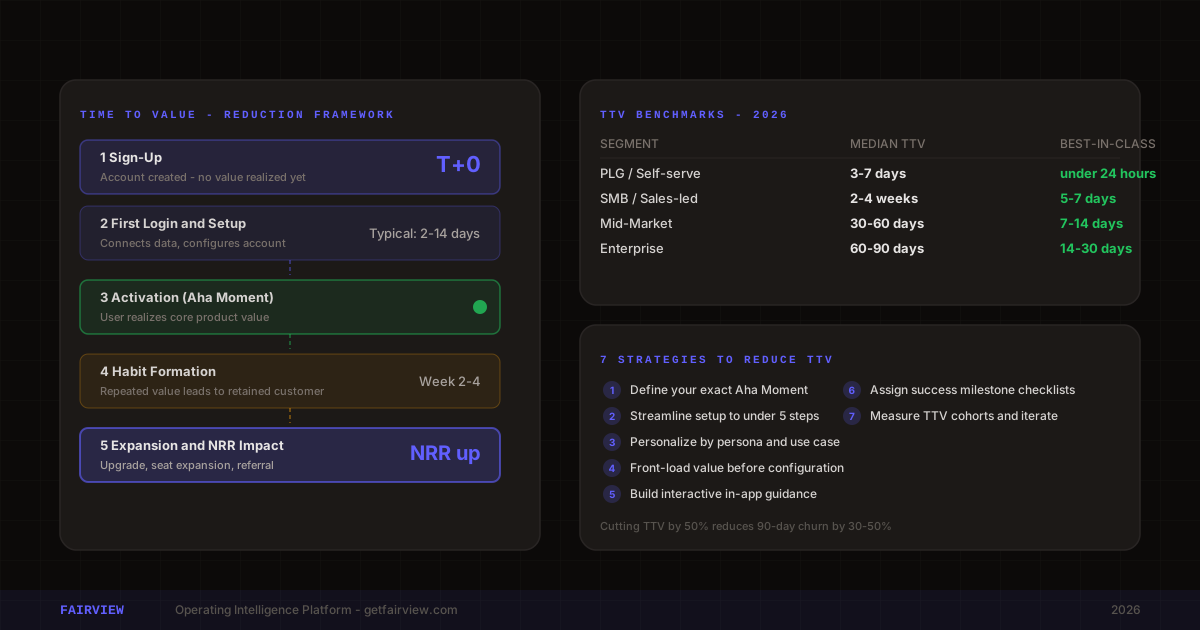
Time to Value in SaaS: How to Reduce It and Why It Matters
TTV is the elapsed time from sign-up to the first moment a customer achieves a meaningful outcome. Reduce it and 90-day churn drops 30–50%. Here are 7 strategies, 2026 benchmarks by segment, and the cohort analysis framework that makes improvement compound.
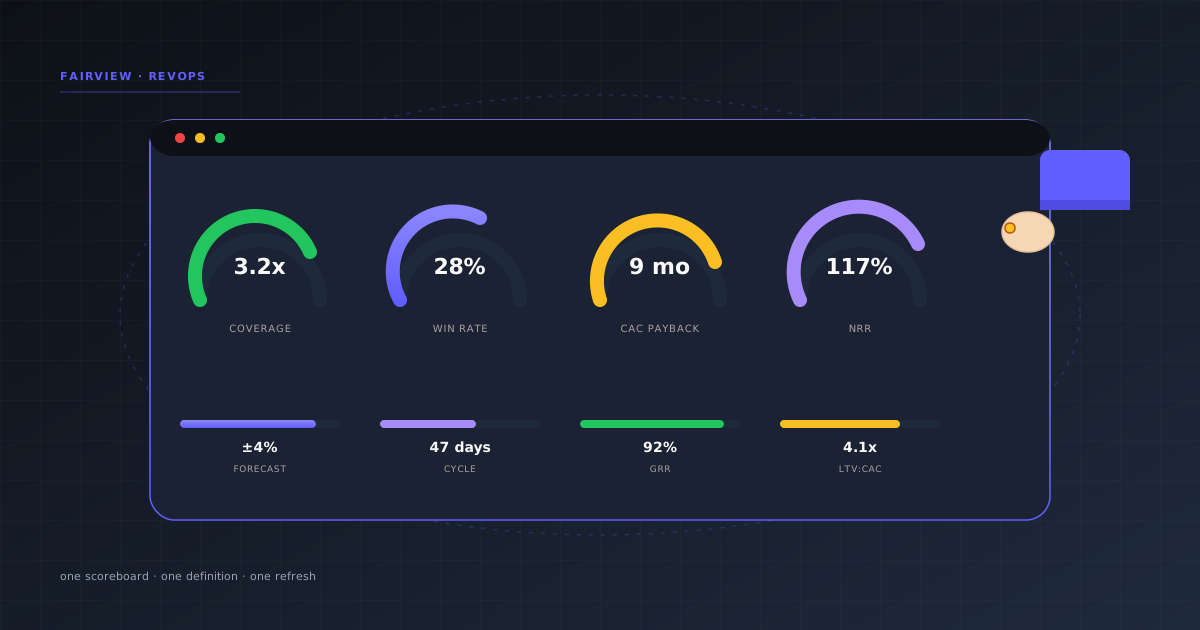
RevOps KPIs: The Metrics That Actually Matter
The 5 RevOps KPIs that drive real revenue decisions: pipeline velocity, win rate, CAC payback, NRR, and forecast accuracy. Cut the noise.
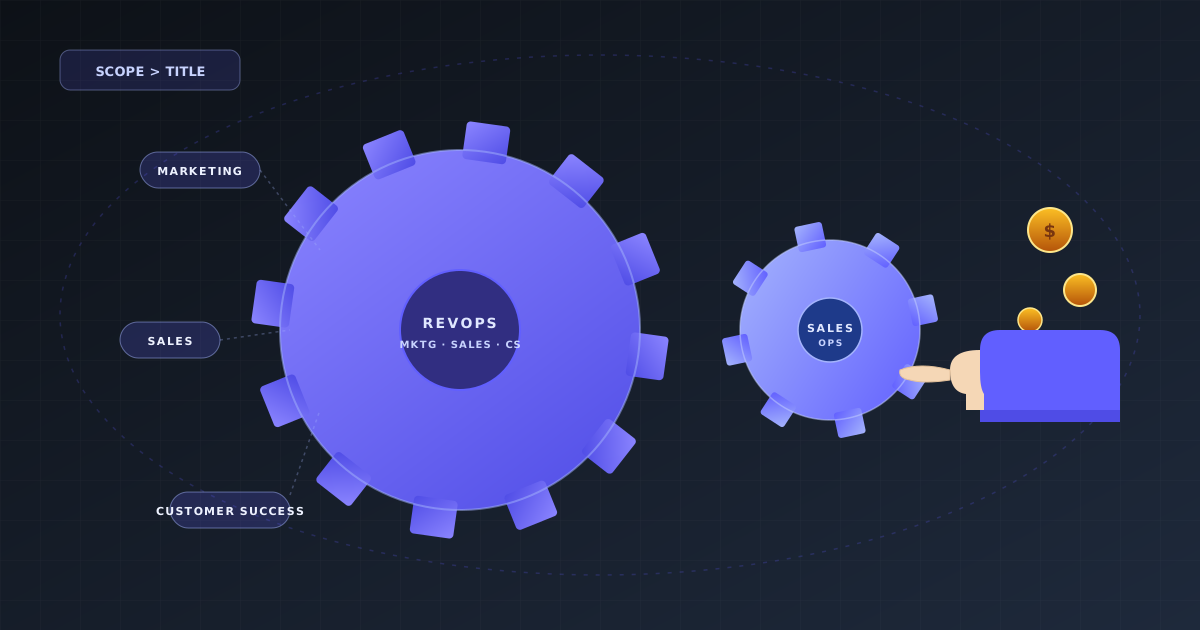
Revenue Operations vs Sales Operations: Key Differences
Sales Ops optimizes the sales team. RevOps aligns the full revenue cycle. Here are the 9 structural differences — and when each model is right for your company.
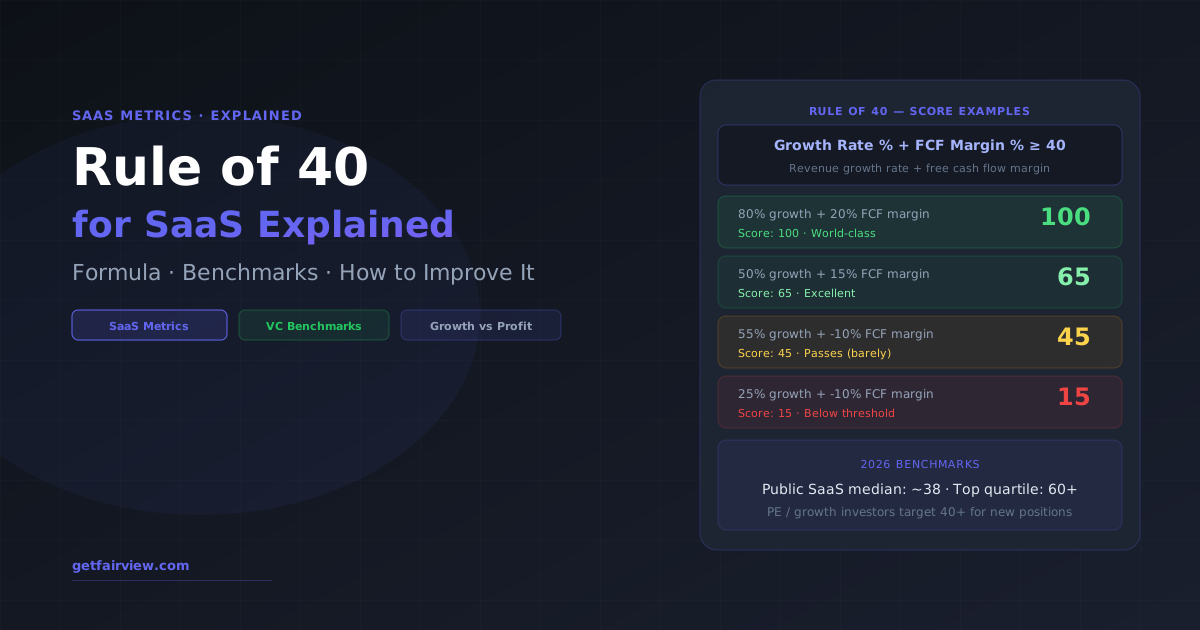
The Rule of 40 for SaaS: What It Means and How to Calculate It
The Rule of 40 is the most common SaaS health metric used by investors. Learn the formula, 2026 benchmarks, common calculation mistakes, and strategies to improve your score.
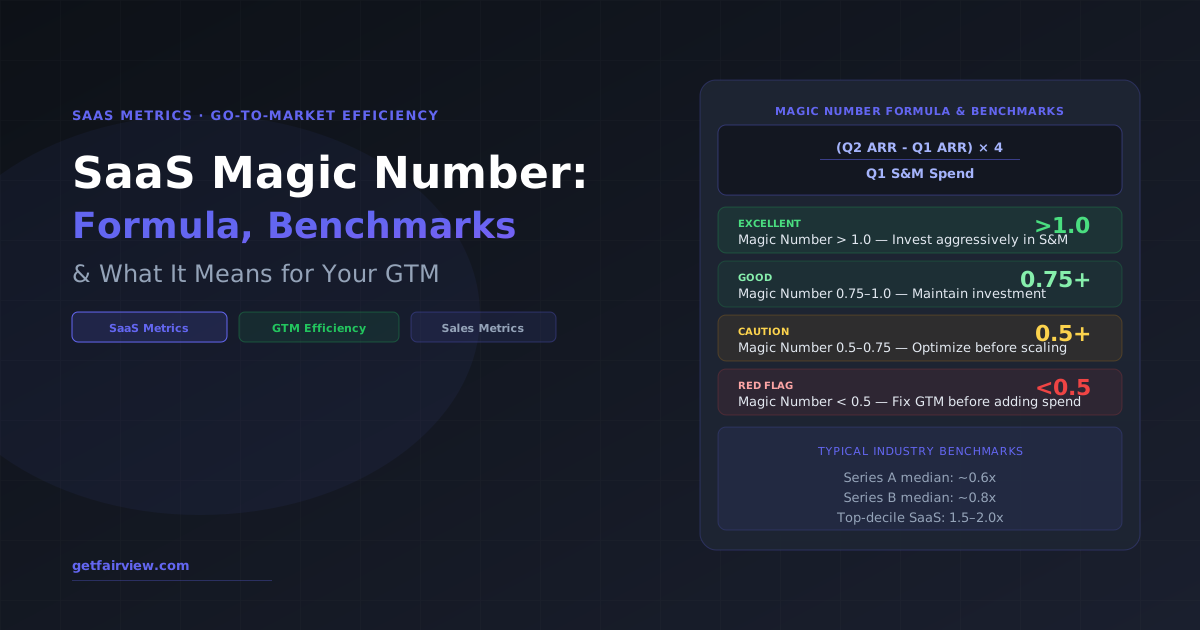
How to Calculate the SaaS Magic Number (Formula + Benchmarks)
The SaaS Magic Number measures how efficiently your sales and marketing spend generates new ARR. Learn the formula, 2026 benchmarks, and when to invest more vs. fix the engine first.
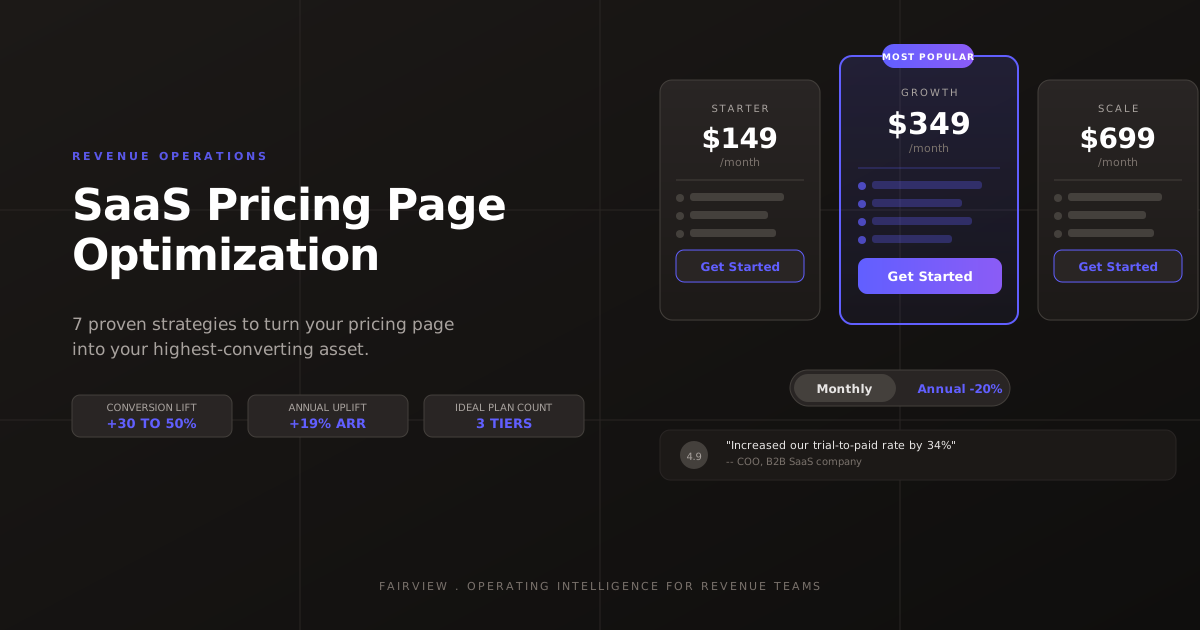
SaaS Pricing Page Optimization: 7 Proven Strategies That Convert
Seven strategies that turn your pricing page into your highest-converting asset — anchor pricing, value-first copy, annual billing toggle, 3-tier structure, social proof at the CTA, FAQ objection handling, and clear upgrade paths.
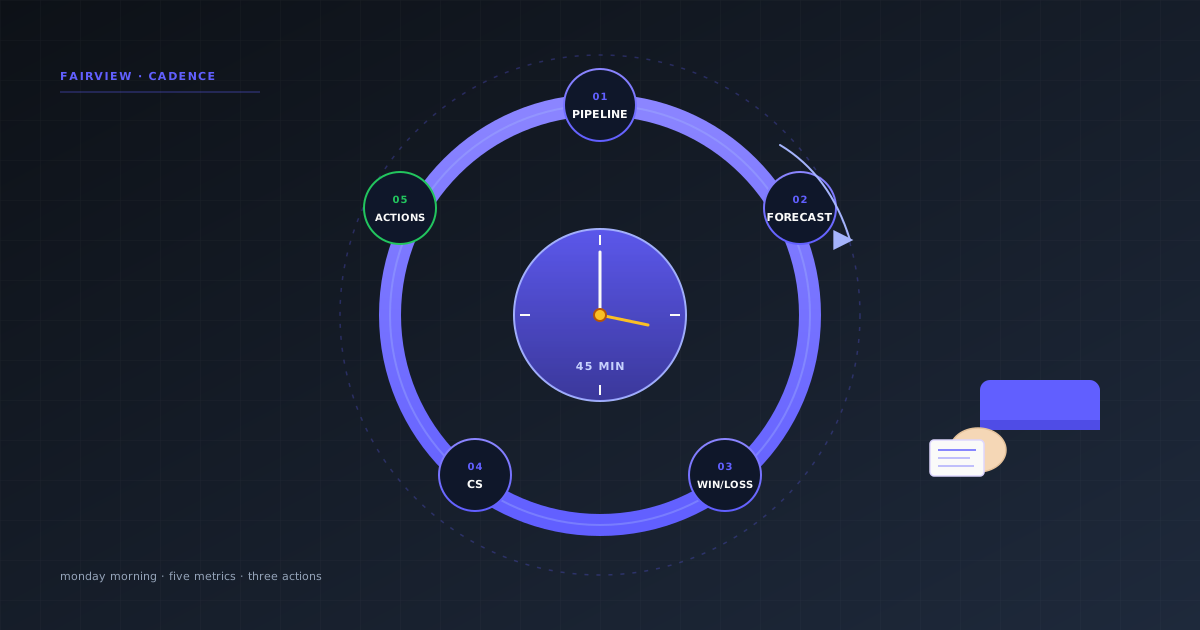
Weekly Revenue Review: Template, Agenda, and What to Track
A 60-minute weekly revenue review template with agenda, attendee list, pre-read format, and the exact metrics to cover. Built for operators.
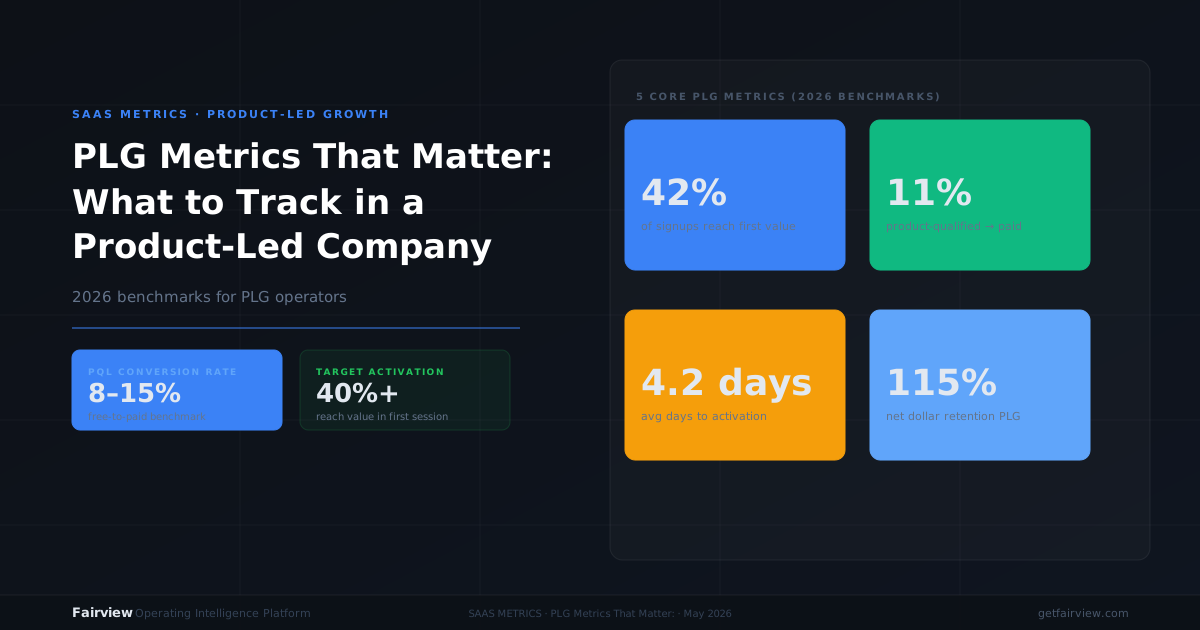
Product-Led Growth Metrics That Matter: A Framework for Operators
The product-led growth metrics that separate growing SaaS companies from stalled ones: activation rate, PQL conversion, NDR, CAC payback, and the framework operators use to track them weekly.
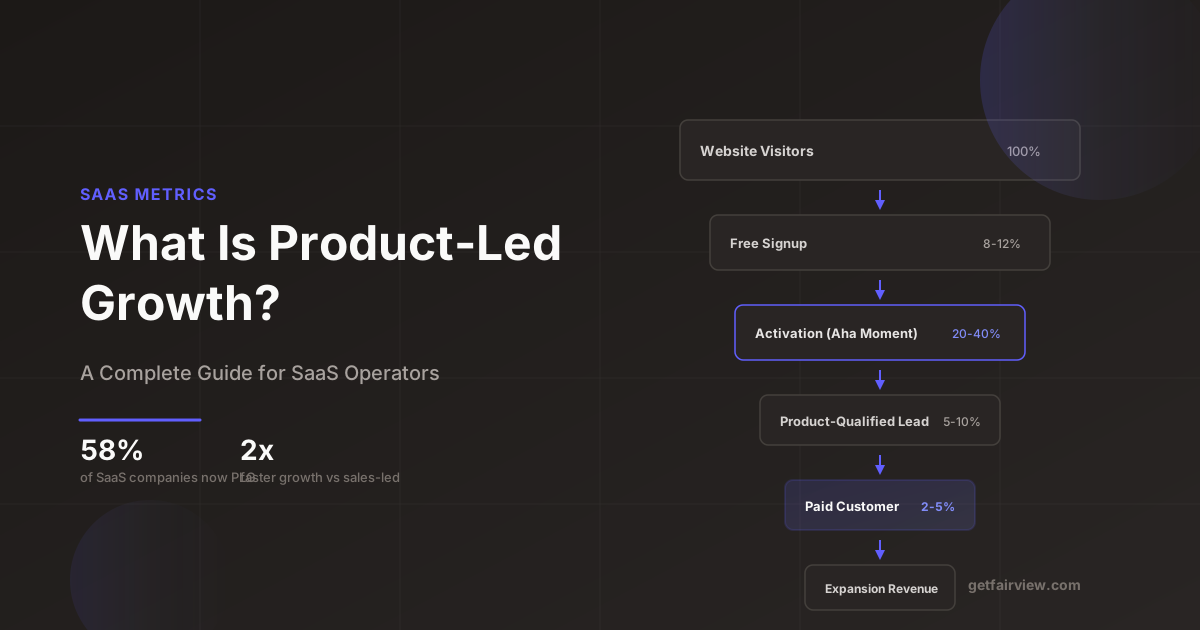
What Is Product-Led Growth? A Complete Guide for SaaS Operators
Product-led growth defined: what PLG is, how it differs from sales-led growth, the metrics that matter, and how SaaS operators build a product-led motion that converts.
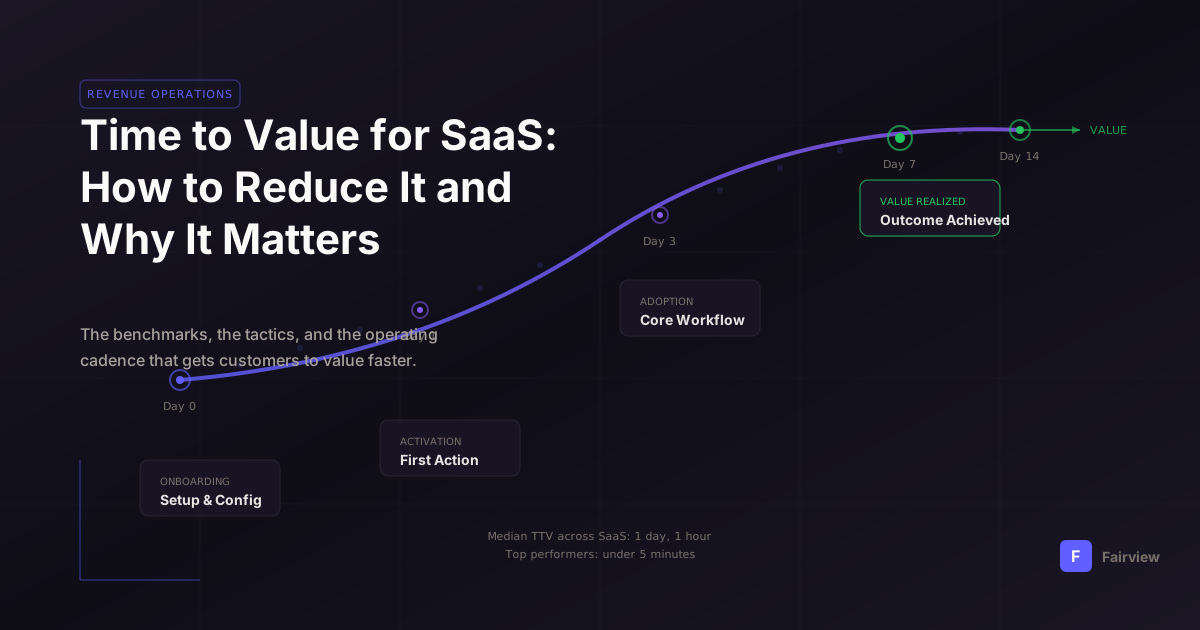
Time to Value for SaaS: How to Reduce It and Why It Matters
Reduce SaaS time to value with proven tactics: onboarding redesign, activation metrics, and the operating cadence that gets customers to first value faster. With 2026 benchmarks.
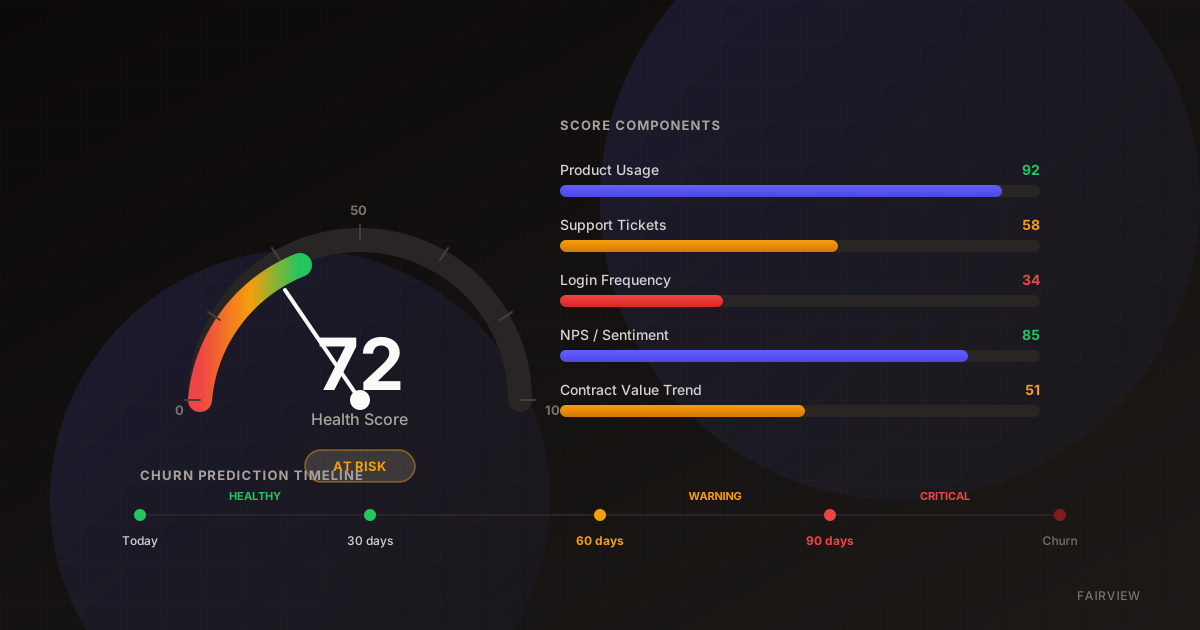
Customer Health Score: How to Build One That Actually Predicts Churn
Build a customer health score that predicts churn 60 to 90 days in advance. Covers signal selection, weighting, scoring models, validation, and the common mistakes that make 73% of health scores useless.
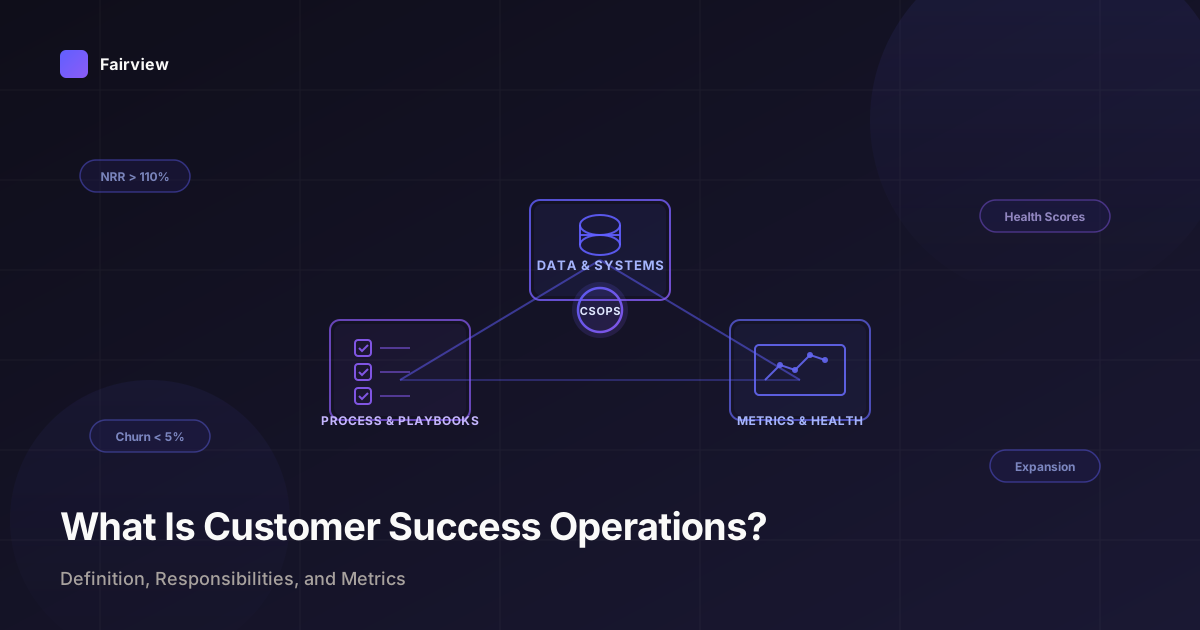
What Is Customer Success Operations? Definition, Responsibilities, and Metrics
Customer success operations defined: what CSOps does, the six core responsibilities, the metrics that prove the function is working, and how it fits inside a modern RevOps org.
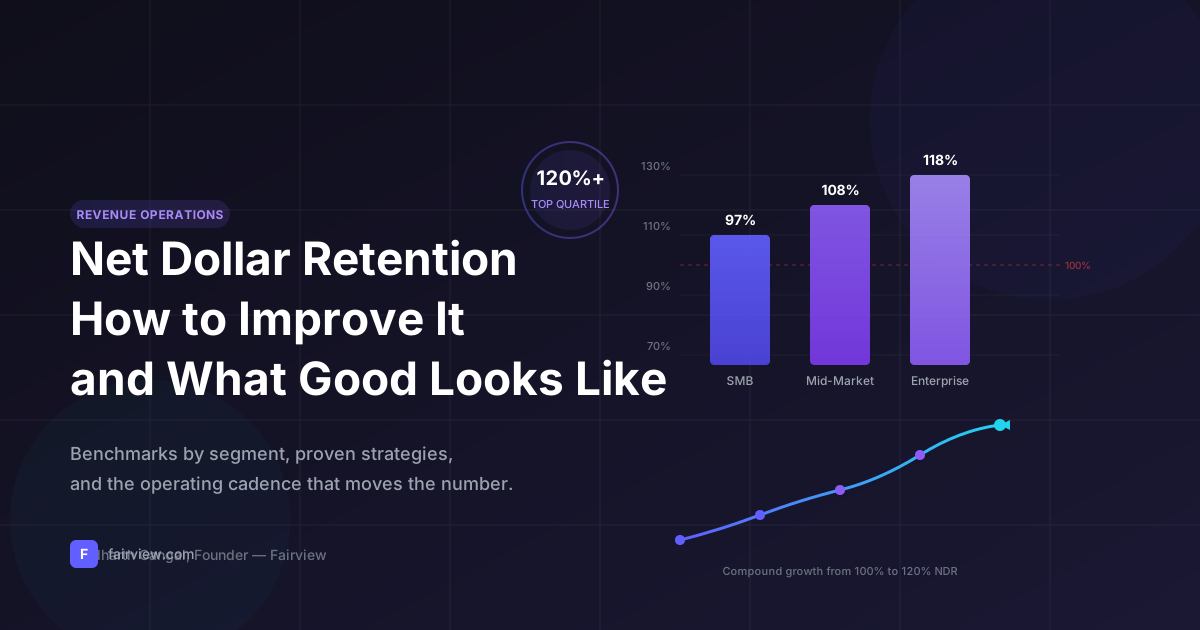
Net Dollar Retention: How to Improve It and What Good Looks Like
Net dollar retention benchmarks by company size and segment, the exact formula, proven strategies to improve NDR, and the operating cadence that moves the number.
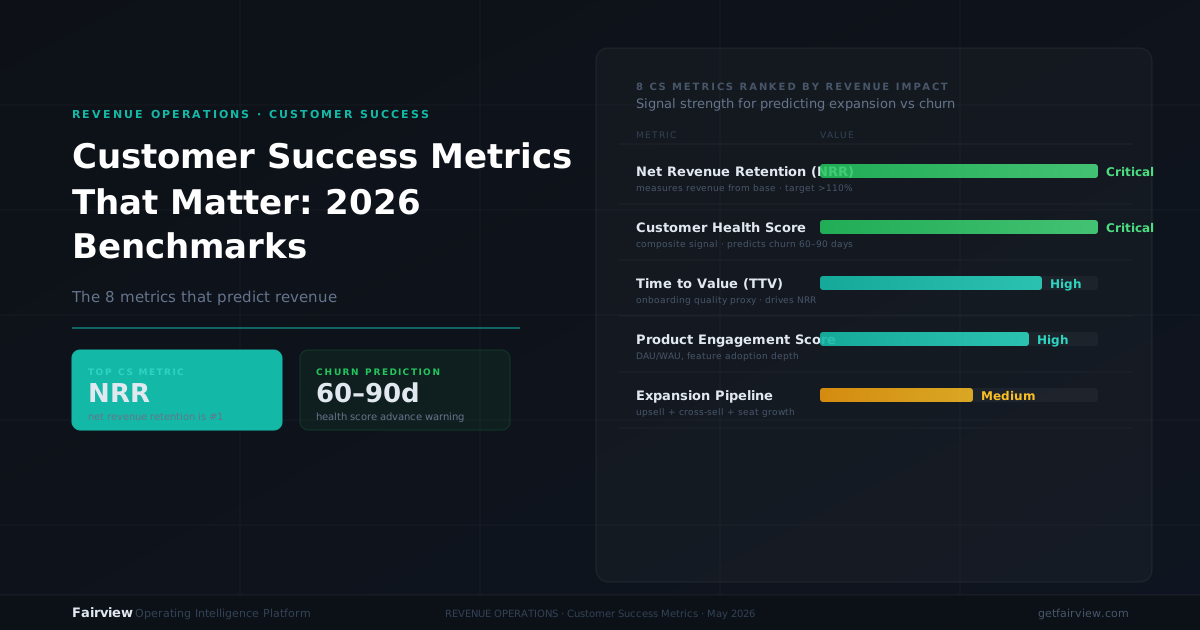
Customer Success Metrics That Actually Predict Revenue
The eight customer success metrics that predict revenue: NRR, GRR, health score, time-to-value, and more. With 2026 benchmarks, formulas, and the specific actions to take when each metric drifts.
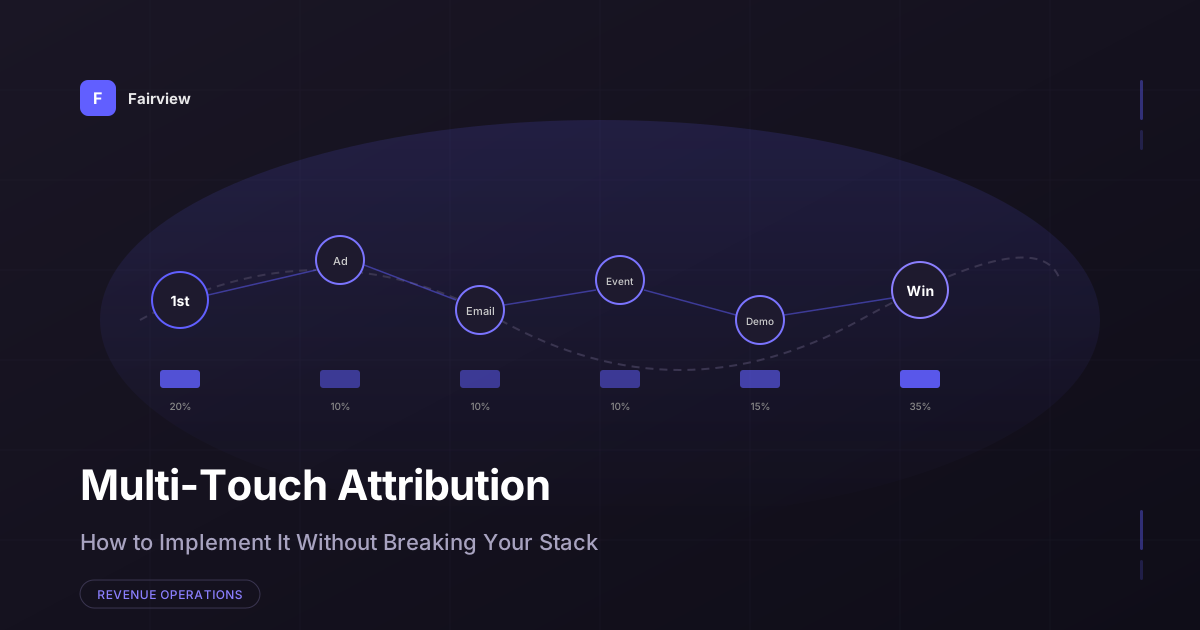
Multi-Touch Attribution: How to Implement It Without Breaking Your Stack
A practical guide to implementing multi-touch attribution without disrupting your CRM, ad platforms, or reporting stack. Covers data requirements, identity resolution, model selection, and a 12-week rollout plan.
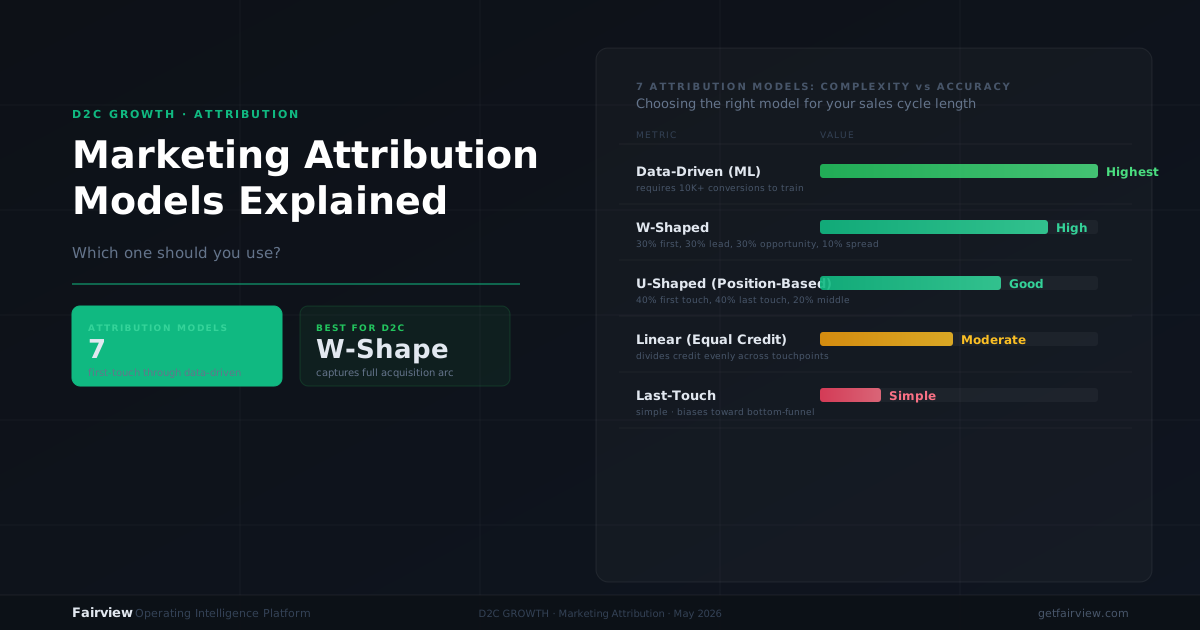
Marketing Attribution Models Explained: First-Touch, Last-Touch, Multi-Touch, and Data-Driven
Marketing attribution models explained: how first-touch, last-touch, linear, time-decay, U-shaped, W-shaped, and data-driven attribution work, when to use each, and how to choose the right model for your business.

Marketing Ops vs RevOps: Key Differences and How They Work Together
Marketing Ops vs RevOps: scope, metrics, reporting lines, and the exact company stage where each function makes sense. A practical framework for operators building the revenue engine.
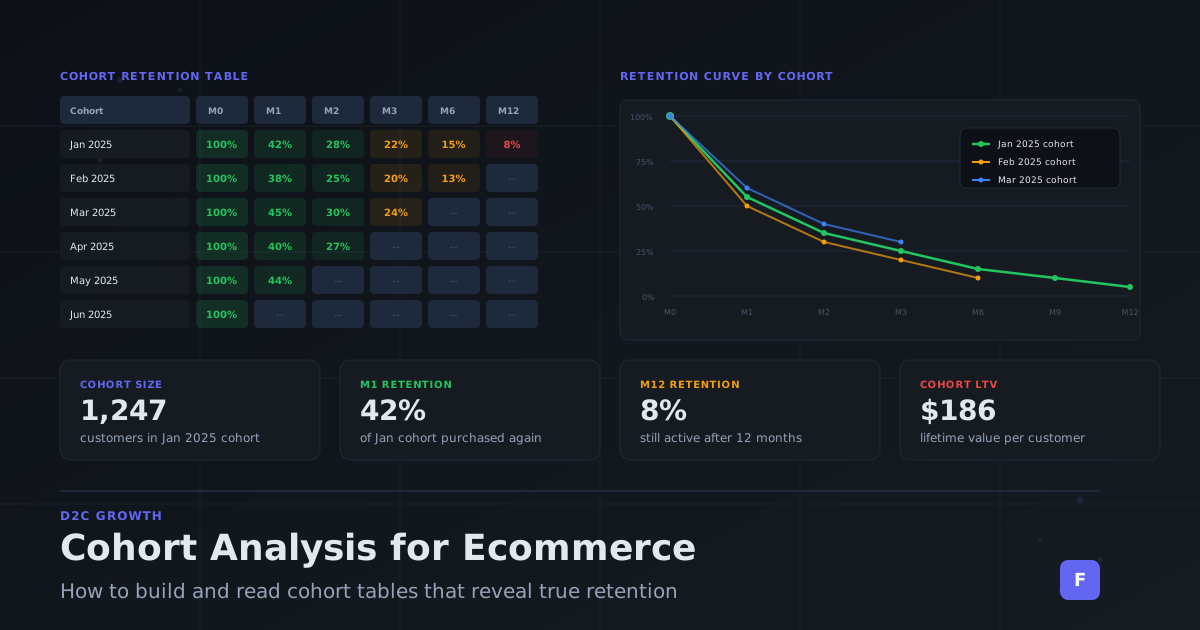
Cohort Analysis for Ecommerce: How to Build and Read Cohort Tables
Build and read ecommerce cohort analysis tables step by step. Learn the exact data requirements, retention formulas, benchmark curves by vertical, and the five mistakes that break cohort tables.
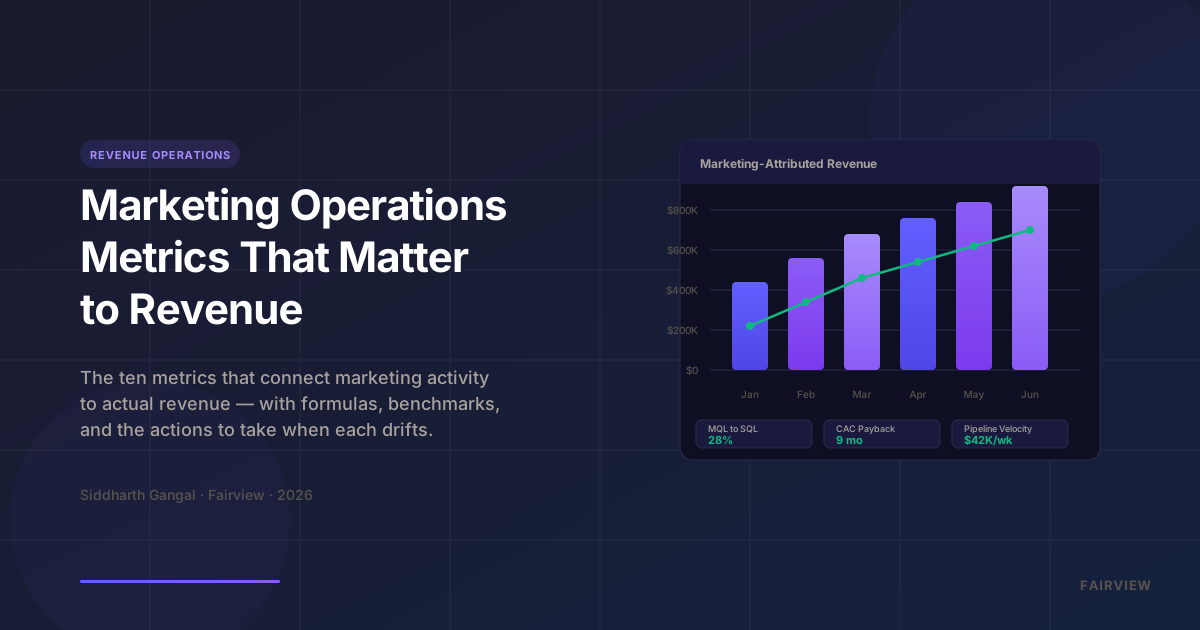
Marketing Operations Metrics That Actually Matter to Revenue
The ten marketing operations metrics that connect marketing activity to actual revenue: formulas, 2026 benchmarks, and the specific actions to take when each metric drifts.
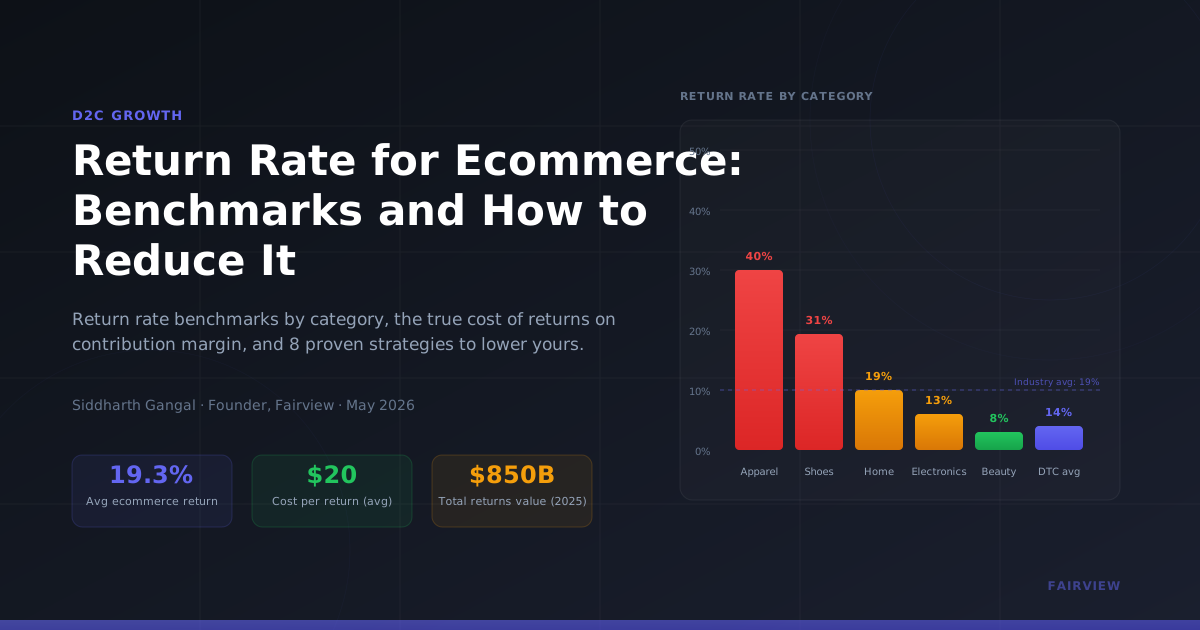
Return Rate for Ecommerce: Benchmarks and How to Reduce It
Return rate benchmarks by category, the true cost on contribution margin, and 8 proven strategies D2C operators use to reduce returns without damaging growth.
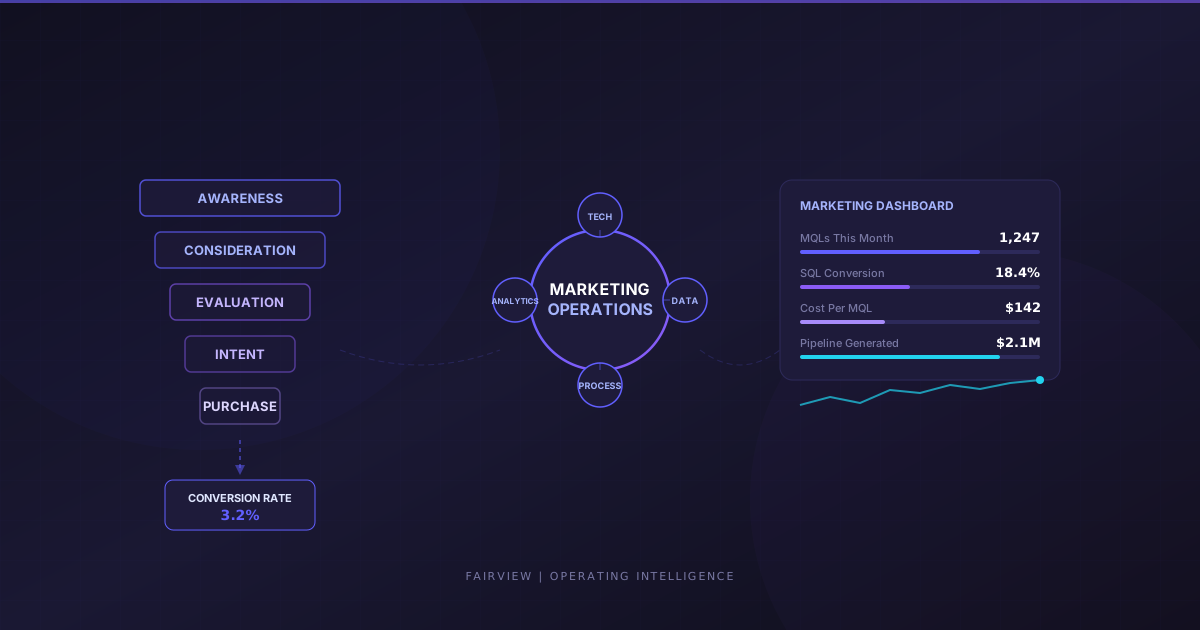
What Is Marketing Operations? Definition, Responsibilities, and Metrics
Marketing operations defined: what MOps does, the seven core responsibilities, the metrics that prove the function is working, and how it fits inside a modern RevOps org.
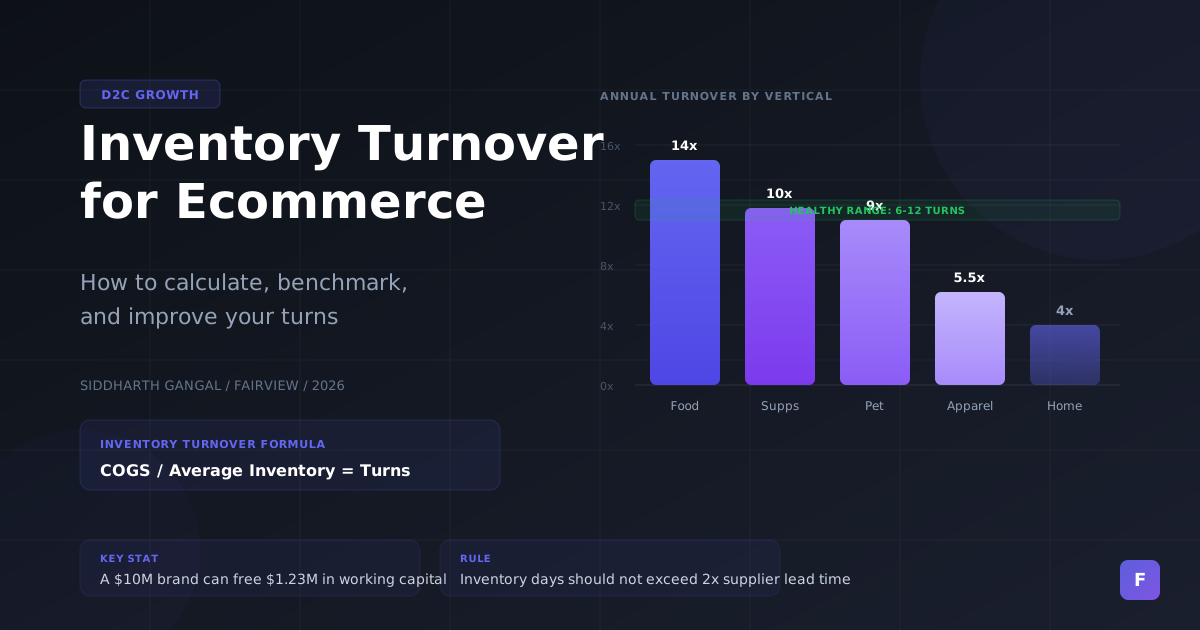
Inventory Turnover for Ecommerce: How to Calculate and Improve It
The exact formula, 2026 benchmarks by vertical, what good looks like at each revenue stage, and seven proven ways to improve your turns without running out of stock.

Marketing Mix Modeling for DTC: A Guide for Operators Without a Data Science Team
How DTC operators run marketing mix modeling without hiring data scientists: self-service tools, the 6-step workflow, data requirements, validation methods, and connecting MMM to contribution margin.
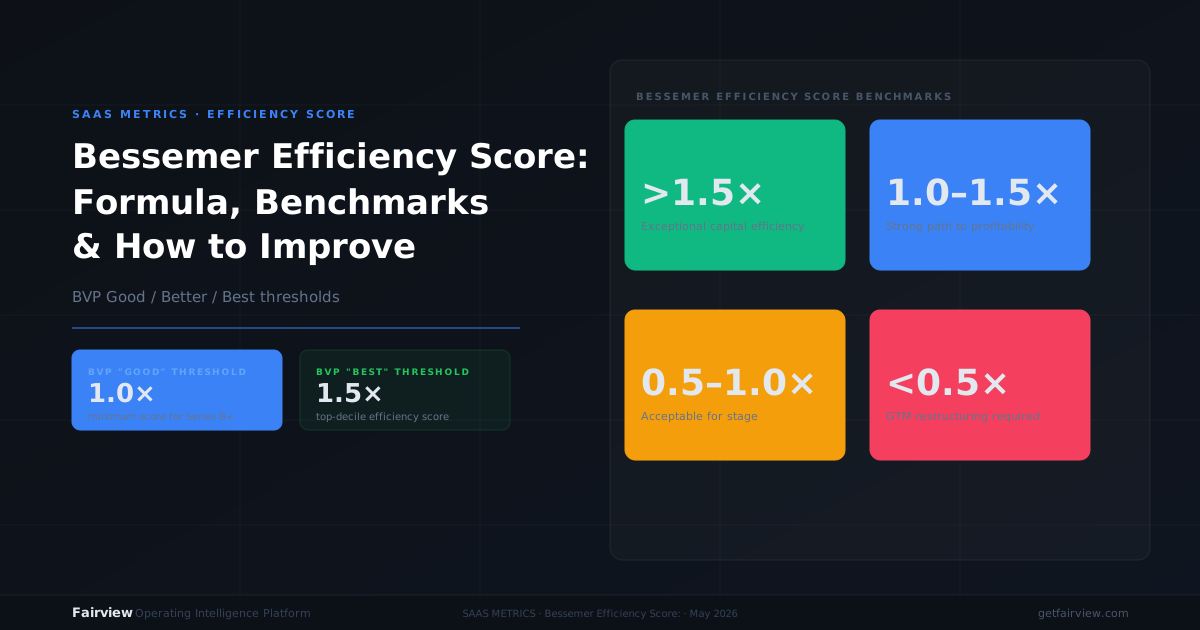
Bessemer Efficiency Score: What It Means and How to Calculate It
Bessemer Efficiency Score explained: the exact formula, BVP Good/Better/Best benchmarks by stage, how it differs from burn multiple, and five ways to improve yours.
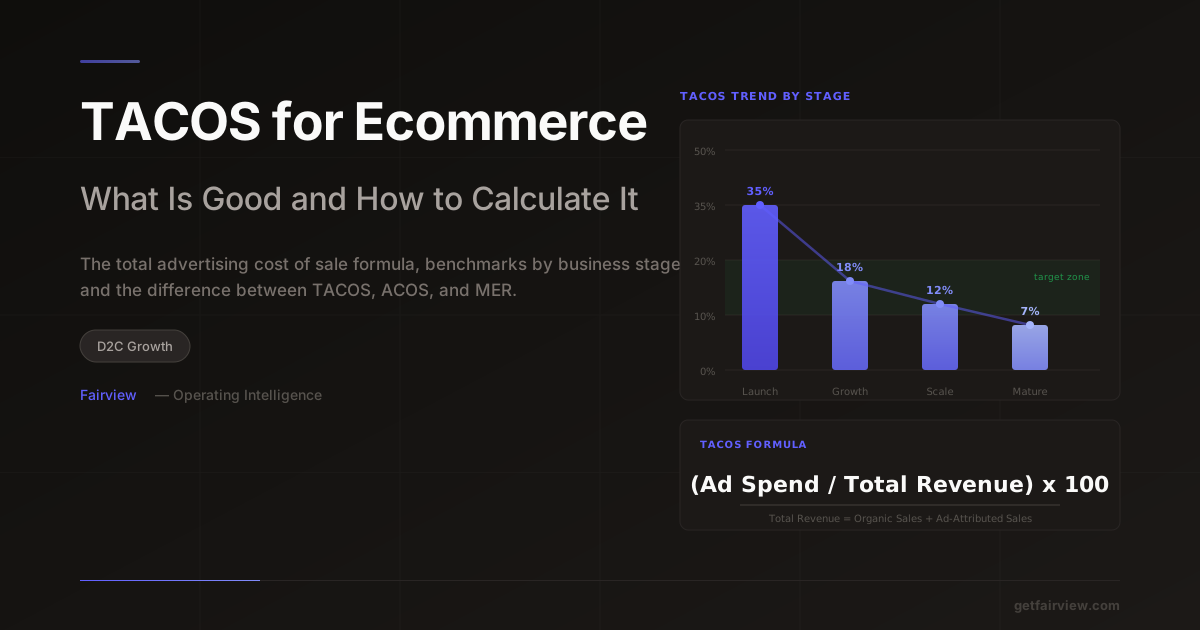
TACOS for Ecommerce: What Is Good and How to Calculate It
TACOS for ecommerce explained: the exact formula, what counts as good by business stage, how it differs from ACOS and MER, and how to use it to guide ad investment decisions.
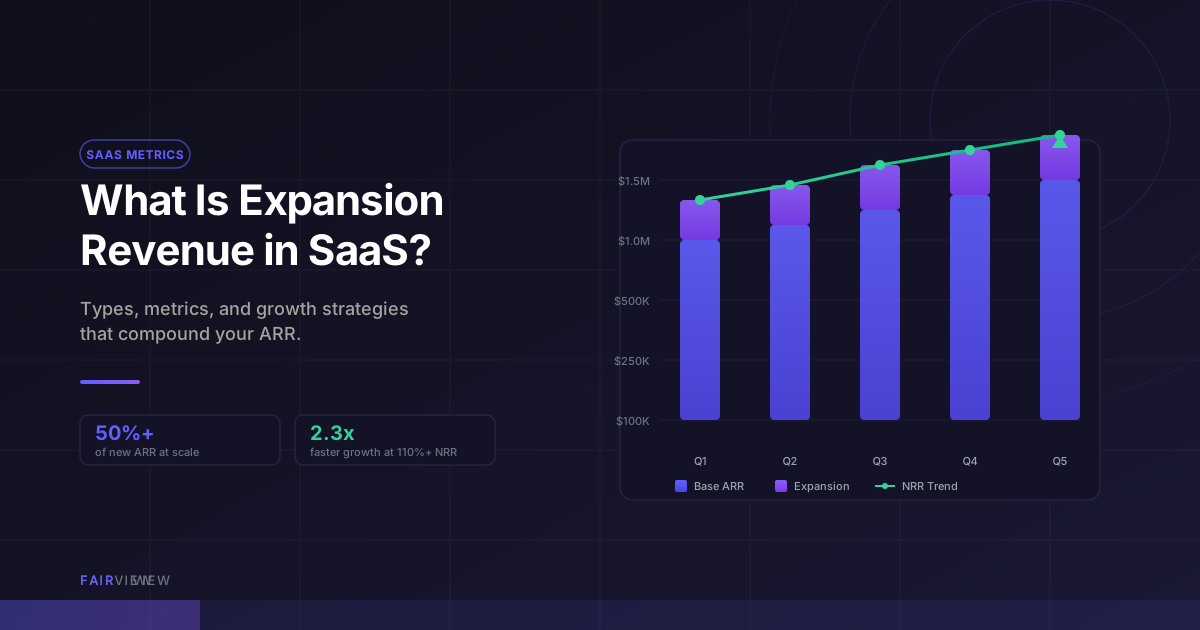
What Is Expansion Revenue in SaaS? Types, Metrics, and Growth Strategies
Expansion revenue in SaaS: the four types, how to calculate expansion rate, benchmarks by company stage, and growth strategies that compound ARR without adding headcount.
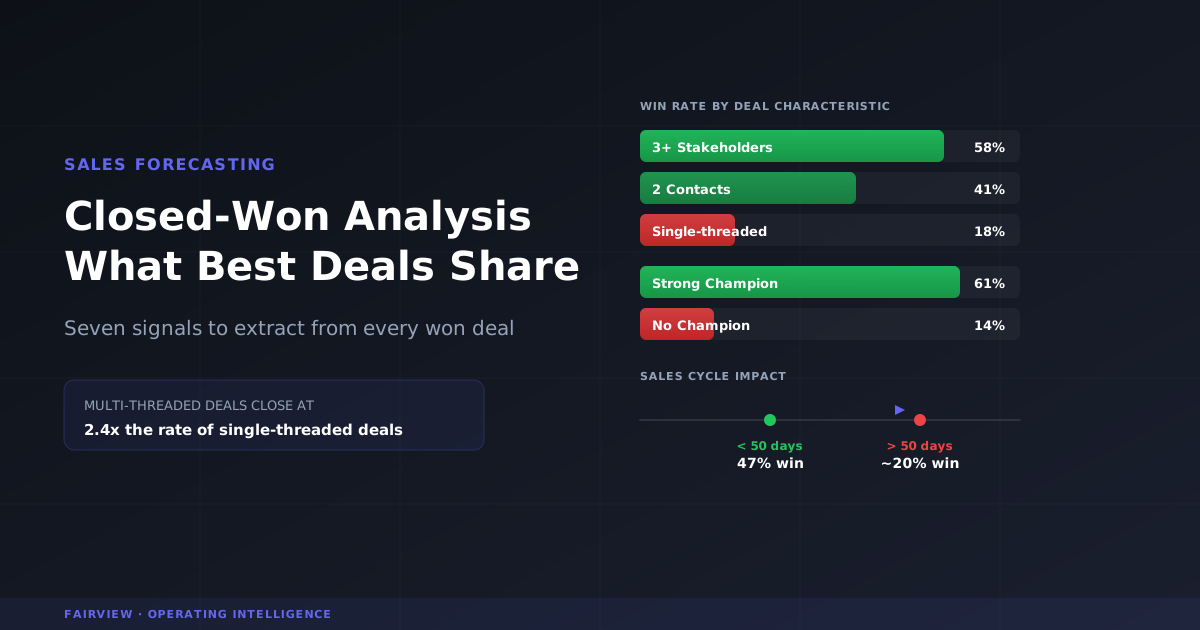
Closed-Won Analysis: What Your Best Deals Have in Common
Seven signals to extract from every closed-won deal: multi-threading, champion behavior, velocity patterns, lead source, pricing dynamics, and the quarterly cadence that turns analysis into pipeline.
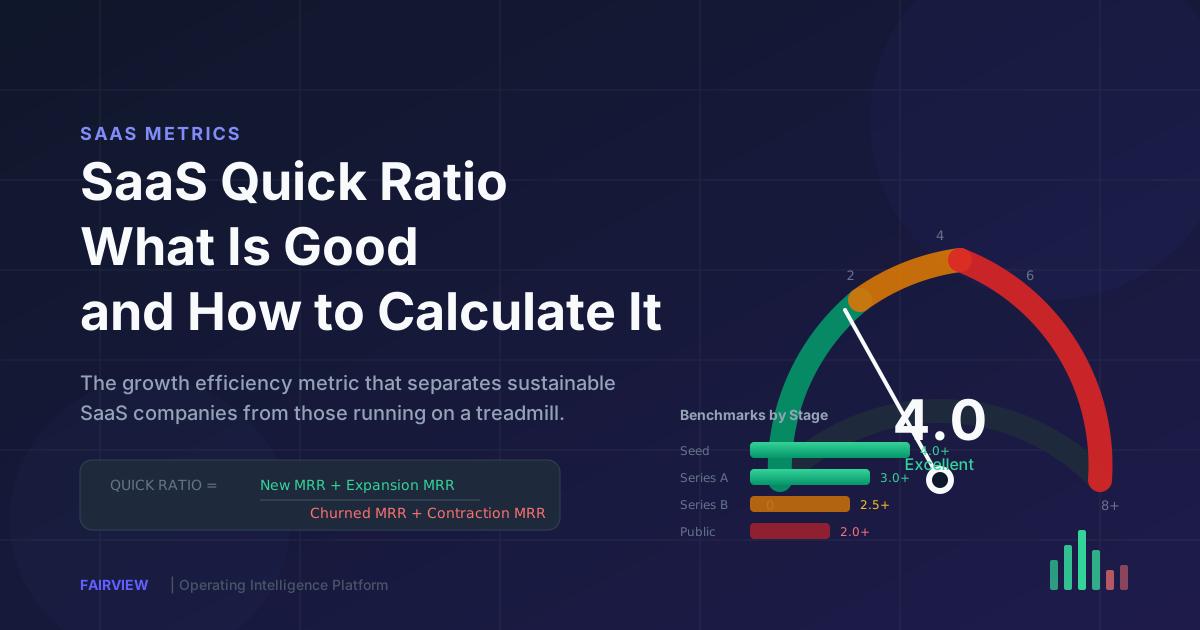
SaaS Quick Ratio: What Is Good and How to Calculate It
SaaS quick ratio explained: the exact formula, what counts as good by company stage, how it differs from net revenue retention, and five ways to improve yours.
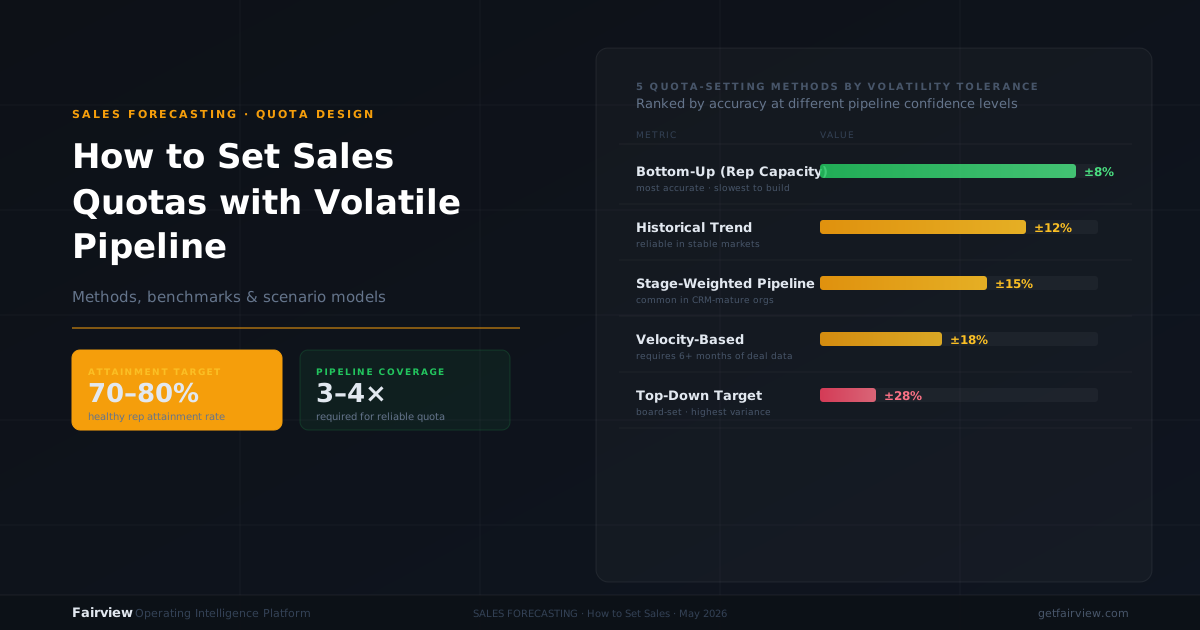
How to Set Sales Quotas When Your Pipeline Is Unpredictable
A complete method for building quota from rep capacity, discounting for variance, segmenting by motion, and stress-testing against pipeline coverage before you commit.
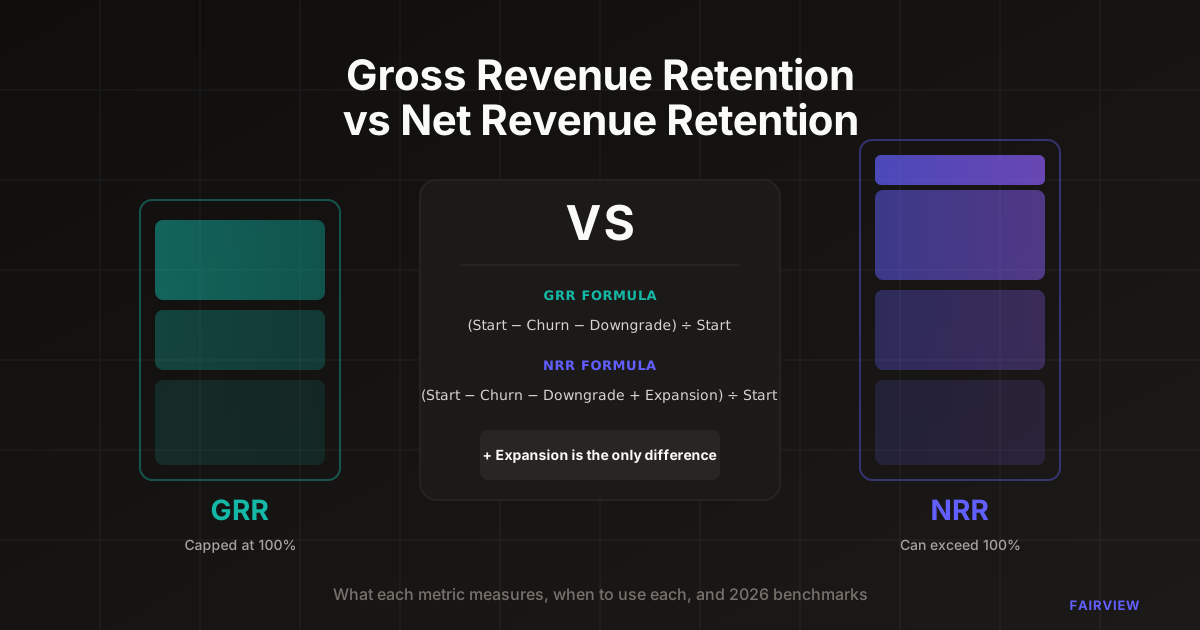
Gross Revenue Retention vs Net Revenue Retention: What Is the Difference?
Gross revenue retention vs net revenue retention: the formulas, what each metric tells you, 2026 benchmarks by segment, and when to use each to diagnose your SaaS business.
What Is Net Revenue Retention? Definition, Formula, and Benchmarks
Net revenue retention defined: the exact formula, how it differs from gross retention, benchmarks by company stage and customer segment, and what your NRR signals about business health.
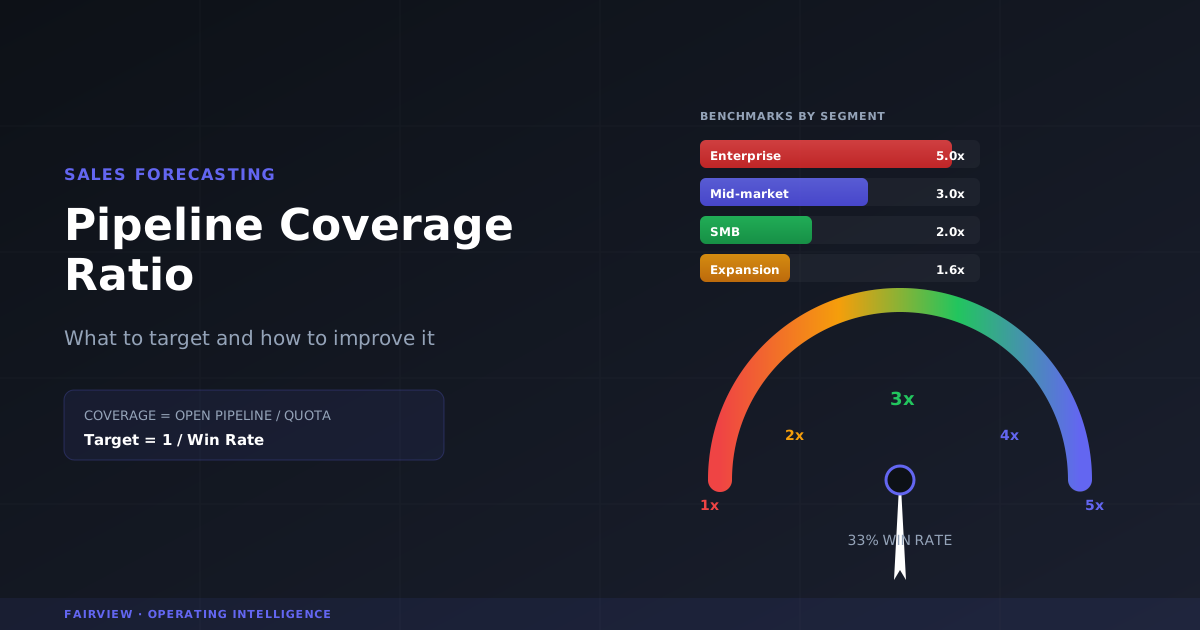
Pipeline Coverage Ratio: What to Target and How to Improve It
Pipeline coverage ratio explained: the formula, benchmarks by win rate and segment, what to target in 2026, and five proven ways to improve coverage without adding headcount.
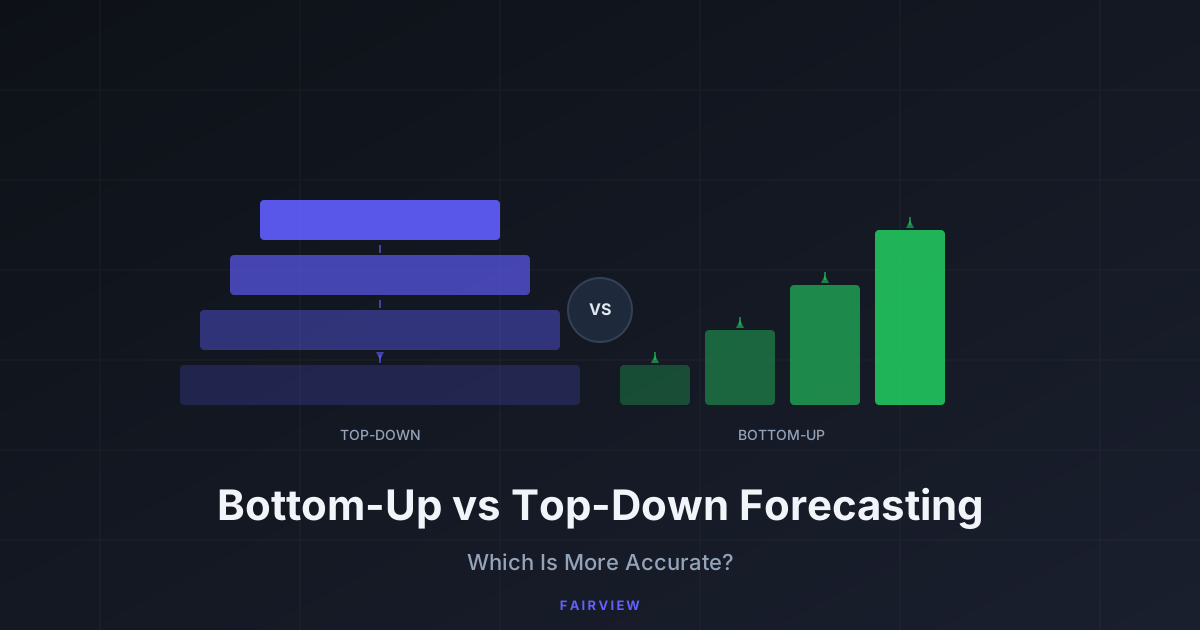
Bottom-Up vs Top-Down Forecasting: Which Is More Accurate?
Bottom-up vs top-down forecasting compared in depth: how each method works, where each breaks, accuracy benchmarks by company stage, and the blended approach operators use to land within 5% of quarterly commit.
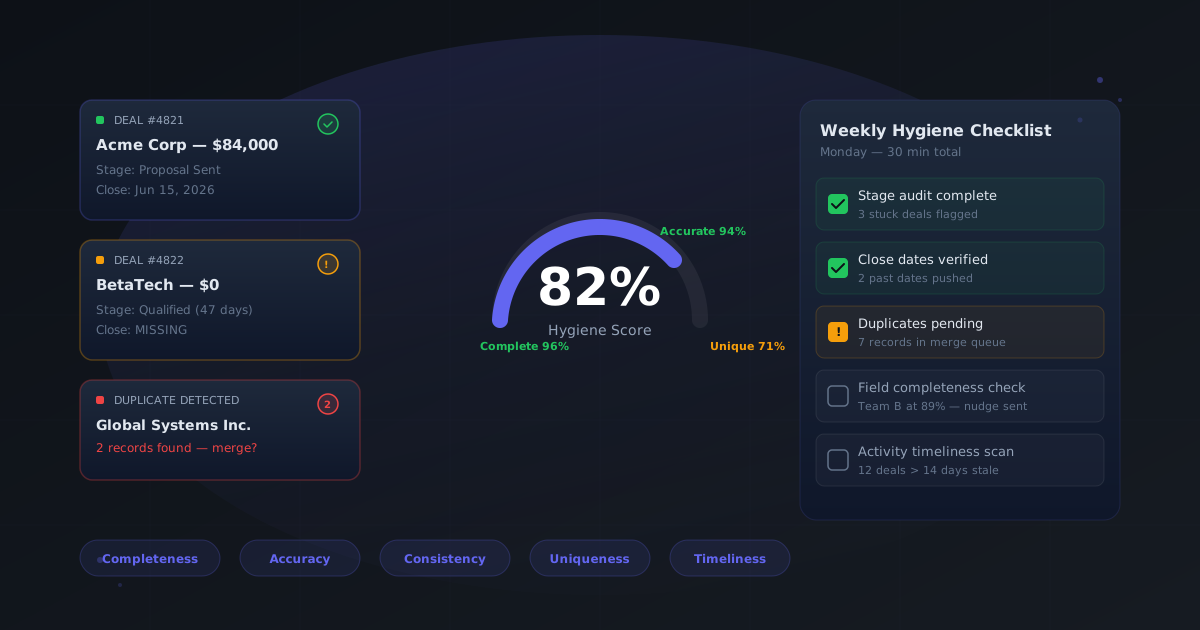
CRM Hygiene: How to Keep Pipeline Data Accurate and Actionable
The five dimensions of clean pipeline data, the field standards that prevent dirt at the source, and a 30-minute weekly cadence that keeps forecasts honest.
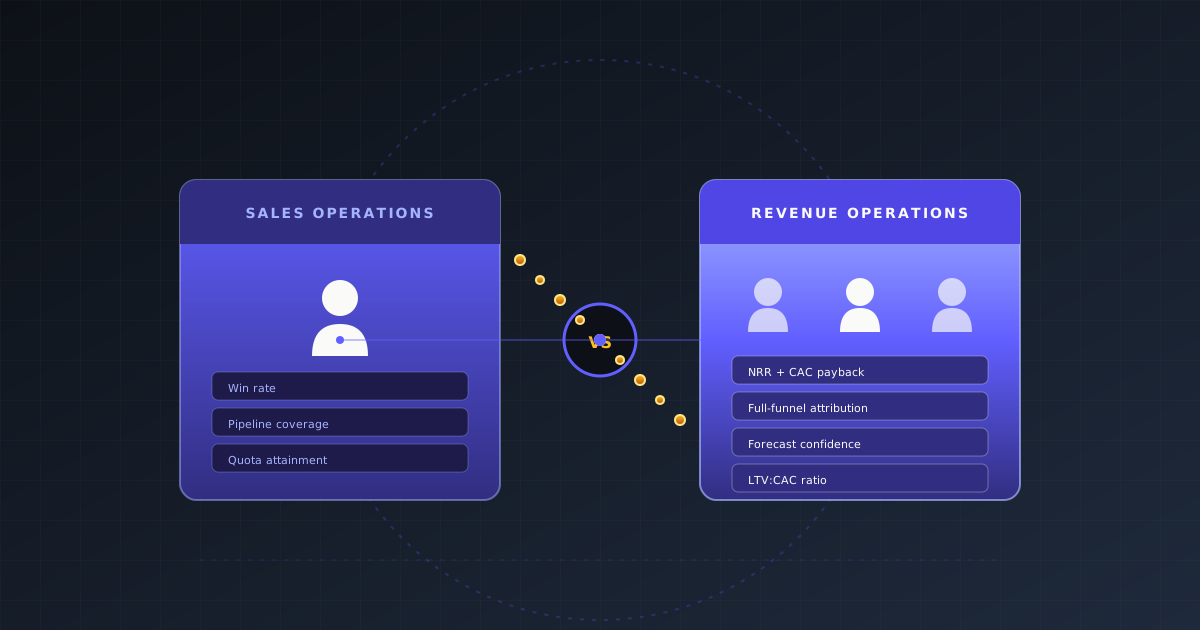
RevOps vs Sales Operations: Key Differences and Why the Distinction Matters
RevOps vs Sales Operations: scope, metrics, ownership, and the exact company stage where each function makes sense. A practical decision framework for operators.
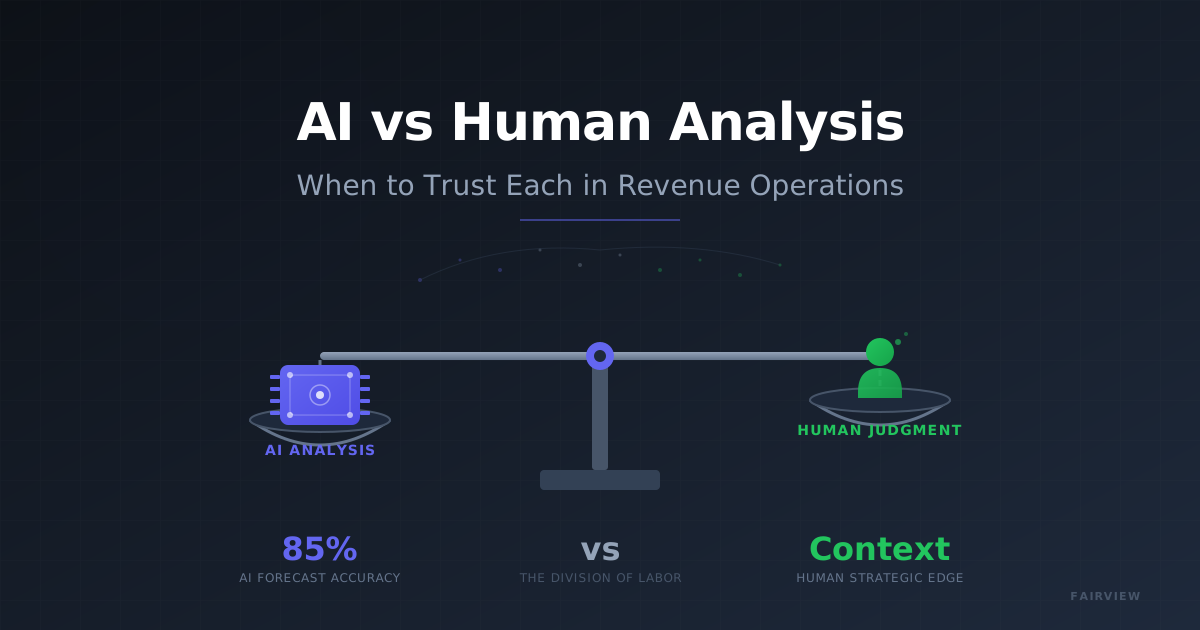
AI vs Human Analysis in Revenue Operations: When to Trust Each
A practical framework for when AI beats human analysis in revenue operations, when humans win, and the four-step hand-off workflow that combines both without losing accountability.
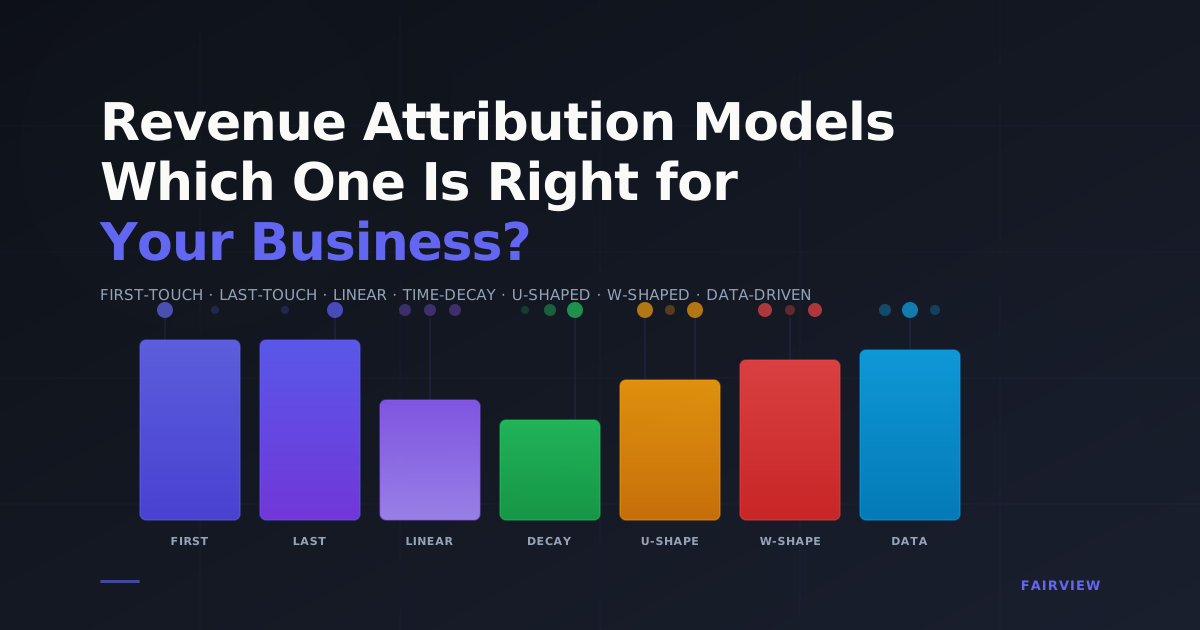
Revenue Attribution Models: Which One Is Right for Your Business?
Seven revenue attribution models compared — first-touch, last-touch, linear, time-decay, U-shaped, W-shaped, and data-driven — with a decision matrix by sales cycle, conversion volume, and business model.
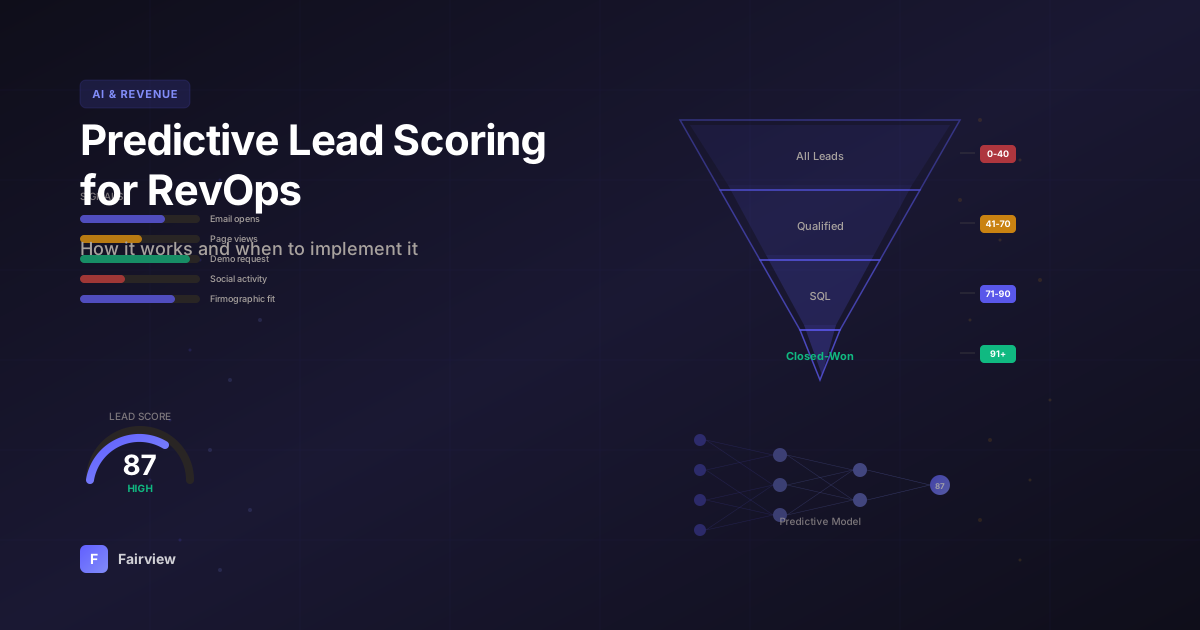
Predictive Lead Scoring for RevOps: How It Works and When to Implement It
Predictive lead scoring for RevOps: how the models work, what data they need, implementation steps, and the signals that tell you when your team is ready.
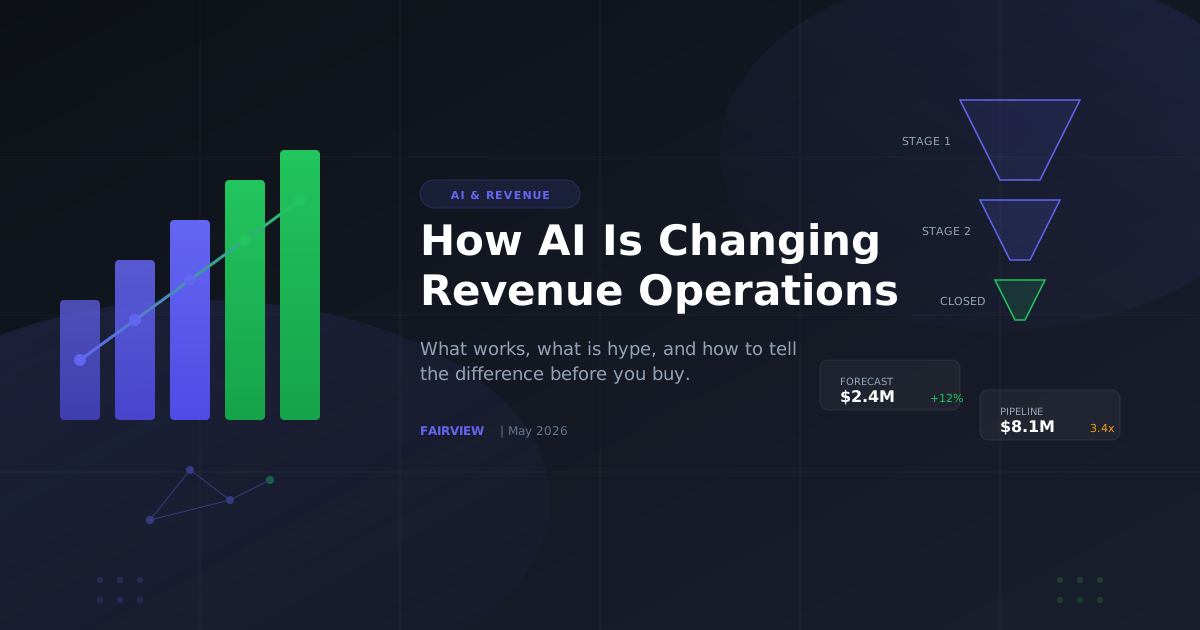
How AI Is Changing Revenue Operations: What Works and What Is Hype
AI is changing revenue operations in 2026. Six capabilities are now production-grade. Three myths still mislead buyers. Here is how to tell what works from what is hype.
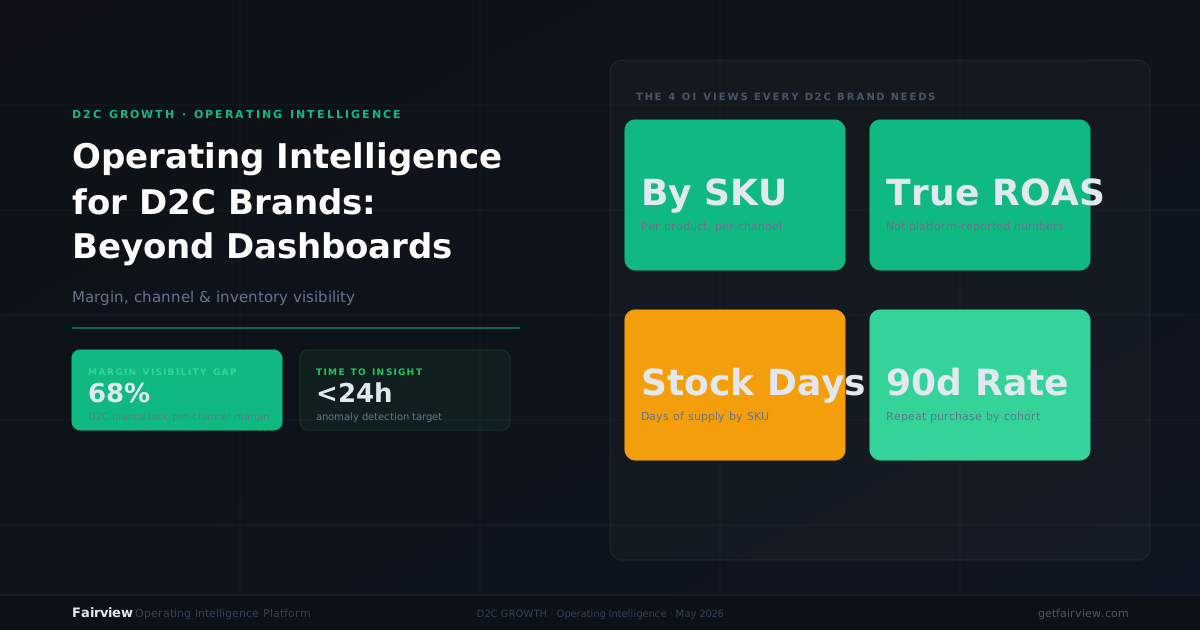
Operating Intelligence for DTC Brands: Margin, Channel, and Inventory Visibility
How DTC brands use operating intelligence to see true margin by channel, manage inventory across platforms, and build a weekly cadence that catches problems in 7 days.
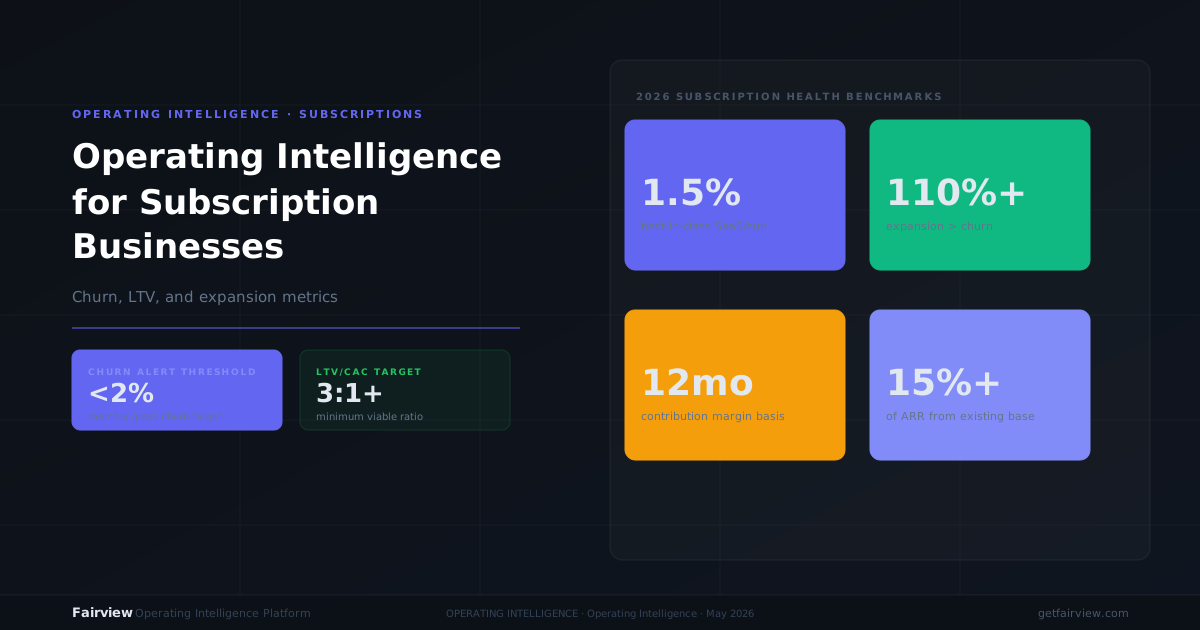
Operating Intelligence for Subscription Businesses: Churn, LTV, and Growth Metrics
Operating intelligence for subscription businesses: how to track churn, LTV, and growth metrics that separate sustainable models from the rest. With 2026 benchmarks and formulas.
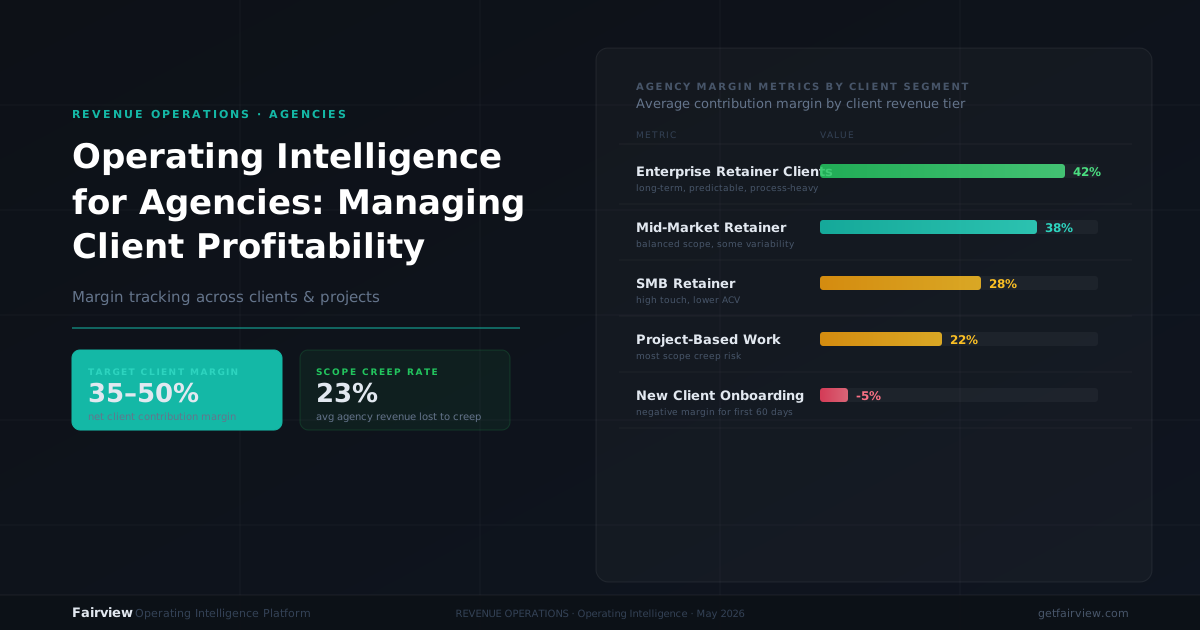
Operating Intelligence for Agencies: Margin Tracking Across Clients and Projects
How to track margin across clients and projects, catch scope creep before it erodes profit, and build an operating view your P&L is missing.
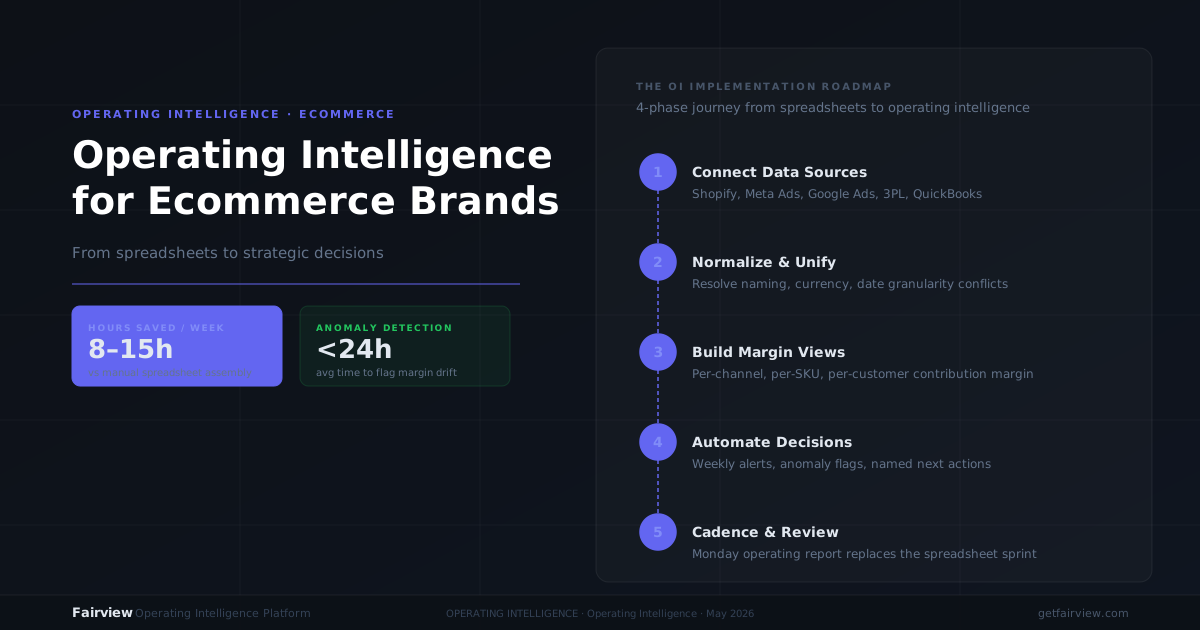
Operating Intelligence for Ecommerce Brands: From Spreadsheets to Strategic Decisions
Ecommerce operators spend 8–15 hours per week on spreadsheet assembly. Operating intelligence replaces manual reconciliation with automated margin tracking, anomaly detection, and named next actions.
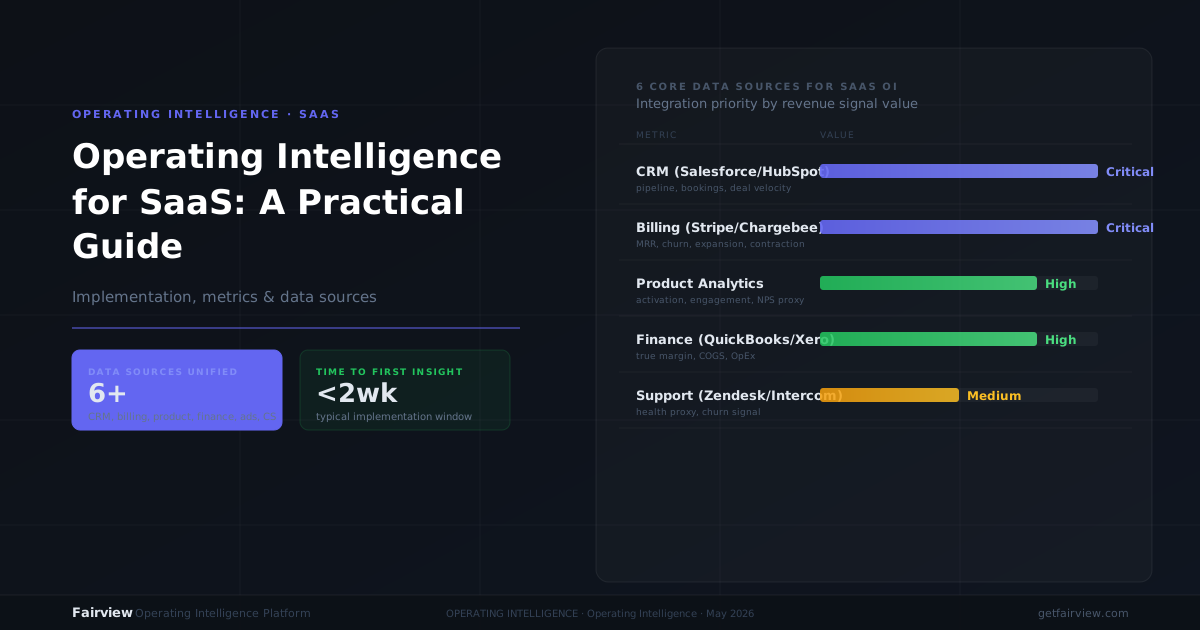
Operating Intelligence for SaaS Companies: A Practical Implementation Guide
A practical guide to implementing operating intelligence for SaaS companies: the six data sources, four implementation phases, metrics to track, and common mistakes to avoid.
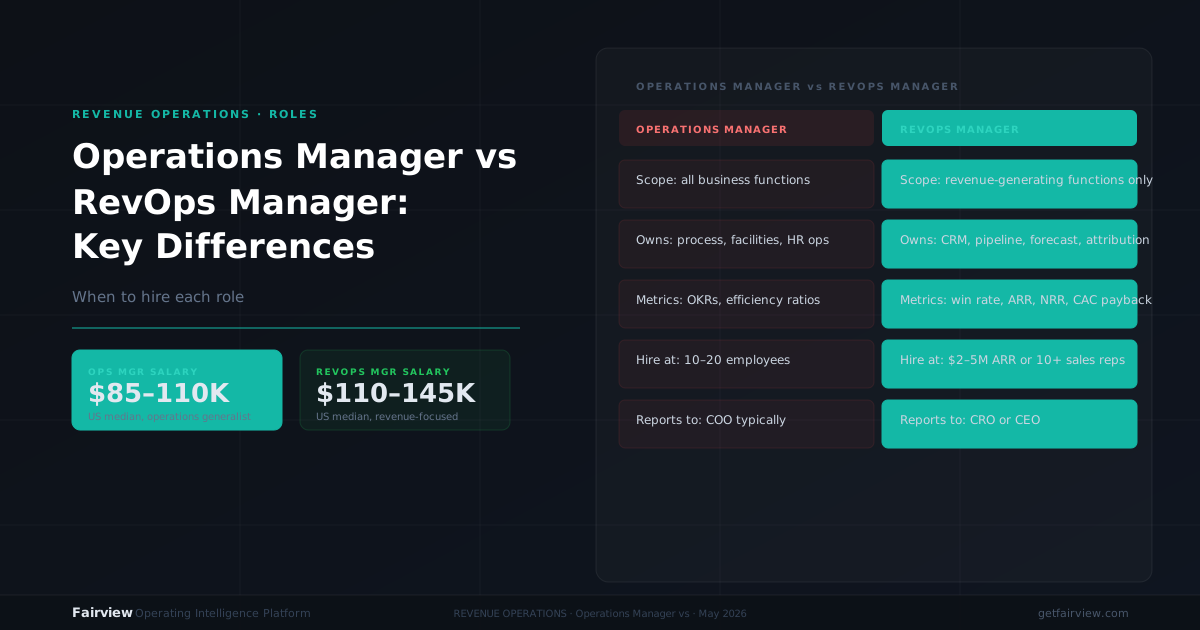
Operations Manager vs RevOps Manager: Key Differences and When to Hire Each
Operations manager vs RevOps manager: scope, skills, salary, career path, and the exact company stage where each hire makes sense. A decision framework for founders and operators.
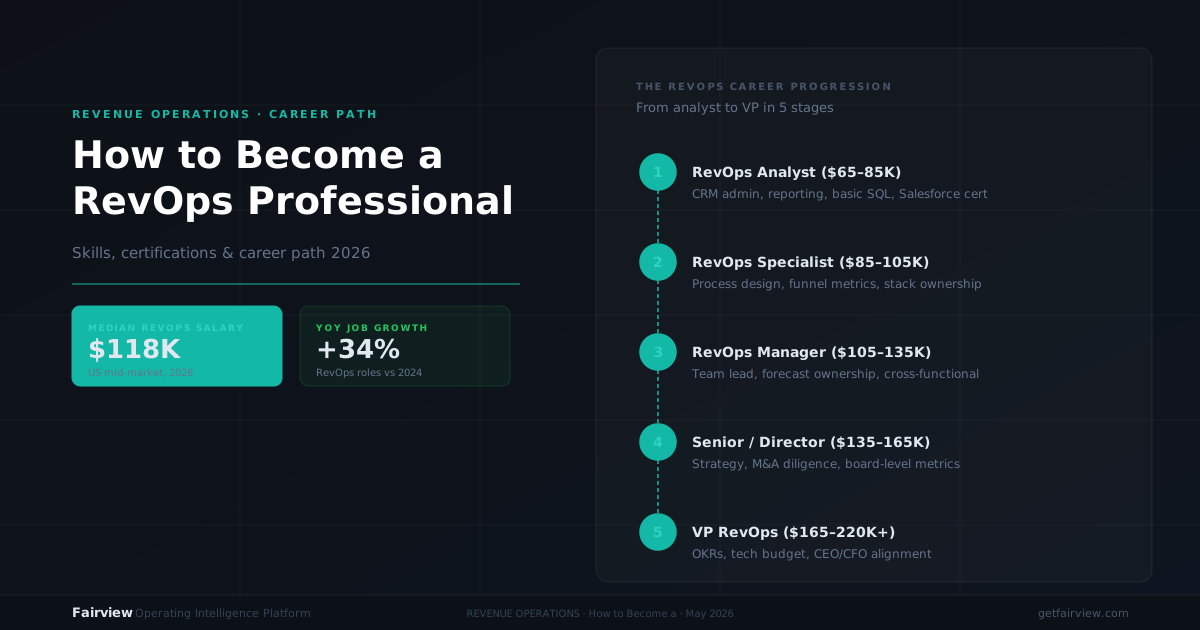
How to Become a RevOps Professional: Skills, Certifications, and Career Path
The complete guide to becoming a RevOps professional in 2026: required skills, top certifications, salary benchmarks by level, and the career path from analyst to VP.
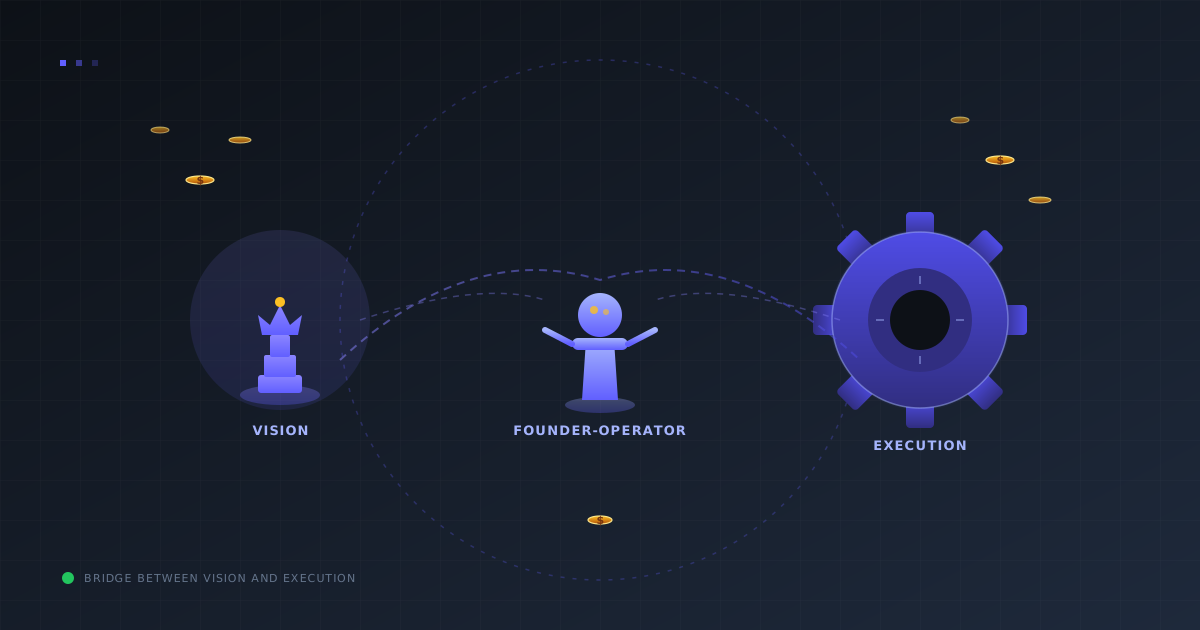
Founder-Operator: Role Definition, Responsibilities, and When the Title Matters
What a founder-operator does, how the role differs from a pure founder or a hired COO, the exact responsibilities, and the five signals that tell you the title matters.
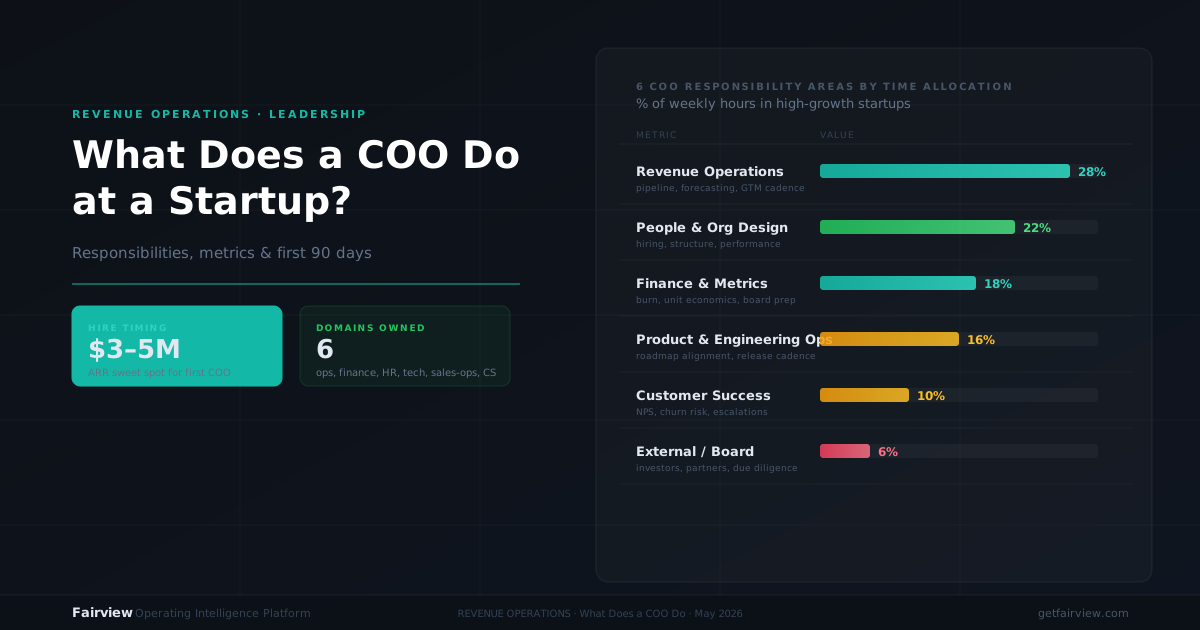
What Does a COO Do at a Startup? Responsibilities, Metrics, and When to Hire One
What a startup COO actually does: six responsibility areas, 12 metrics they track, the exact timing for when to hire one, and the four mistakes that turn a good hire into costly misalignment.
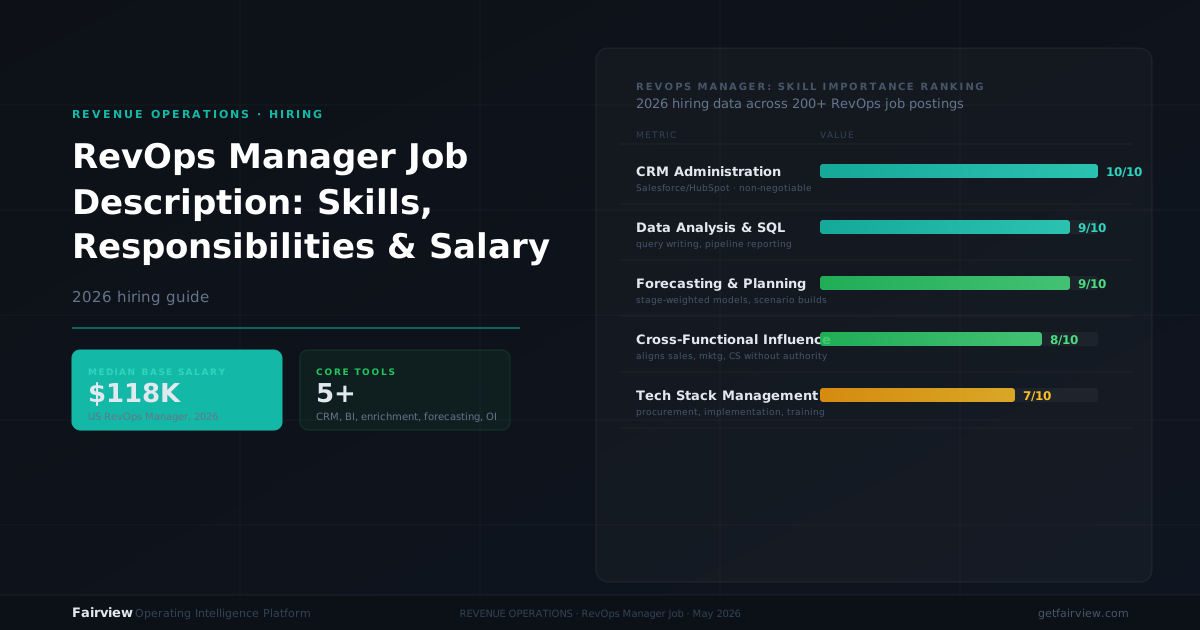
RevOps Manager Job Description: What to Look For and What to Pay
A complete RevOps manager job description for 2026: responsibilities, required skills, salary benchmarks by market, and the red flags that signal a bad hire before you make it.
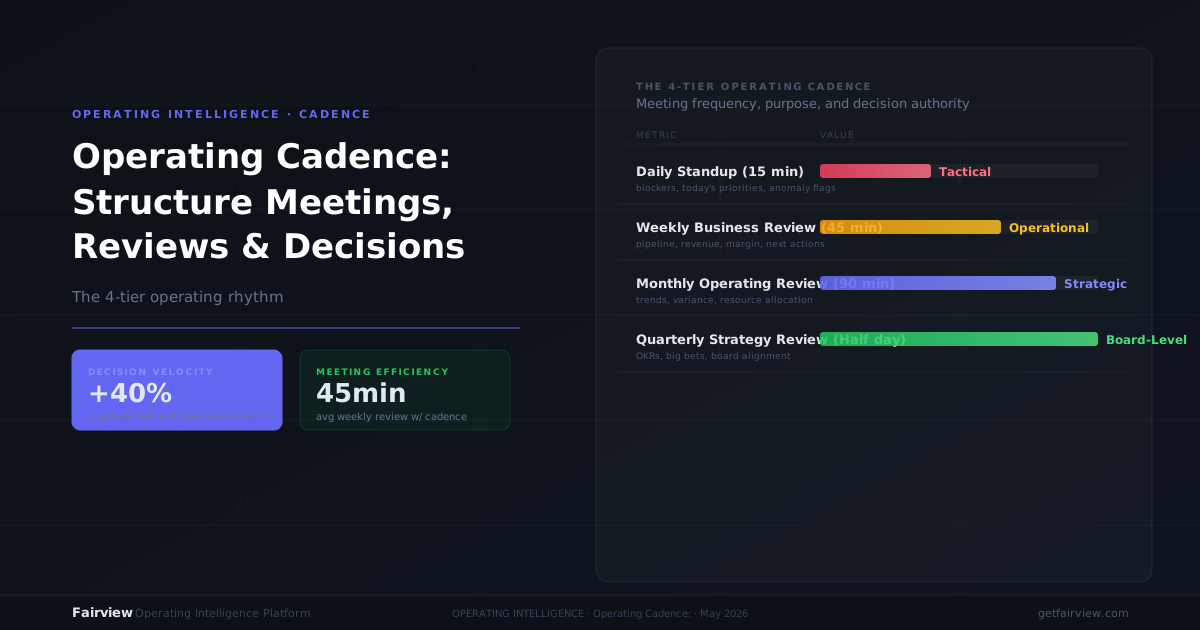
Operating Cadence: How to Structure Meetings, Reviews, and Decisions
Build an operating cadence that structures meetings, reviews, and decisions across daily, weekly, monthly, and quarterly rhythms. Decision frameworks, agendas, and common mistakes.
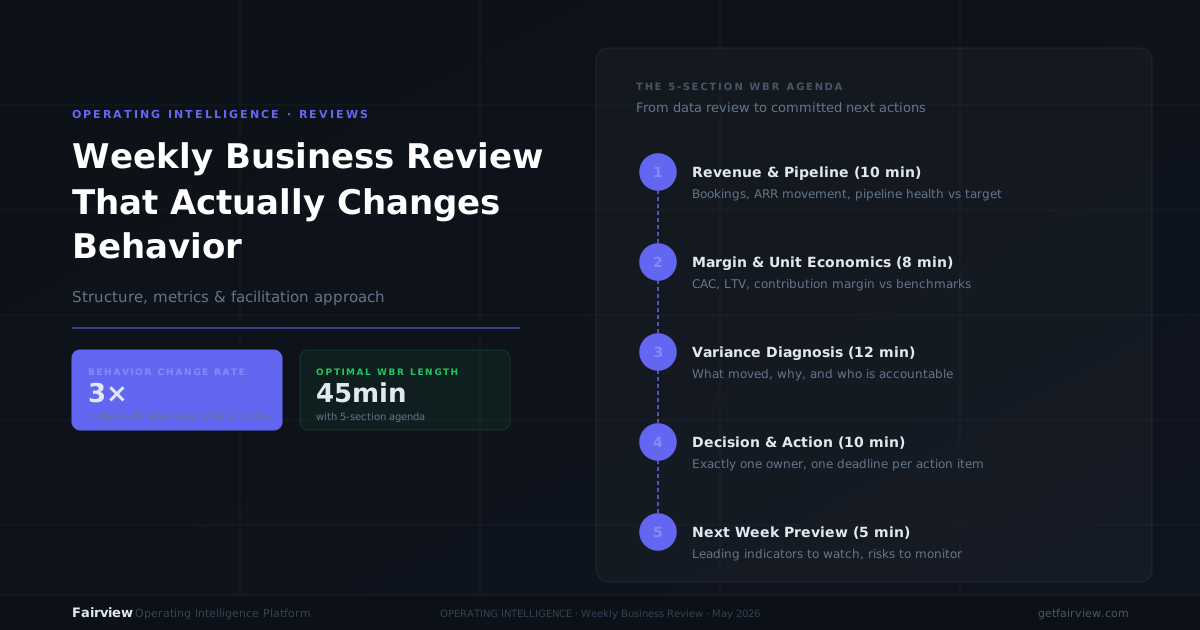
How to Run a Weekly Business Review That Actually Changes Behavior
Run a weekly business review that changes behavior, not just reports numbers. The operating rhythm, input metrics, decision framework, and action cadence that make reviews productive.
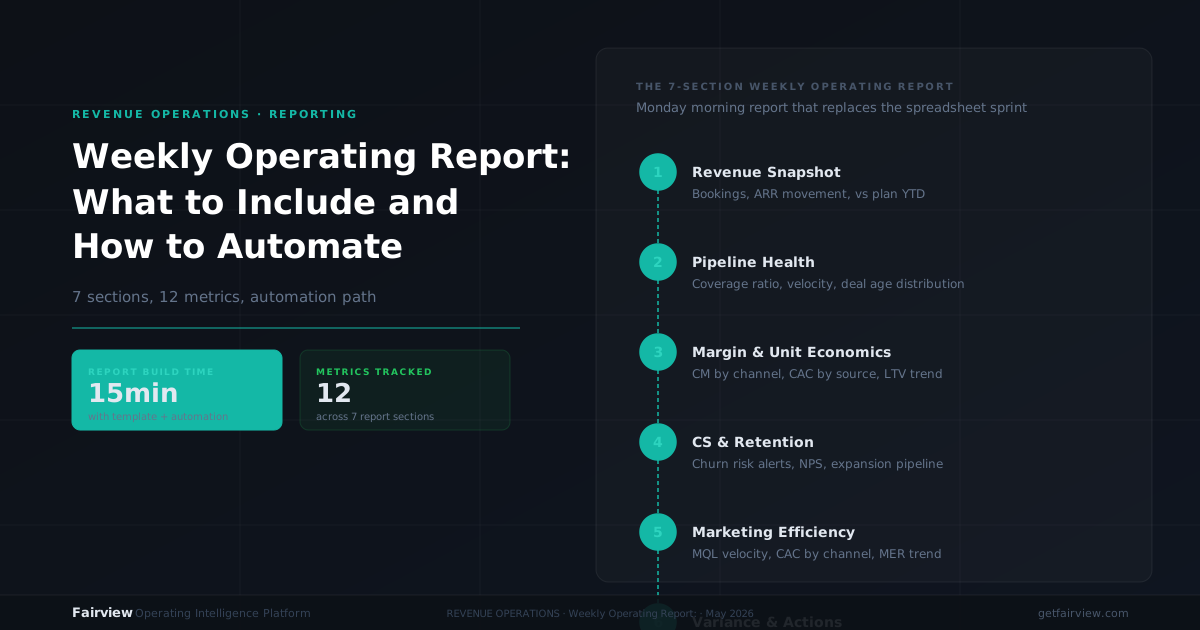
Weekly Operating Report Template: What to Include and Why
The complete weekly operating report template for operators: 7 sections, 12 metrics, and an action framework that turns Monday reports into decisions.
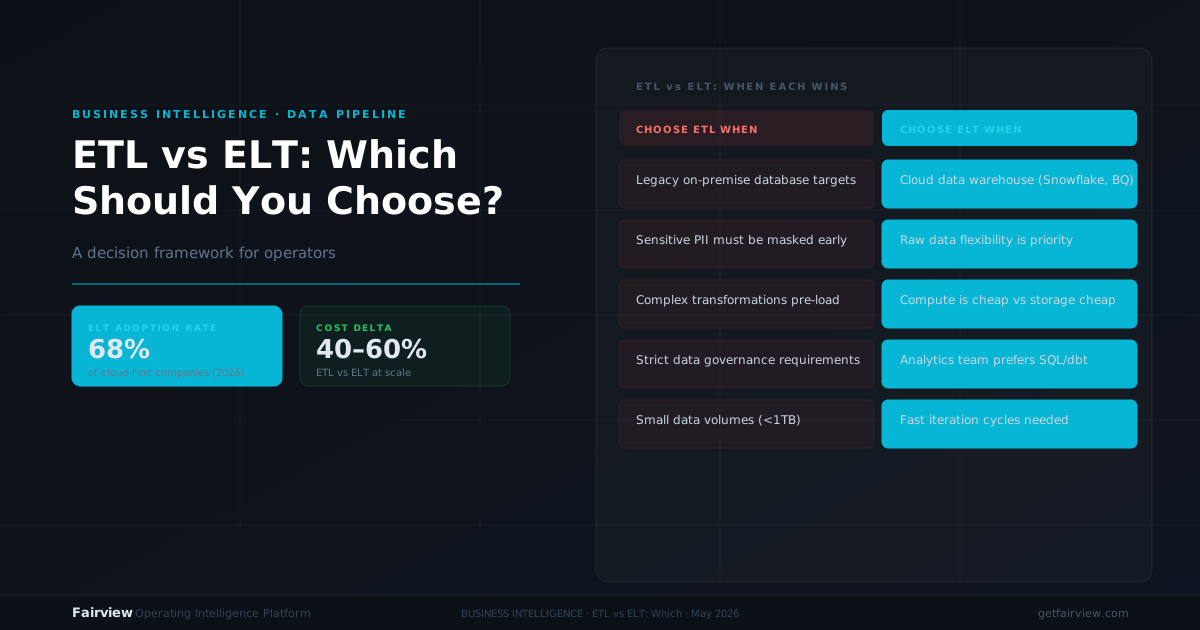
ETL vs ELT: Which Data Integration Approach Should You Choose?
ETL vs ELT explained for operators: how each approach works, when ETL wins, when ELT wins, cost differences, and the decision framework for choosing your data pipeline architecture.
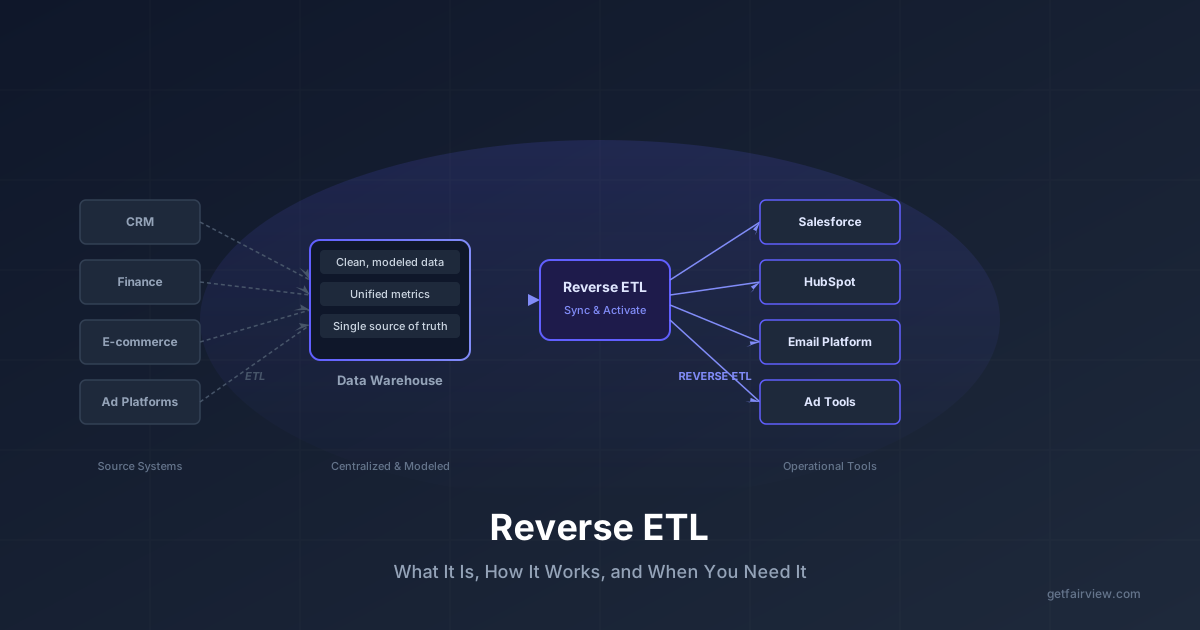
Reverse ETL: What It Is, How It Works, and When You Need It
Reverse ETL explained for operators: what it is, how it differs from traditional ETL, the tools that power it, and when your business needs it to activate warehouse data.
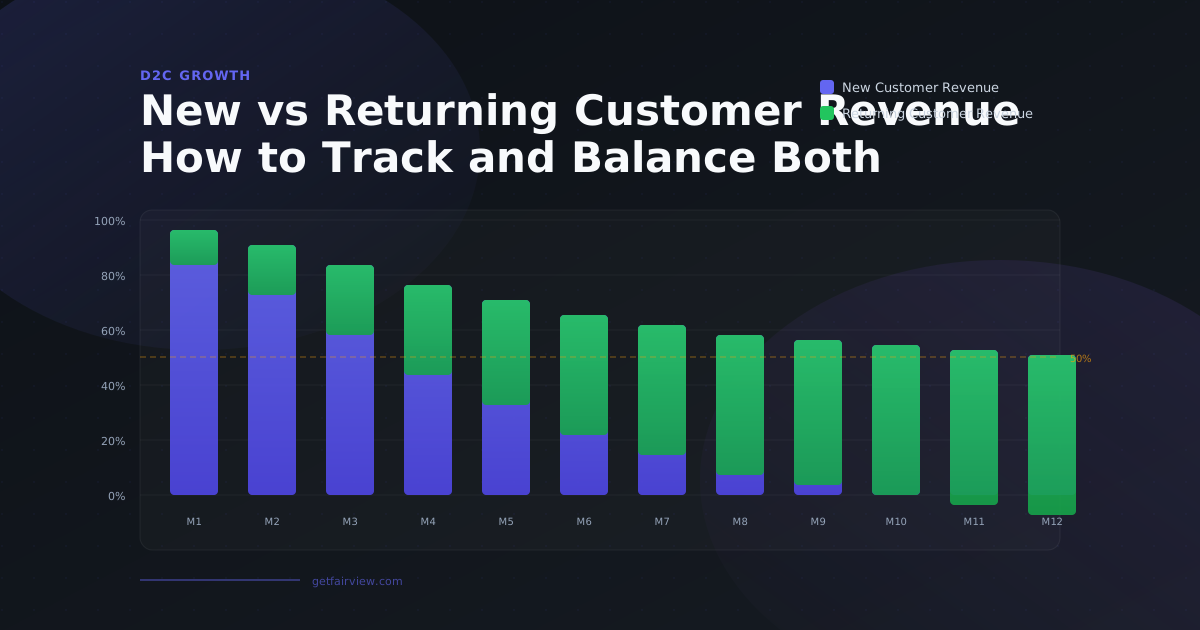
New vs Returning Customer Revenue: How to Track and Balance Both
How to track, calculate, and balance new vs returning customer revenue — with benchmarks by brand stage, the healthy mix ratio, cohort-based tracking, and the five mistakes that break the split.
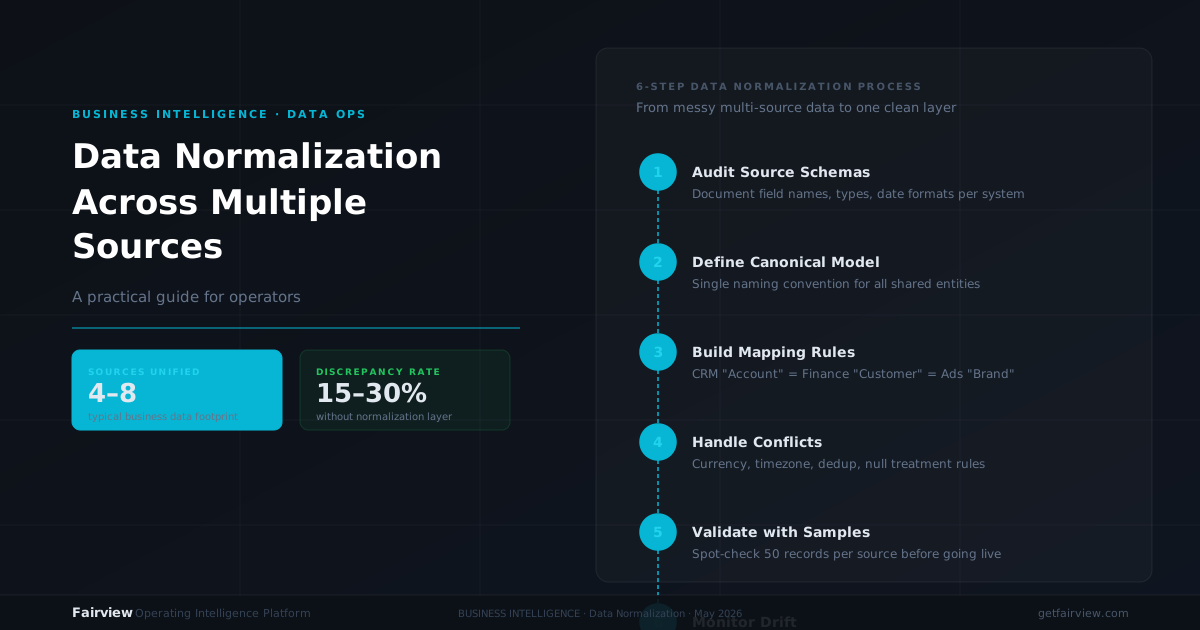
Data Normalization Across Multiple Sources: A Practical Guide
Data normalization across multiple sources explained for operators. Why your CRM, finance, and e-commerce data disagree, the six normalization steps, and how to build one source of truth.
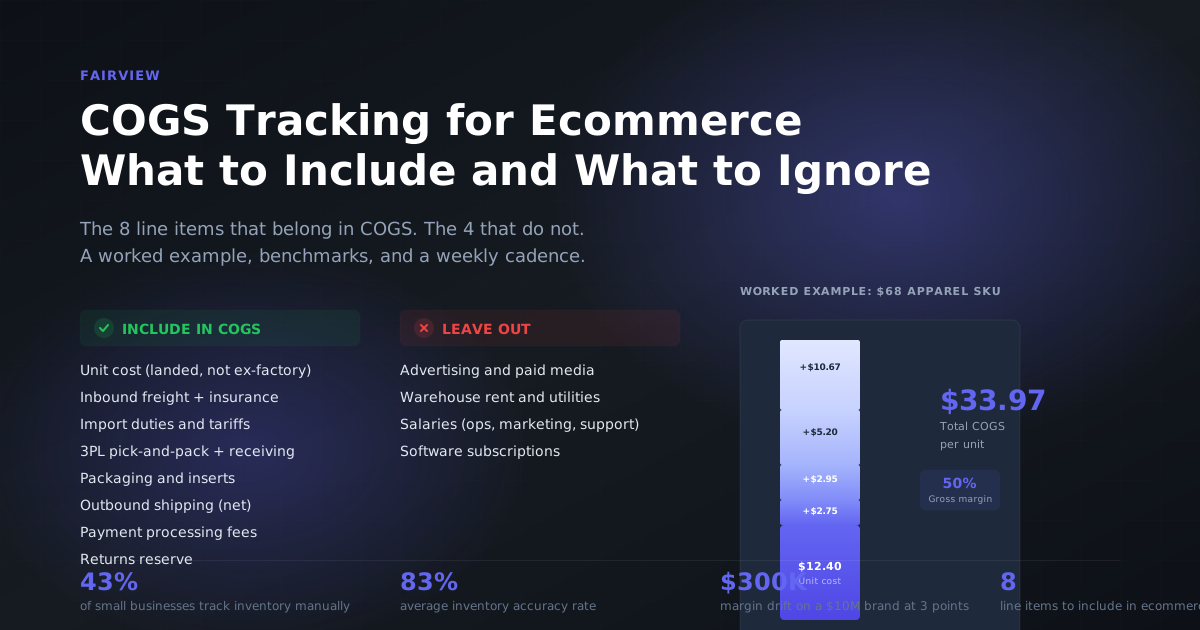
COGS Tracking for Ecommerce: What to Include and What to Ignore
Eight line items belong in ecommerce COGS. Four common ones do not. Here is the operator view, with a worked example per unit, benchmarks by category, and a Monday-morning cadence that stops COGS from drifting.
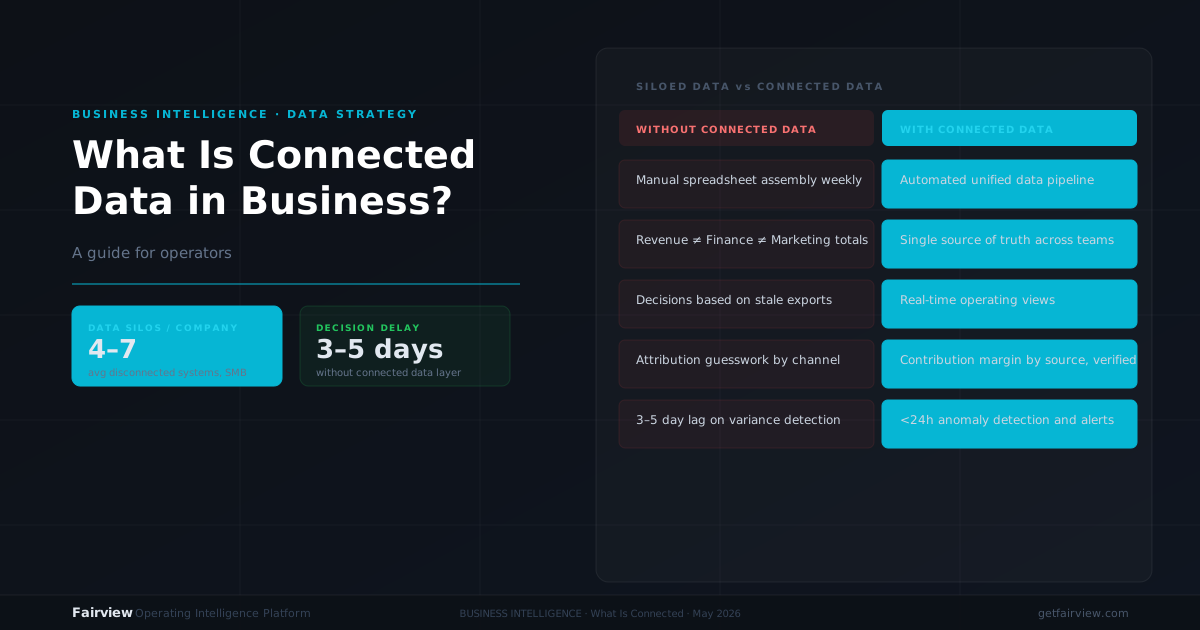
What Is Connected Data in Business? A Guide for Operators
Connected data explained for operators and founders: what it is, why data silos cost you decisions, how to connect your systems, and when connected data becomes a competitive advantage.
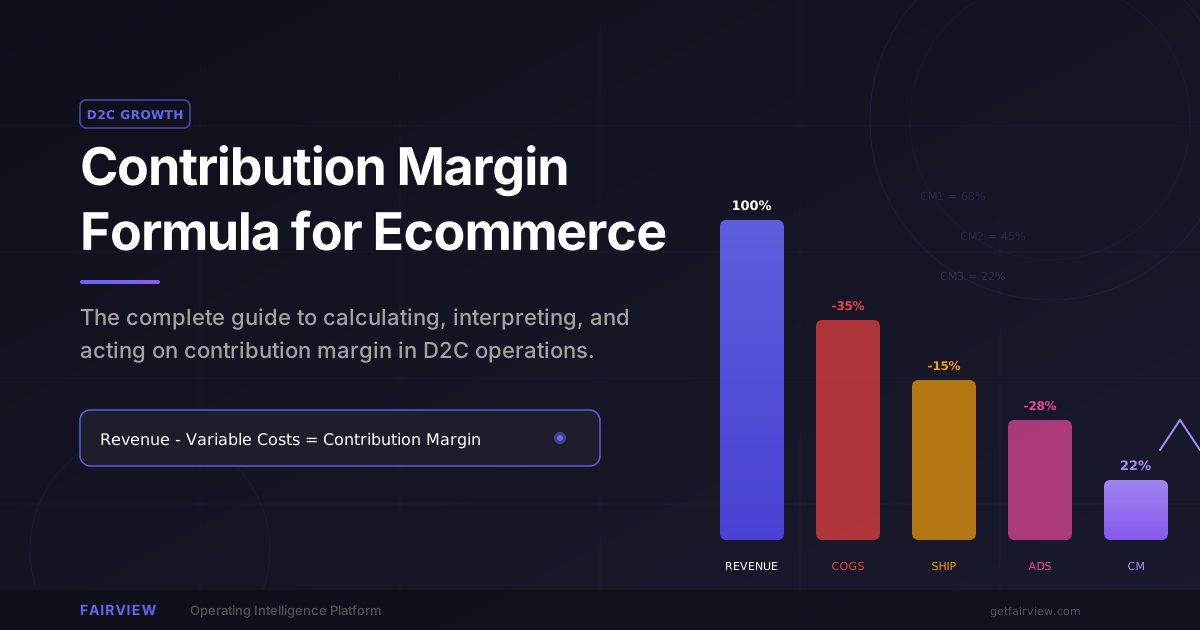
Contribution Margin Formula for Ecommerce: A Complete Guide
The complete guide to contribution margin formula for ecommerce: how to calculate per unit, per order, and per channel, what variable costs to include, benchmarks by vertical, and how operators use it weekly.
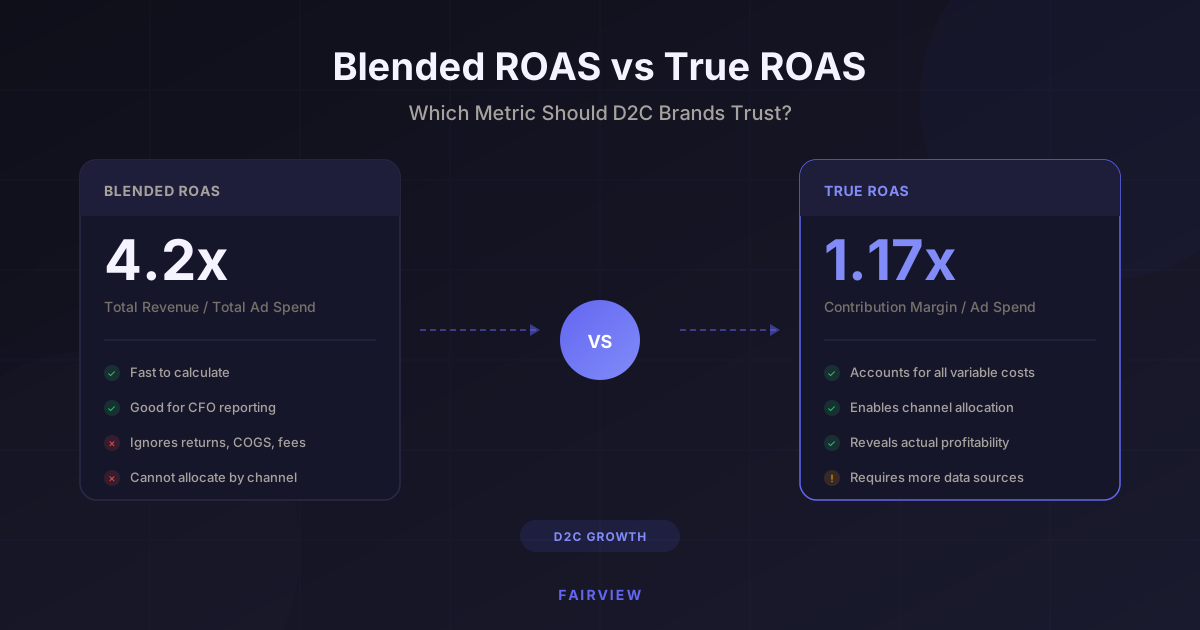
Blended ROAS vs True ROAS: Which Metric Should D2C Brands Trust?
Blended ROAS vs true ROAS for D2C brands: what each metric measures, when each tells the truth, when each lies, and how to use both to make honest decisions about ad spend.
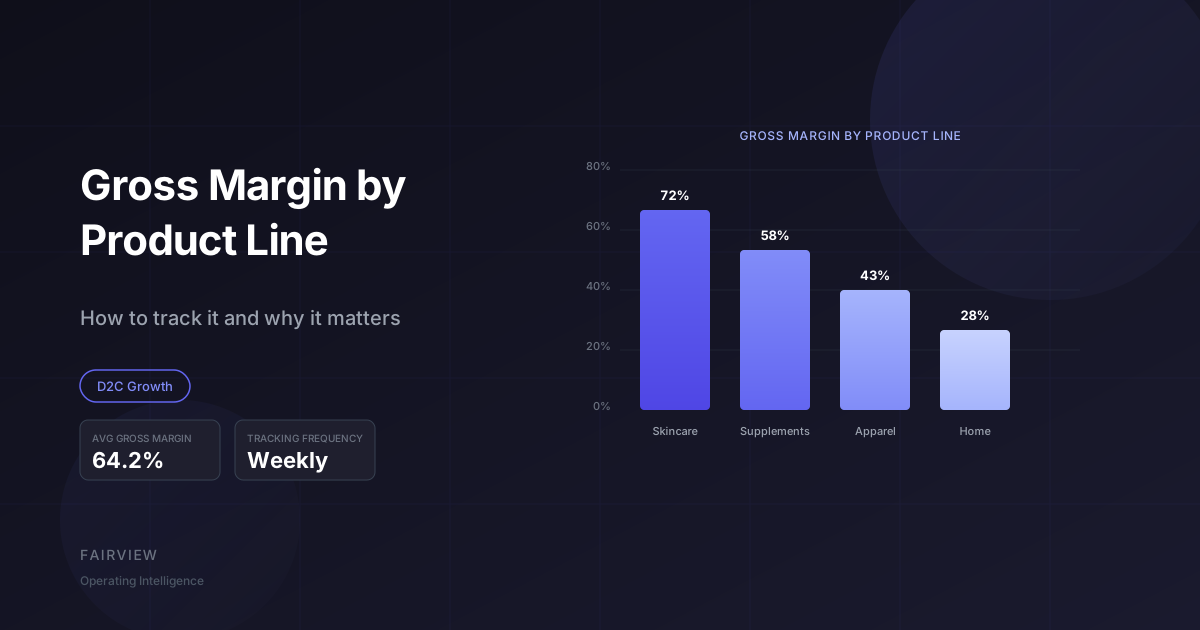
Gross Margin by Product Line: How to Track It and Why It Matters
The formula, COGS rules most teams get wrong, benchmarks by product category, and the weekly tracker operators use to rank every product line by real profit.
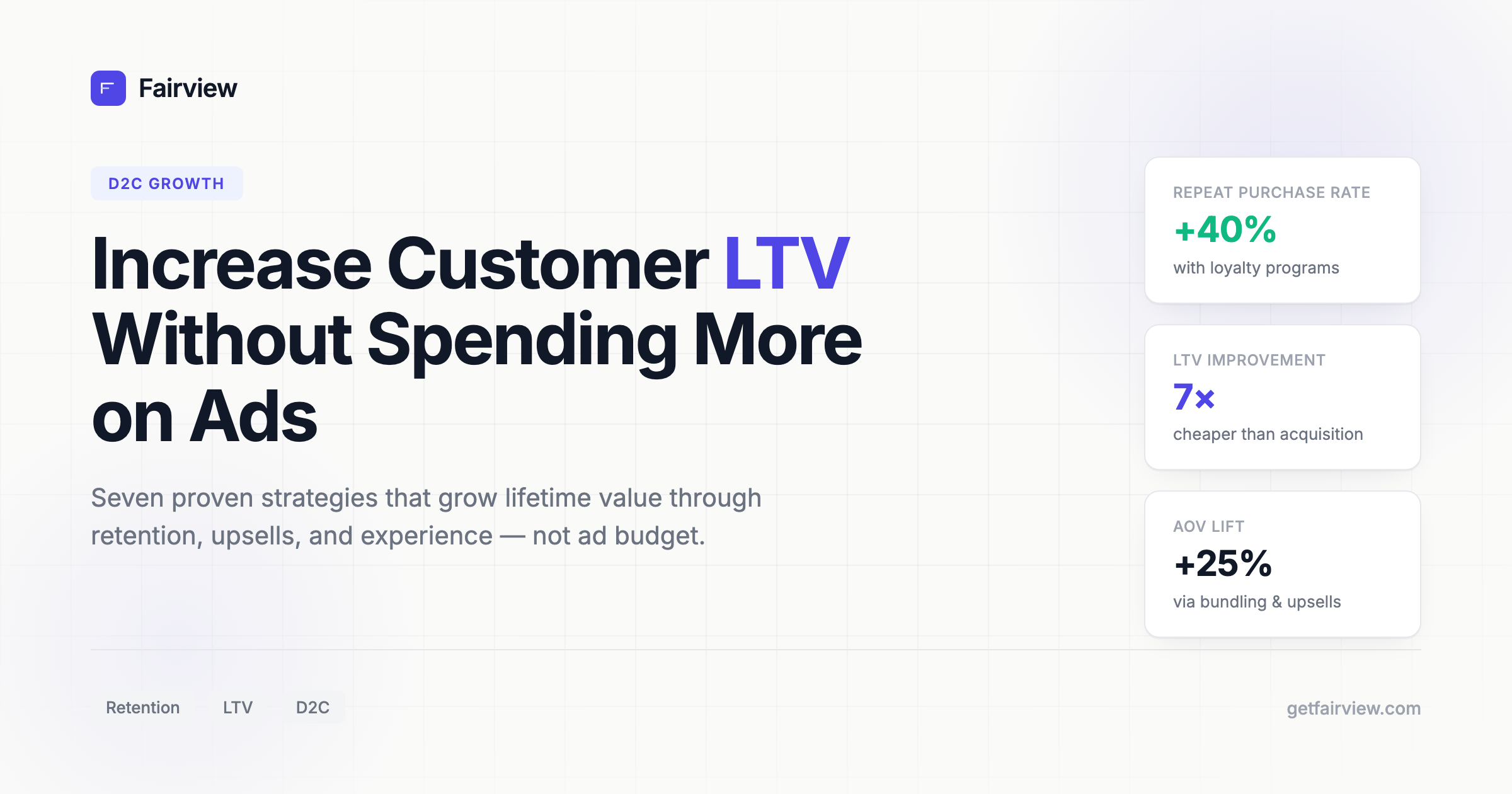
How to Increase Customer LTV Without Spending More on Ads
Seven proven strategies to increase customer lifetime value without raising ad spend. Retention, upsells, loyalty programs, and the metrics that track real progress.
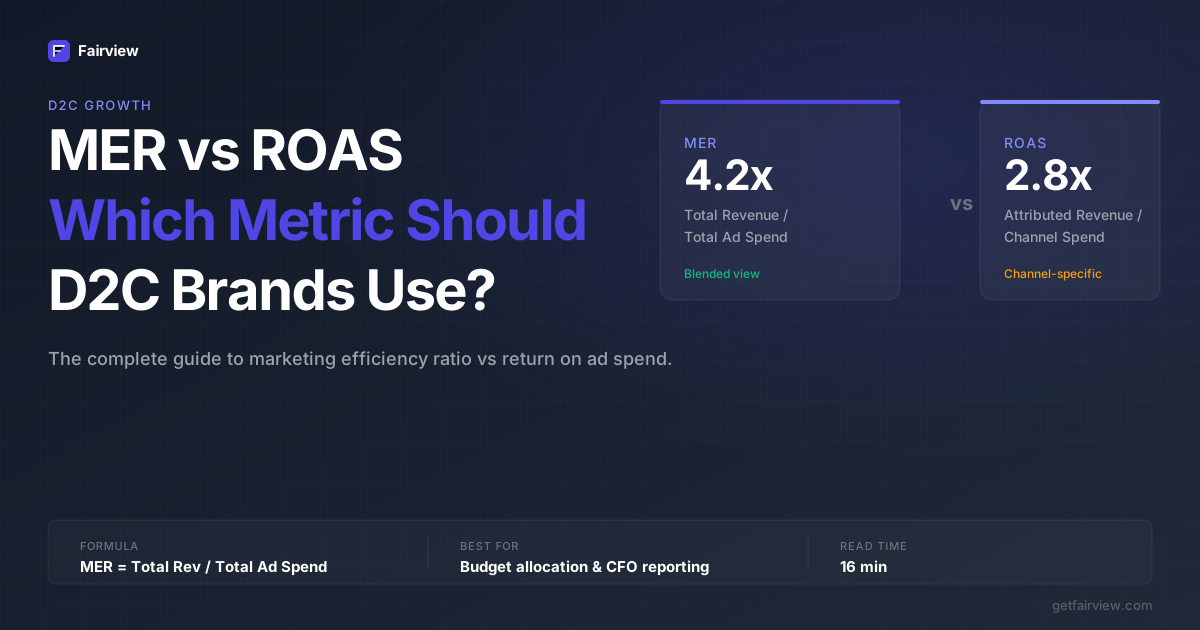
MER vs ROAS: Which Metric Should D2C Brands Use?
MER vs ROAS explained for D2C operators: formulas, when each metric tells the truth, when each lies, and why most brands should track both to keep ad budgets honest.
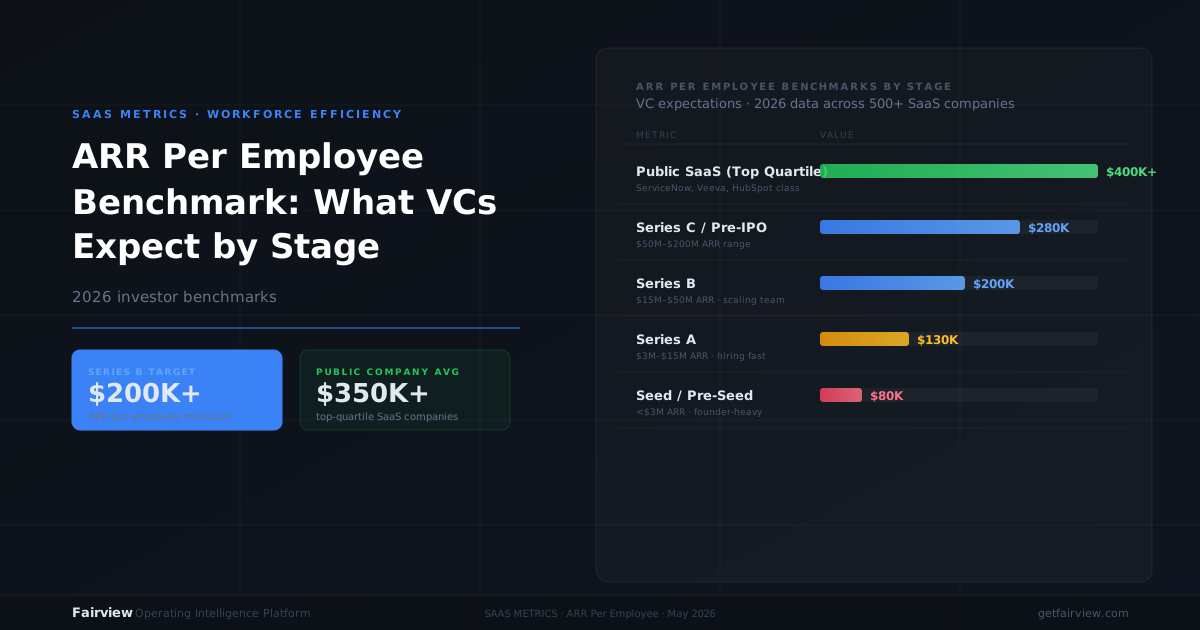
ARR Per Employee: Benchmarks and Why They Matter
ARR per employee benchmarks for SaaS companies by stage and go-to-market motion. How to calculate, interpret, and improve this key workforce efficiency metric.
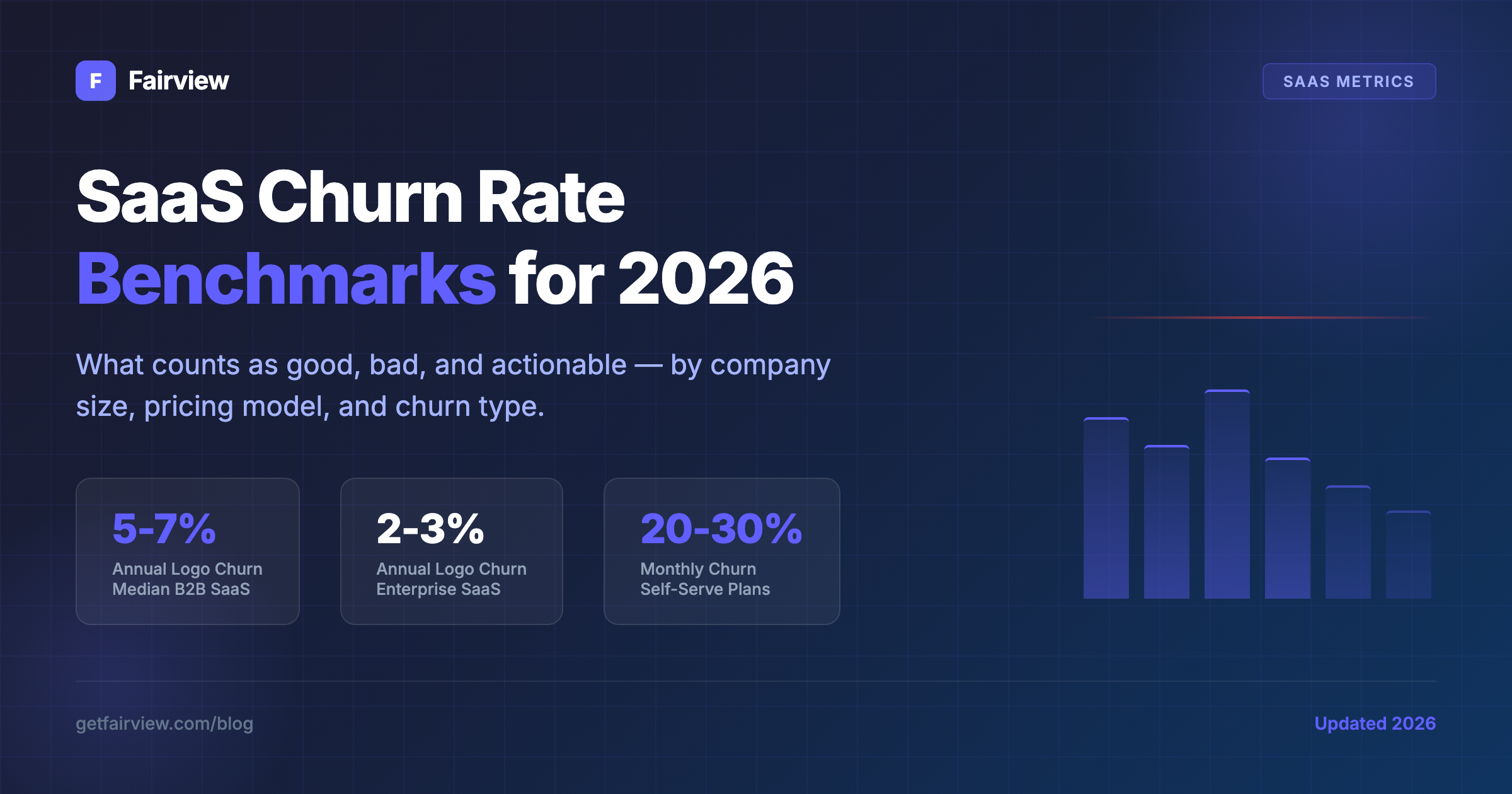
SaaS Churn Rate Benchmarks: What Is Good in 2026
SaaS churn rate benchmarks by company size and pricing model for 2026. What counts as good, how to calculate churn, logo vs revenue churn, and five ways to reduce it.
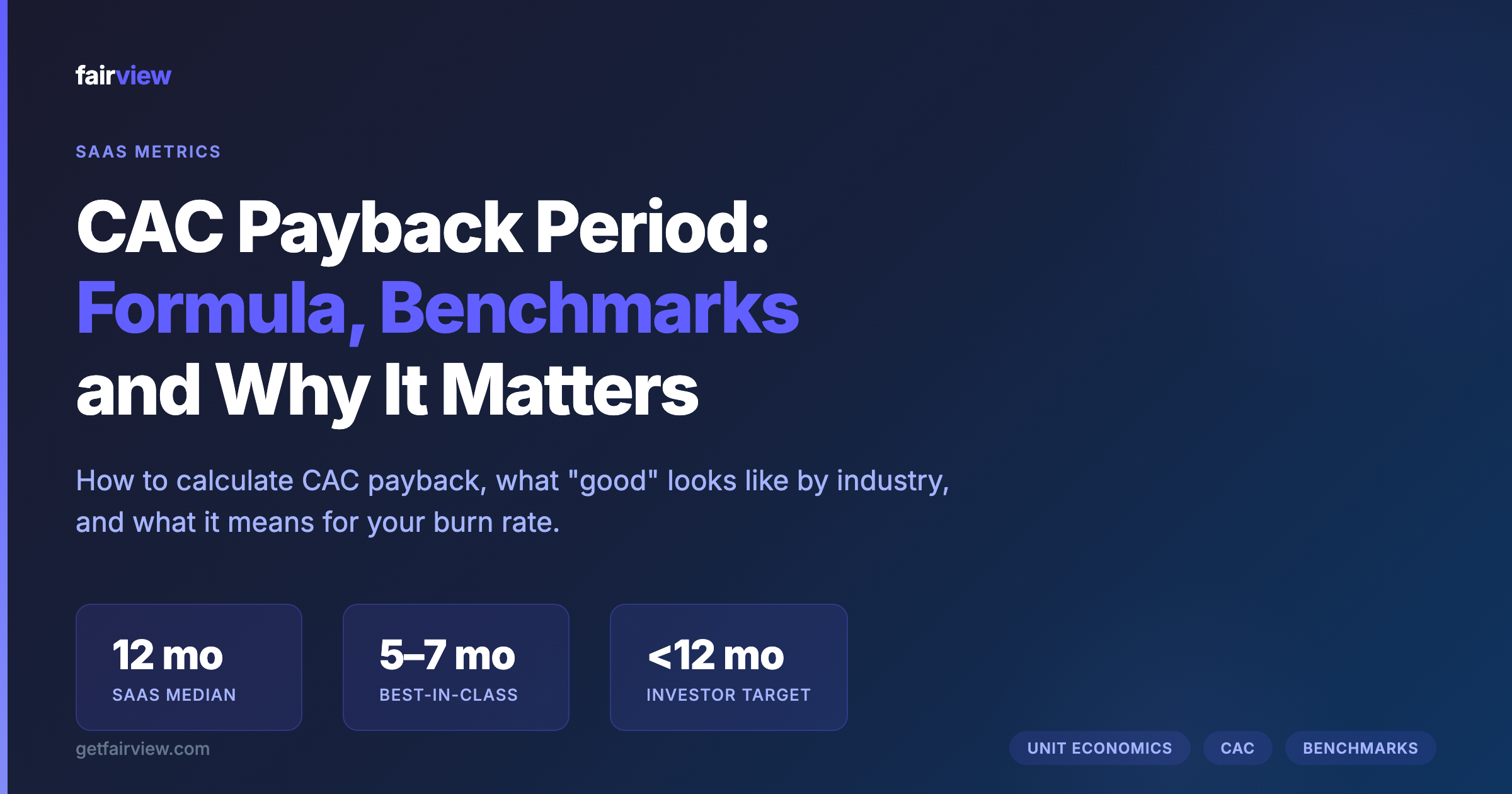
CAC Payback Period: Formula, Benchmarks and Why It Matters
How to calculate CAC payback period, benchmarks by industry and go-to-market motion, and what your payback means for burn rate and fundraising.
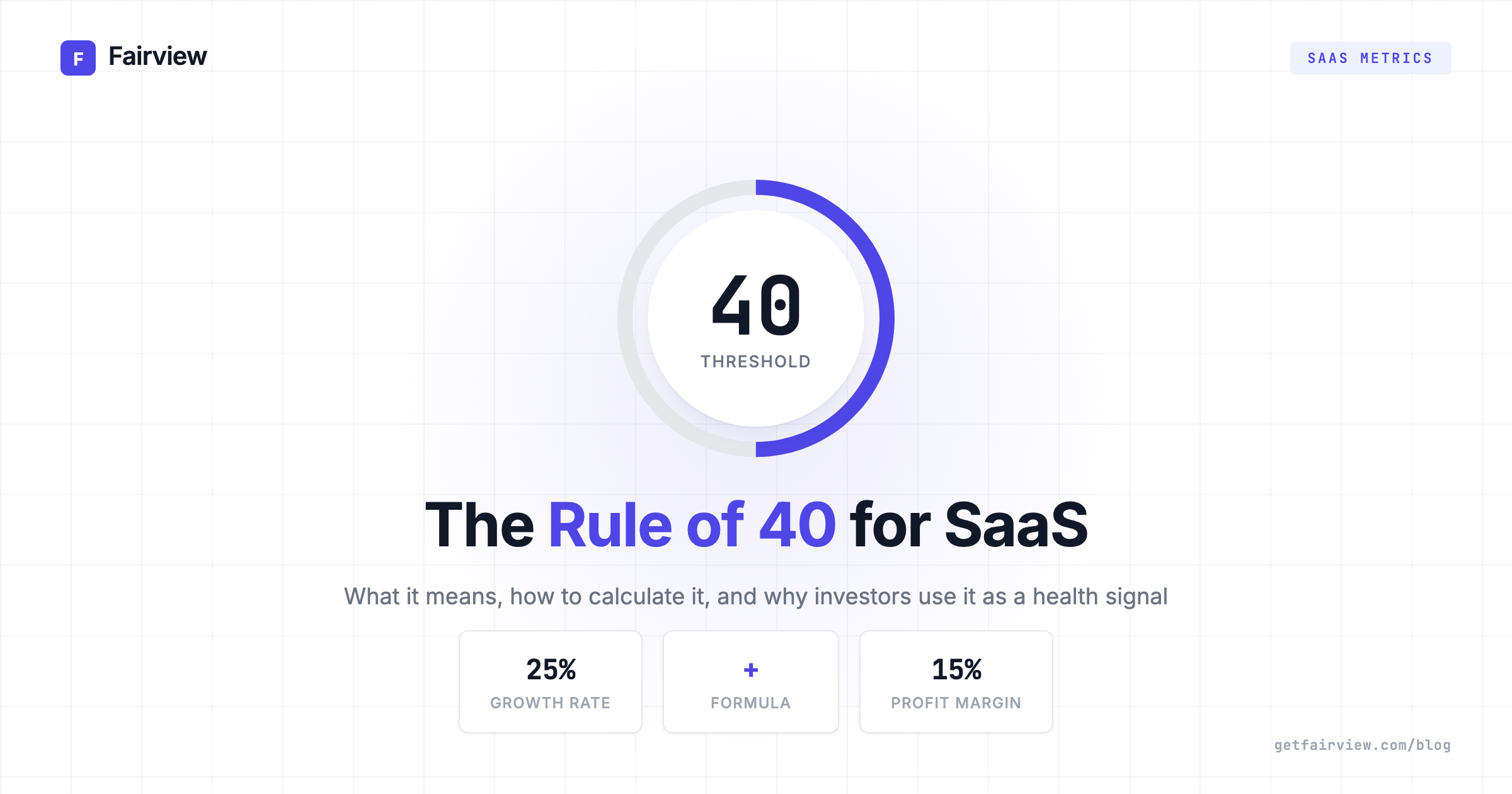
The Rule of 40 for SaaS: What It Means and How to Calculate It
The Rule of 40 explained for SaaS operators: formula, benchmarks by stage from seed to public, worked examples, when it misleads, growth vs profit paths, and how to improve your score.
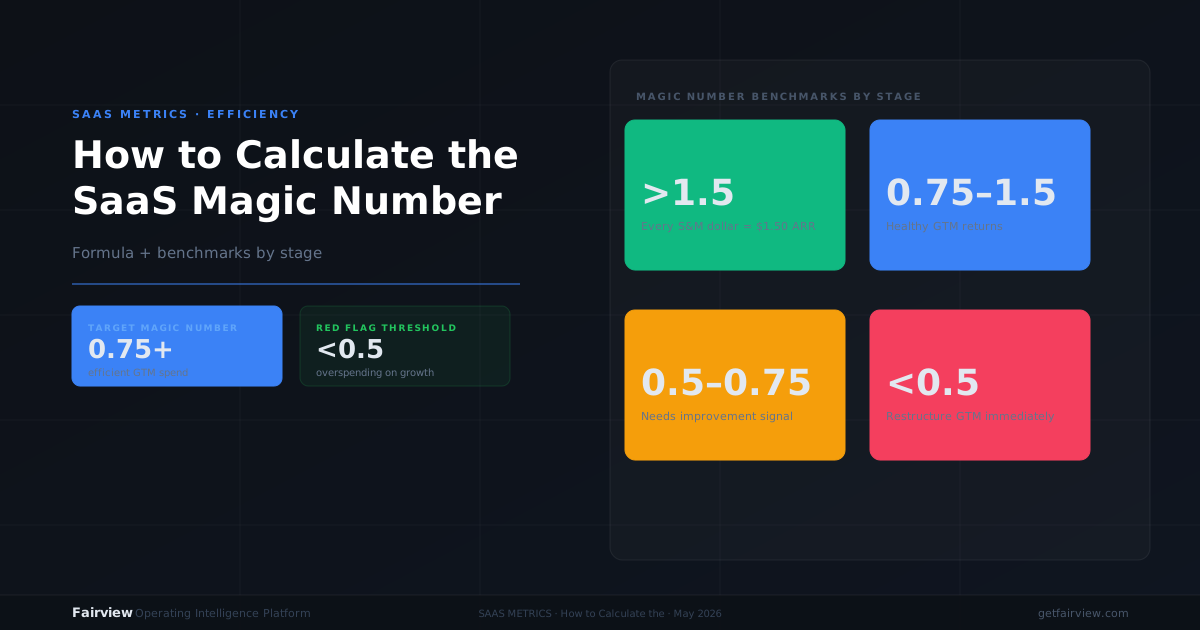
How to Calculate the SaaS Magic Number (Formula + Benchmarks)
The exact SaaS Magic Number formula, worked examples, benchmarks by stage and go-to-market motion, when the metric misleads, and how it compares to CAC payback and LTV:CAC.
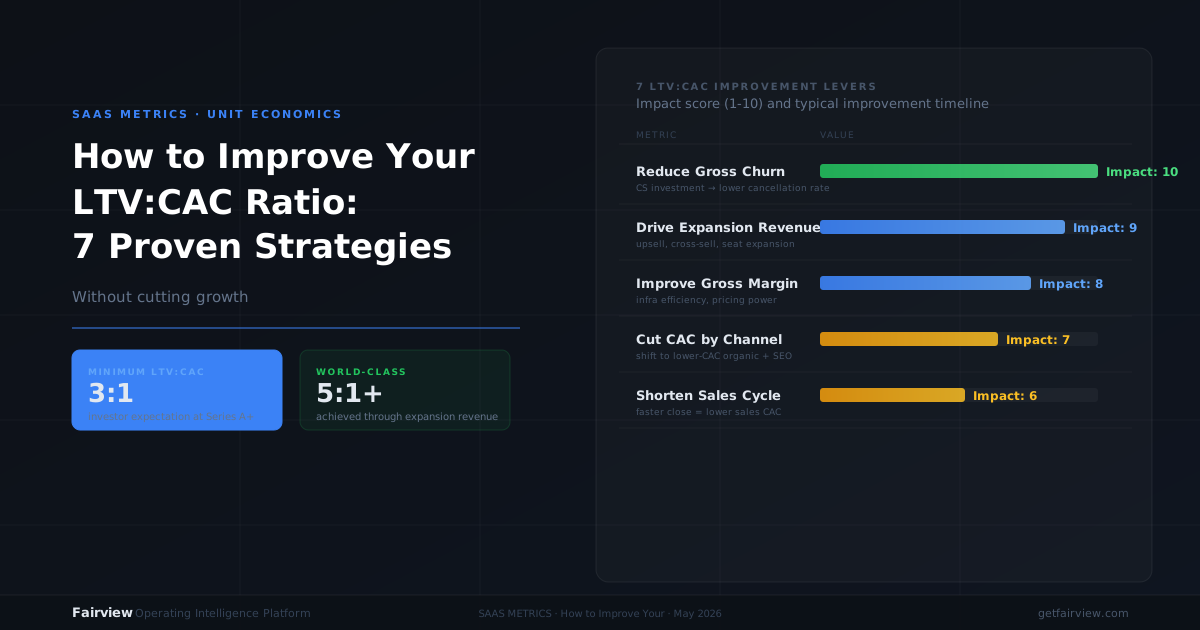
How to Improve Your LTV:CAC Ratio: 7 Proven Strategies
Seven proven strategies to improve your LTV:CAC ratio without cutting growth. Expansion revenue, churn reduction, onboarding, pricing, organic channels, sales cycle, and ACV — with benchmarks and timelines.
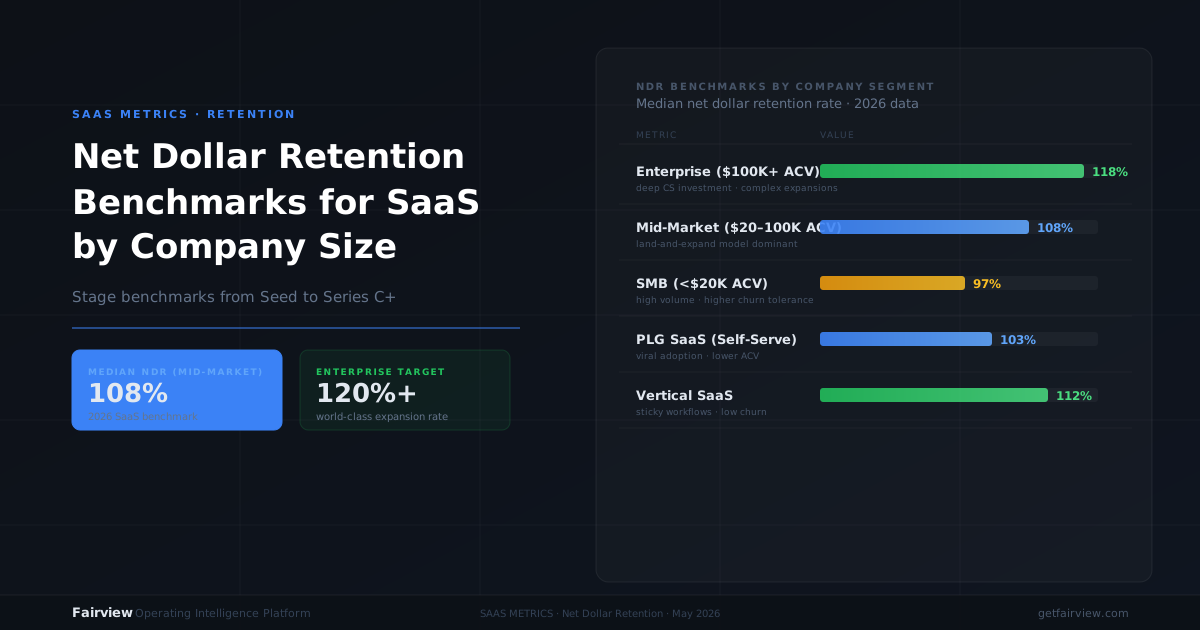
Net Dollar Retention Benchmarks for SaaS by Company Size
Net dollar retention benchmarks for SaaS companies by stage: what good looks like at seed, Series A, B, and C. Formula, worked example, NDR vs GRR, and 5 ways to improve.
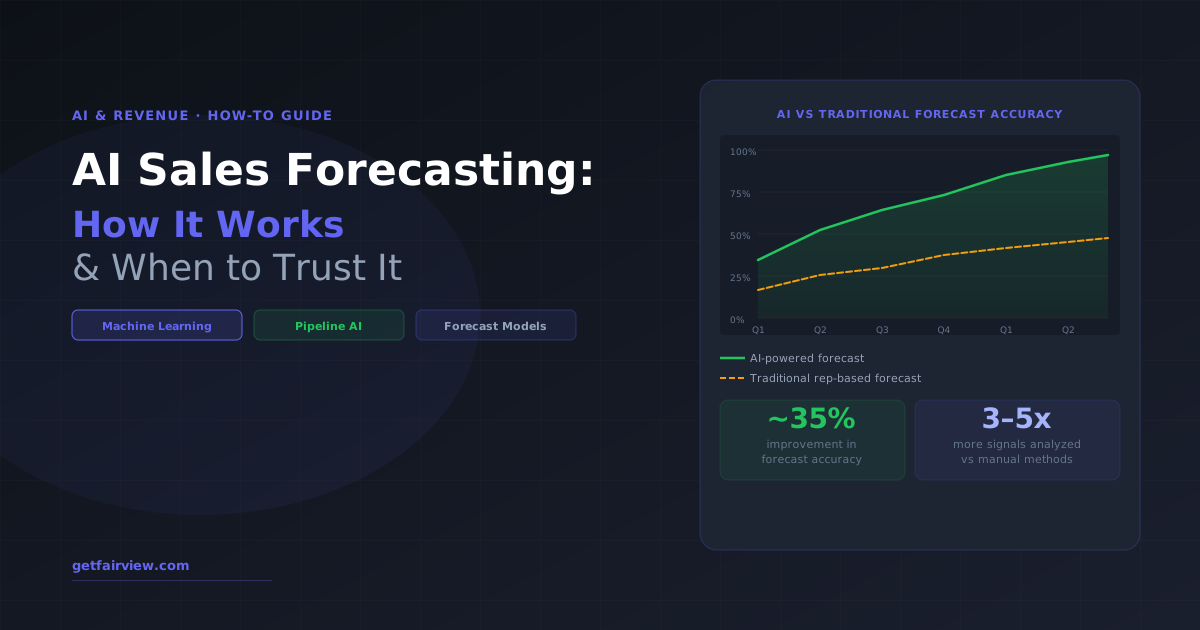
AI Sales Forecasting: How It Works and When to Trust It (2026)
AI sales forecasting uses machine learning to predict revenue more accurately than rep-based gut checks. Learn how it works, what data it needs, and when to trust its outputs.
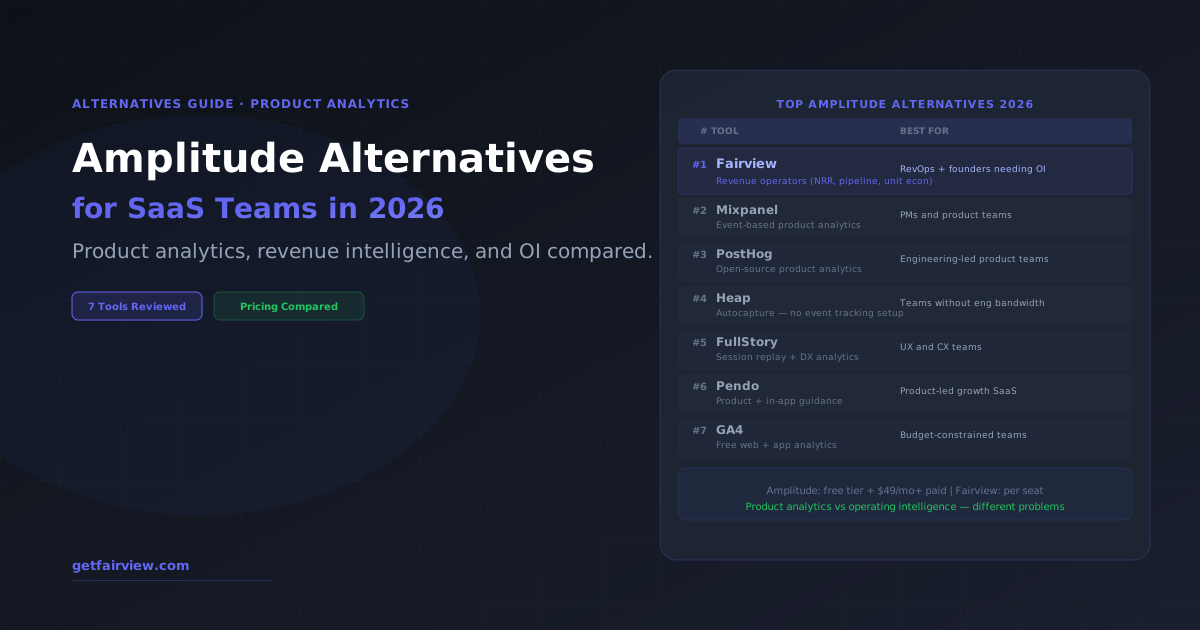
7 Best Amplitude Alternatives for SaaS Teams in 2026
Looking for Amplitude alternatives? Compare the 7 best product analytics and operating intelligence tools for SaaS in 2026 — Mixpanel, PostHog, Fairview, and more.
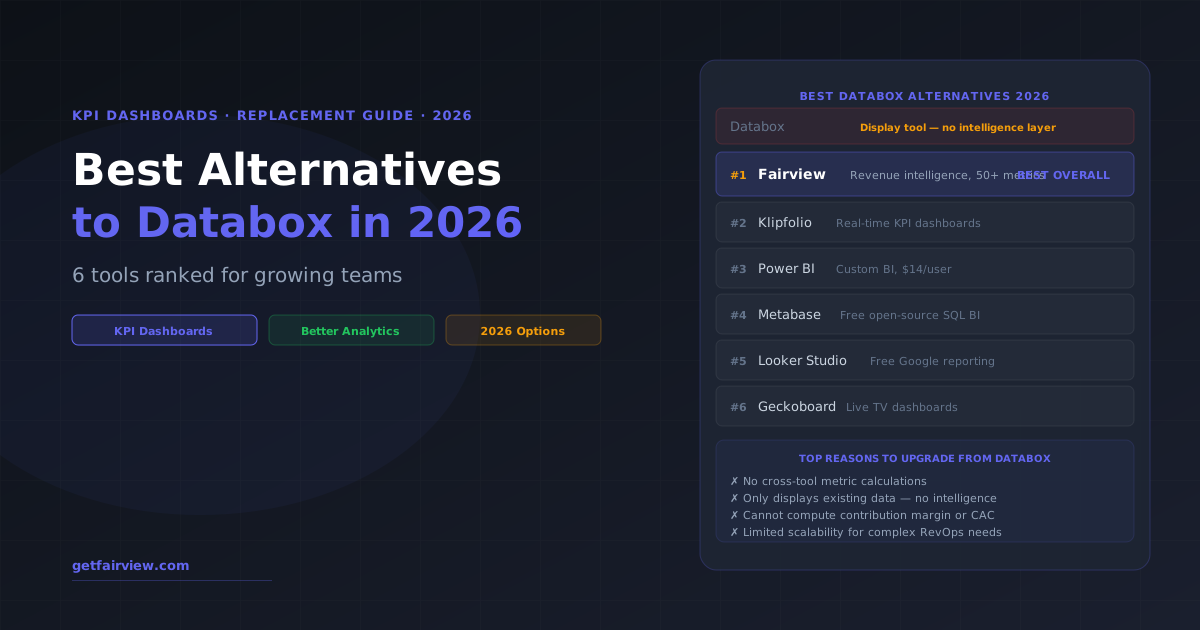
6 Best Alternatives to Databox in 2026 (For Teams That Need More)
The 6 best Databox alternatives in 2026 for teams that have outgrown KPI dashboards and need actual revenue intelligence, custom BI, or deeper analytics without display-only tools.
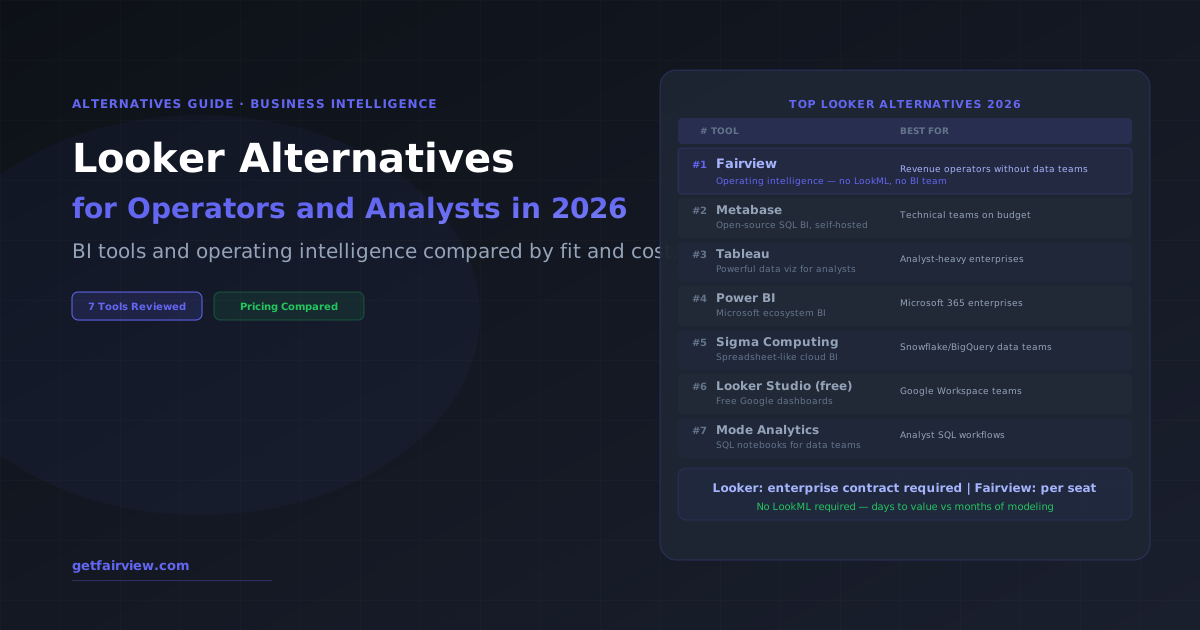
7 Best Looker Alternatives for 2026 (BI and Operating Intelligence)
Looker too expensive or complex? Compare the 7 best Looker alternatives in 2026 — Metabase, Tableau, Power BI, Fairview, Sigma, and more. Ranked by fit and cost.
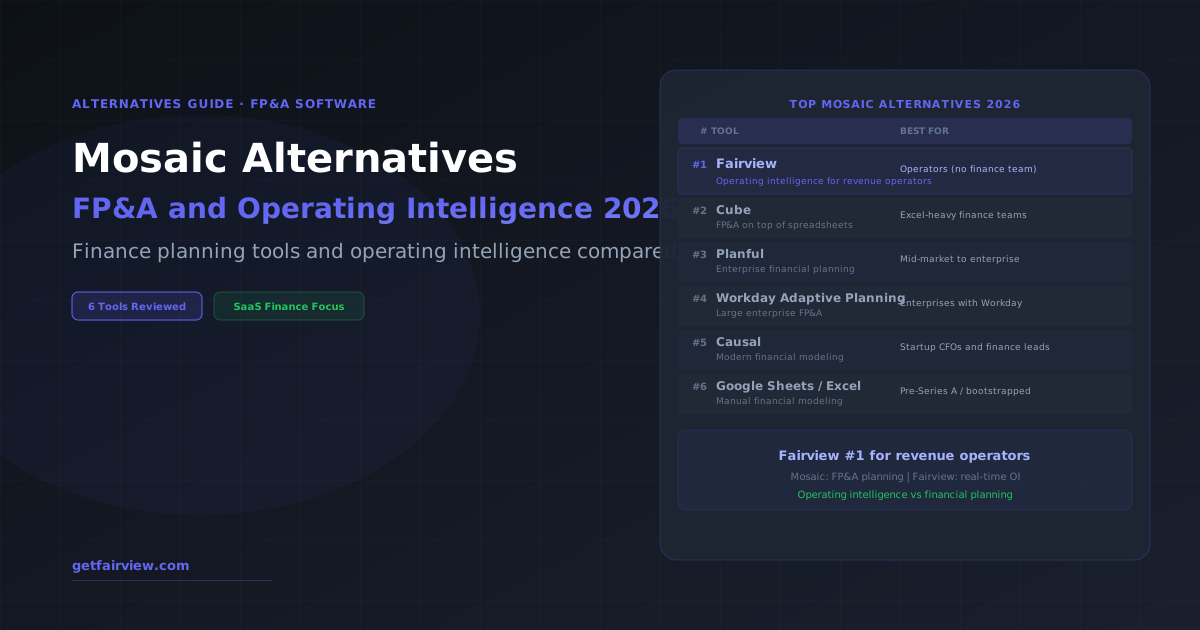
6 Best Mosaic Alternatives for 2026 (FP&A and Operating Intelligence)
Looking for Mosaic alternatives? Compare the 6 best FP&A and operating intelligence tools for SaaS companies in 2026 — ranked by fit, pricing, and capability.
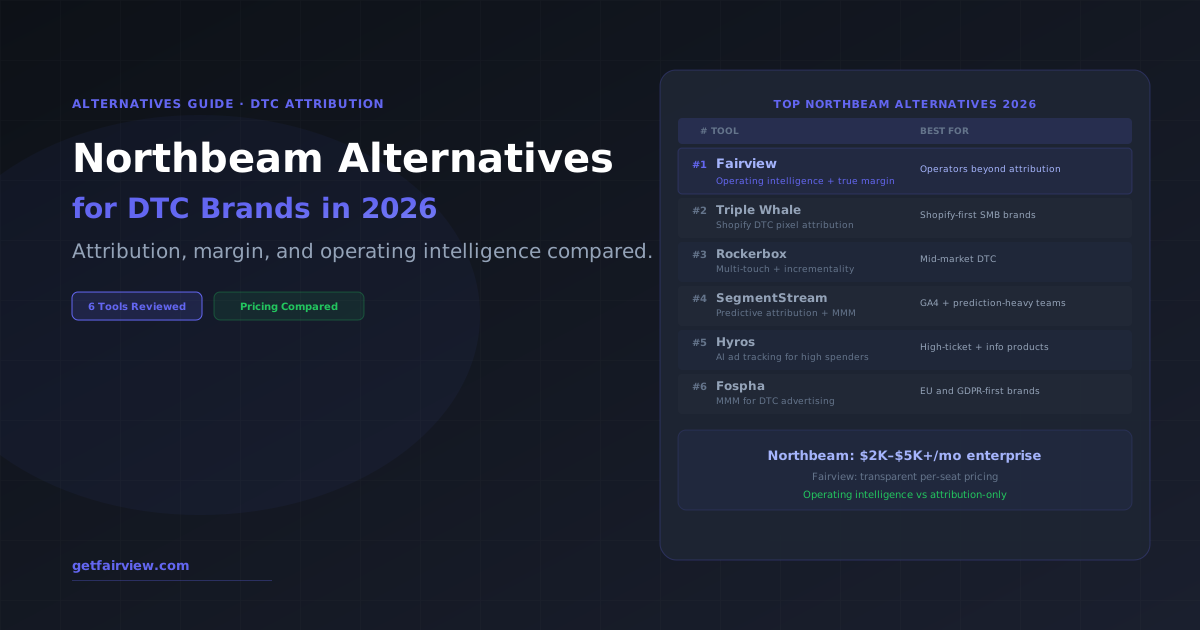
6 Best Northbeam Alternatives for DTC Brands in 2026
Northbeam pricing too high? Compare the 6 best Northbeam alternatives for DTC brands in 2026 — ML attribution, margin analytics, and operating intelligence tools ranked.
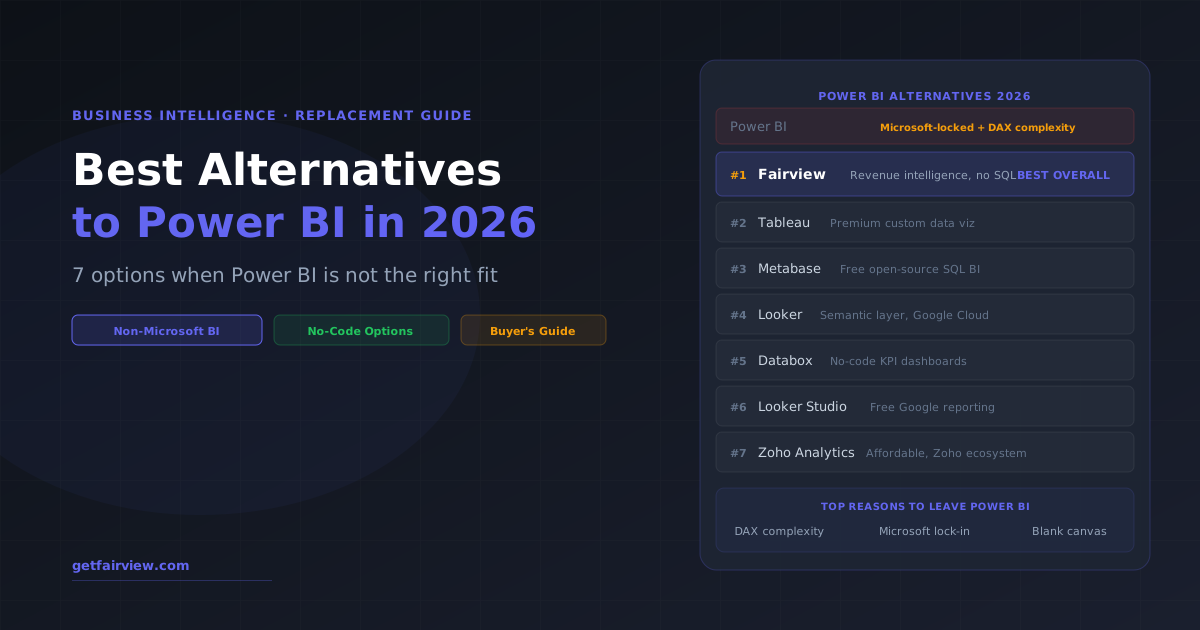
7 Best Alternatives to Power BI in 2026 (Non-Microsoft Options)
The 7 best Power BI alternatives in 2026 — for teams locked out of the Microsoft ecosystem, frustrated by DAX complexity, or needing pre-built revenue intelligence instead of a blank BI canvas.
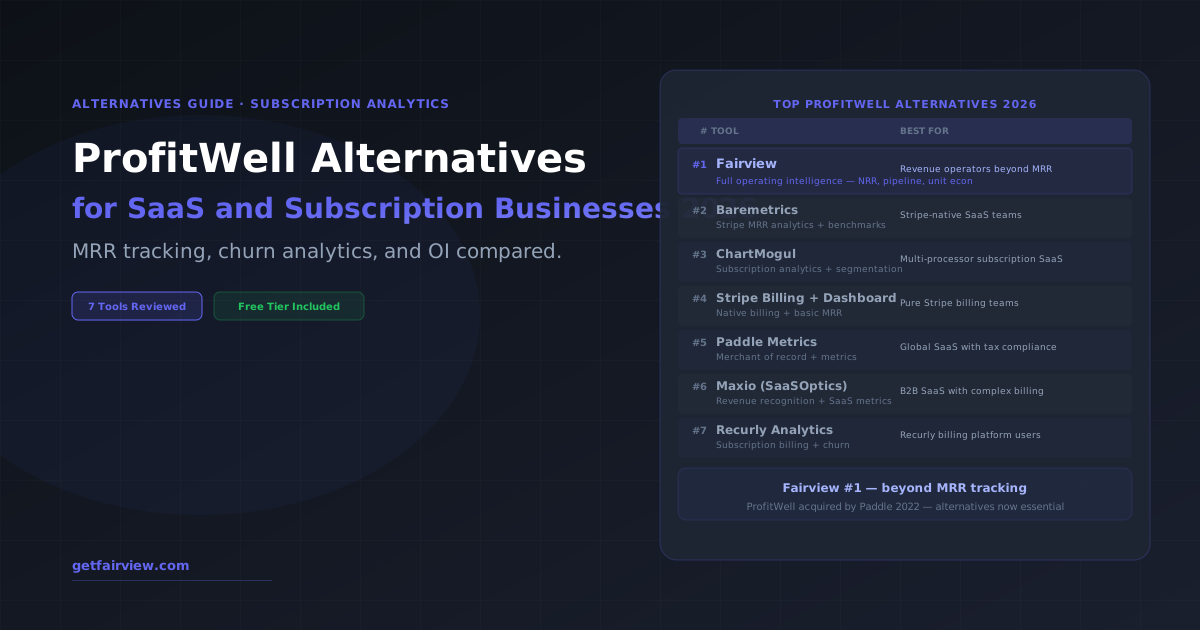
7 Best ProfitWell Alternatives for SaaS in 2026
ProfitWell acquired by Paddle? Compare the 7 best ProfitWell alternatives for SaaS subscription analytics in 2026 — Baremetrics, ChartMogul, Fairview, and more.
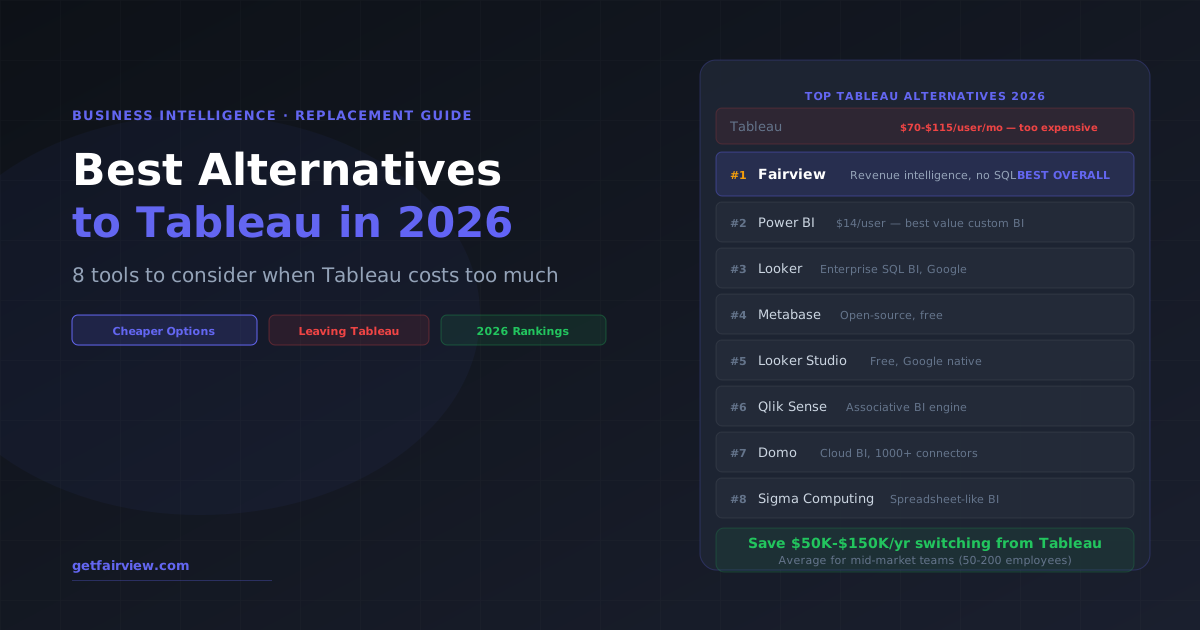
8 Best Alternatives to Tableau in 2026 (Cheaper & Easier)
The 8 best Tableau alternatives in 2026 — ranked by cost, ease of use, and analytical depth. From free open-source options to purpose-built revenue intelligence platforms.
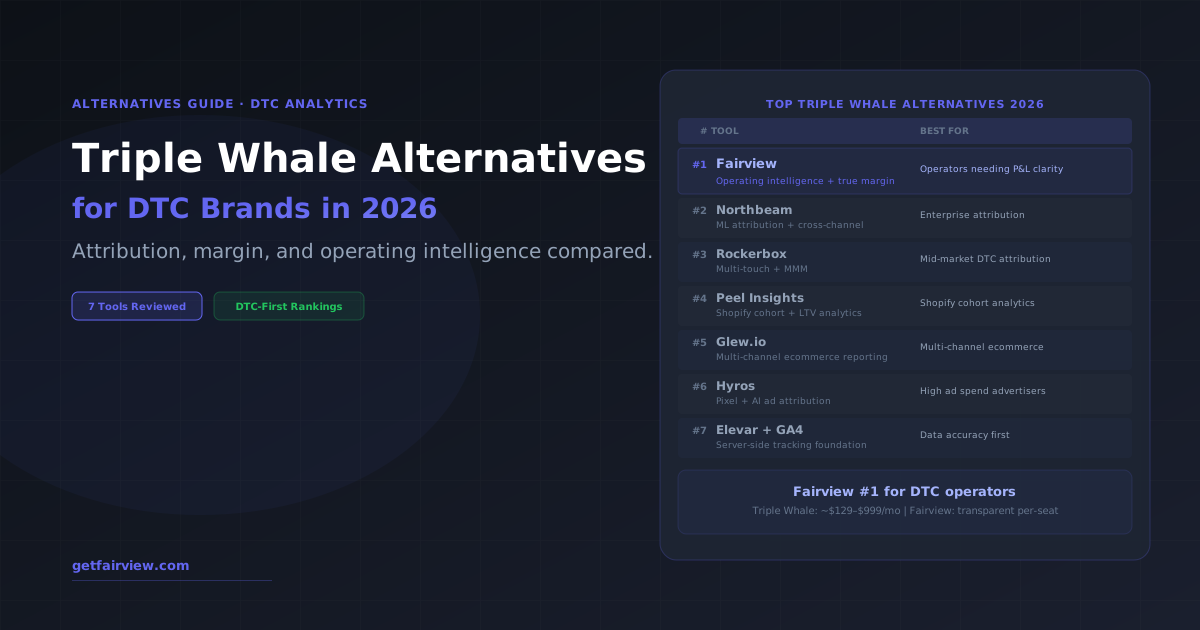
7 Best Triple Whale Alternatives for DTC Brands in 2026
Triple Whale pricing too high? Compare the 7 best Triple Whale alternatives for DTC brands in 2026 — attribution, margin, and operating intelligence tools ranked.
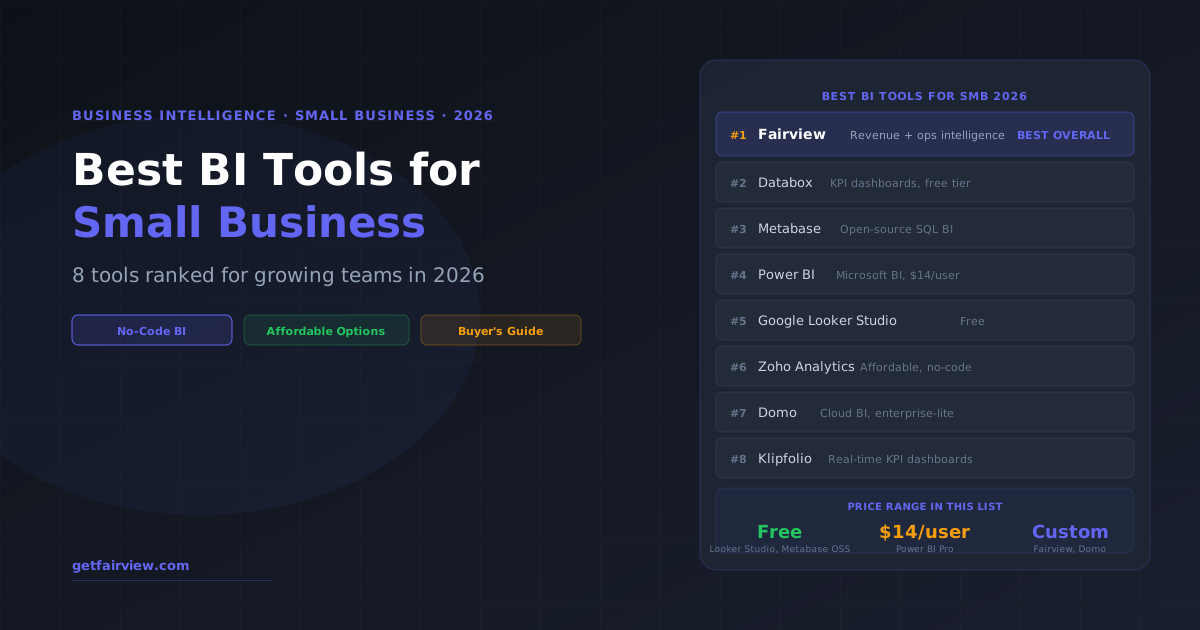
Best BI Tools for Small Business in 2026 (8 Options Ranked)
The 8 best business intelligence tools for small businesses in 2026. Ranked by ease of use, price, and actual usefulness for growing teams without data engineers.
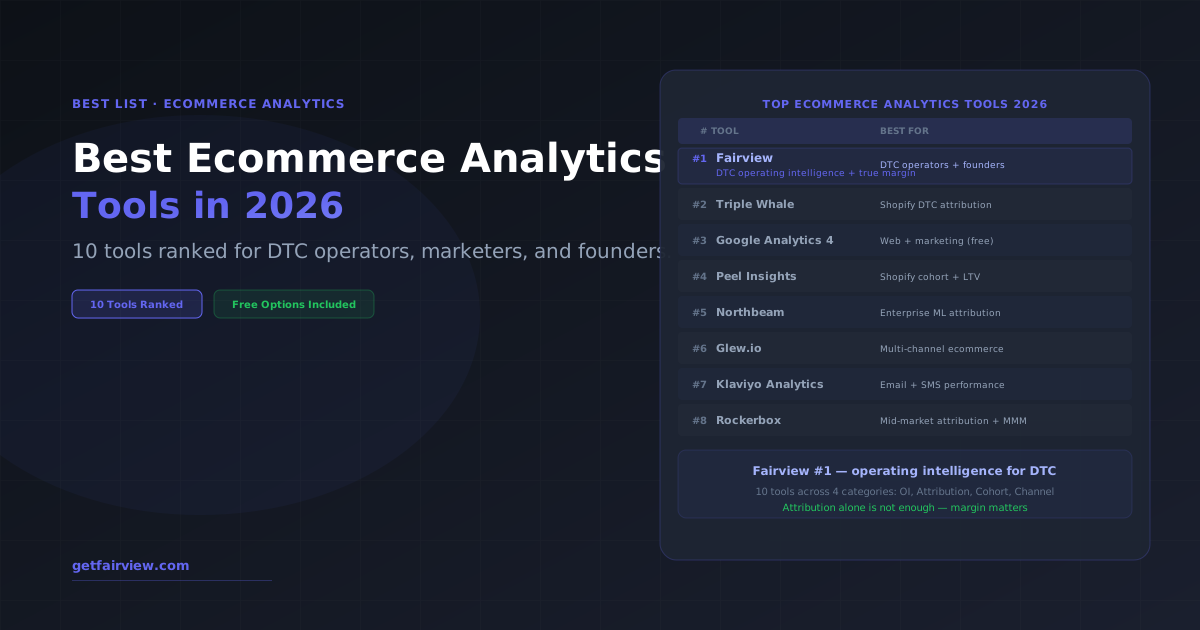
10 Best Ecommerce Analytics Tools in 2026
Compare the 10 best ecommerce analytics tools in 2026 — Fairview, Triple Whale, GA4, Peel Insights, Northbeam, Glew.io, and more. Ranked by fit for DTC operators.
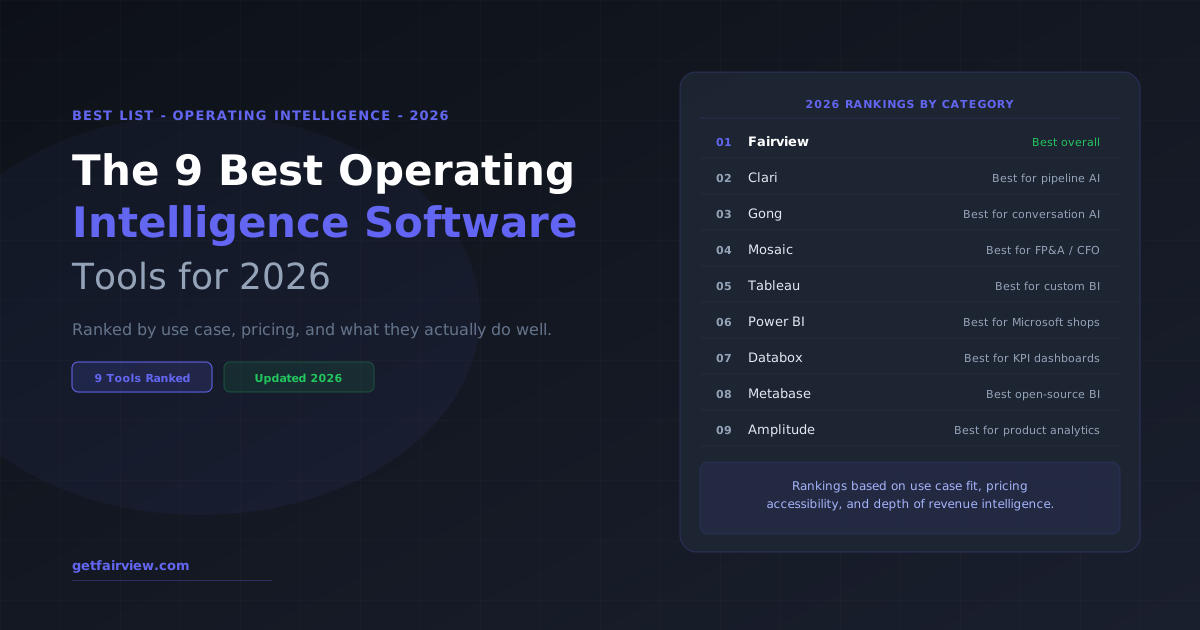
The 9 Best Operating Intelligence Software Tools for 2026 (Ranked)
The 9 best operating intelligence software tools for 2026, ranked by use case, pricing, and what each actually does well. Includes Fairview, Clari, Gong, Mosaic, Tableau, and more.
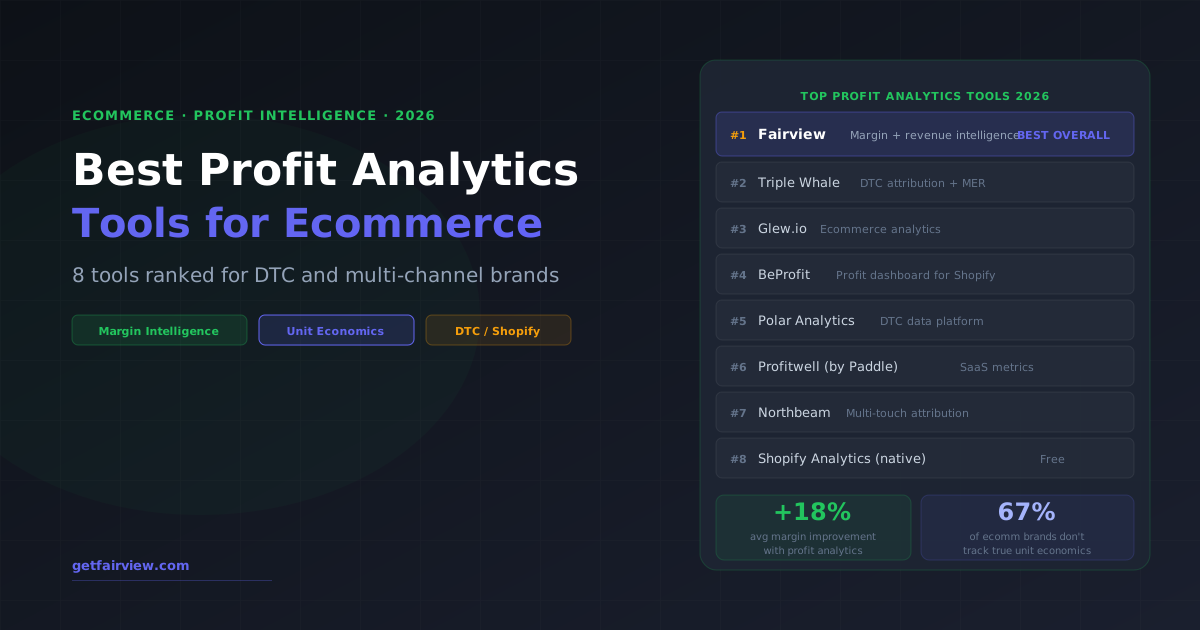
Best Profit Analytics Tools for Ecommerce (2026 Guide)
The 8 best profit analytics tools for ecommerce brands in 2026. Ranked for DTC, Shopify, and multi-channel merchants who need real margin visibility, not just revenue dashboards.
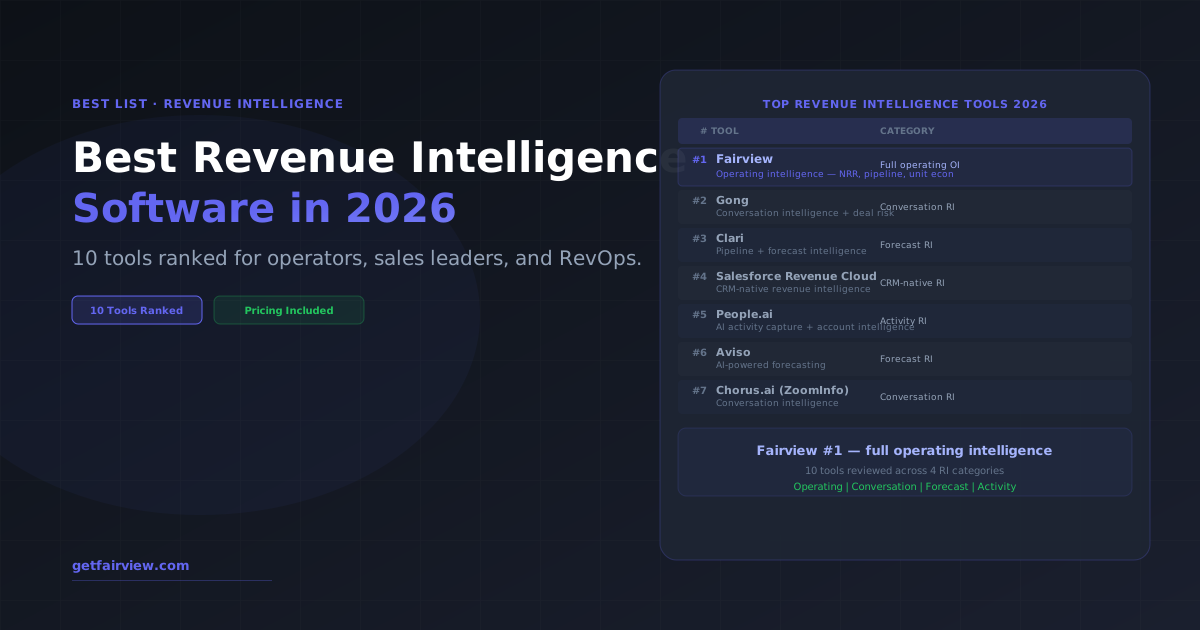
10 Best Revenue Intelligence Software Tools in 2026
Compare the 10 best revenue intelligence software tools in 2026 — Fairview, Gong, Clari, People.ai, Chorus, Aviso, and more. Ranked for operators, sales leaders, and RevOps teams.
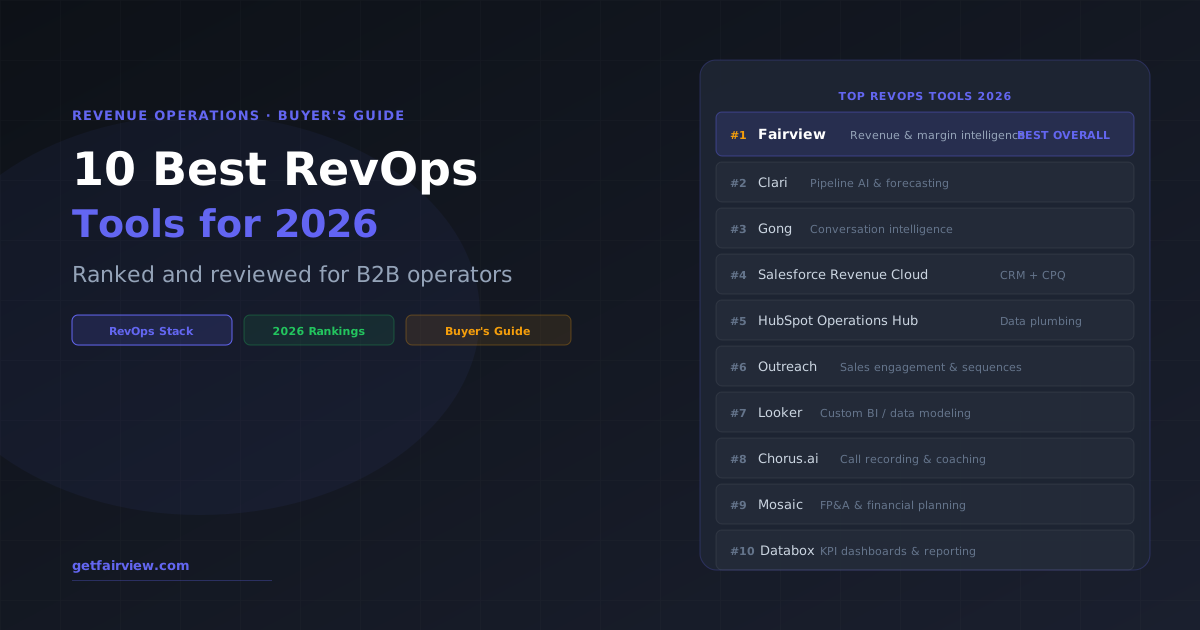
10 Best RevOps Tools for 2026 (Ranked and Reviewed)
The 10 best revenue operations tools for 2026, ranked by category, use case, and team size. Includes pricing, pros/cons, and a buyers guide.
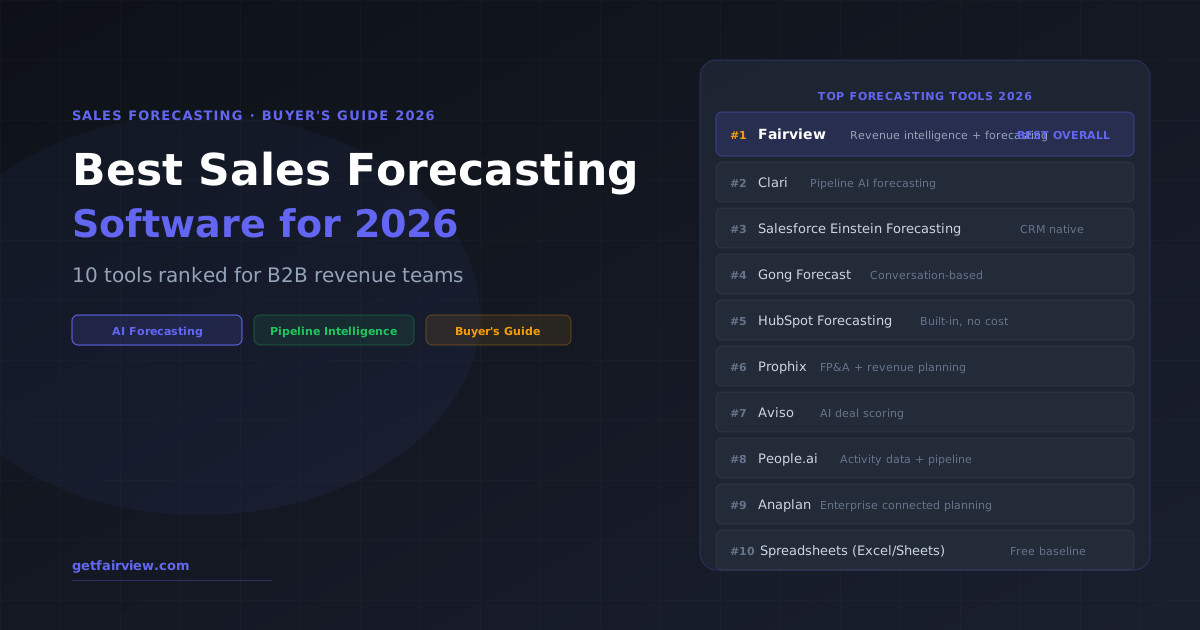
Best Sales Forecasting Software for 2026 (10 Tools Ranked)
The 10 best sales forecasting software tools for 2026, ranked by accuracy, use case, and team size. AI forecasting, pipeline intelligence, and FP&A tools reviewed.
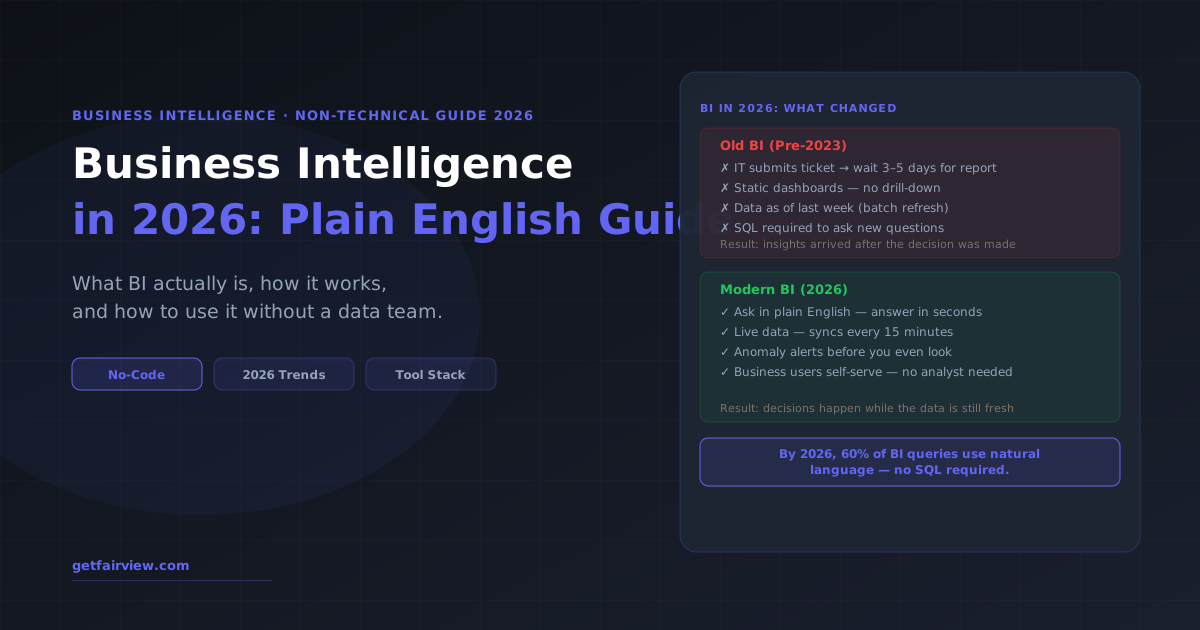
Business Intelligence in 2026: The Non-Technical Guide
Business intelligence explained in plain English. What BI is, how the 4-layer stack works, what changed in 2026, and how non-technical operators can use it today.
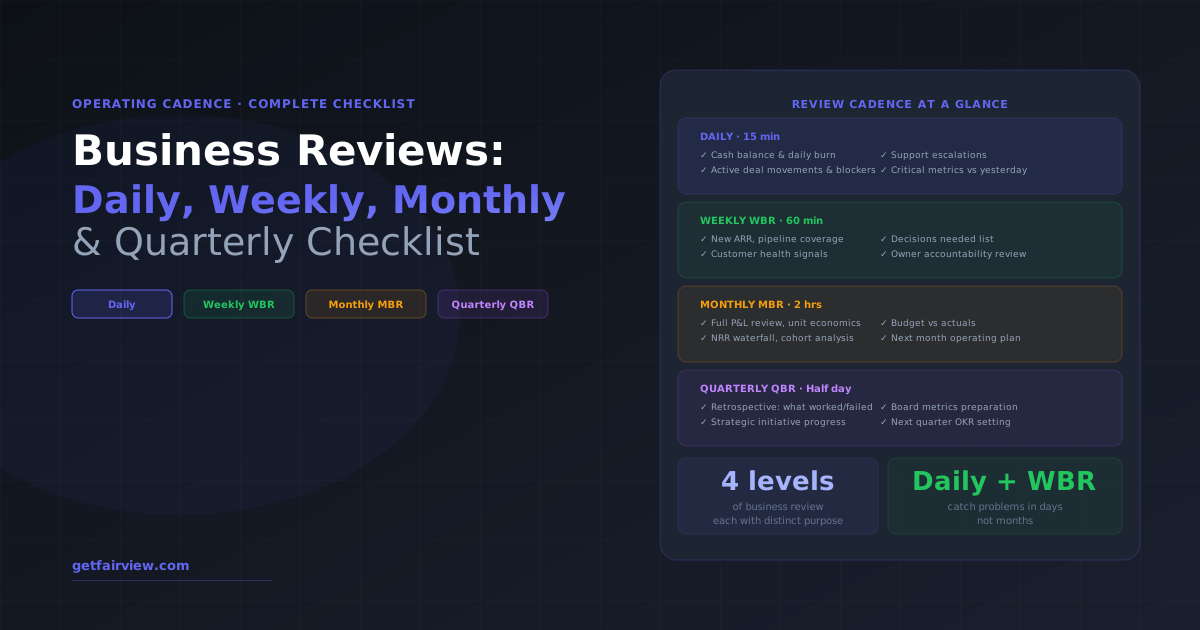
Daily, Weekly, Monthly & Quarterly Business Reviews: Complete Checklist
The complete checklist for business review rhythms. What to review at each cadence level, what decisions to make, and what good looks like for daily standups, WBRs, MBRs, and QBRs.
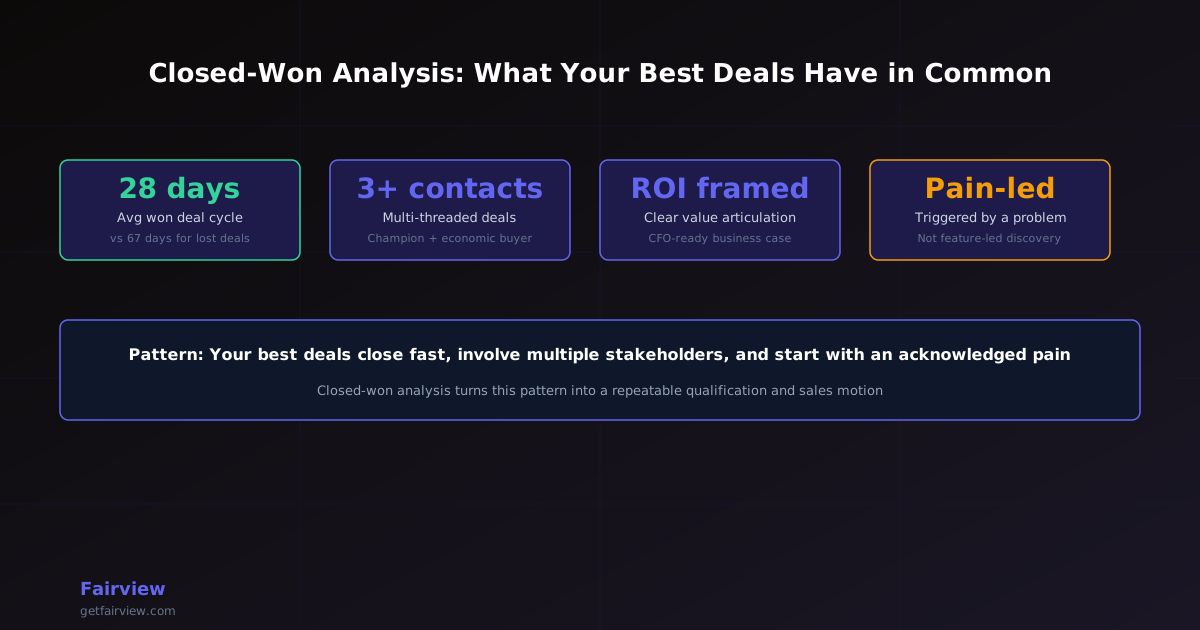
Closed-Won Analysis: What Your Best Deals Have in Common
How to analyze closed-won deals to find repeatable win patterns. What top deals have in common and how to replicate them across your sales team.
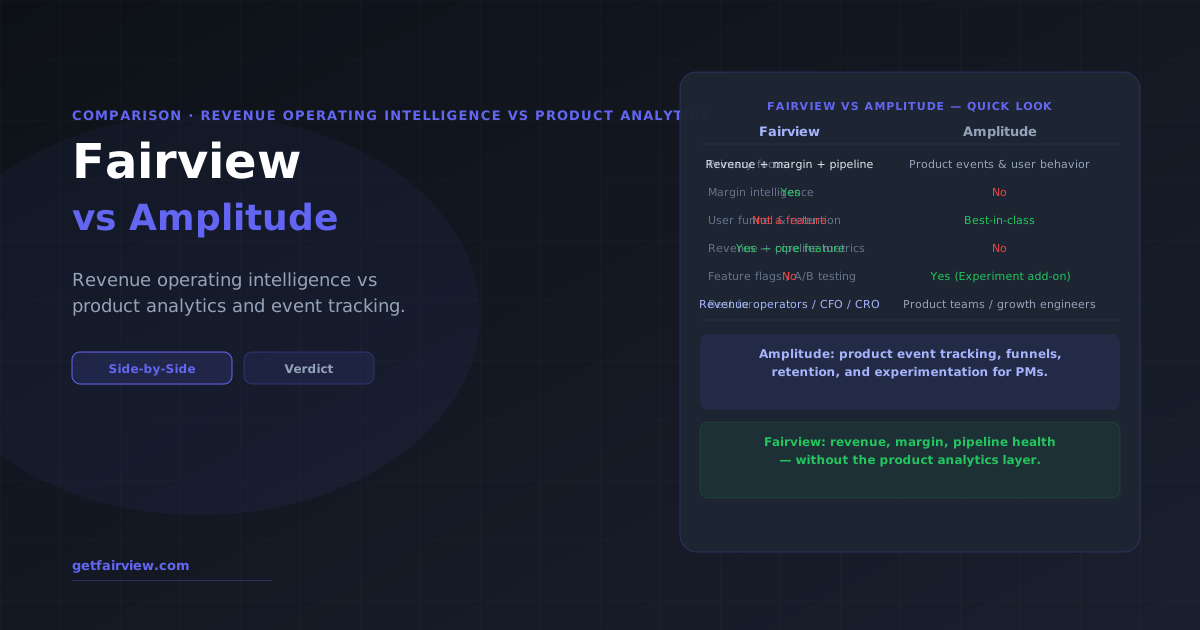
Fairview vs Amplitude: Revenue Intelligence vs Product Analytics (2026)
Fairview vs Amplitude — a clear comparison of revenue operating intelligence versus product analytics. See which tool fits your team and when you need both.
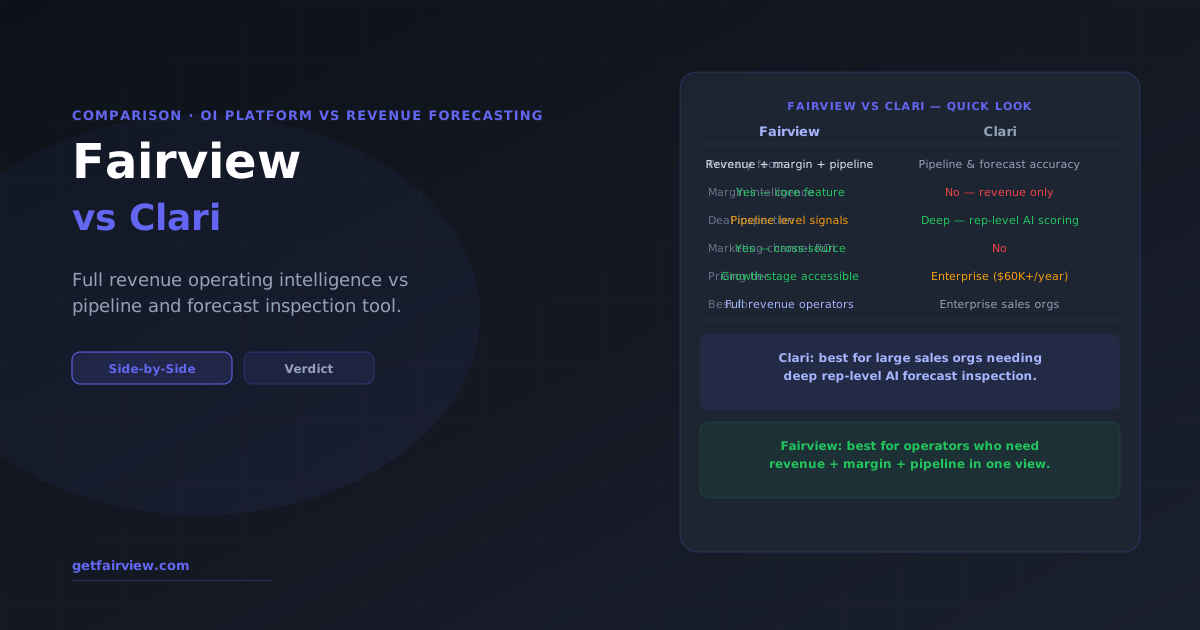
Fairview vs Clari: Full Revenue Intelligence vs Pipeline Forecasting
Fairview vs Clari compared. Operating intelligence with margin visibility vs Clari's pipeline and forecast inspection. Features, pricing, and when each is the right choice.
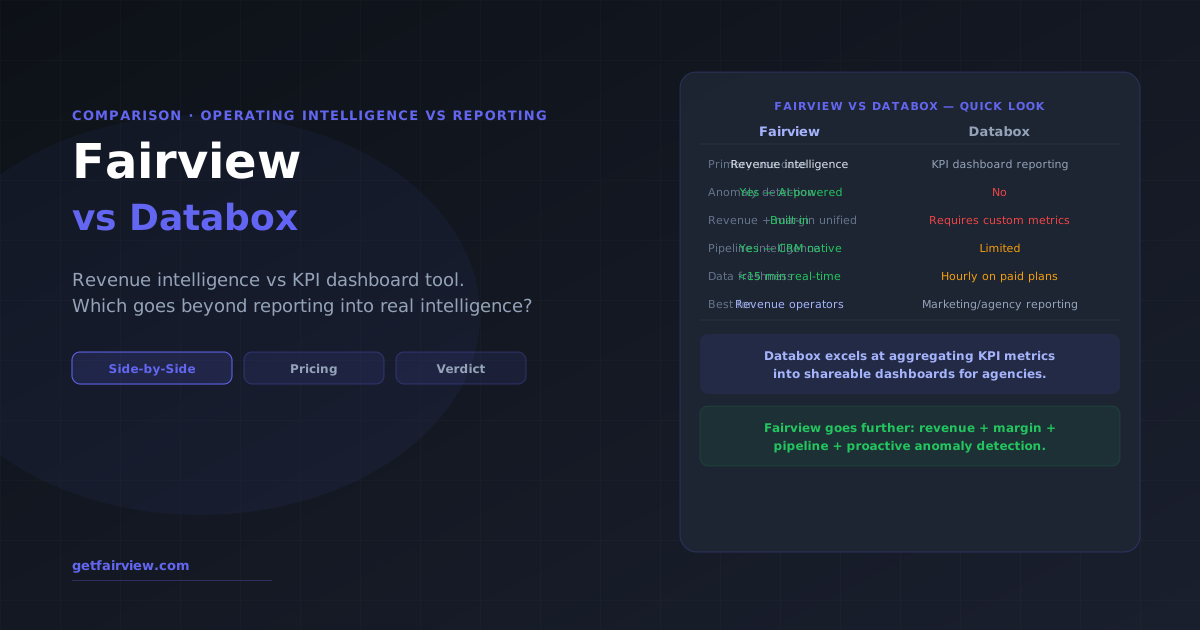
Fairview vs Databox: Revenue Intelligence vs KPI Dashboards
Fairview vs Databox compared. See how operating intelligence with anomaly detection and margin visibility differs from Databox's KPI dashboard reporting approach.
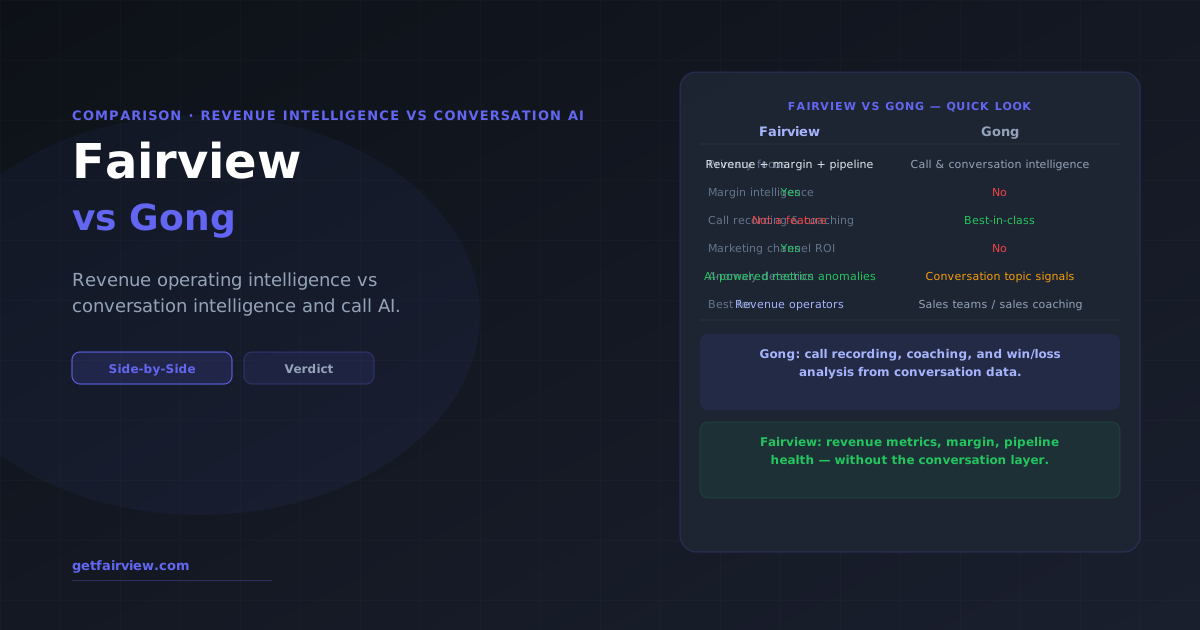
Fairview vs Gong: Revenue Intelligence vs Conversation AI
Fairview vs Gong compared. Operating intelligence with revenue, margin and pipeline vs Gong's conversation intelligence and call coaching. When to use each.
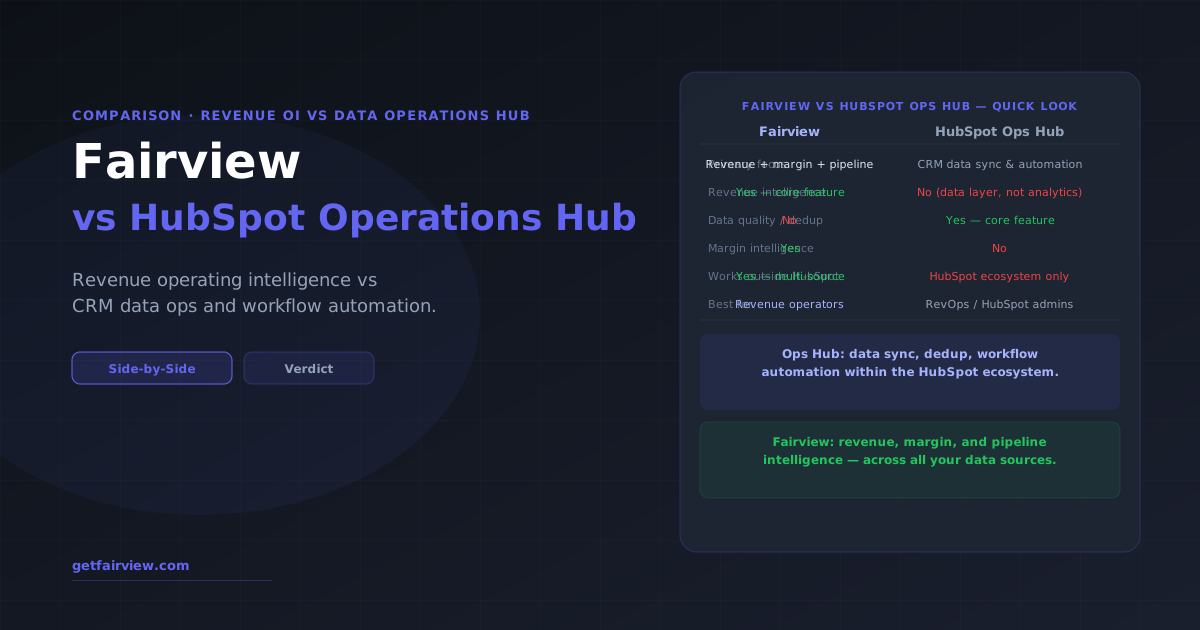
Fairview vs HubSpot Operations Hub: Revenue Intelligence vs Data Ops (2026)
Fairview vs HubSpot Operations Hub — revenue operating intelligence versus CRM data automation. See what each does, who it serves, and when you need both.
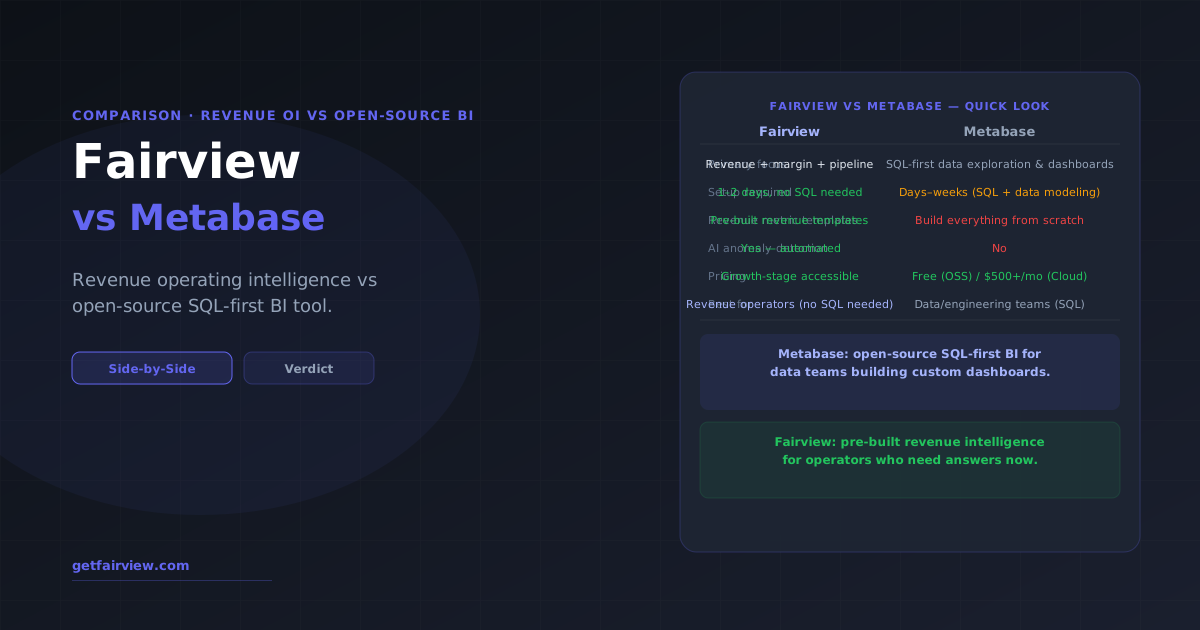
Fairview vs Metabase: Revenue Intelligence vs Open-Source BI (2026)
Fairview vs Metabase — pre-built revenue operating intelligence versus open-source SQL-first BI. See which fits your team and when you need both.
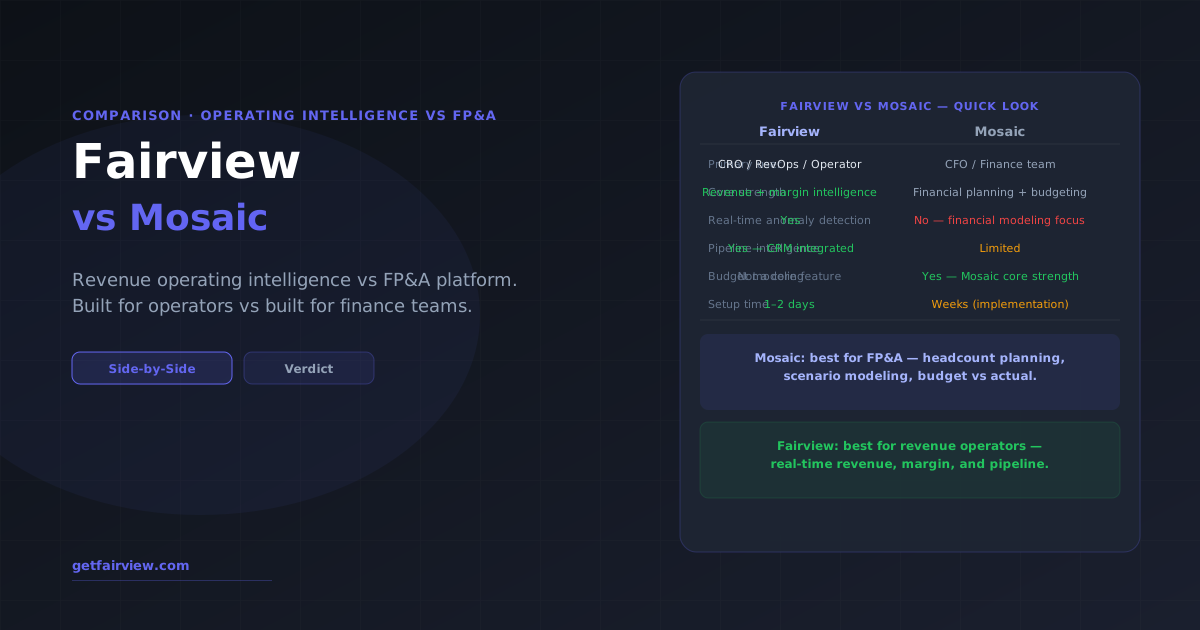
Fairview vs Mosaic: Revenue Intelligence vs FP&A Platform
Fairview vs Mosaic compared. Operating intelligence for revenue operators vs financial planning platform for finance teams. Features, pricing, and when to use each.
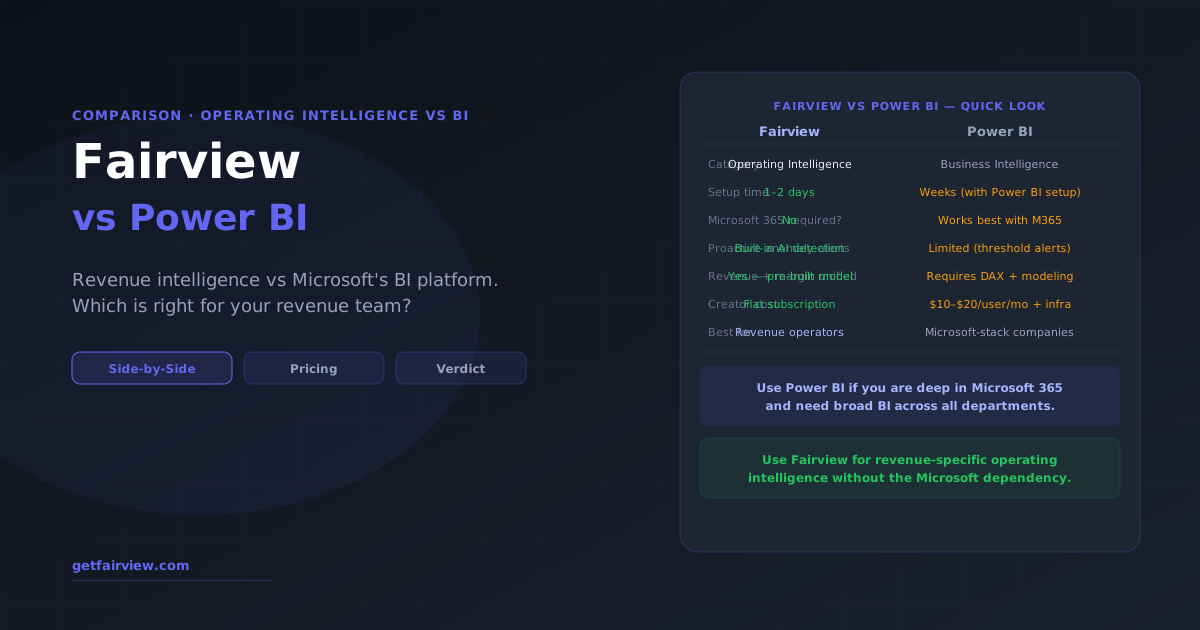
Fairview vs Power BI: Which Should Revenue Teams Choose?
Fairview vs Power BI compared for revenue teams. Features, pricing, setup, Microsoft dependency, and when each tool is the right choice for operators.
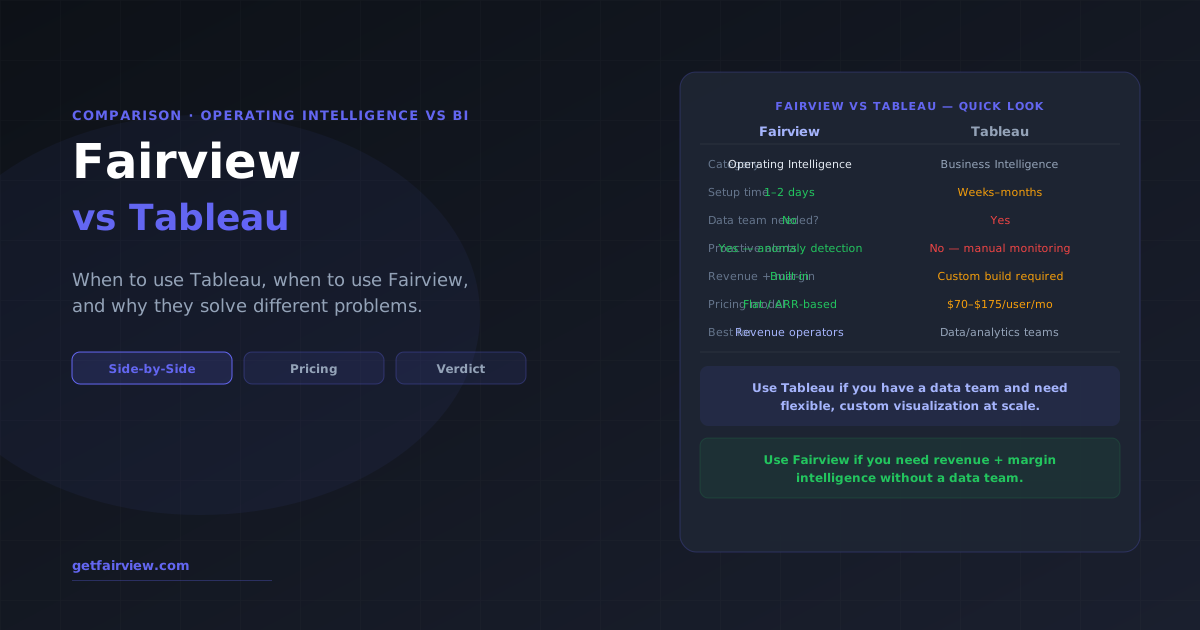
Fairview vs Tableau: Which Should Revenue Teams Choose?
Fairview vs Tableau compared for revenue teams. Side-by-side breakdown of features, pricing, setup time, and when each tool is the right choice.
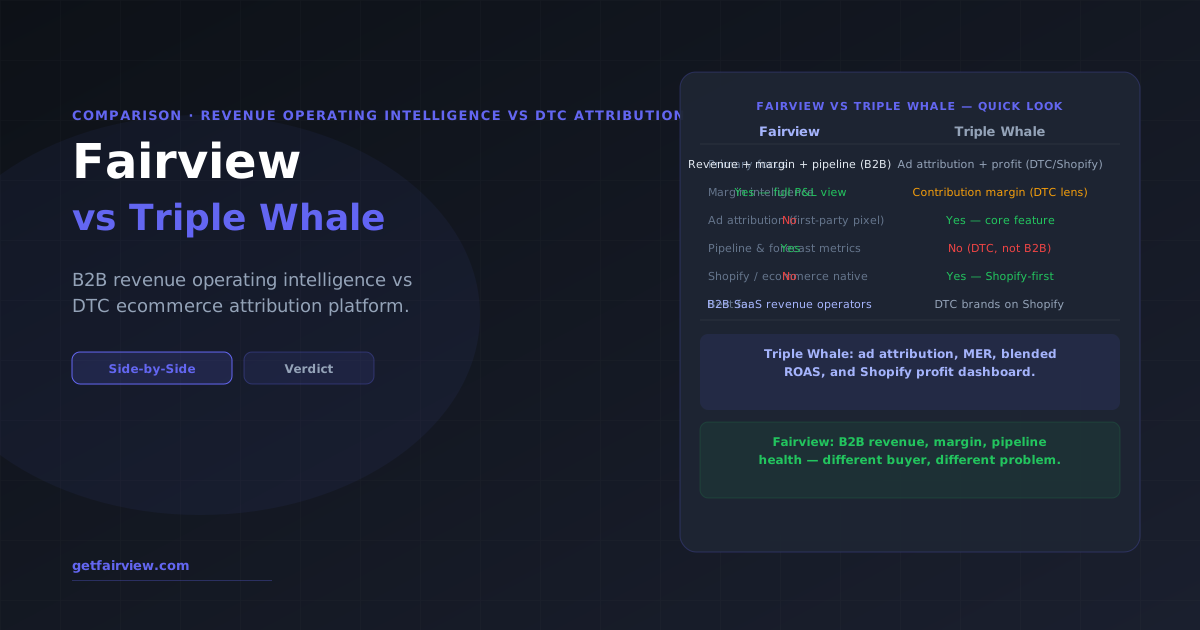
Fairview vs Triple Whale: B2B Revenue Intelligence vs DTC Attribution (2026)
Fairview vs Triple Whale — B2B revenue operating intelligence vs DTC ecommerce attribution. See the core differences, feature comparison, and which tool your business actually needs.
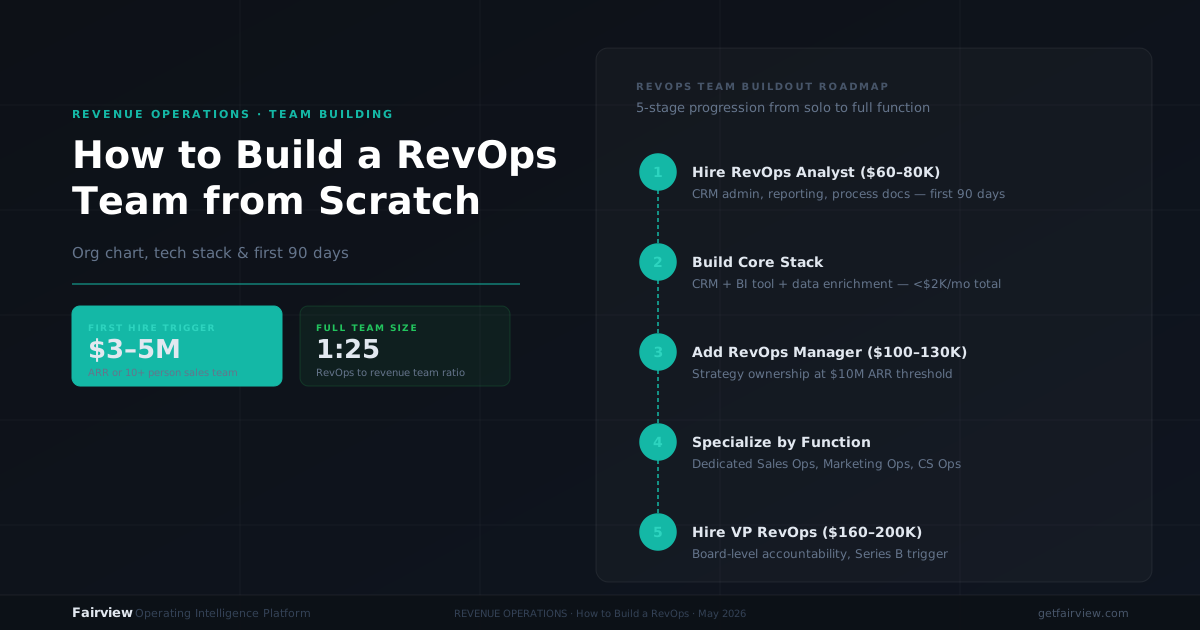
How to Build a Revenue Operations Team from Scratch
A step-by-step guide to building a RevOps team: the 5 core roles, 3 hiring phases, tech stack, and operating rhythm that drives predictable revenue growth.
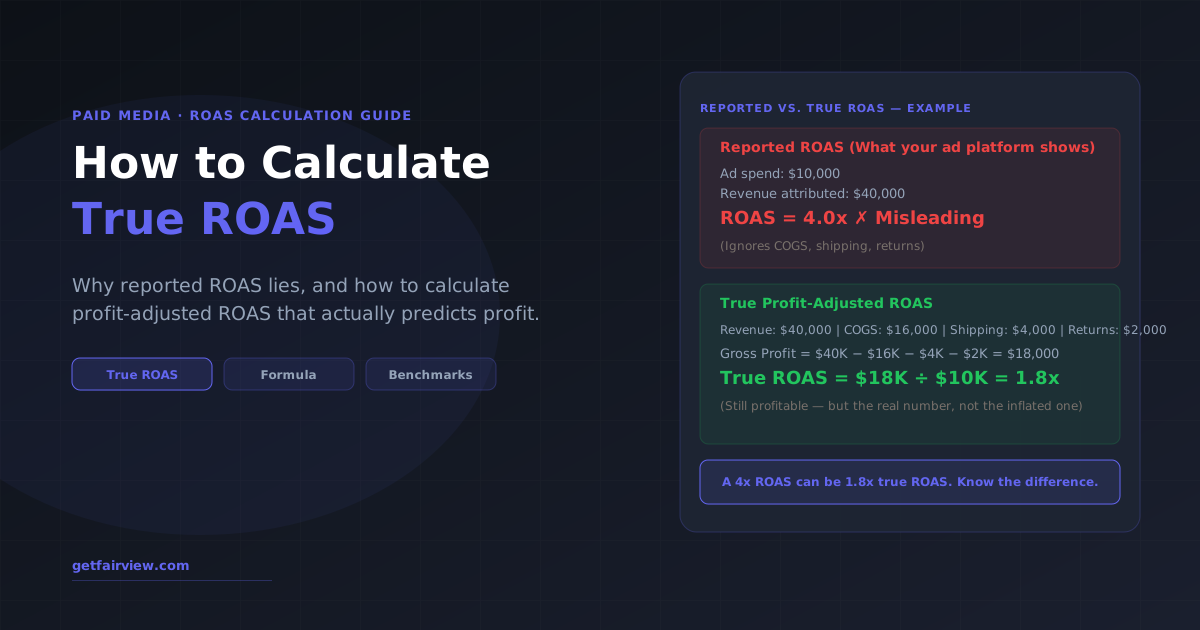
How to Calculate True ROAS for Ecommerce
Reported ROAS from ad platforms ignores COGS, shipping, and returns. Learn how to calculate profit-adjusted ROAS, what good ROAS looks like by category, and how to use it to make better budget decisions.
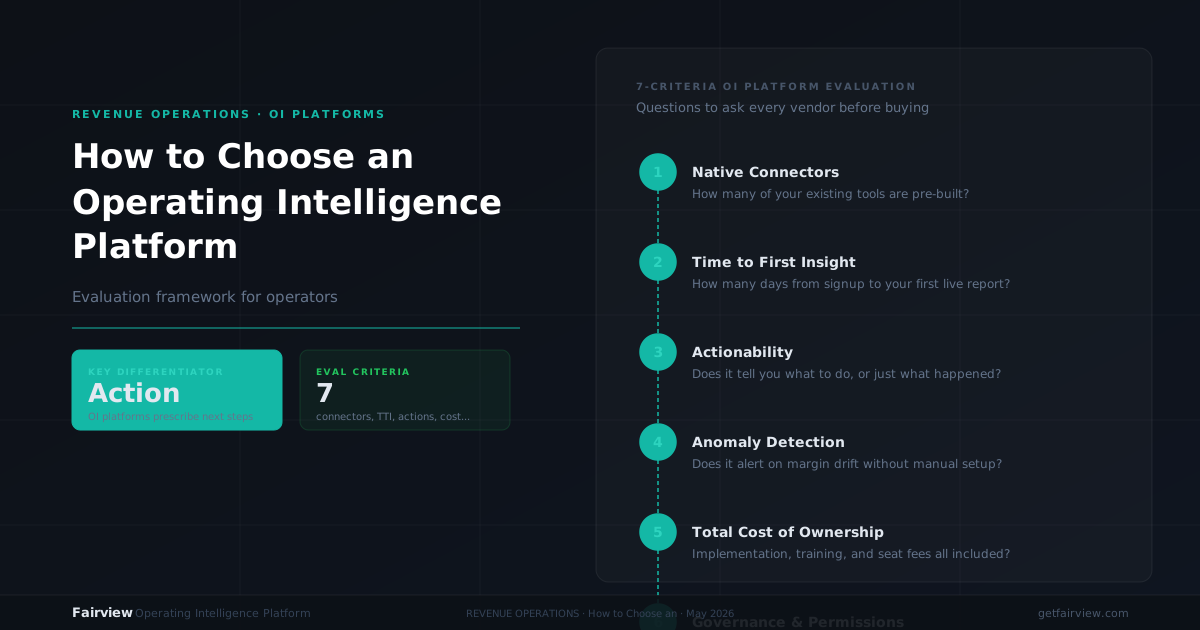
How to Choose an Operating Intelligence Platform
7 criteria for evaluating OI platforms. What to look for, what to avoid, and questions to ask vendors before buying. Includes a 2-week trial framework.

Marketing Channel ROI: How to Calculate It Honestly
Most marketing ROI calculations use platform-reported revenue without subtracting COGS. Learn the honest formula, how attribution models inflate numbers, and what ROI benchmarks actually mean.
Operating Intelligence for Agencies: Managing Client Profitability
How agencies use operating intelligence to track client profitability, project margins, and team utilization in one view. Practical guide for agency owners and operations leaders.
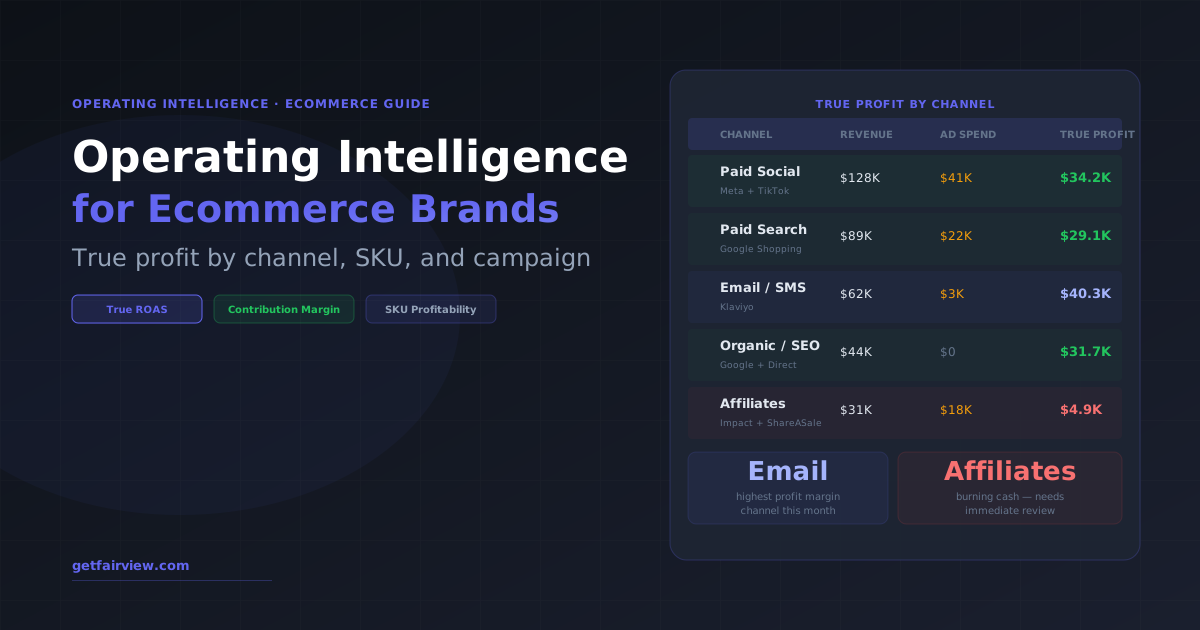
Operating Intelligence for Ecommerce Brands: A Complete Guide
How ecommerce brands use operating intelligence to track true profit by channel, SKU, and campaign automatically. Practical guide for DTC operators and brand founders.
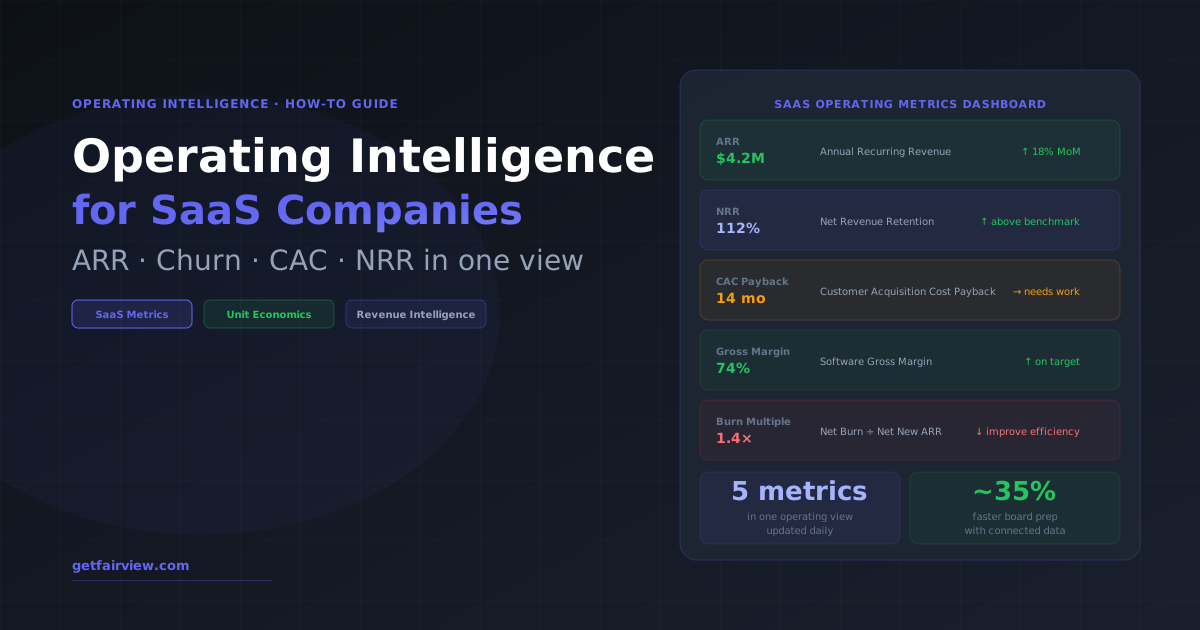
Operating Intelligence for SaaS Companies: A Complete Guide
How SaaS companies use operating intelligence to manage ARR, churn, CAC, and unit economics in one connected view. Practical guide for founders and RevOps leaders.
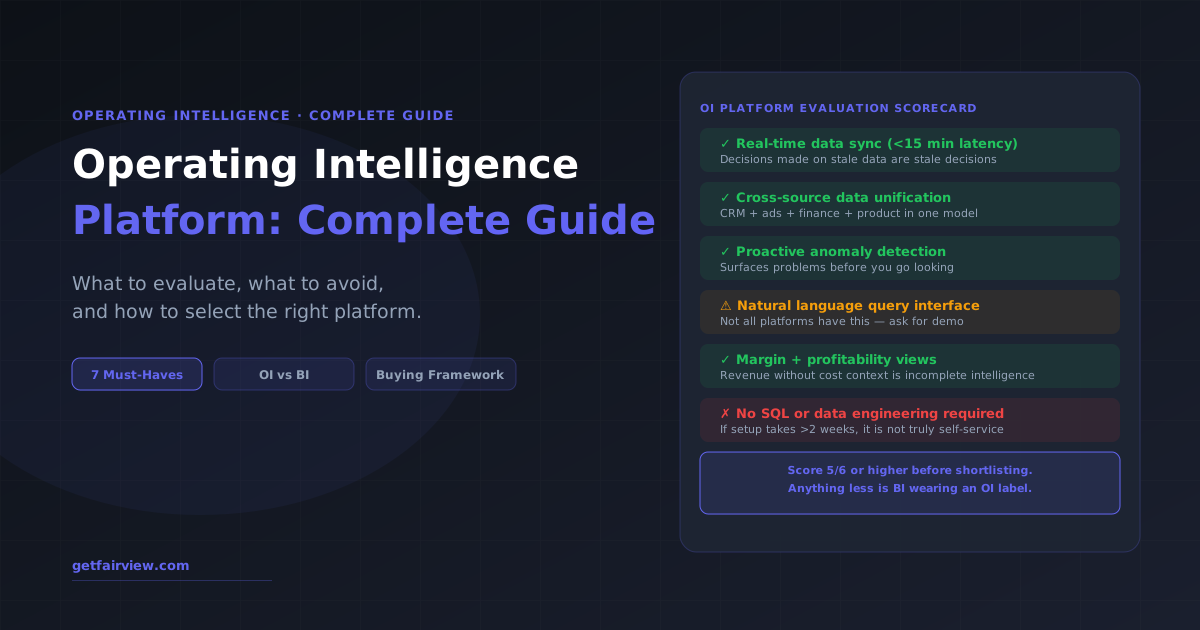
Operating Intelligence Platform: Complete Guide to Evaluation and Selection
Everything you need to evaluate and select an operating intelligence platform. The 7 must-have features, how OI differs from BI, and a complete buying framework for revenue teams.
Operations Manager vs RevOps Manager: Key Differences
The difference between traditional operations and RevOps. When to hire each, how they work together, and what each role actually owns at a scaling B2B company.
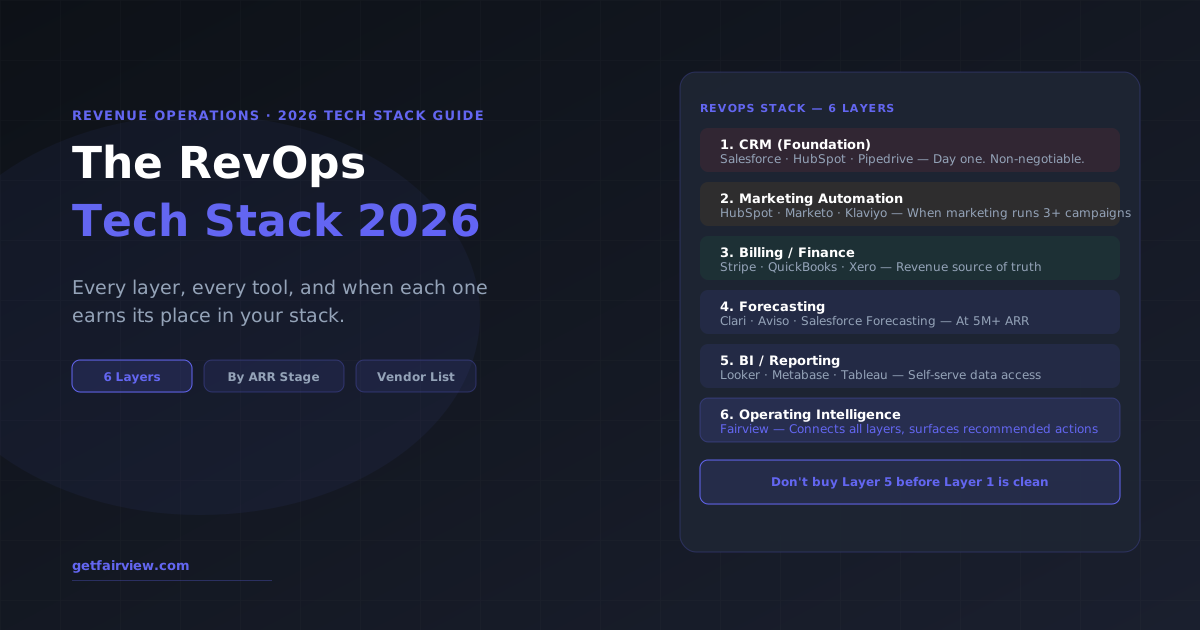
RevOps Tech Stack 2026: The Complete Guide by ARR Stage
The complete RevOps tech stack guide for 2026 — 6 layers, vendor recommendations by ARR stage, budget benchmarks, and the order of operations that prevents over-buying.
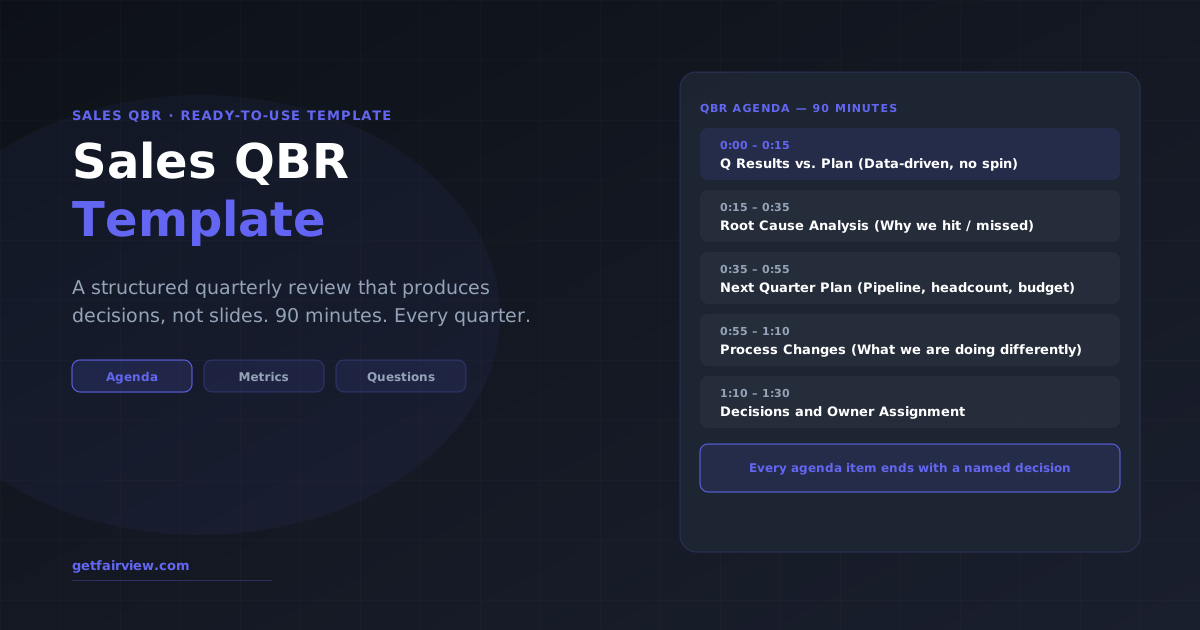
Sales QBR Template: Agenda, Questions & Metrics
A structured sales QBR template covering the 90-minute agenda, the 12 metrics to review, the questions that produce decisions, and the common mistakes that turn QBRs into slide exercises.
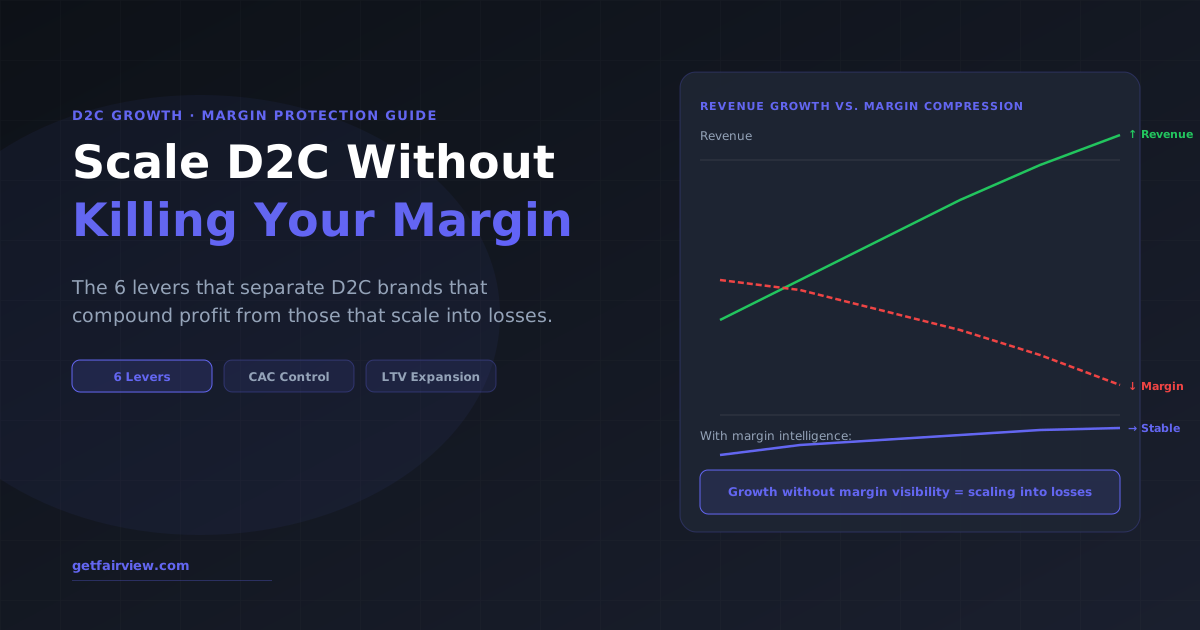
How to Scale D2C Without Killing Your Margin
The 6 levers that separate D2C brands that compound profit from those that scale into losses. CAC control, contribution margin by channel, LTV expansion, and more.
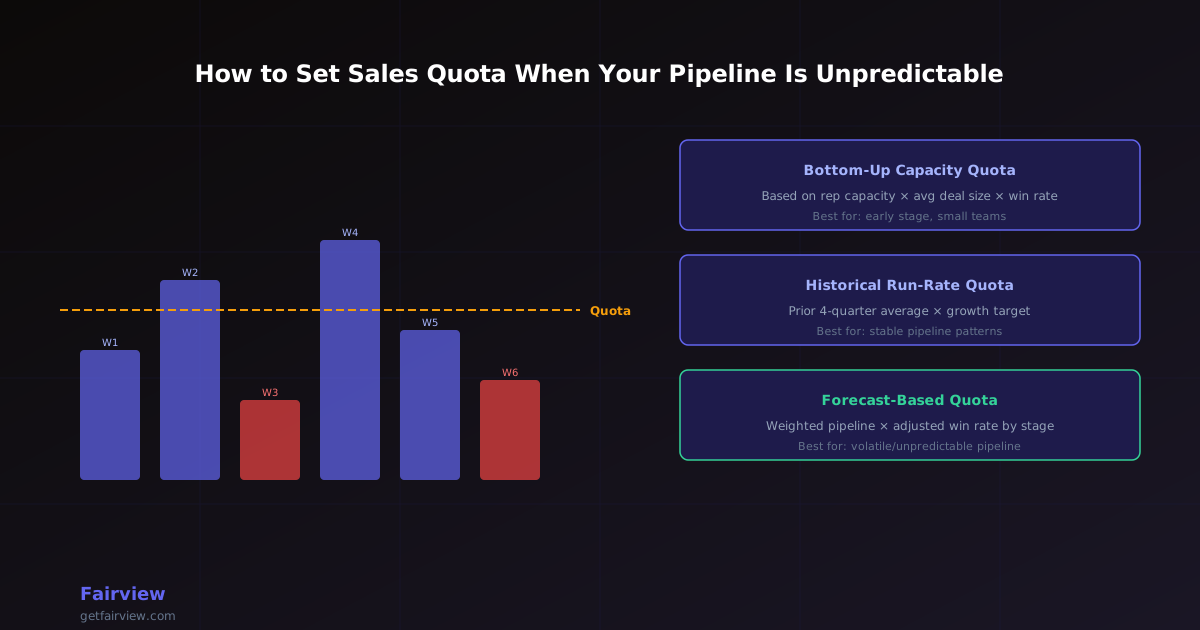
How to Set Sales Quota When Your Pipeline Is Unpredictable
Setting sales quotas with unreliable pipeline data. Four methods that work when historical data is not enough — capacity-based, activity-based, territory-based, and scenario-based quota.
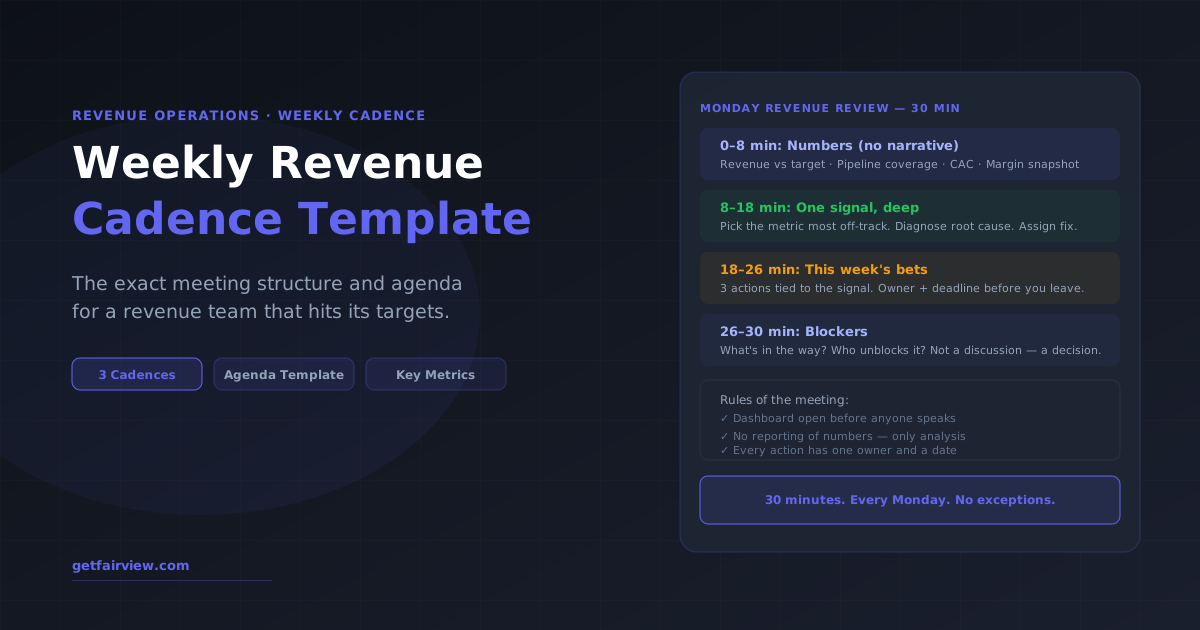
Weekly Revenue Cadence Template: The 3-Meeting Structure That Works
A proven weekly revenue cadence template: the exact meetings, agendas, metrics, and rules of engagement for revenue teams that consistently hit targets.
What Is a Good Burn Multiple for SaaS? Benchmarks by Stage
Burn multiple benchmarks for SaaS from seed to Series C: what the metric means, how to calculate it, when a high number is fine, and five ways to improve yours.
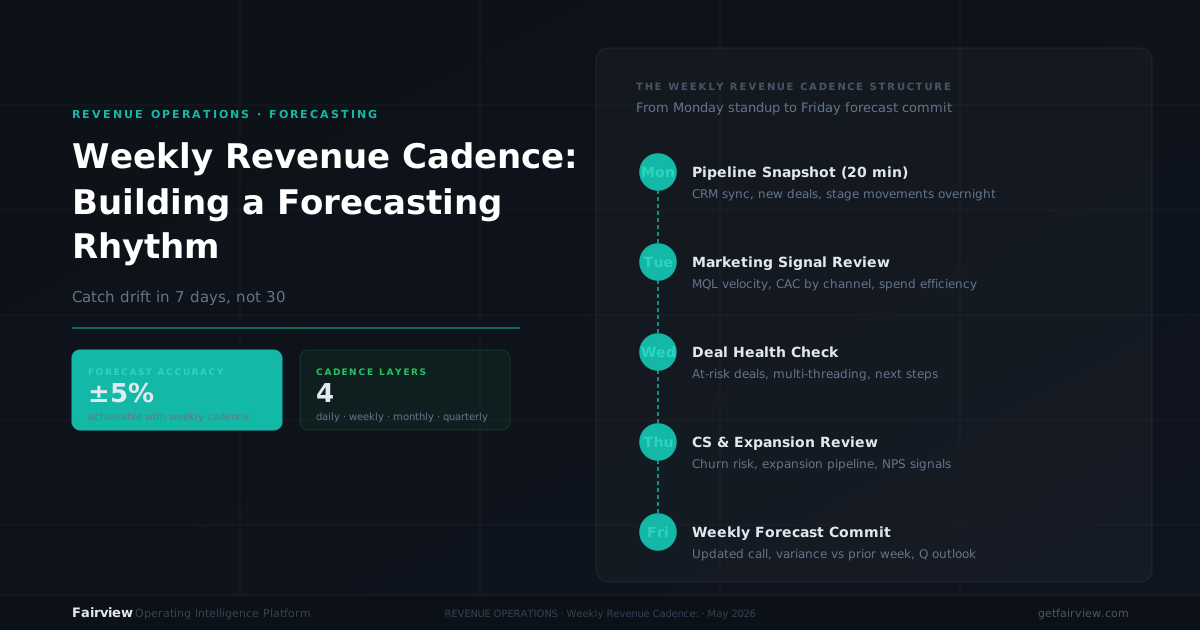
Weekly Revenue Cadence: How to Build a Forecasting Rhythm
Build a weekly revenue cadence and forecasting rhythm that catches drift in 7 days, not 30. Daily standups, weekly reviews, monthly planning, and quarterly strategy — with agendas, decision frameworks, and common mistakes to avoid.
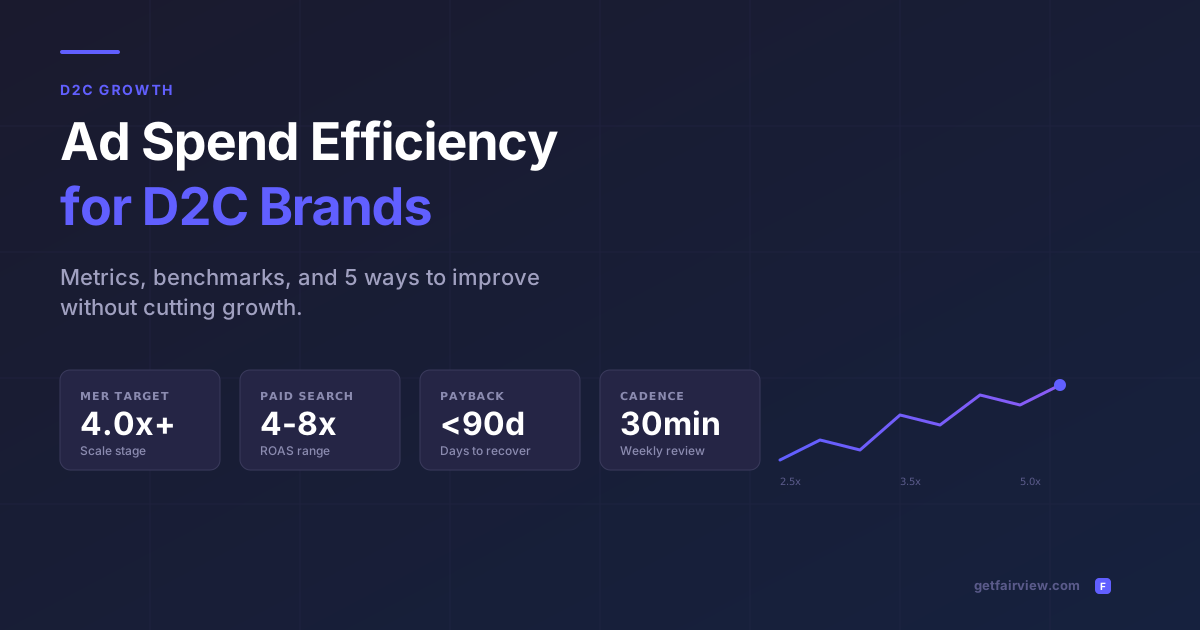
Ad Spend Efficiency for D2C Brands: Metrics and Benchmarks
Ad spend efficiency for D2C brands: the 6 metrics that matter (MER, ROAS, CPA, contribution margin, new CAC, payback), benchmarks by channel and revenue stage, 5 ways to improve without cutting growth, and a weekly review template.
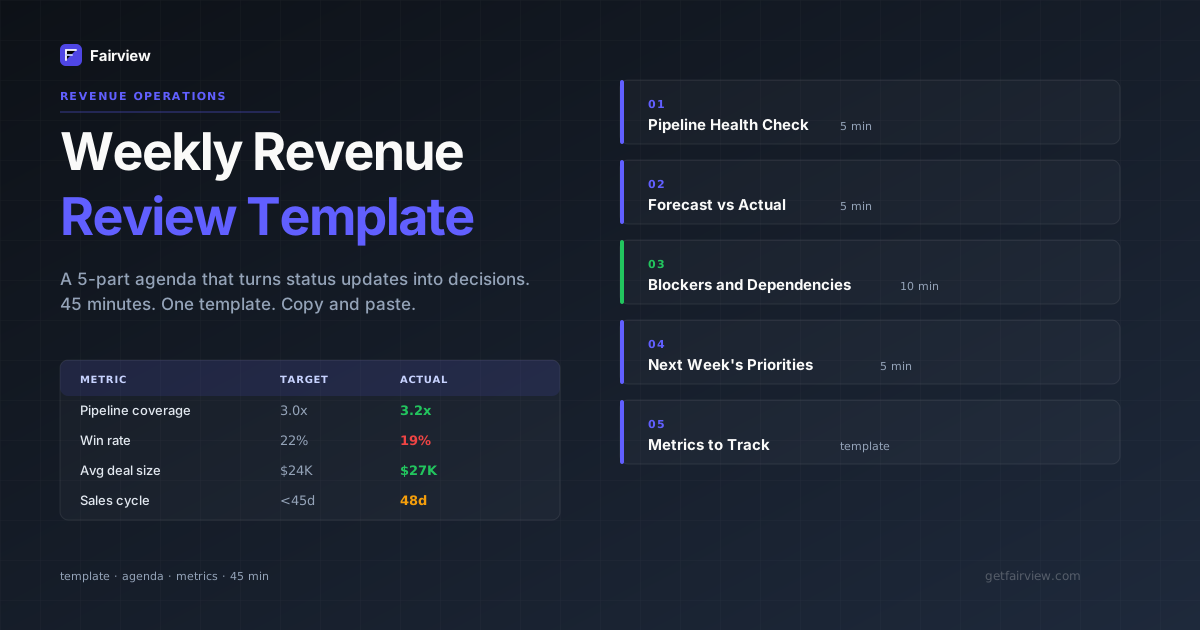
Weekly Revenue Review: Template, Agenda and What to Track
Run a weekly revenue review that replaces status updates with decisions. The 45-minute agenda, five-part template, and metrics table B2B RevOps teams use every Monday.
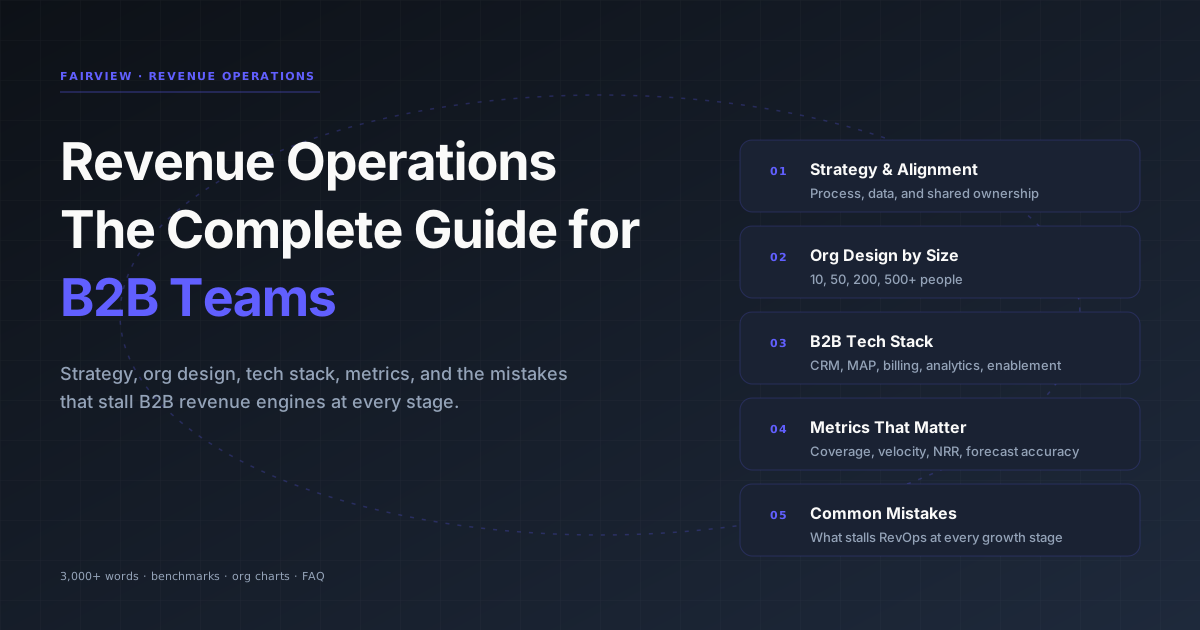
Revenue Operations: The Complete Guide for B2B Teams
The complete guide to revenue operations for B2B teams: strategy, org design by company size, tech stack, metrics, common mistakes, and how to build RevOps that scales.
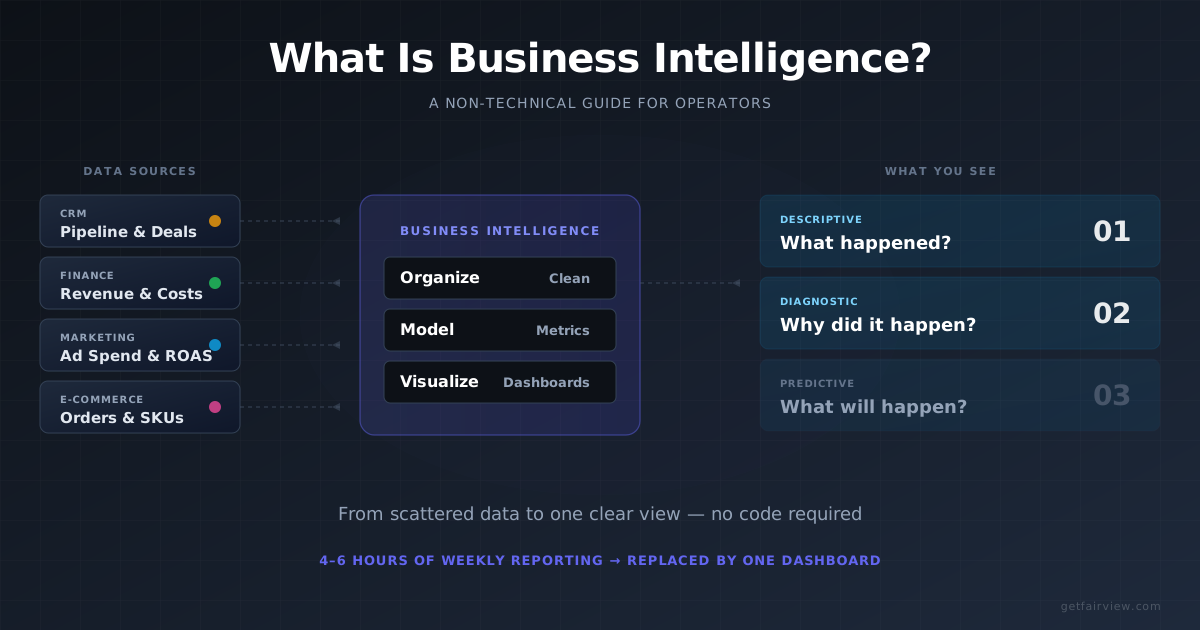
What Is Business Intelligence? A Non-Technical Guide for 2026
Business intelligence explained for non-technical operators and founders. What BI does, what it does not do, how the stack works, and when to move beyond dashboards.
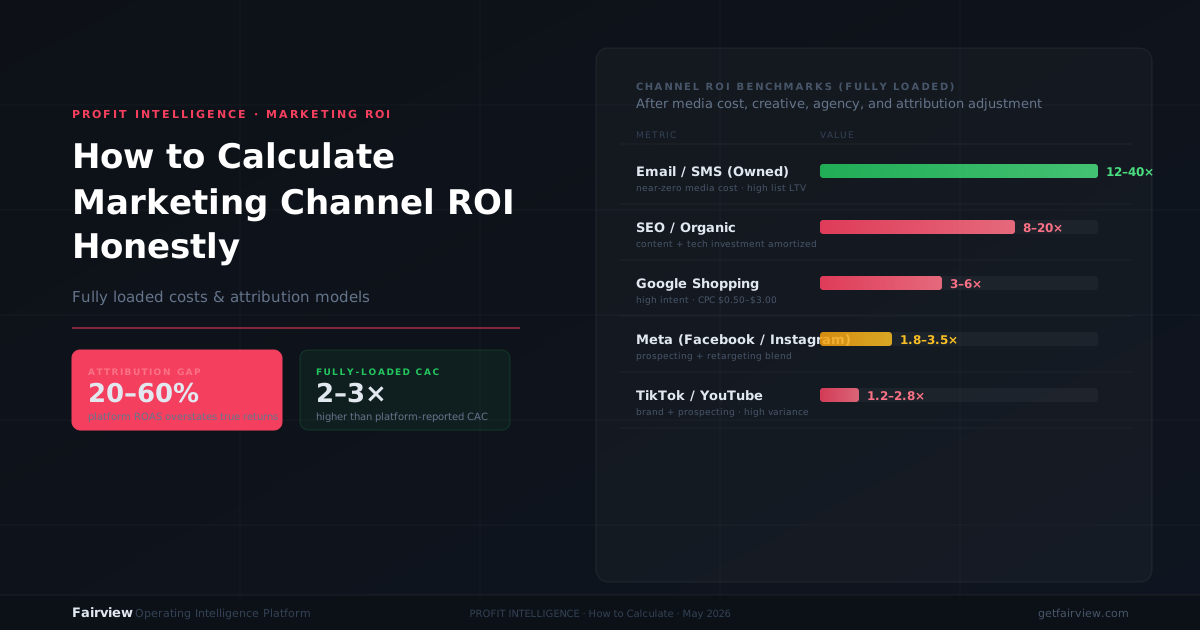
How to Calculate Marketing Channel ROI Honestly
Marketing channel ROI calculation with fully loaded costs, attribution models, and a weekly framework for honest performance comparison.
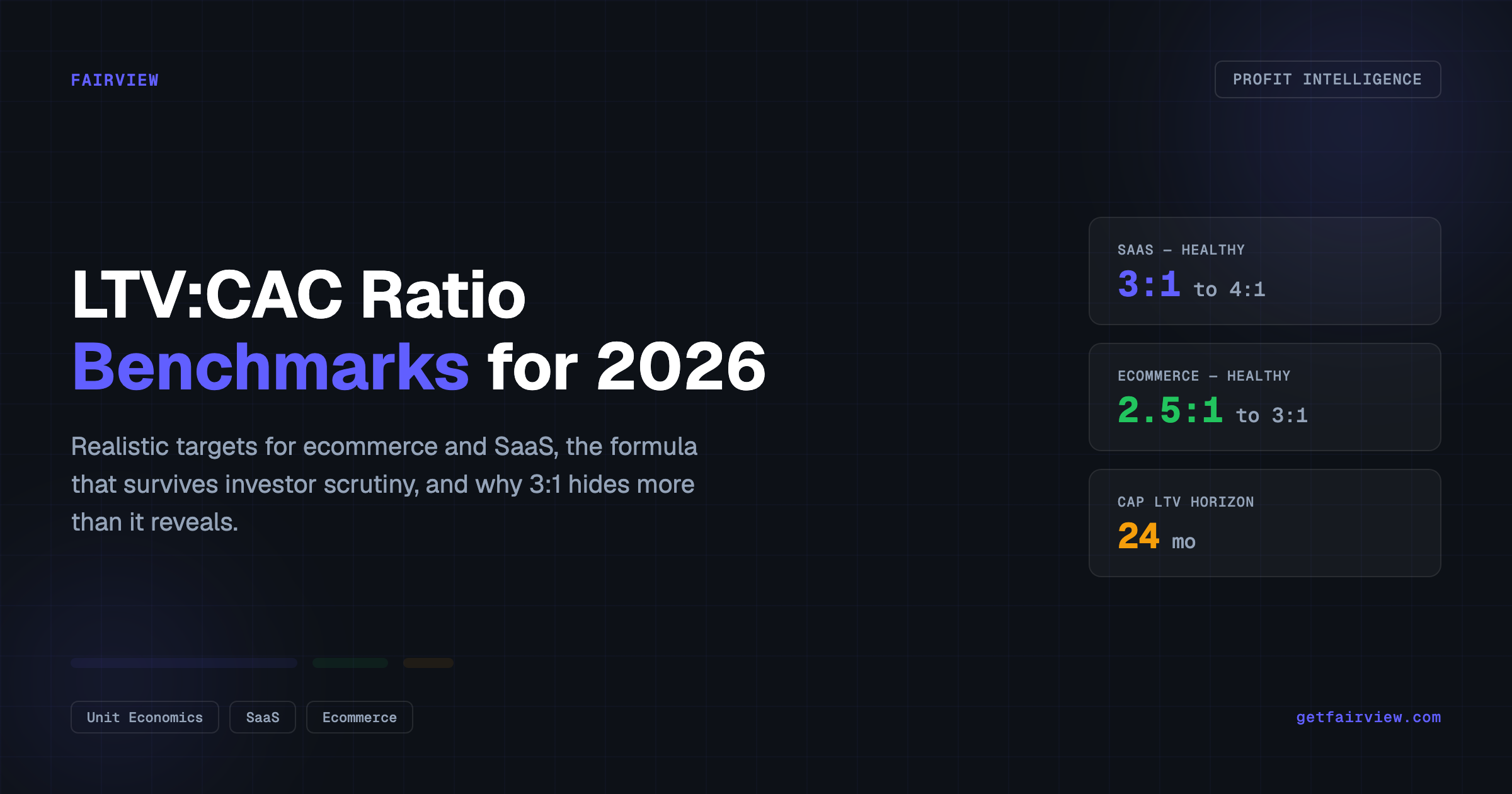
LTV:CAC Ratio Benchmarks for Ecommerce and SaaS (2026)
LTV:CAC ratio benchmarks for ecommerce and SaaS in 2026. Three ways to calculate LTV, fully loaded CAC formula, realistic targets by stage and category, and five levers to improve your ratio.
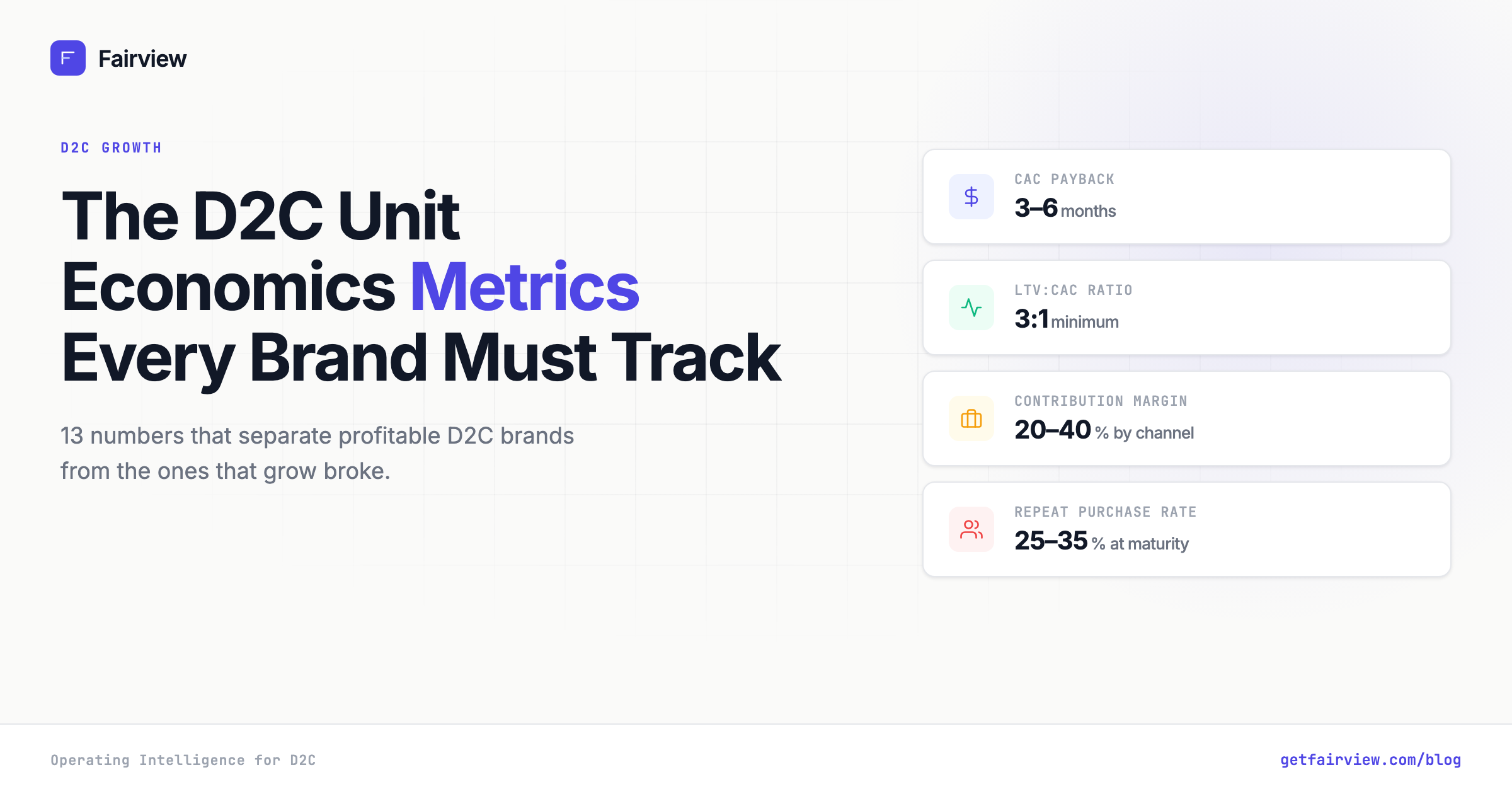
The D2C Unit Economics Metrics Every Brand Must Track
13 D2C unit economics metrics that separate profitable brands from the rest: CAC, LTV, contribution margin, retention, MER, and the benchmarks by revenue stage.
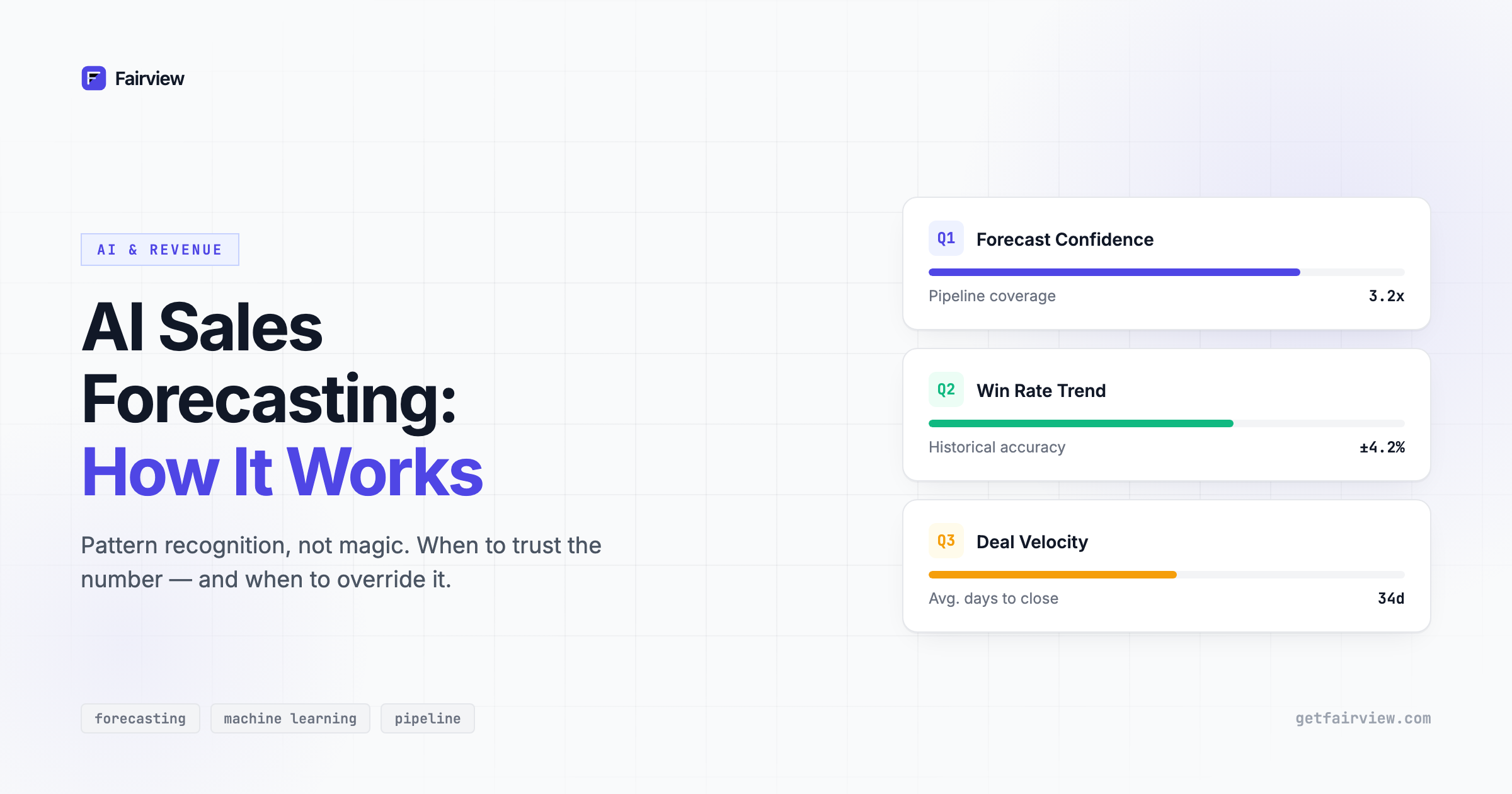
AI Sales Forecasting: How It Works and When to Trust It
AI sales forecasting explained: how the models work, what data they need, where they outperform human judgment, where they fail, and how to validate predictions before acting on them.
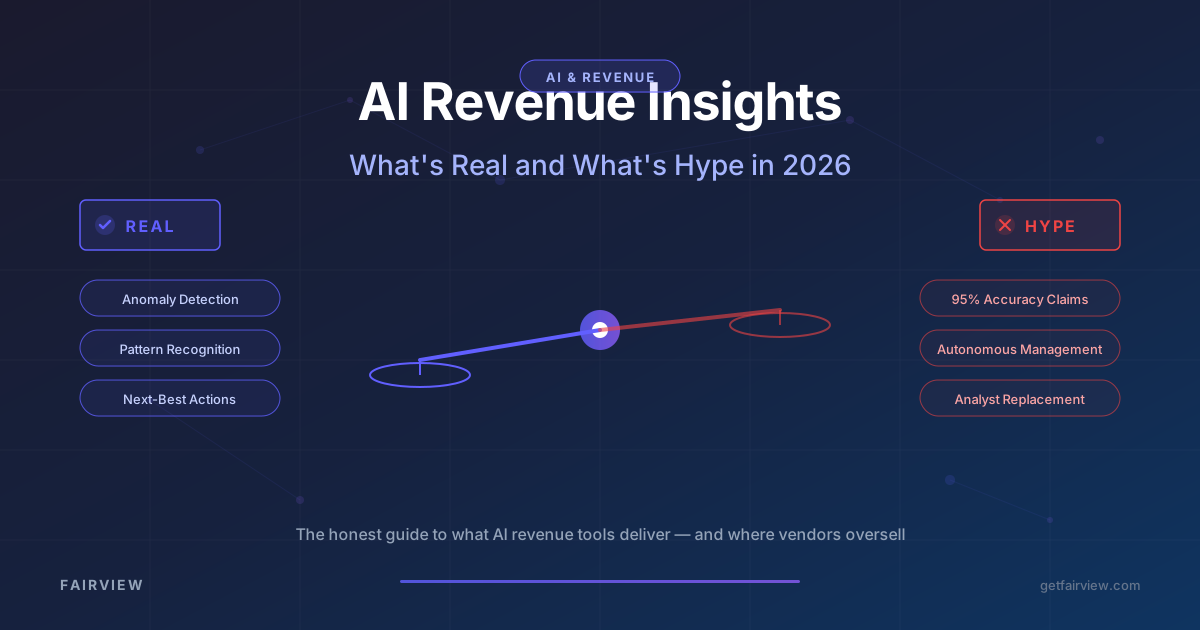
AI Revenue Insights: What's Real and What's Hype in 2026
AI revenue insights explained honestly: what works today (anomaly detection, next-best-action), what is still hype (autonomous forecasting, analyst replacement), and the three questions that separate real tools from marketing fluff.
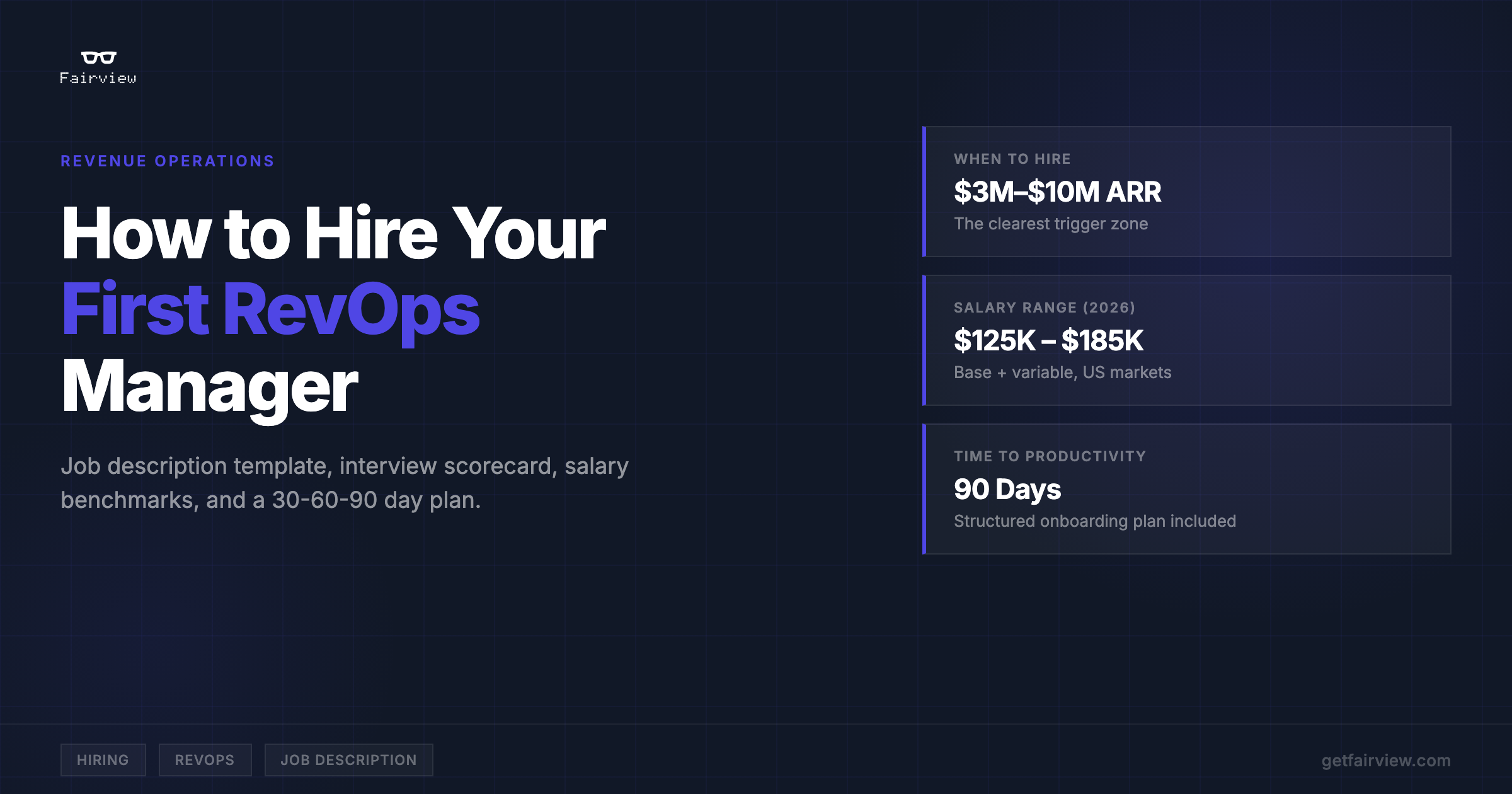
How to Hire Your First RevOps Manager (Job Description + Interview Guide)
The complete playbook for hiring your first RevOps manager: when to hire, job description template, 10 interview questions, salary benchmarks for 2026, and a 30-60-90 day plan.
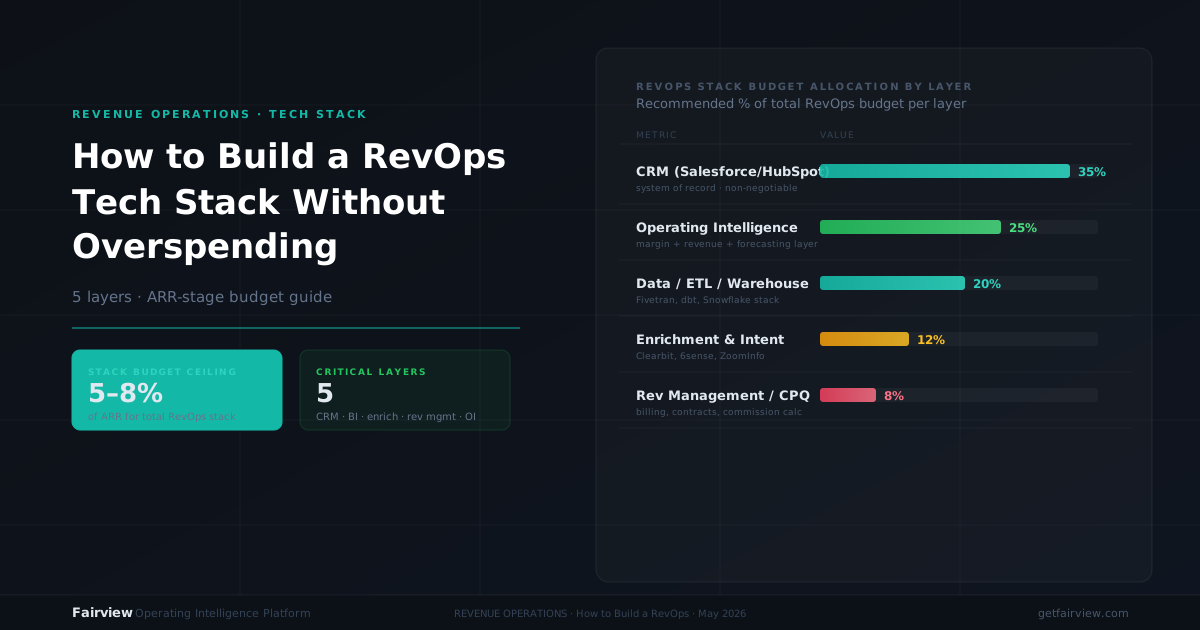
How to Build a RevOps Tech Stack Without Overspending
Five layers, one tool per layer, 5–8% of ARR as a budget ceiling — the field guide operators use to build a RevOps stack that earns its keep without waste.
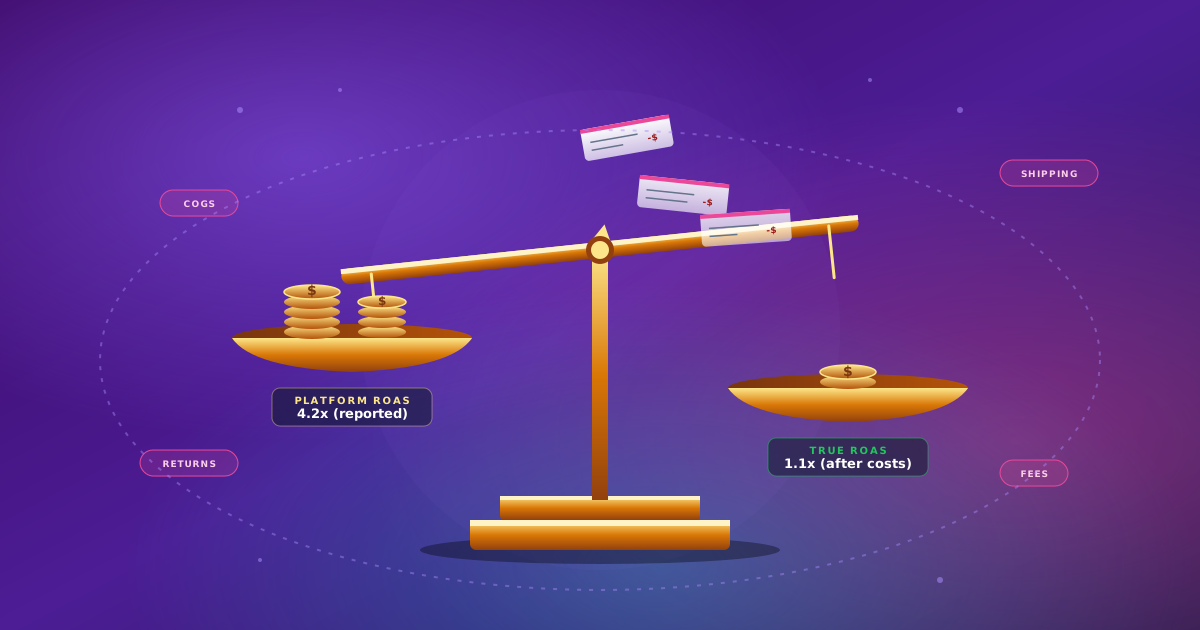
How to Calculate True ROAS for Ecommerce (Not Blended)
True ROAS calculation for ecommerce: the formula, five cost adjustments most brands miss, a worked example, and how to compare ROAS by channel. Stop reporting numbers that lie.
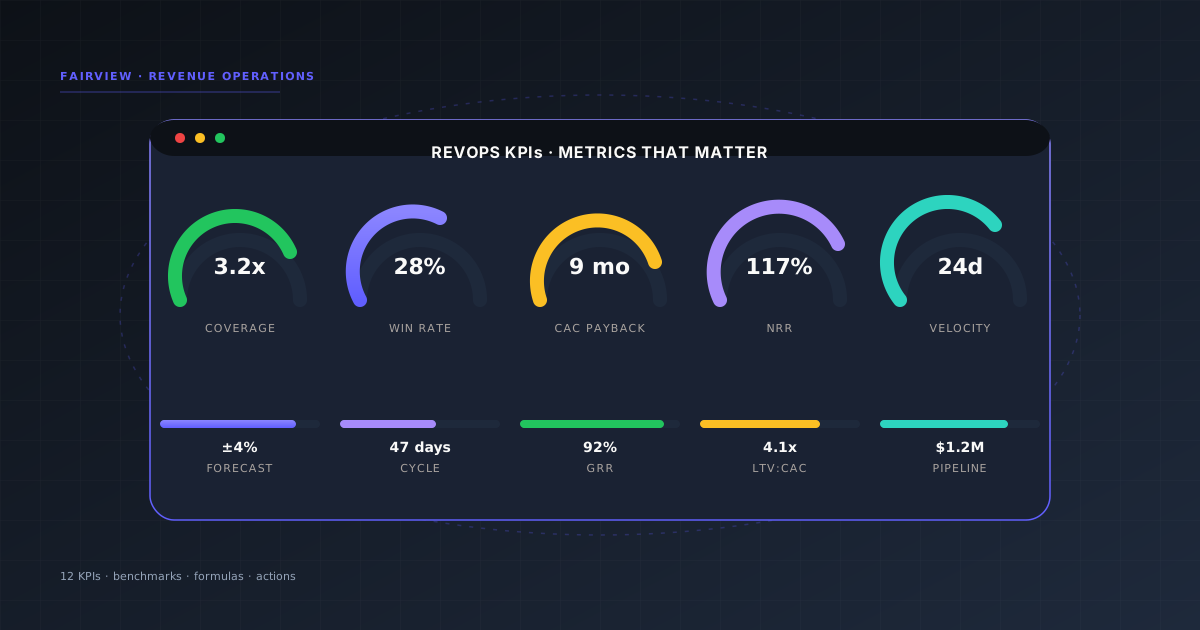
RevOps KPIs: The Only Metrics That Actually Matter
The 12 RevOps KPIs every B2B operator should track: pipeline coverage, velocity, win rate, CAC payback, NRR, forecast accuracy, and more. With formulas, benchmarks, and the weekly cadence that turns metrics into decisions.
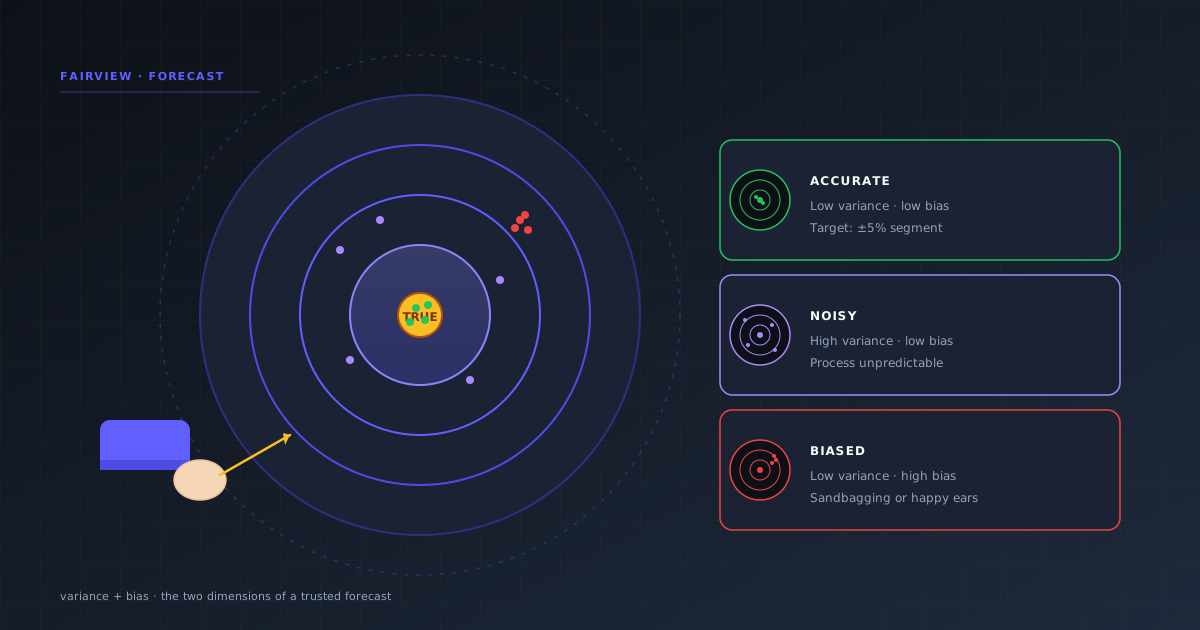
Forecast Accuracy: Metrics, Formulas and How to Improve It
Forecast accuracy metrics explained: MAPE, WAPE, bias, and the formulas finance teams use to measure forecast error. Plus 5 ways to improve accuracy starting this week.
What Is Margin Intelligence? The Complete Guide
Most brands know their blended margin. Few know their true margin. Here is what margin intelligence is, the four layers beyond gross margin, and how to build it.
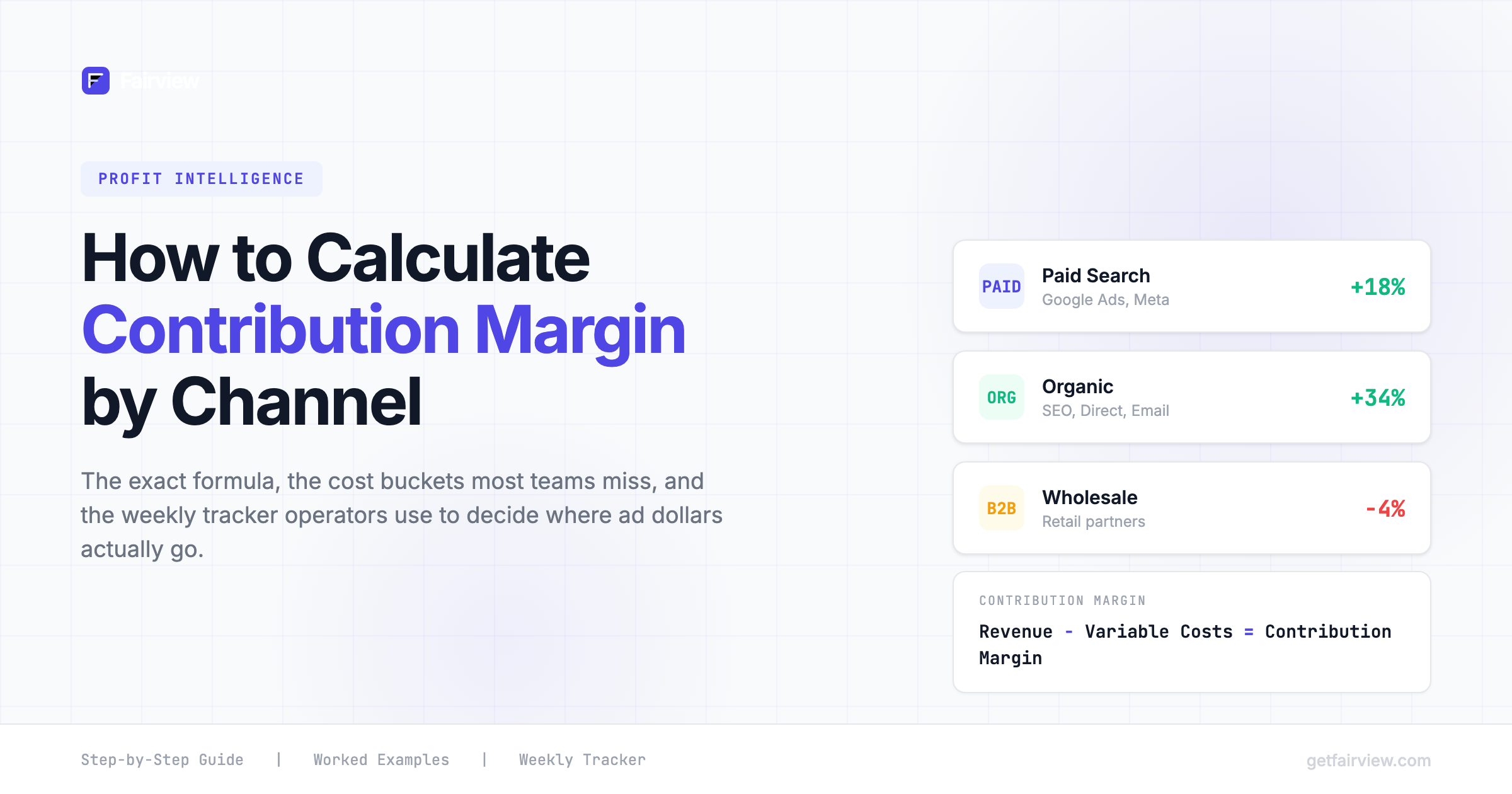
How to Calculate Contribution Margin by Channel (Step-by-Step)
The exact formula, the four variable cost buckets, and the weekly tracker operators use to decide where ad dollars actually go.
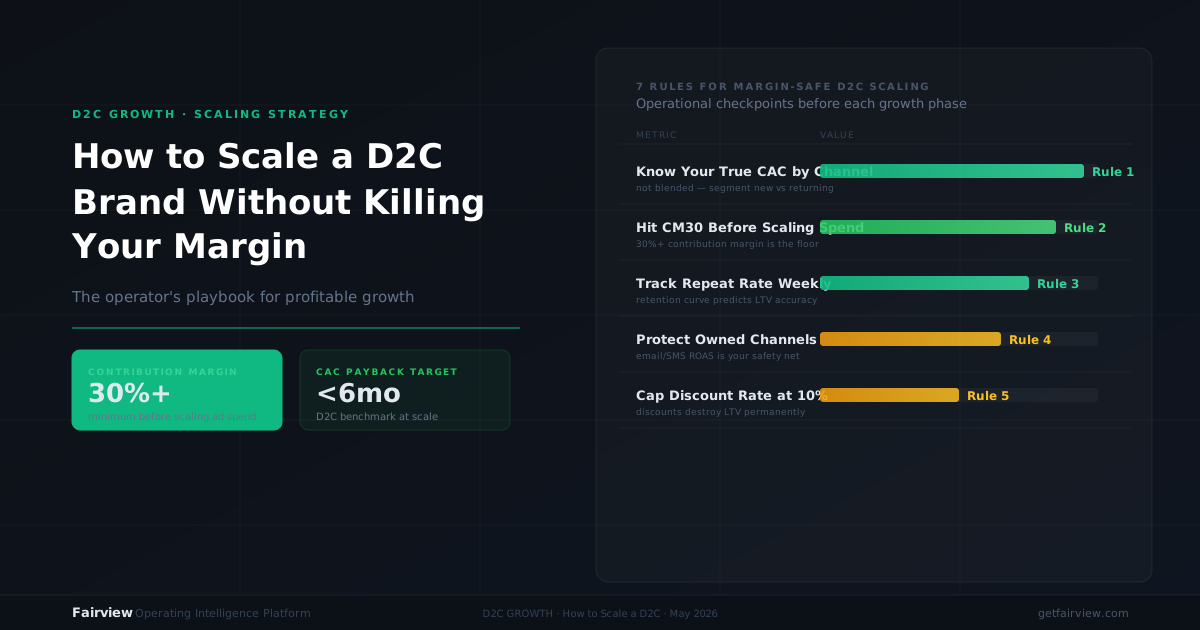
How to Scale a D2C Brand Without Killing Your Margin
Seven rules that separate profitable D2C brands from those that grow broke. From unit economics to weekly margin reviews — the operator's playbook for scaling with margin intact.
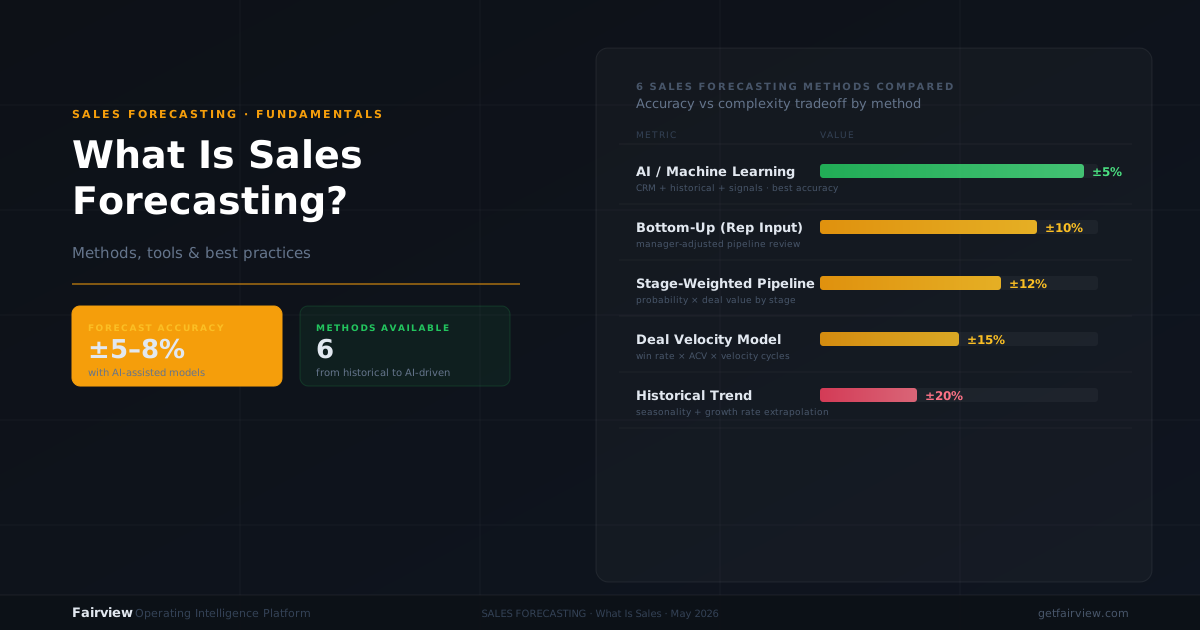
What Is Sales Forecasting? Methods, Tools and Best Practices
Sales forecasting defined: what it is, six methods compared, common mistakes, accuracy benchmarks, and the tools that help operators land within 5% of quarterly commit.
How to Build a Revenue Operations Team from Scratch
A step-by-step guide to building RevOps for 5-500 person companies. Org chart, tech stack, and first 90 days.
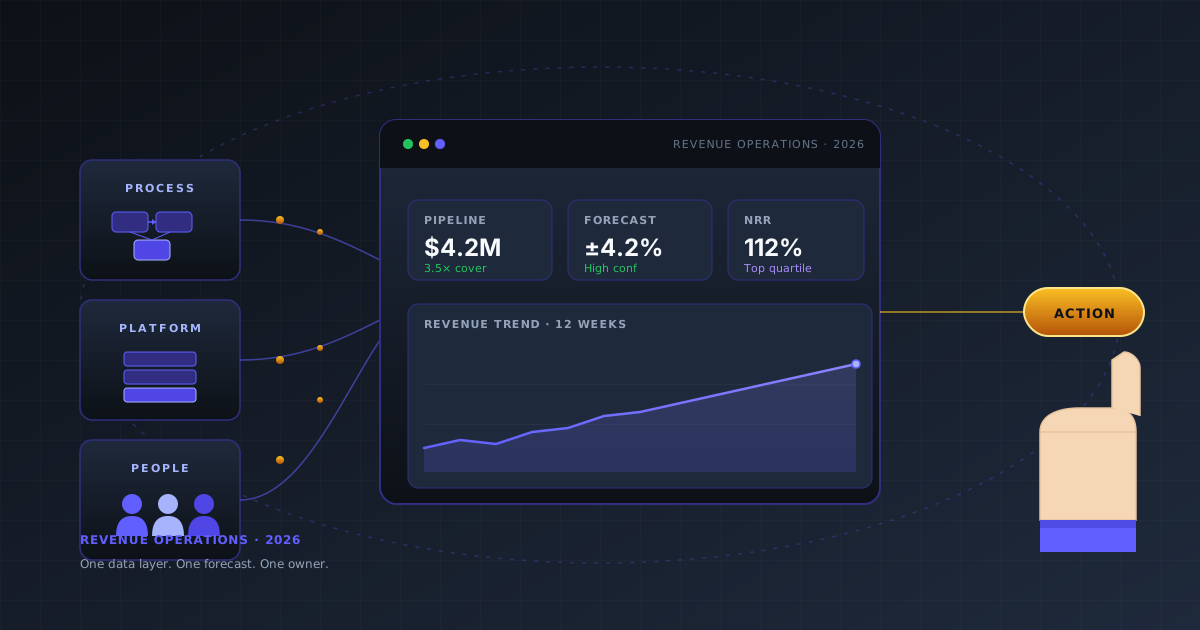
What Is Revenue Operations? The Complete Guide for 2026
RevOps aligns sales, marketing, and CS under one data model. Learn what it is, who owns it, and how to build it.
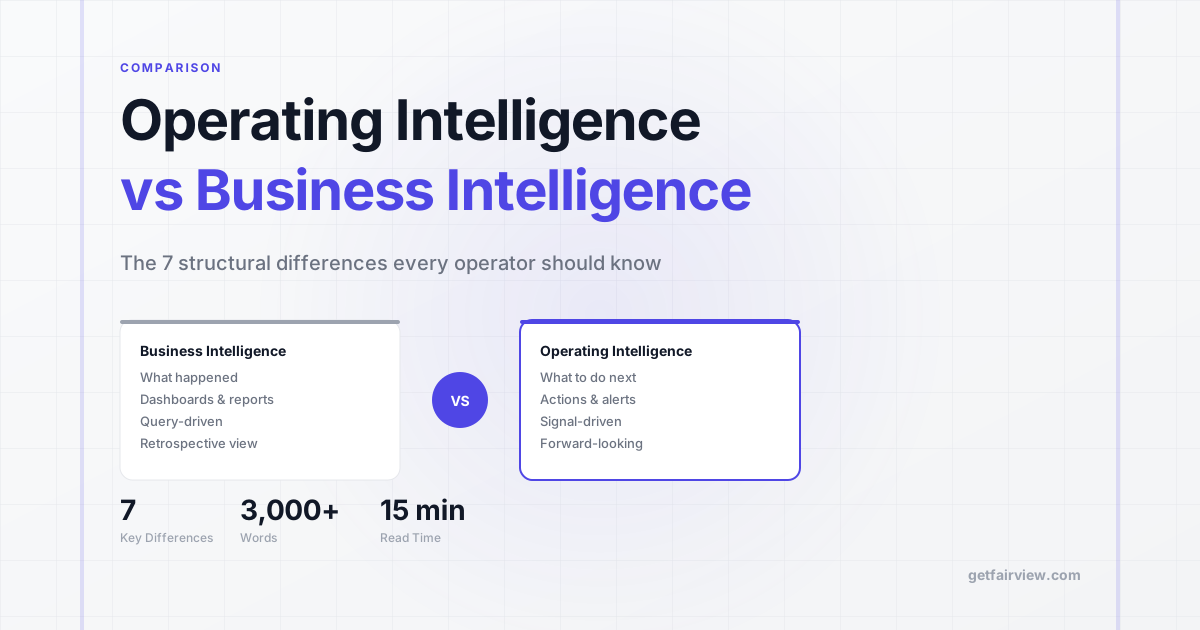
Operating Intelligence vs Business Intelligence: Key Differences
BI tells you what happened. OI tells you what to do next. Here are the 7 structural differences every operator should know.
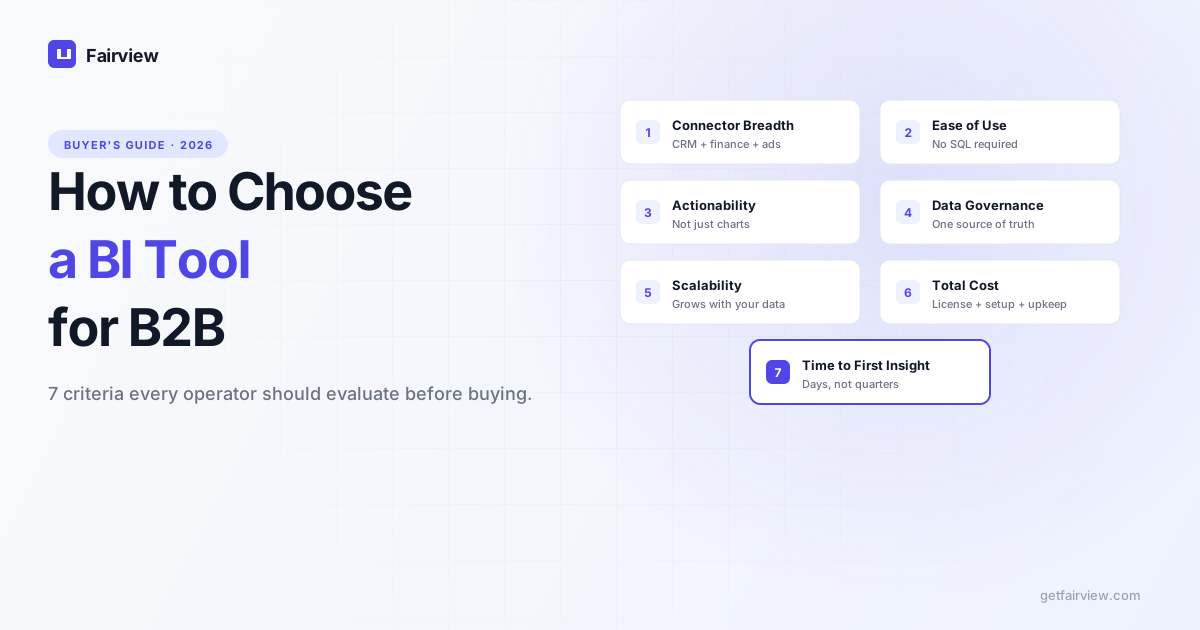
How to Choose a BI Tool for Your B2B Business (2026 Guide)
7 criteria for evaluating BI tools for B2B: connector breadth, ease of use, actionability, governance, scalability, total cost, and time to first insight. Plus red flags and when OI is the better fit.
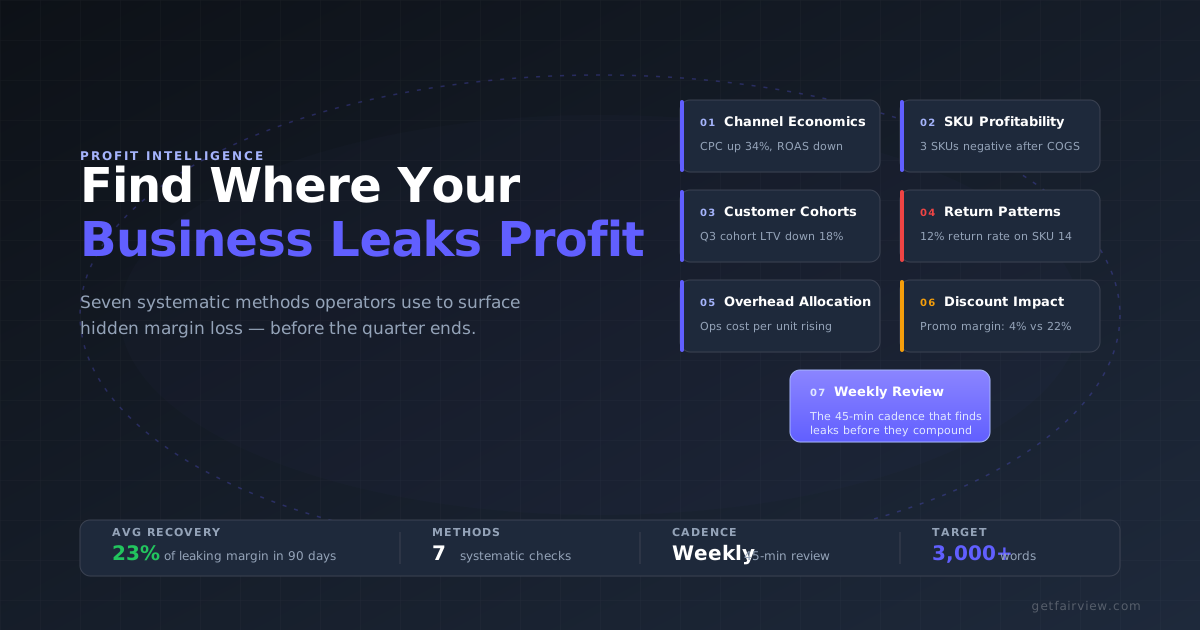
How to Find Where Your Business Is Leaking Profit
Seven systematic methods to find hidden profit leaks: channel economics, SKU profitability, customer cohorts, returns, overhead, discounts, and the weekly review that catches them all.
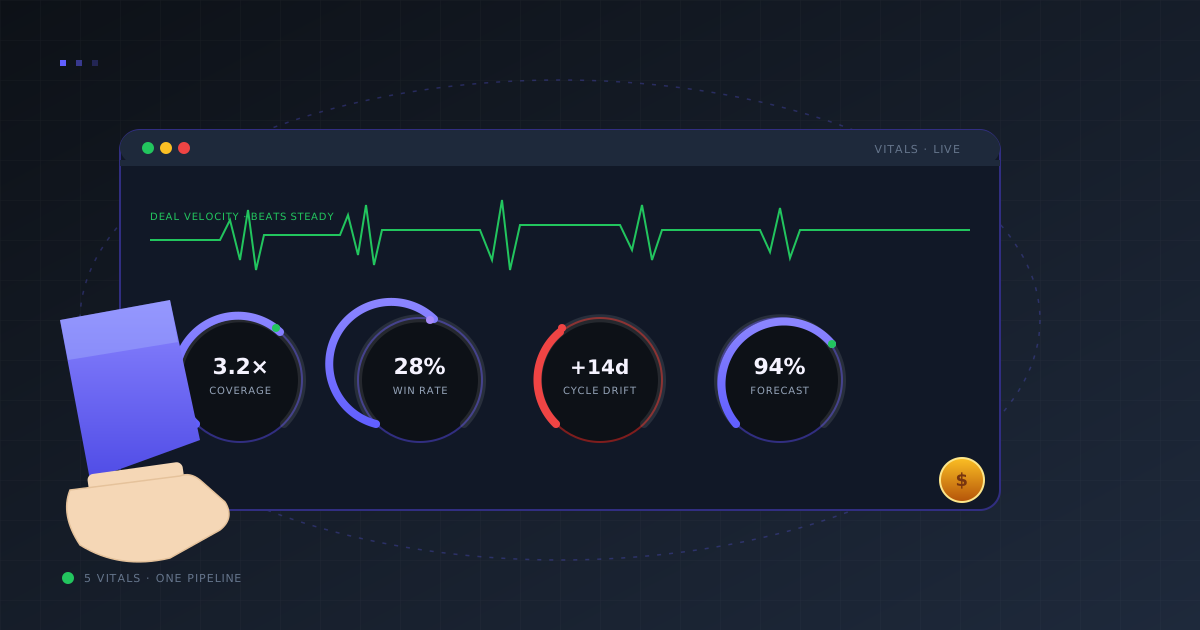
Pipeline Health Metrics: What to Track and Why
Six pipeline health metrics that predict revenue outcomes: coverage ratio, velocity, stage conversion, deal size, quality score, and win rate by rep. With formulas, benchmarks, and how to build the dashboard.
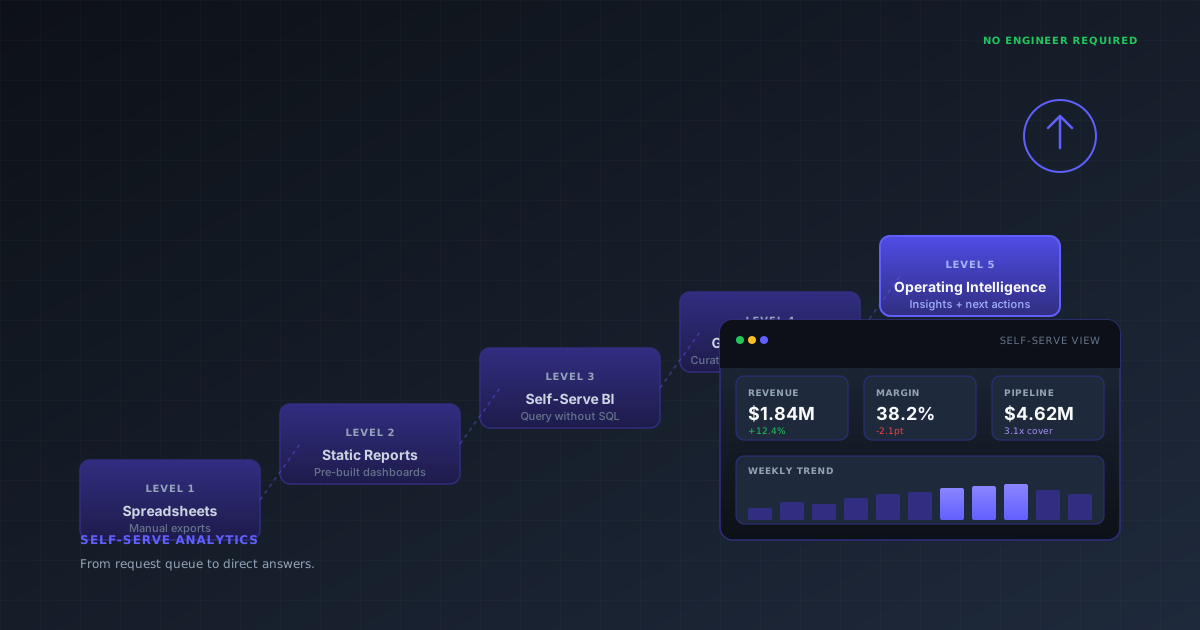
Self-Serve Analytics: What It Means and Why It Matters
Self-serve analytics explained for operators: what it means, what it requires, where it breaks, and how to implement it without a dedicated data team.
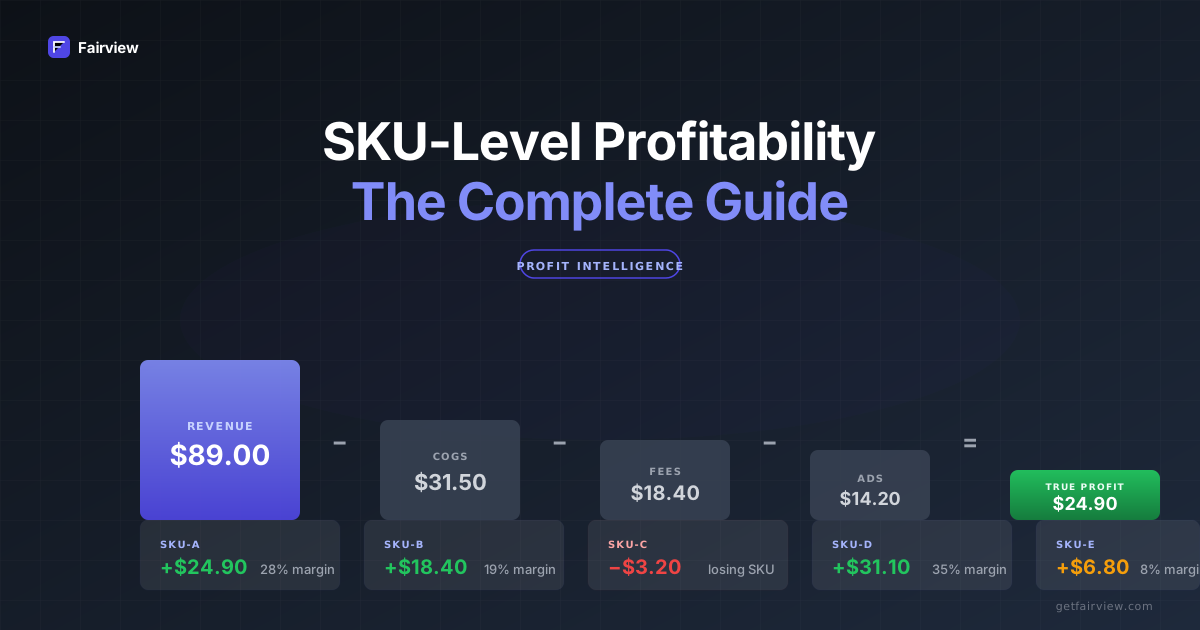
SKU-Level Profitability: The Complete Guide for Ecommerce
Calculate true profit per SKU including returns, shipping, discounts, and ad spend. Formula, worked example, cost table, and weekly tracking method for ecommerce operators.
How to Choose an Operating Intelligence Platform (2026 Guide)
7 criteria for evaluating OI platforms. What to look for, what to avoid, and questions to ask vendors before buying.
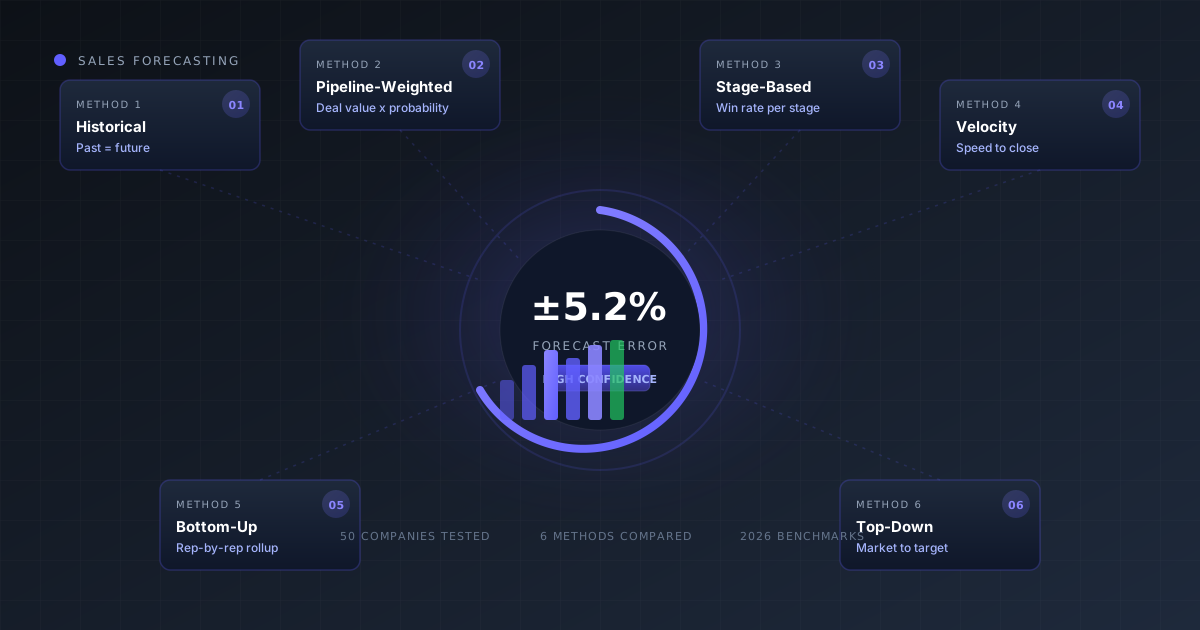
6 Sales Forecasting Methods: What Actually Works in 2026
We tested six sales forecasting methods across 50 SaaS companies. Here is what worked, what failed, and which method to use at each stage of growth.
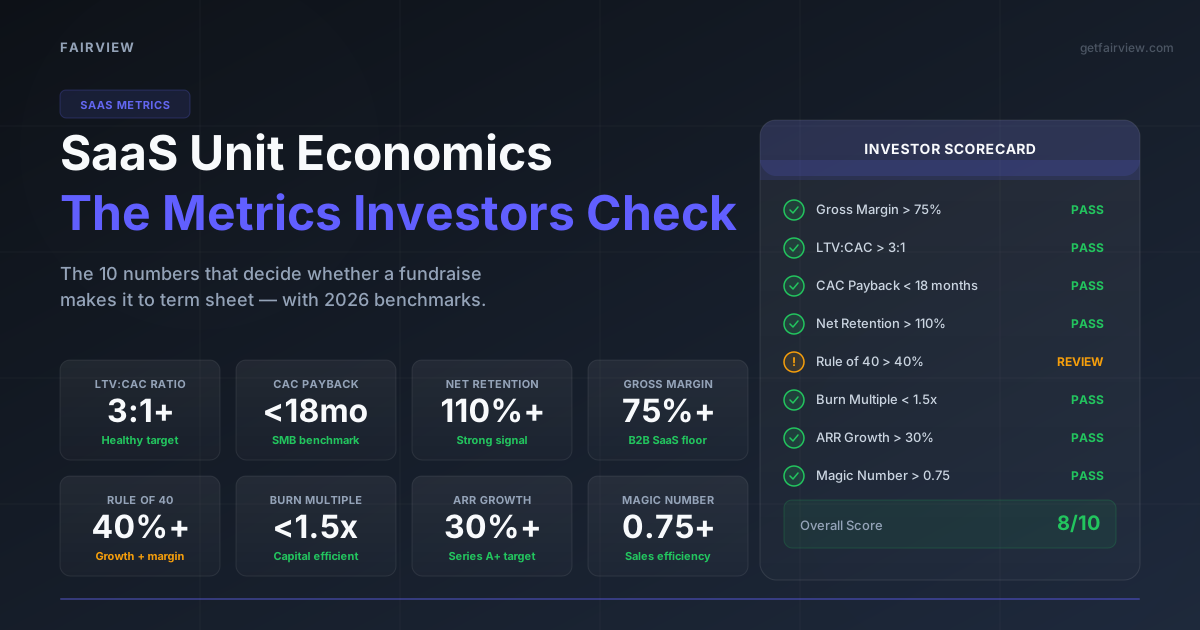
SaaS Unit Economics: The Metrics Investors Actually Check
The 10 SaaS unit economics metrics every investor checks first: LTV:CAC, CAC payback, net dollar retention, gross margin, burn multiple, Rule of 40, and more. With 2026 benchmarks and formulas.
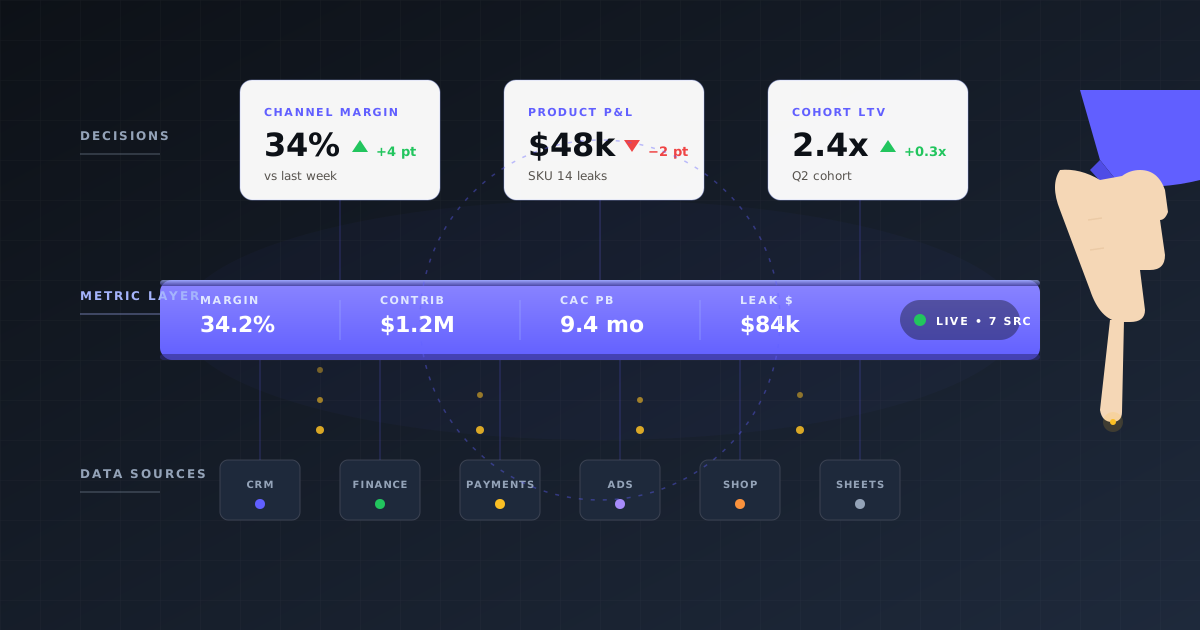
Margin Intelligence: The Metric Layer Every Operator Needs
A plain-language definition of margin intelligence — the metric layer that sits between transactional data and operating decisions, what data it requires, and how operators use it weekly.
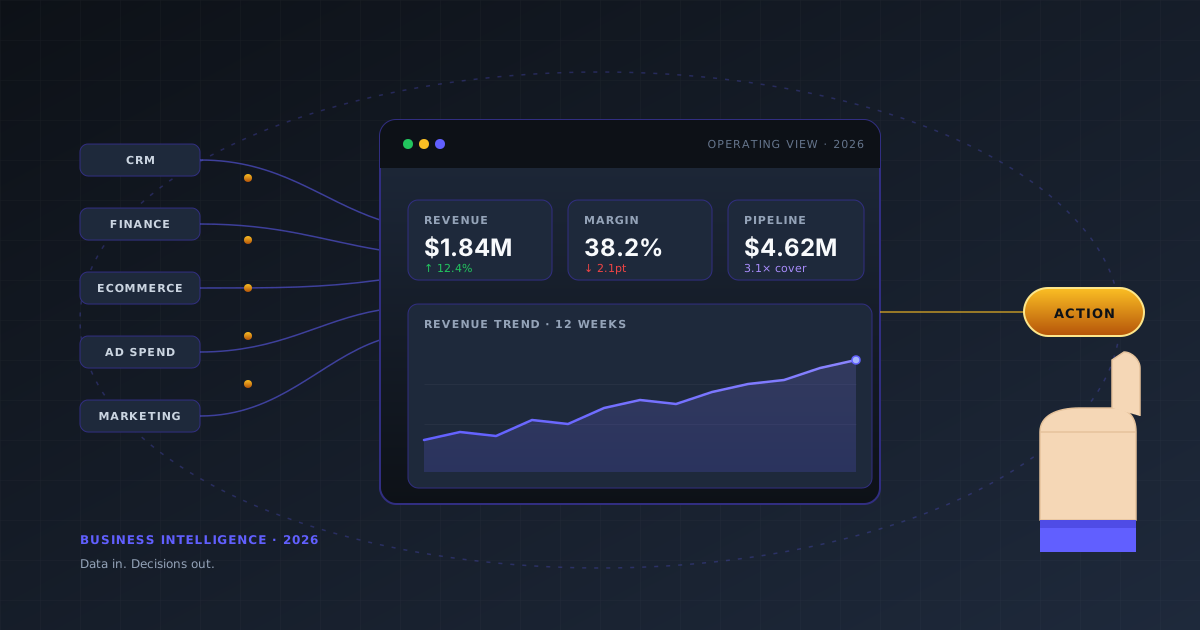
Business Intelligence in 2026: What Operators Need to Know
Business intelligence in plain language for operators and founders — what BI does, what's changed in 2026, where it stalls, and when an operating intelligence platform is the better fit.

RevOps, Explained: What It Is, Who Owns It, and When You Need It
A plain-English guide to revenue operations: what RevOps is, who owns it across company stages, and the five readiness signals that say it is time to formalize the function.
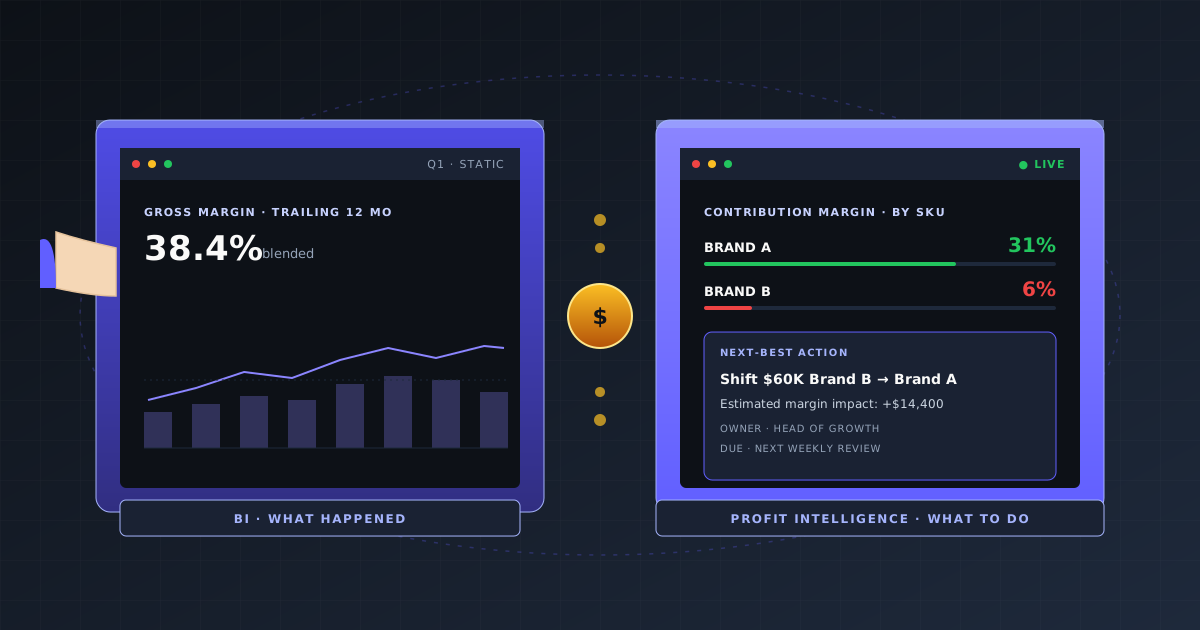
Profit Intelligence vs Business Intelligence: Why the Difference Matters
An operator’s side-by-side: definitions, output type, data model, weekly cadence, and when you need profit intelligence alongside BI.
Ad Spend Efficiency for DTC Brands: Metrics & Benchmarks
Ad spend efficiency for DTC: the five metrics that matter (MER, nCAC, aMER, contribution ROAS, payback), benchmarks, and how to improve each one.

AI Revenue Insights: What's Real and What's Hype
AI revenue insights explained honestly: what works today (anomaly detection, next-best-action), what is still hype, and how to tell the two apart.
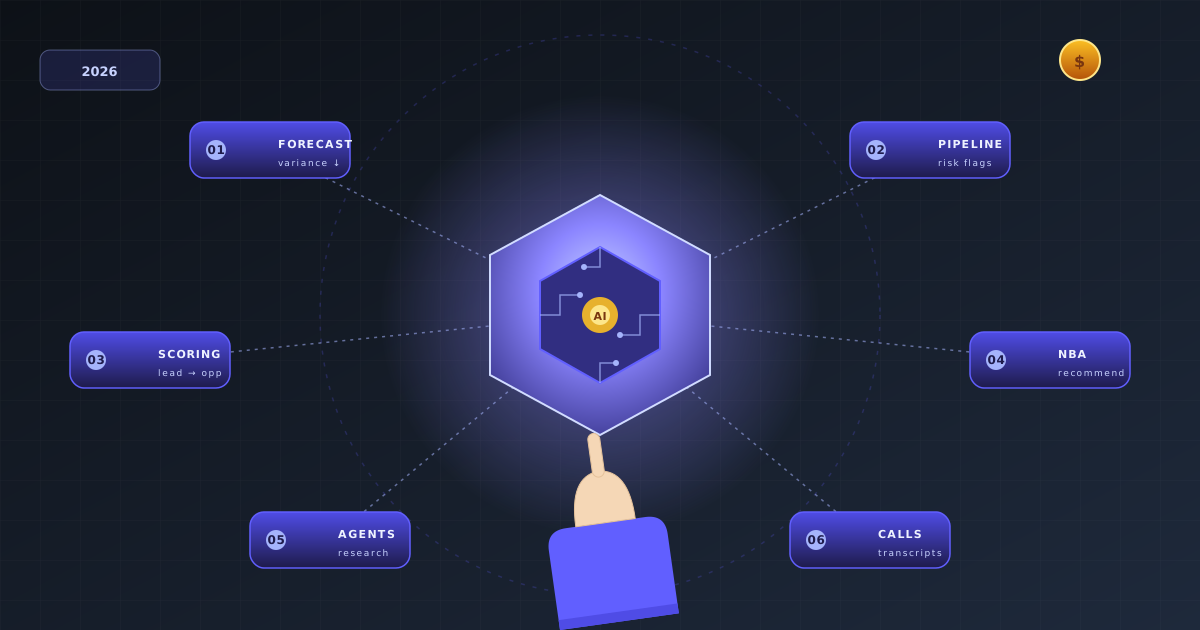
How AI Is Changing Revenue Operations in 2026
AI revenue operations in 2026: the six capabilities that are now production-grade, three myths operators still fall for, and a practical adoption roadmap.
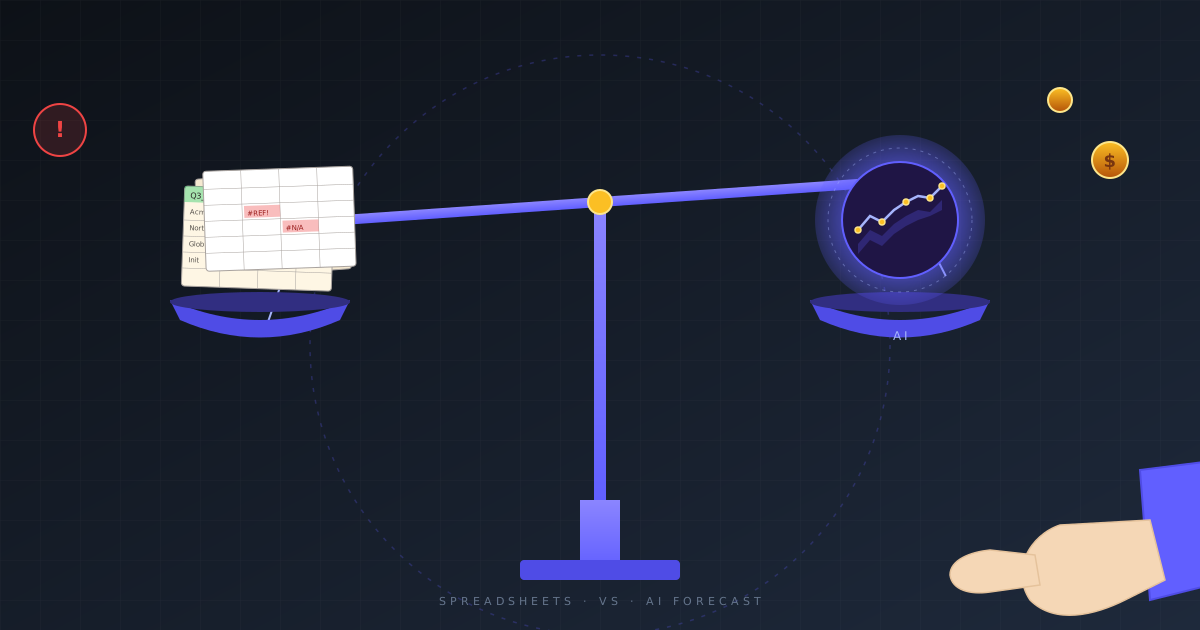
AI Sales Forecasting vs Spreadsheets: Practical Comparison
AI forecasting vs spreadsheets compared across seven dimensions: accuracy, cost, confidence signals, auditability. When each wins, when to switch.
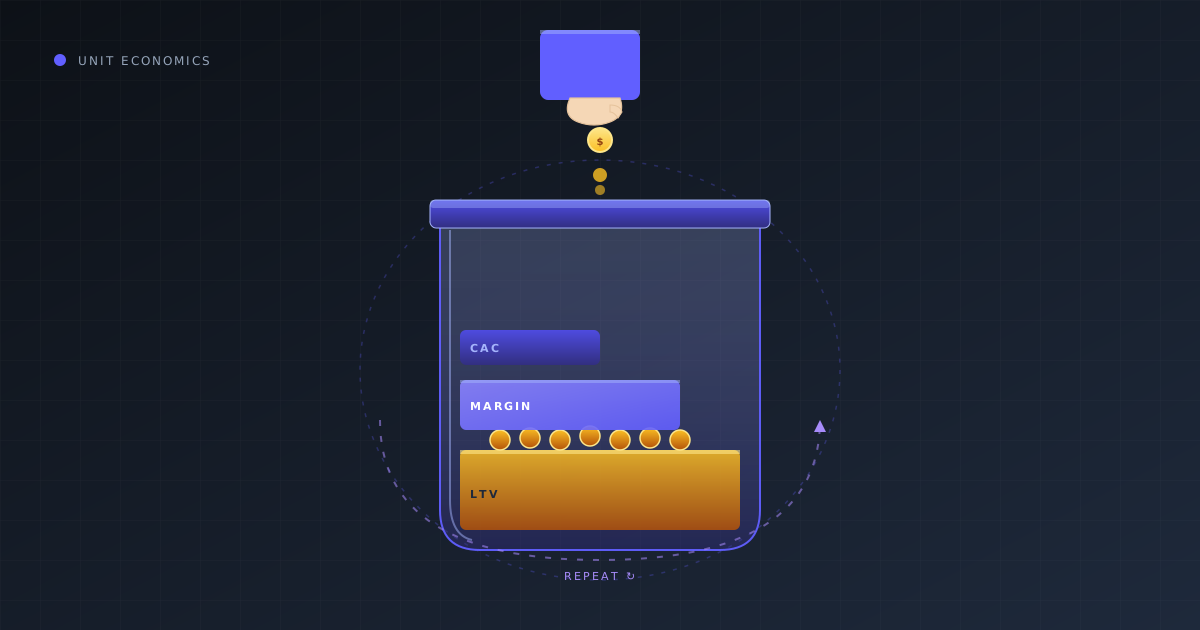
D2C Unit Economics: Metrics Every Brand Must Track
The 8 D2C unit economics every brand must track: CAC, AOV, contribution margin, payback, LTV, repeat rate, and blended vs paid CAC. With benchmarks.
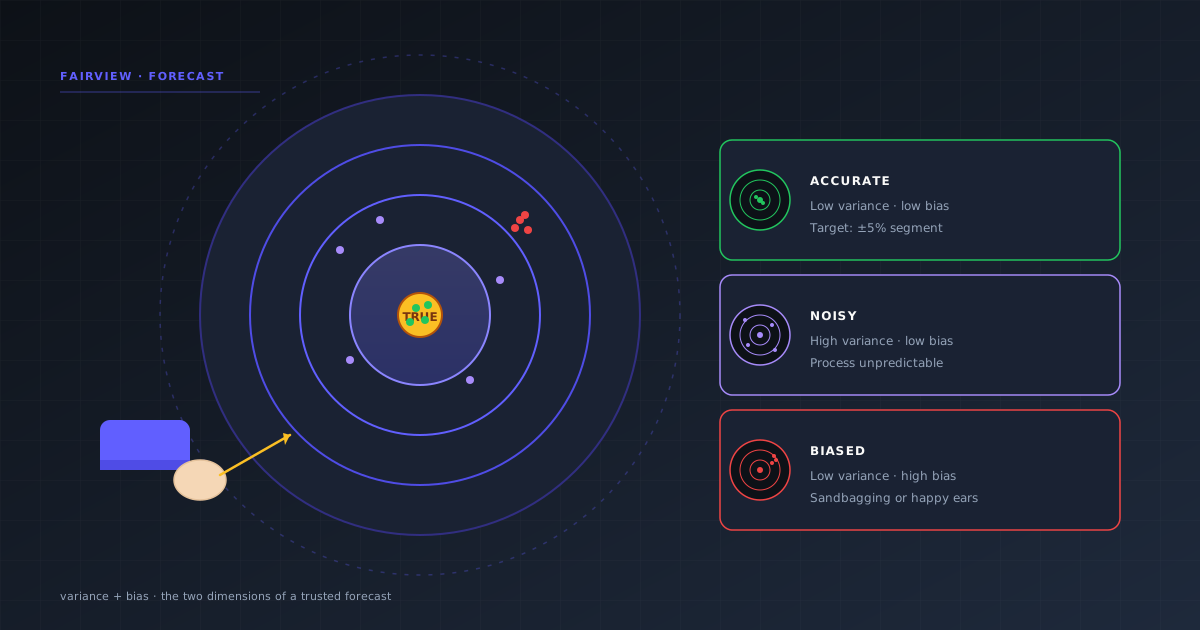
Forecast Accuracy: Metrics, Formulas & How to Improve It
Forecast accuracy metrics explained: MAPE, WAPE, bias, segment-level variance, and the 7 levers that move the number from ±15% to ±5% in a quarter.
How to Choose a BI Tool for Your B2B Business
How to choose a BI tool for B2B: the six decision criteria, a side-by-side of Looker, Tableau, Power BI, and Metabase, and when to pick OI instead.
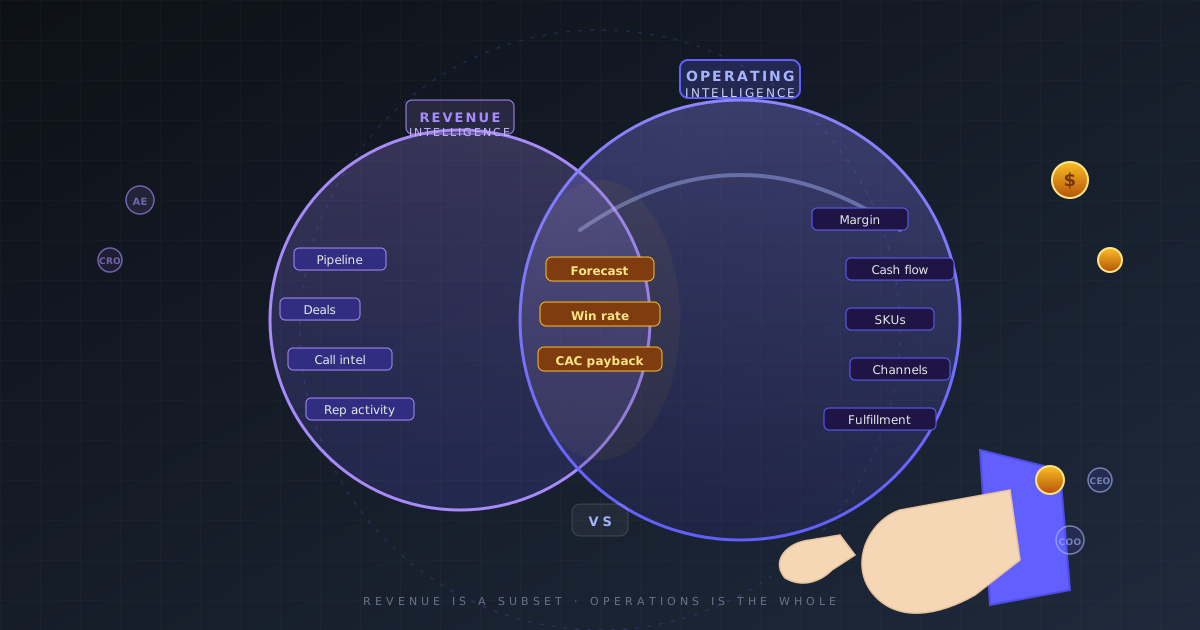
Operating Intelligence vs Revenue Intelligence
Operating intelligence vs revenue intelligence: what each category covers, where they overlap, which buyer owns which, and when the wider view matters.
Predictive Lead Scoring: A Guide for RevOps Teams
Predictive lead scoring guide for RevOps: how the models work, what data they need, implementation steps, and benchmarks for lift over rules-based scoring.
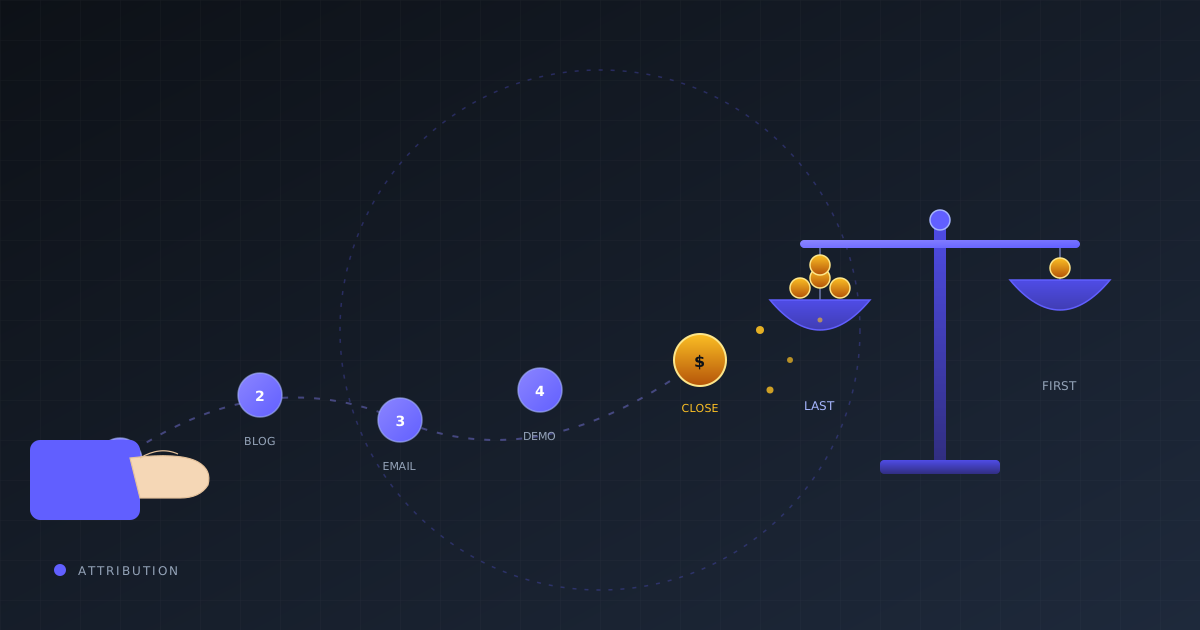
Revenue Attribution Models: Which Is Right for You
First-touch, last-touch, linear, time-decay, U-shaped, W-shaped, and data-driven attribution compared. Pick the model that matches your sales cycle.

Sales Forecasting Methods: What Actually Works in 2026
Eight sales forecasting methods compared — historical, pipeline-weighted, stage-based, velocity, bottom-up, top-down, regression, AI. With benchmarks.
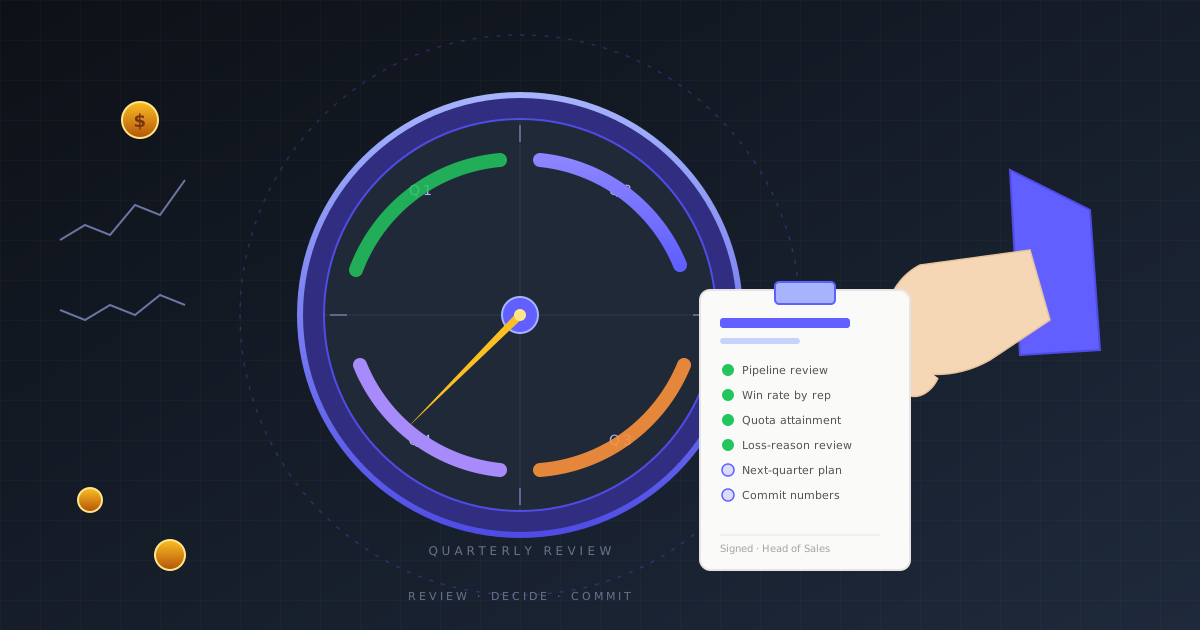
Sales QBR Template: Run Reviews That Improve Results
A sales QBR template that actually improves performance. 90-minute agenda, scorecard metrics, win/loss teardown, and next-quarter commits that stick.
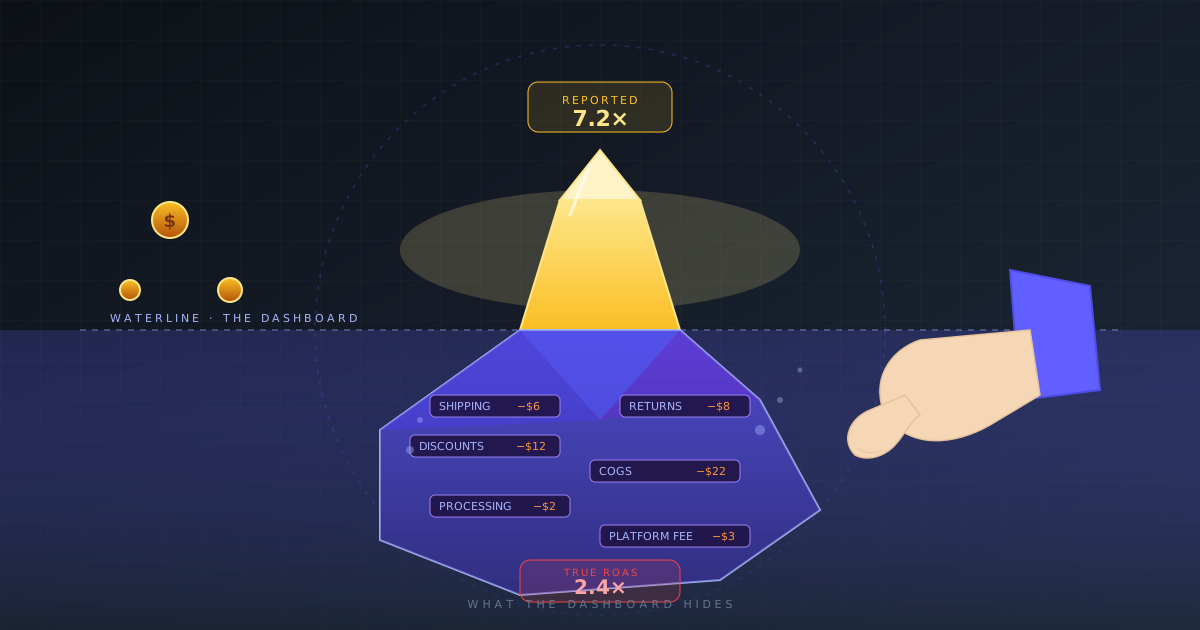
True ROAS Ecommerce: Why Your Numbers Mislead You
True ROAS vs reported ROAS. Why your Meta and Google numbers overstate returns, the formula that tells the truth, and how to act on it weekly.

LTV:CAC Ratio Benchmarks for Ecommerce and SaaS
LTV:CAC ratio benchmarks for ecommerce and SaaS. Formula, realistic targets by model, why 3:1 is misleading, and how to measure it honestly.
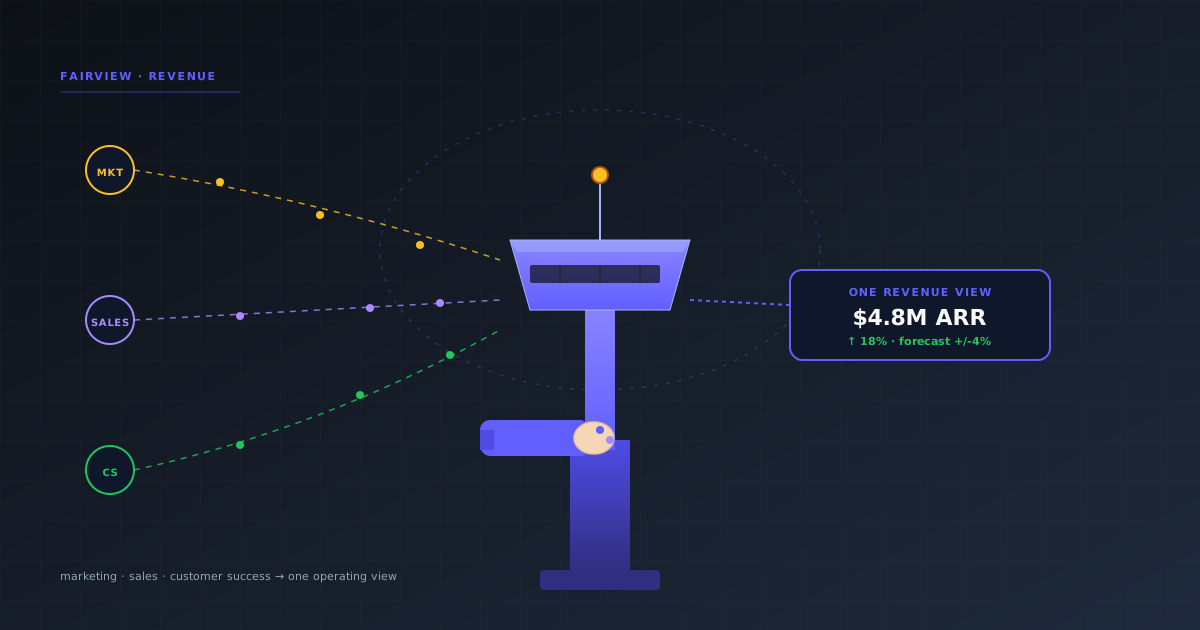
Revenue Operations: The Complete Guide for B2B
Revenue operations aligns marketing, sales, and customer success under one data and process layer. Pillars, team structure, maturity model, and metrics.
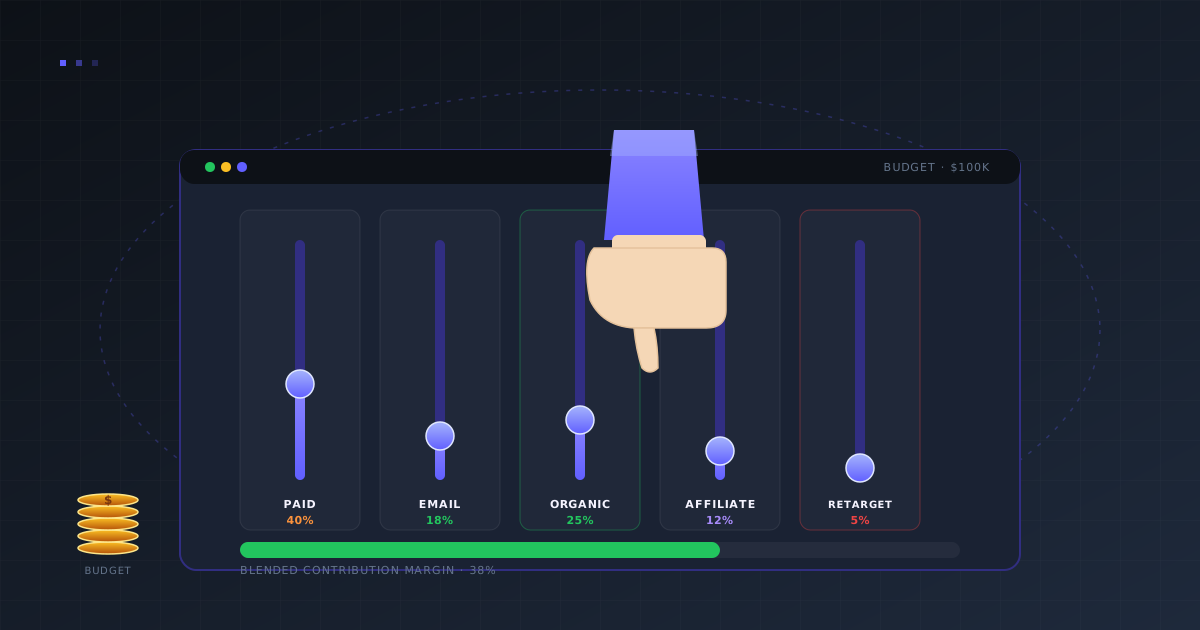
DTC Channel Mix: Allocating Budget Across Channels
Benchmark allocations by revenue stage, CAC and margin bands per channel, and the weekly rebalance rule that keeps blended contribution margin on target.
New vs Returning Customer Revenue: How to Track Each
How to split and track new vs returning customer revenue — platform rules, healthy mix benchmarks, and the cohort view that separates real growth from tax.
What Is Marketing Mix Modeling (MMM)? A Guide for DTC Brands
The operator-level explanation of MMM — what it measures, why iOS killed last-click, and how DTC brands use it to allocate ad budget weekly.
How to Calculate True ROAS (Profitability After Costs)
The formula, the five variable-cost buckets, break-even math, and vertical benchmarks for ecommerce operators.
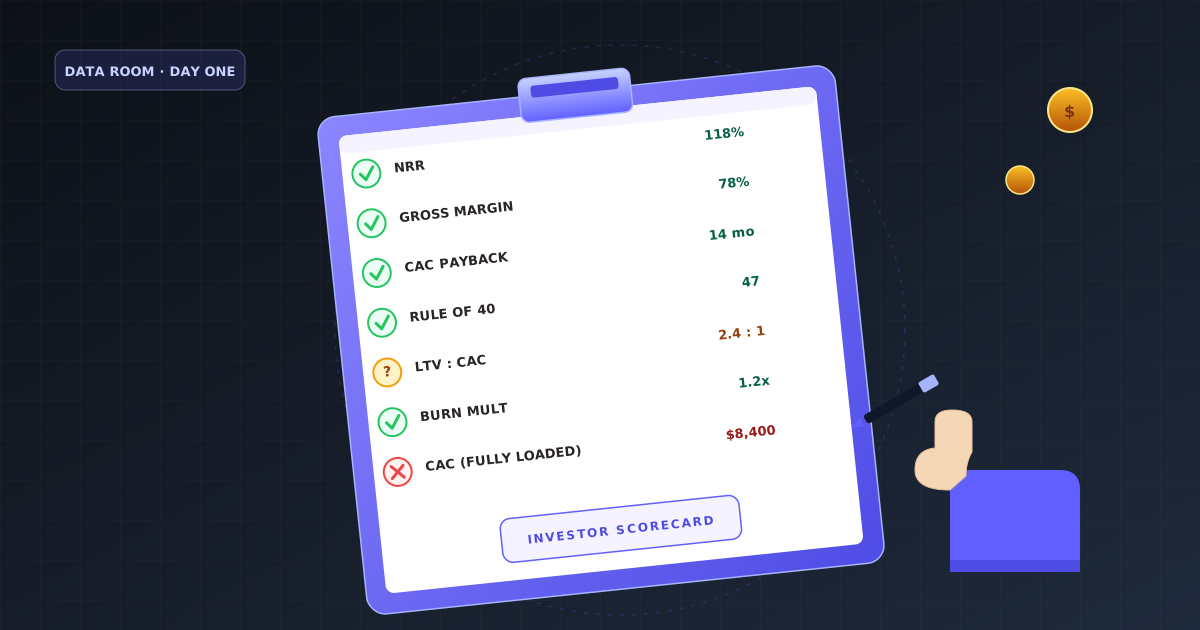
SaaS Unit Economics: A Complete Guide for Operators
The seven metrics every investor opens the data room to read first, with 2026 benchmarks and the calculation traps that cost fundraises.

How to Increase LTV: 7 Tactics Without More Ad Spend
Five operator-tested levers that lift lifetime value without raising ad spend, with benchmarks and a 90-day sequence.
Customer Retention Metrics for Ecommerce: What to Track
The six retention KPIs D2C operators measure weekly, how to calculate each, and the cohort view that reveals whether your retention is actually improving.
Bottom-Up vs Top-Down Forecasting: A Complete Guide
How each method works, where each breaks, and the blended approach operators use to land within 5% of quarterly commit.
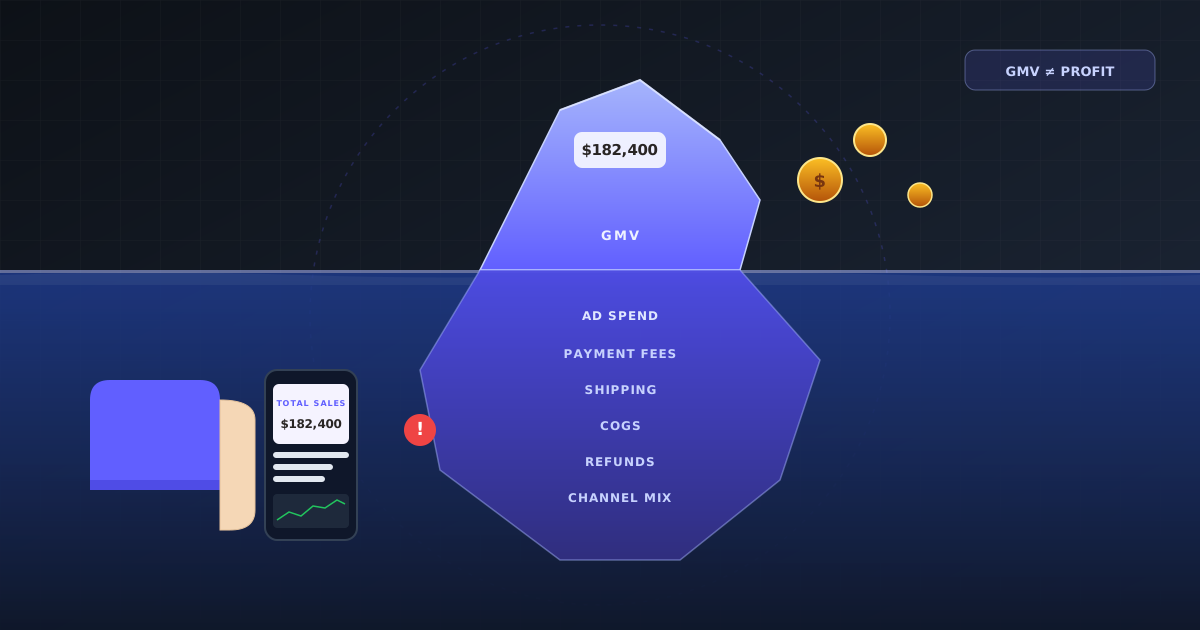
Why Your Shopify Revenue Dashboard Lies to You
Shopify reports GMV, not profit. Six blind spots in the default dashboard and the profit analytics D2C merchants need instead.
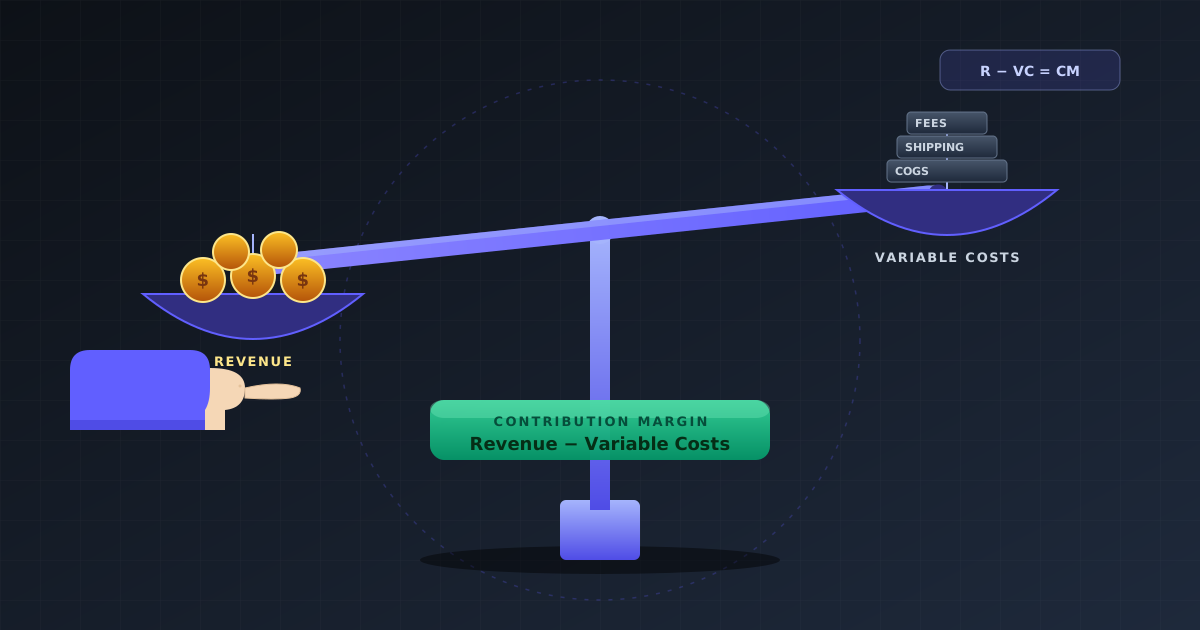
Contribution Margin Formula: How to Calculate and Apply It
The three forms of the formula, what counts as a variable cost, and worked examples per unit, per product, and per channel.
COGS Tracking for Ecommerce: What to Include
Eight line items that belong in ecommerce COGS, four that do not, a $34 per-unit worked example, and the weekly cadence that stops margin drift.
Blended ROAS vs True ROAS: Which Number Should You Trust?
Blended is a CFO metric. True is an allocation metric. How to report both from one source of truth without getting lost in attribution.
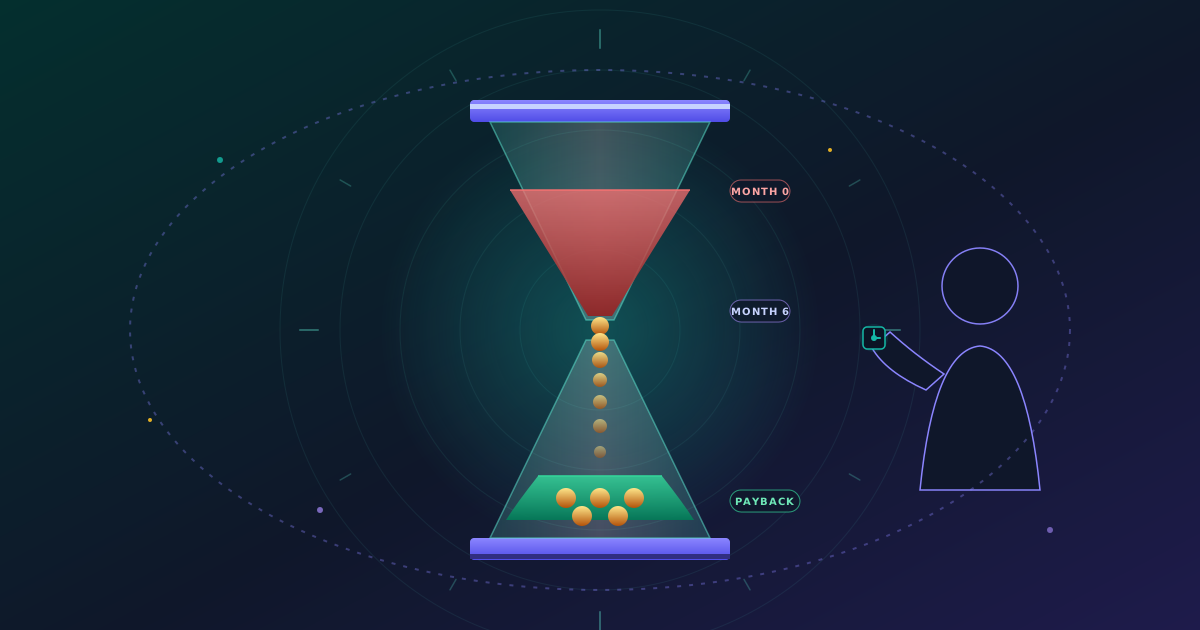
CAC Payback Period: Formula, Benchmarks, Why It Matters
Contribution-margin formula, cohort curve, and benchmarks by business model for D2C and SaaS operators.
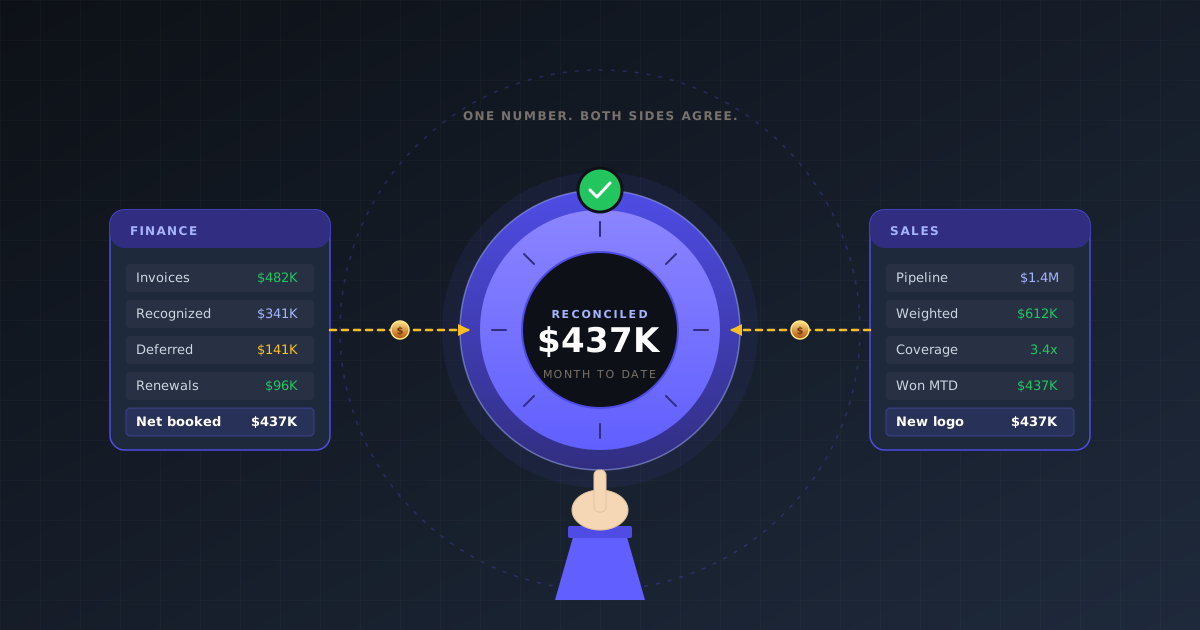
How to Build a RevOps Dashboard Finance and Sales Trust
The seven layers, the reconciliation step most teams skip, and the design pattern that ends the weekly bookings-vs-billings fight.
Pipeline Coverage Ratio: What It Is and What to Target
The formula, the 3× rule, benchmarks by win rate, and the weekly segment-level read every sales leader should run.

How to Set Sales Quota When Your Pipeline Is Unpredictable
A bottom-up method for building quota from rep capacity, discounting for variance, and stress-testing the number before you commit.

Automated CRM Data Enrichment: How It Works
The source types, the pipeline stages, and the governance rules that turn a half-empty CRM into a system of record your team can actually trust.
Know the number. Take the action.
14-day free trial. No credit card. First data source live in 10 minutes.