

TL;DR
- Revenue intelligence covers the sales motion: pipeline, rep coaching, deal inspection, forecast accuracy.
- Operating intelligence covers the whole operating picture: revenue, margin, cash, channel economics, SKU profitability, and cross-functional next-best actions.
- Revenue intelligence is bought by CROs at 30+ rep sales orgs. Operating intelligence is bought by COOs and founder-CEOs at $2M–$30M ARR companies.
- Most growth-stage teams do not need both. Operating intelligence already covers pipeline and forecast for smaller sales orgs.
- Fairview is an operating intelligence platform — one operator view of revenue, margin, forecast, and next-best actions.
Every COO evaluating software in 2026 hits the same wall. One vendor calls it revenue intelligence. Another calls it operating intelligence. A third calls it operator dashboards, and a fourth says all three are just BI with better marketing. The categories are not the same, and picking the wrong one leaves a $40K-a-year gap in the weekly review.
The difference matters because the buyer is different. Revenue intelligence is built for a CRO running a 40-rep sales team. Operating intelligence is built for a COO running a 40-person company. The data each one pulls, the questions it answers, and the decisions it triggers are shaped by that buyer.
This post defines both categories, shows where they overlap, maps who buys what, and explains why most growth-stage operators end up choosing the wider view. It pairs with what is operating intelligence, operating intelligence vs BI, and the operating intelligence platform guide.
What is revenue intelligence?
Definition
Revenue intelligence: software that captures sales activity — calls, emails, meetings, CRM updates — and turns it into signals for pipeline inspection, deal risk, rep coaching, and forecast accuracy. Bought by CROs and VPs of Sales at companies with a real sales org.
The category was defined by Clari around 2017 and popularized by Gong and Chorus. The problem it solves is specific: a CRO cannot watch 40 reps ride every call, so the platform watches for them. It records meetings, transcribes them, scores the conversation, and flags deals that are slipping.
Revenue intelligence is narrow on purpose. It owns the sales funnel from lead to close. It does not track margin by SKU. It does not track cash. It does not tell a founder which marketing channel produced the most profitable customers. It is not supposed to.
- Typical vendors: Clari, Gong, Chorus (now Zoominfo), Aviso, Outreach Intelligence.
- Typical buyer: CRO or VP Sales. Budget sits in the sales org.
- Typical deal size: $60K–$300K+ per year for 40–200 seats.
- Typical trigger: forecast accuracy below 80%, or a board that wants to see deal-level evidence behind the commit.
What is operating intelligence?
Definition
Operating intelligence: a platform that pulls revenue, margin, pipeline, cash, and marketing data into one operator view — then triggers named next-best actions. Bought by COOs, founder-CEOs, and operator-CFOs running weekly operating reviews.
Operating intelligence is a newer category, shaped around a specific buyer: the operator who owns the number but does not have a data team. The CRO at a 500-person company has a RevOps director and a sales analyst. The COO at a 60-person company has a spreadsheet and a Monday morning problem.
The category covers everything that moves the weekly operating number, not just the sales motion. Revenue is one input. Margin by channel is another. CAC payback, runway, SKU profitability, and forecast confidence are all on the same screen. The output is not a report — it is the three actions that would recover the most margin this week.
- Typical buyer: COO, founder-CEO, or operator-CFO. Budget sits with the operator, not the CRO.
- Typical company: $2M–$30M ARR, 20–200 employees, no dedicated data team.
- Typical deal size: $1.8K–$8.4K per year at the small end; higher with more integrations and seats.
- Typical trigger: a finance review that reveals margin erosion the dashboard did not catch, or a board forecast the operator cannot defend.
Where the two categories overlap — and where they diverge
The shared territory is narrower than it looks. Both categories cover pipeline health, deal-level risk signals, and forecast generation. Both pull from the CRM. Both produce a weekly view that the leadership team argues over.
The divergence starts at the edges. Revenue intelligence goes deeper on the sales conversation: call recording, objection tracking, competitor mentions, rep coaching scorecards. Operating intelligence goes wider across the business: margin by channel, CAC payback, SKU profitability, cash, and cross-functional next-best actions.
Key insight
Revenue intelligence is a subset of operating intelligence. For a 40-rep sales org, the subset is where the money is. For a 60-person company with a 5-rep sales team, the whole picture matters more than the deepest slice.
Which buyer owns which?
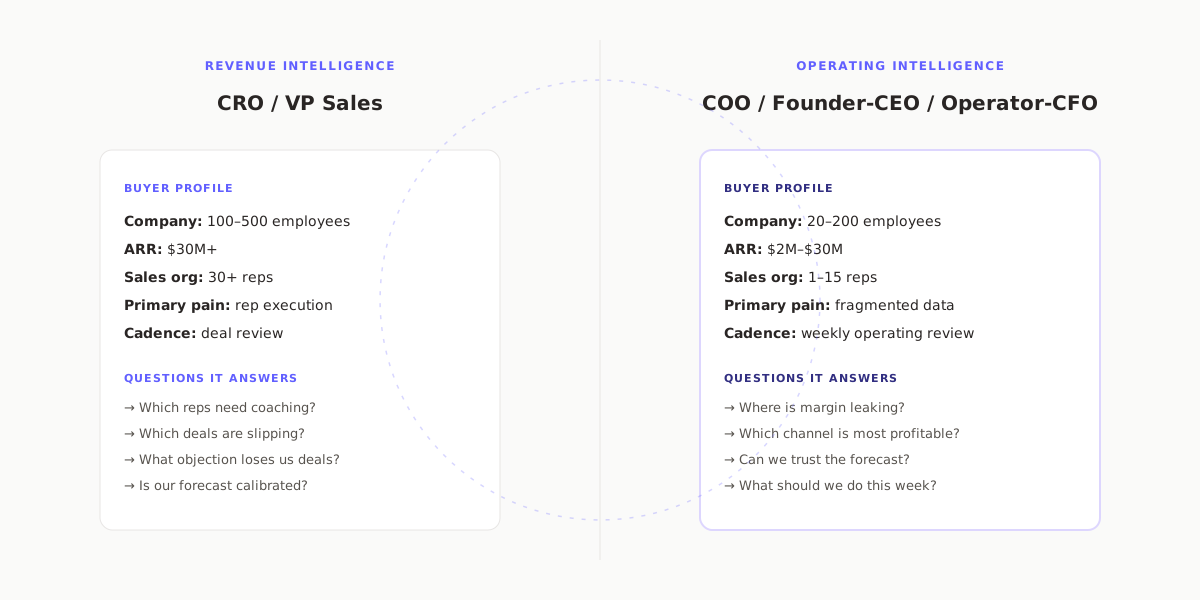
The cleanest way to tell the categories apart is not the feature list — it is who signs the invoice. Revenue intelligence is sold to a CRO whose problem is rep execution. Operating intelligence is sold to a COO or founder whose problem is running the business on Monday.
| Revenue intelligence | Operating intelligence | |
|---|---|---|
| Primary buyer | CRO / VP Sales | COO / Founder-CEO / Operator-CFO |
| Core pain | Rep execution, forecast accuracy | Fragmented data, margin leakage |
| Data sources | CRM, call recordings, email, calendar | CRM, finance, e-commerce, marketing, payments |
| Primary output | Deal risk, rep scorecards, forecast | Operator dashboard, margin by channel, next-best actions |
| Ideal company size | 100–1,000+ employees, 30+ reps | 20–200 employees, 1–15 reps |
| Typical ACV | $60K–$300K+ | $1.8K–$8.4K |
When to choose revenue intelligence
Revenue intelligence earns its price tag when the sales org is large enough that the CRO cannot personally coach every rep. That threshold usually sits around 30 reps. Below it, the tooling is overbuilt for the team.
Pick revenue intelligence when the main problem is inside the sales motion. Forecast accuracy is the usual trigger — if the board is asking why the commit missed by 20% and the answer requires a week of spreadsheet work, a platform that tags deal risk in real time pays for itself quickly.
- 30+ reps, and rep performance varies widely
- Forecast accuracy is under 80% and the board notices
- Sales cycles are long enough that call coaching moves the number
- The CRO has budget authority and the pain is inside their function
If the team is comparing vendors in this category, Fairview maintains comparison pages for Fairview vs Clari and Fairview vs Gong that show the coverage gap a COO buyer usually cares about.
When to choose operating intelligence
Operating intelligence earns its price tag when the operator's weekly review covers more than pipeline. If margin, cash, channel mix, and SKU profitability have to be in the same conversation as deals, the dashboard has to cover all of it.
Most B2B companies between $2M and $30M ARR fit this profile. The sales org is small enough that the founder or a single sales lead can coach reps directly. The operator's real problem is reconciling five tools on Monday morning, not understanding what was said on a call last Wednesday.
- Small-to-mid sales team (1–15 reps) where coaching is hands-on
- Revenue and margin live in different tools that do not talk to each other
- The weekly review needs cash, pipeline, margin, and forecast on one screen
- The operator is spending more than two hours a week assembling the report by hand
Quote-ready
Revenue intelligence watches 40 reps. Operating intelligence watches the whole company. The right tool depends on which problem keeps the buyer up on Sunday night.
Do you need both?
For most growth-stage teams, no. The overlap is meaningful enough that operating intelligence covers 80% of what a sub-30-rep team would use revenue intelligence for — pipeline health, deal slippage, forecast confidence. The deep call-coaching layer is what is missing, and it is hard to justify a $120K platform to coach 8 reps.
At 50+ reps the answer shifts. A CRO may want the deep coaching layer of a revenue intelligence platform, and the COO or finance team still needs the wider operating view. At that scale, companies often run both, feeding pipeline signals from revenue intelligence into the operating dashboard for cross-functional visibility.
The mistake to avoid is buying revenue intelligence for a 10-rep team because the board likes the category name. The platform will be under-used, and the operator's actual problem — a messy Monday review — will still be on the spreadsheet.
How Fairview handles operating intelligence
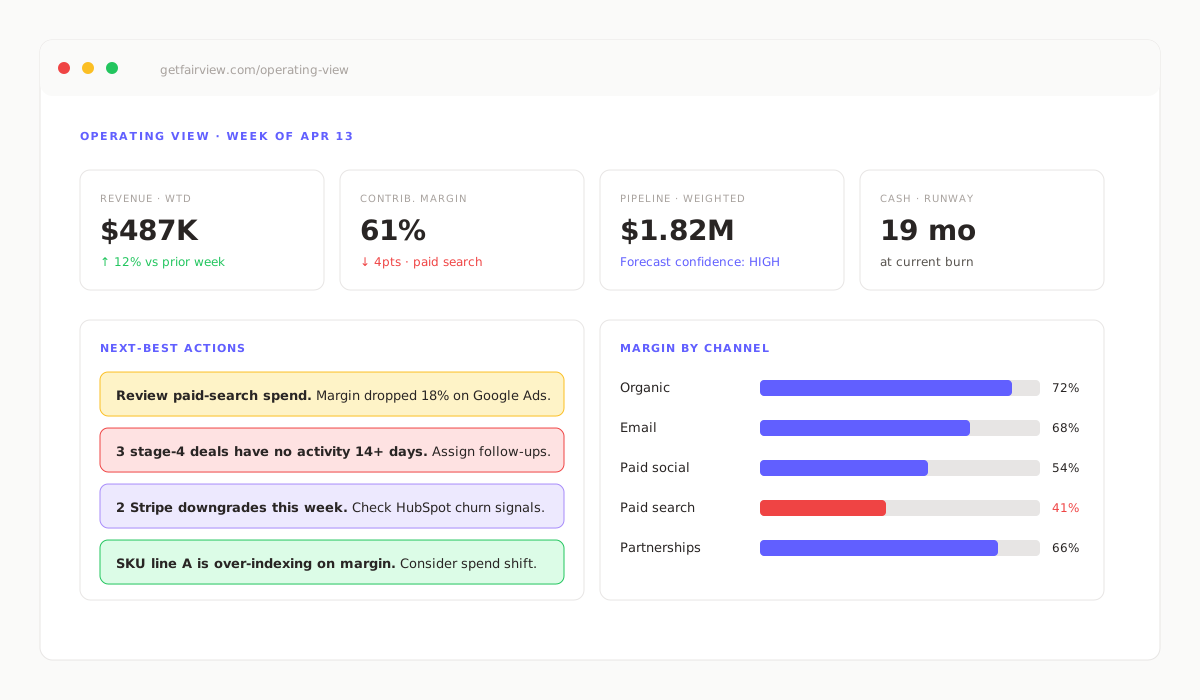
Fairview is an operating intelligence platform built for the COO and founder-CEO profile. It connects HubSpot, Salesforce, Pipedrive, Stripe, Shopify, QuickBooks, Xero, Google Ads, Meta Ads, and HubSpot Marketing Hub, then surfaces the operator view on one screen.
10 min
First integration to first insight
23%
Average leaking margin recovered in 90 days
4–6 hrs
Weekly reporting time replaced
Key takeaways
- Revenue intelligence covers the sales motion for a CRO with 30+ reps.
- Operating intelligence covers the whole operating picture for a COO or founder-CEO at $2M–$30M ARR.
- Pipeline, forecast, and rep performance are the overlap. Margin, cash, and cross-functional actions are operating intelligence only.
- Most growth-stage teams do not need both. The wider view usually wins below 50 reps.
- The buyer signs the invoice based on the problem they own, not the feature list.
One operating view. Revenue, margin, pipeline, and next-best actions.
Connect your CRM, finance, and marketing stack. Fairview ships with the operator dashboard pre-built — the wider view revenue intelligence tools do not cover. 14-day trial, no card required.