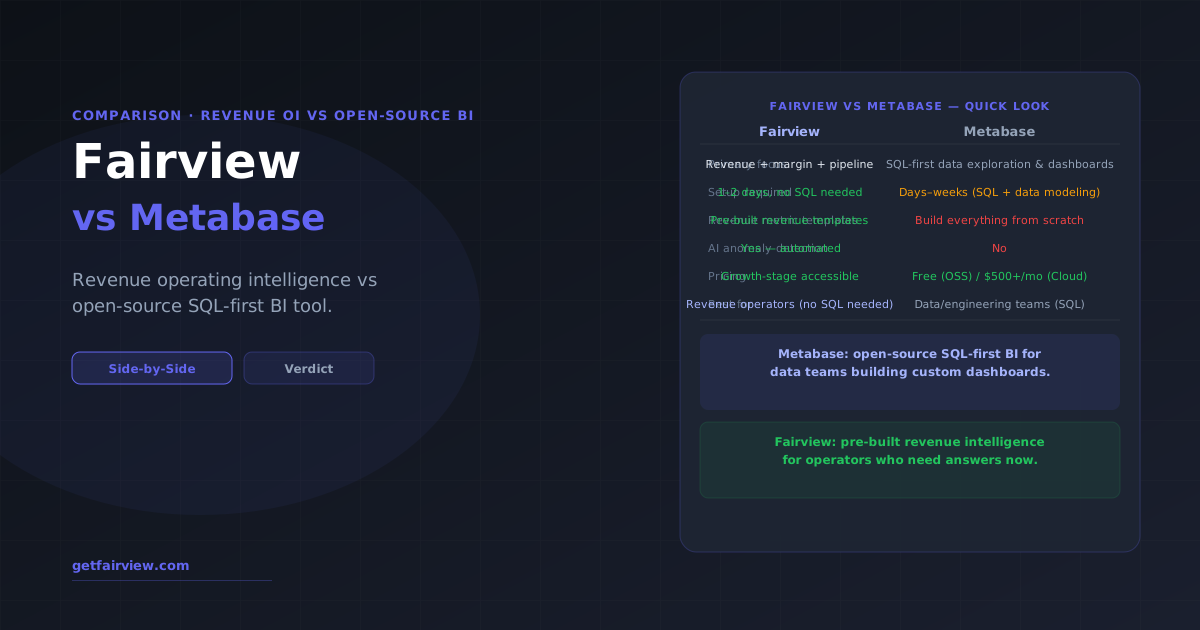
Metabase is free and flexible. Fairview is purpose-built and instant. Here is what each one actually delivers — and which team needs which tool.
Founder, Fairview
TL;DR
Metabase is an open-source SQL-first BI tool where data teams build custom dashboards from scratch. Fairview is a pre-built revenue operating intelligence platform where operators get immediate insight into revenue, margin, and pipeline without writing SQL. Metabase gives you maximum flexibility at the cost of significant setup and maintenance. Fairview gives you revenue intelligence out of the box in 1–2 days.
The Core Trade-Off: Flexibility vs Speed
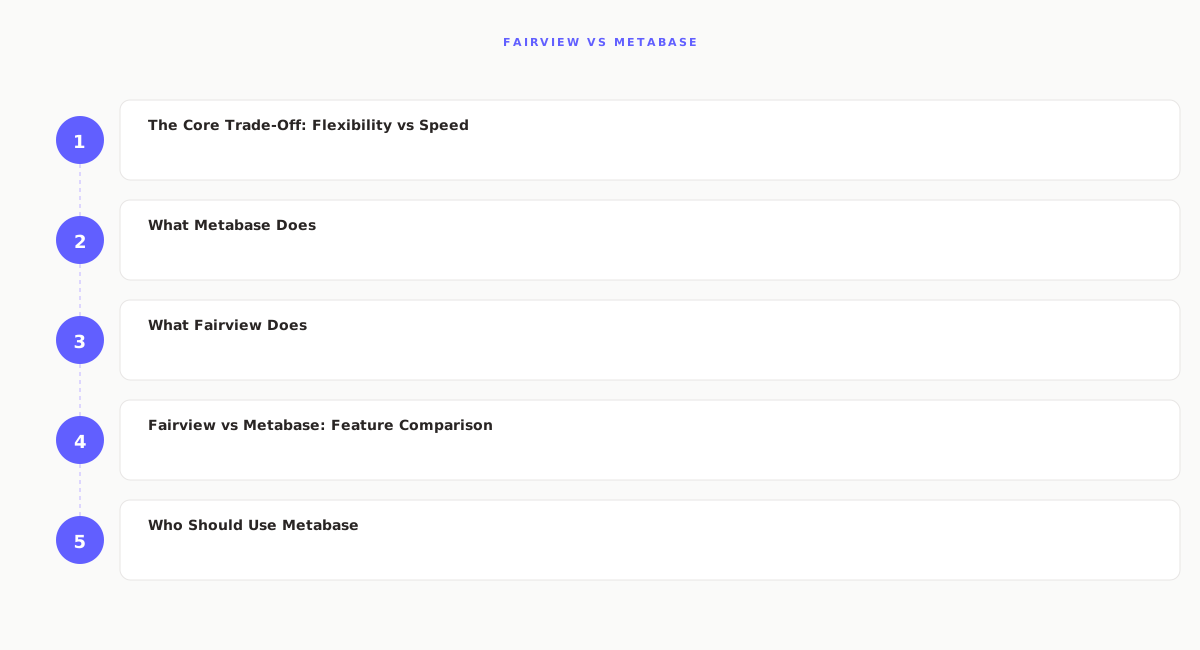
The Fairview vs Metabase comparison comes down to a fundamental trade-off: do you want maximum analytical flexibility, or do you want revenue intelligence working immediately?
Metabase is an open-source business intelligence tool. It connects to your database, warehouse, or data source and lets data analysts and engineers write SQL queries, build visualizations, and publish dashboards to the broader organization. It is powerful, flexible, and affordable — but it requires a data team to build and maintain everything.
Fairview is a revenue operating intelligence platform with pre-built connectors, pre-built revenue metrics, and pre-built anomaly detection. It was designed specifically for the revenue operator workflow — where a CFO, CRO, or RevOps leader needs to see how the business is performing without waiting for a data analyst to build a report.
What Metabase Does
Metabase is one of the most popular open-source BI tools, with over 50,000 organizations using it across industries. It connects directly to databases (PostgreSQL, MySQL, BigQuery, Snowflake, Redshift, and many more) and provides two primary interaction modes: a no-code question builder for non-technical users and a SQL editor for data analysts who need full query control.
Metabase Core Features
- SQL editor and query builder: Write raw SQL or use the no-code question interface to explore data from connected databases
- Dashboard builder: Drag-and-drop dashboard construction from saved queries and visualizations
- Broad database connectivity: 20+ native database connectors including major cloud warehouses and relational databases
- Sharing and embedding: Publish dashboards to internal users or embed them in external applications via iframes
- Alerts and subscriptions: Email or Slack notifications when a query result meets a threshold you define manually
- Models: Semantic layer functionality to define reusable data models that non-technical users can query without knowing SQL
Metabase Pricing Reality
Metabase is technically free in its open-source self-hosted form. But free does not mean no cost. The full picture:
The hidden cost of Metabase — like Tableau and Power BI — is the analyst time required to build, maintain, and update dashboards as your business evolves. That cost is real and significant.
What Metabase Does Not Do
Metabase does not come with pre-built revenue metrics. There is no template that connects to your CRM and shows MRR, ARR, churn, and NRR out of the box. You build everything from scratch. Metabase also has no AI-powered anomaly detection — if your win rate drops 8 points week over week, Metabase only surfaces that if someone has built an alert for it manually. It is a blank canvas, not a revenue operating platform.
What Fairview Does
Fairview is purpose-built for the revenue operator's workflow. Instead of connecting to a raw database and giving you a blank canvas, Fairview connects to your business systems — CRM, billing, marketing platforms, and accounting — and immediately surfaces the revenue, margin, and pipeline metrics your leadership team needs.
Fairview Core Capabilities
- Pre-built revenue metrics: MRR, ARR, expansion, contraction, churn, and NRR — available immediately on connection, no data modeling required
- Margin intelligence: Gross margin and contribution margin by segment, product line, and geography — metrics that Metabase would require weeks of modeling to produce
- Pipeline health: Deal velocity, win rate by stage, pipeline coverage ratio, and stage conversion trend — automatically surfaced from CRM data
- AI anomaly detection: Fairview automatically identifies when metrics move outside expected ranges — no manual alert configuration needed
- Cross-source unification: Revenue operators should not need to query four separate databases. Fairview synthesizes CRM, billing, marketing, and financial data into one view
Fairview vs Metabase: Feature Comparison
| Feature / Capability | Fairview | Metabase |
|---|---|---|
| Primary audience | Revenue operators (CFO, CRO, RevOps) | Data analysts, engineers |
| Revenue metric templates | Pre-built (MRR, ARR, churn, NRR) | Build from scratch |
| SQL required | No | Yes (for meaningful analysis) |
| Setup time | 1–2 days | Weeks–months (modeling + dashboards) |
| Database flexibility | Business system connectors (CRM, billing) | 20+ database types |
| Custom SQL exploration | No | Yes — core feature |
| AI anomaly detection | Yes — automated | No |
| Margin intelligence | Yes | Build from scratch |
| Ongoing maintenance burden | Low — managed platform | High — analyst time required |
| Pricing (real total cost) | Growth-stage flat pricing | $0 + analyst cost = $8,500+/mo realistic |
| Embed in apps | No | Yes |
Who Should Use Metabase
Metabase is a strong choice for engineering-led organizations that need a low-cost SQL exploration tool for their internal data team. If you have a data analyst or data engineer who needs to explore your database, build custom reports for multiple business functions, and publish findings to the organization, Metabase's flexibility is genuinely valuable.
Metabase is also a good choice when you need to embed analytics inside a product — its embedding capabilities are strong for building customer-facing reporting features. For internal tooling and customer-facing analytics at low cost, Metabase is hard to beat.
Who Should Use Fairview
Fairview is the right choice when revenue operators — not data analysts — need to understand how the business is performing. If your CFO, CRO, or CEO is waiting for a data analyst to pull a revenue report each week, that is a Fairview problem. If your RevOps team spends hours each Monday building the forecast deck from Salesforce exports and Stripe data, that is a Fairview problem.
Fairview is also the right choice when you need margin intelligence and anomaly detection without building it yourself. Metabase can produce those insights with enough analyst investment — but Fairview delivers them on day one.
The Case for Using Both
Some companies use Metabase for broad data exploration and ad hoc analysis across their engineering database, while using Fairview specifically for revenue operating intelligence. These are complementary use cases: Metabase for flexible SQL exploration across all your data, Fairview for the pre-built revenue metrics that operators need daily.
The common pattern: Metabase is owned by the data team, Fairview is owned by the revenue team. Both tools serve their respective audiences without overlap.
How Fairview Compares on Ease of Use
The single biggest complaint about Metabase (and BI tools generally) among non-technical operators is the setup and maintenance burden. Building a reliable MRR dashboard in Metabase requires understanding your data model, writing correct SQL, joining multiple tables, and then maintaining that dashboard every time your schema changes. That is meaningful engineering work — appropriate for a data analyst, not a CFO.
Fairview eliminates that burden by doing the data modeling for revenue metrics once, maintaining it as your systems evolve, and surfacing insights through a UI designed for operators, not analysts. The tradeoff is less flexibility for ad hoc exploration — but most revenue operators do not need to explore raw database tables. They need to see whether MRR is on track and whether margin is improving.
Book a demo to see how Fairview delivers revenue intelligence without the SQL overhead.
Can Fairview replace Metabase? +
Do I need SQL to use Fairview? +
How does Metabase pricing compare to Fairview? +
Revenue Intelligence Without the SQL
Metabase requires a data analyst. Fairview gives operators revenue, margin, and pipeline intelligence on day one — no SQL needed.
Book a Demo