TL;DR
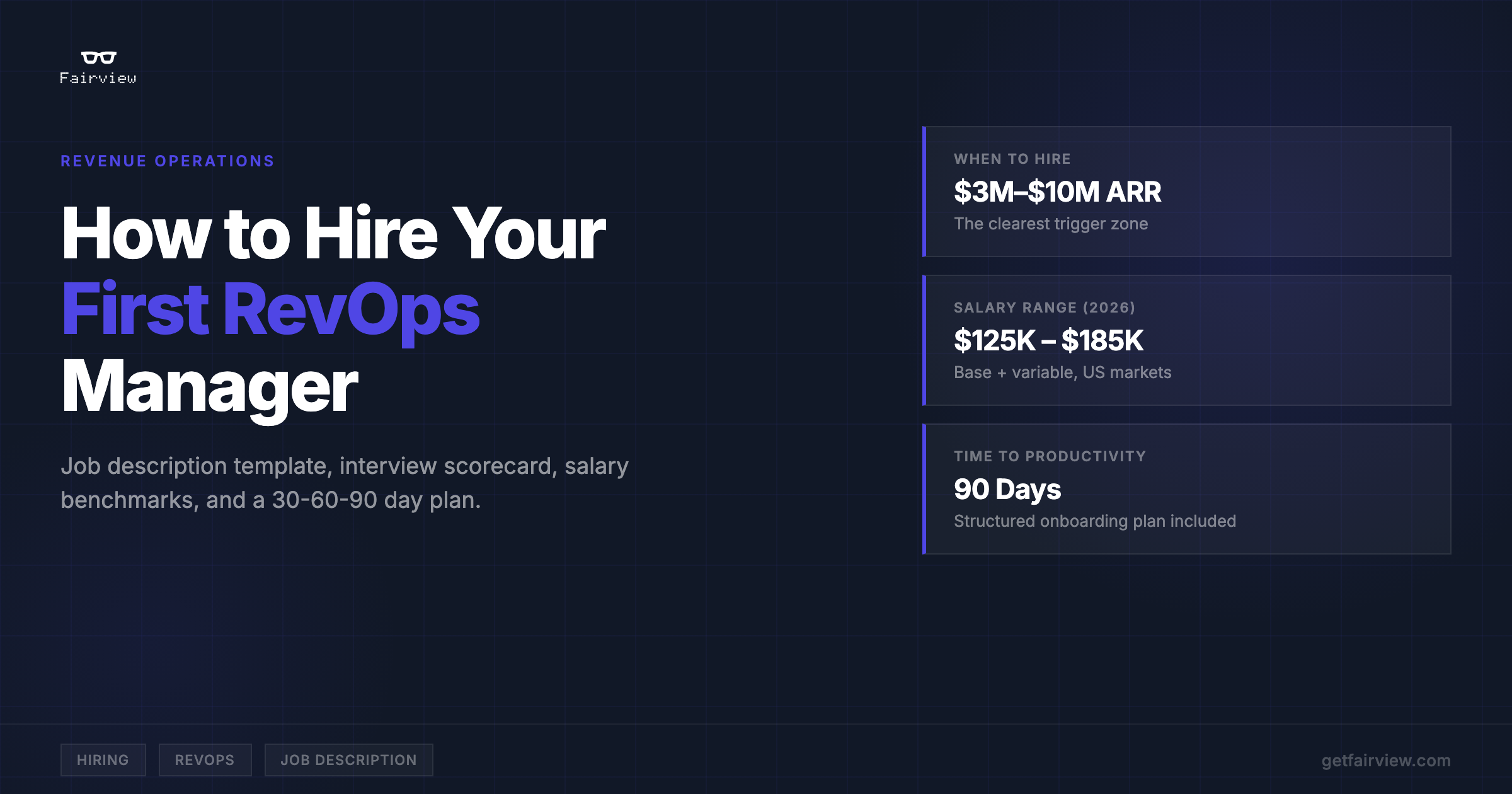
- Hire your first RevOps manager between $5M and $15M ARR, or ~20 go-to-market headcount.
- The charter: own lead-to-cash process, data, tooling, forecasting, and the weekly operating review.
- US base band: $120K–$175K for a first hire. London/Dublin run 15–25% lower.
- Interview loop: charter alignment, analytics case, stakeholder role-play, reference deep dive.
- Day 1: hand them a 30-60-90 plan that favors audit and alignment before dashboard building.
The question "when should we hire a RevOps manager?" usually arrives about six months after the answer was "yesterday." The forecast started drifting, the CRO and VP Marketing stopped agreeing on pipeline definitions, and the weekly spreadsheet reconciliation consumed a full day of someone’s week. The first RevOps hire is the unlock.
Most founders get the hire wrong in one of two ways. They hire a SalesOps manager with a new title and end up with a rep-support function instead of a revenue function. Or they hire a senior analyst who builds beautiful dashboards nobody can act on. The right hire is neither.
This post is the playbook to hire your first RevOps manager: when to pull the trigger, the scorecard to screen against, the JD to copy, the compensation range, the interview loop, and the 30-60-90 to hand them on day one. It supports the pillar on revenue operations, the RevOps KPI set, and the weekly revenue review they will end up running.
When to hire a RevOps manager
Direct answer
Hire your first RevOps manager between $5M and $15M ARR, or when the go-to-market team crosses 20 to 30 people. Waiting past $15M ARR almost always shows up as a broken forecast before the hire can be onboarded fast enough to fix it.
Three signals that the moment has arrived: pipeline numbers disagree between marketing, sales, and finance; the forecast has missed by more than 10% two quarters running; someone on the team spends a full day a week reconciling spreadsheets. Any two of the three and the hire is overdue.
What a RevOps manager actually owns
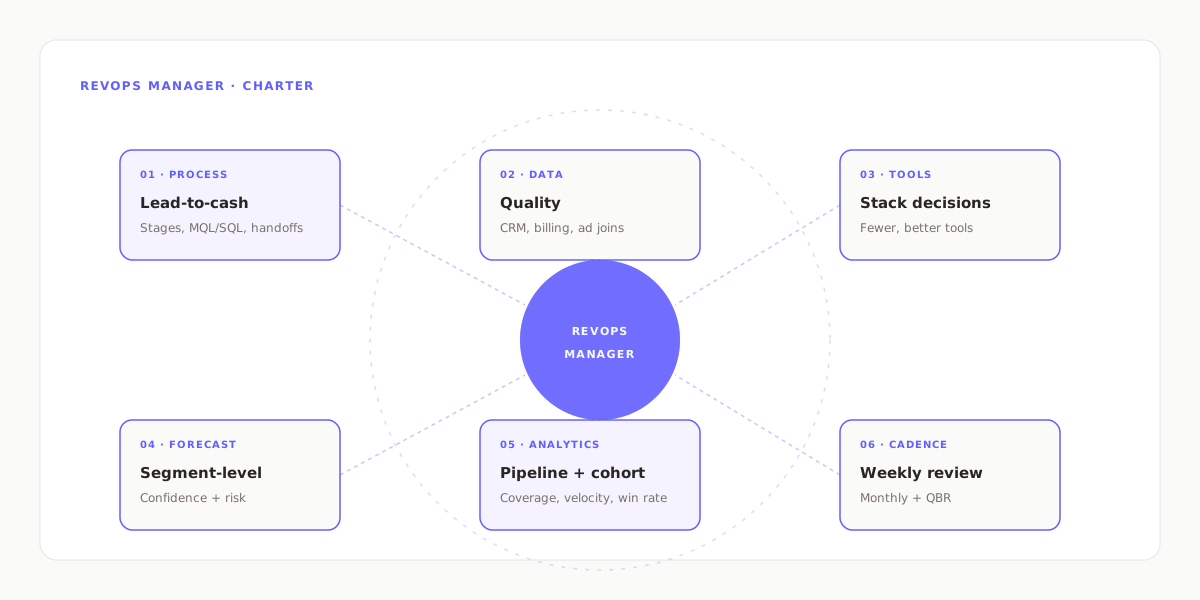
- Lead-to-cash process. MQL/SQL definitions, stage gates, handoffs from marketing to sales to CS.
- Data quality. CRM hygiene, account model, activity capture, billing joins, ad-to-CRM match.
- Tooling. CRM, MAP, billing, CS platform, analytics layer. Fewer, better tools over more tools.
- Forecasting. Segment-level forecast, confidence scoring, pull-forward and slip tracking.
- Pipeline analytics. Coverage, velocity, win rate by segment, conversion rates, cohort retention.
- Operating cadence. The weekly revenue review, monthly ops review, and quarterly QBR.
Key insight
If the scope fits on a SalesOps job description, you have hired the wrong role. RevOps crosses every team that touches revenue.
The hiring scorecard
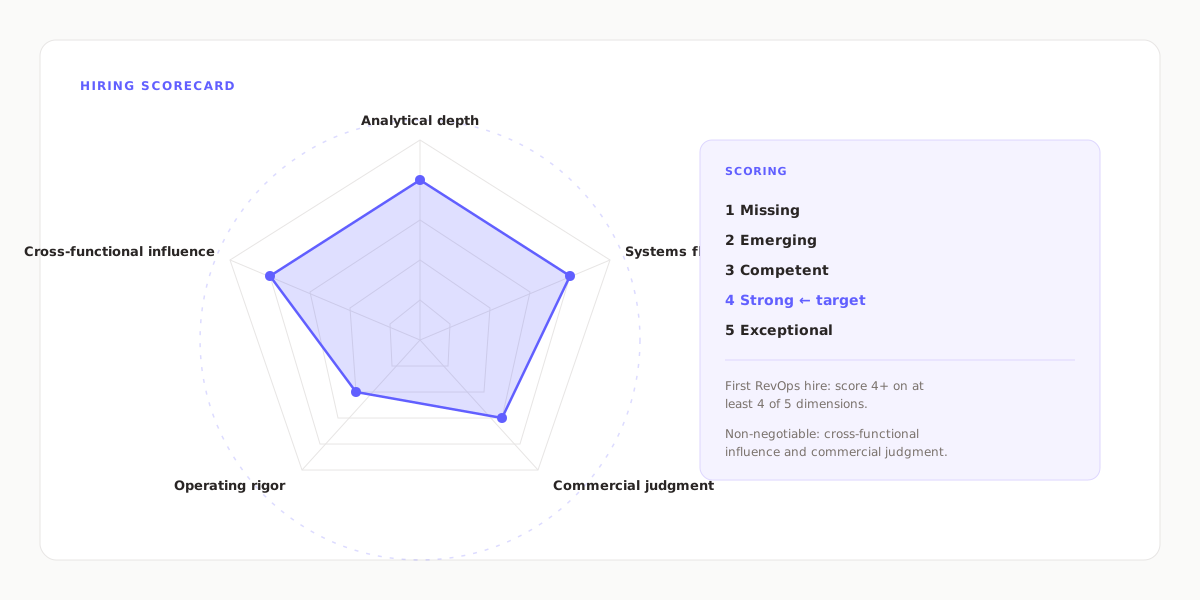
Score every candidate against five dimensions on a 1–5 scale:
- Analytical depth. Can they look at a pipeline report and tell you which segment is rotting? SQL is nice, judgment is non-negotiable.
- Systems fluency. Fluent in HubSpot or Salesforce, comfortable with Stripe or a billing system, understands how ad platforms pass data back. Admin-level, not user-level.
- Cross-functional influence. They will ask marketing to change lead definitions and sales to close the stage skipper. Can they do that without the CRO in the room?
- Operating rigor. Do they write things down? Run meetings tightly? Default to async when async works?
- Commercial judgment. Do they know the difference between a metric that moves and a metric that matters?
Compensation bands (2026)
| Level | US base | Bonus | Equity (early-stage) |
|---|---|---|---|
| RevOps Manager (first hire) | $120K–$150K | 10–15% | 0.05–0.15% |
| Senior RevOps Manager | $150K–$175K | 15–20% | 0.1–0.2% |
| Director of RevOps | $175K–$210K | 15–25% | 0.15–0.4% |
| VP RevOps | $210K+ | 20–30% | 0.3–0.8% |
These bands reflect early-2026 US market data (Pave Q1 2026 survey, RevOps Co-op compensation thread). London and Dublin typically run 15–25% lower on base, with lower equity percentages on later-stage companies. Adjust for stage and funding runway.
The interview loop
Four stages, about five hours of total candidate time. Any more and you are testing endurance rather than fit.
- Hiring manager screen · 45 min. Charter alignment. Do they understand the scope of RevOps vs SalesOps? What is the last process they fixed end-to-end?
- Analytics case · 90 min. Give them a messy pipeline CSV with obvious data quality issues and a fake forecast. Ask them to find three problems and propose three fixes. Watch how they think, not just what they answer.
- Stakeholder role-play · 60 min. Two interviewers playing VP Marketing and VP Sales disagree about lead quality. Candidate facilitates the conversation. You are testing for influence without authority.
- Exec & culture · 45 min. CEO, CFO, or CRO. Ambition, judgment, communication.
- References · async. Two backchannel references, not just the two the candidate chose. One peer, one cross-functional stakeholder.
Quote-ready
The analytics case matters less for the right answer and more for watching the candidate think on their feet without a polished slide to hide behind.
The 30-60-90 plan to hand them on day one
Strong RevOps hires come in with opinions; they get burned when they ship dashboards before they build alignment. Give them a plan that sequences audit, then alignment, then instrumentation.
- Days 1–30: audit. Document current stages, definitions, data flows, tools. Interview each GTM leader. Pull 4 quarters of forecast vs actual. Deliverable: the top 10 process and data gaps.
- Days 31–60: align. Land shared definitions (MQL, SQL, opportunity, handoff criteria). Get leadership sign-off in writing. Deliverable: the one-page definitions doc every team agrees on.
- Days 61–90: instrument. Connect CRM, billing, MAP, and ad platforms to one analytics layer. Stand up the weekly operating review with the same five metrics every time.
- Day 90+: iterate. Pick the weakest pillar every quarter and strengthen it.
Four mistakes that sink the first RevOps hire
- Hiring a SalesOps manager with a new title. Scope stays rep-support; marketing and CS get ignored. Forecast stays broken.
- Making them report to an unclear stakeholder. If it is unclear whether RevOps serves the CRO, the COO, or the CFO, they will serve none.
- Asking for dashboards before alignment. The dashboard shows what the disagreement is. It does not solve it.
- Under-leveling the role. Paying $90K for a function that reports into the CRO is a recipe for turnover inside 18 months.
How Fairview makes the first 90 days easier
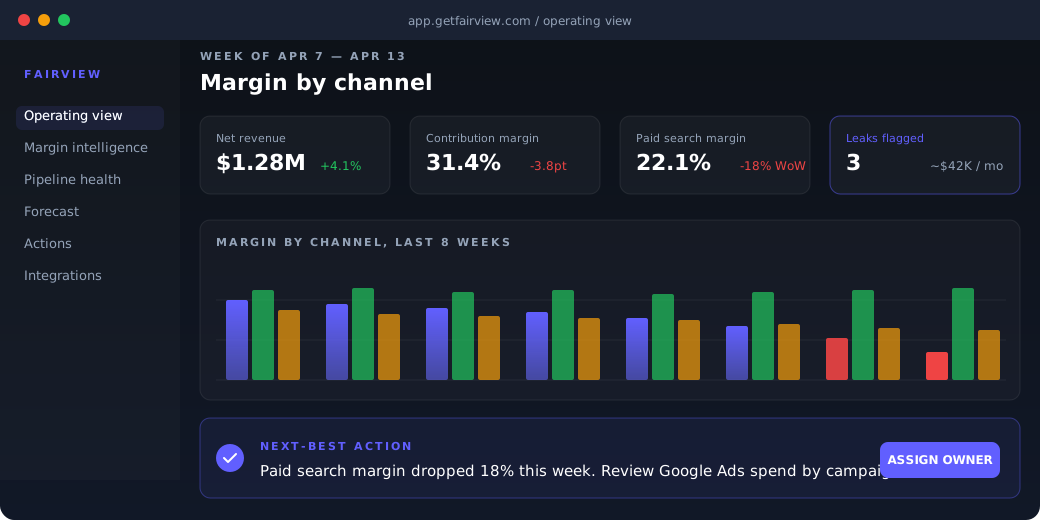
The first 90 days are harder than they need to be because the data layer is usually the last thing in place. Fairview connects natively to HubSpot, Salesforce, Pipedrive, Stripe, Shopify, QuickBooks, Xero, Google Ads, Meta Ads, and HubSpot Marketing Hub. A new RevOps manager can open the Operating Dashboard on day one and see pipeline, margin, forecast, and KPI variance in one place.
That buys them time for the work that actually matters in month one: interviews, audits, and alignment. The Forecast Confidence Engine and Weekly Operating Report give them a forecast and a review cadence they can adopt or adapt without building from scratch.
See pricing and tiers for the plan that fits your team.
Day 1
Source of truth ready
10
Native integrations live
No SQL
No data team required
Key takeaways
- Hire your first RevOps manager at $5–$15M ARR or ~20 GTM headcount.
- Charter spans marketing, sales, and CS. Anything narrower is SalesOps.
- Score on analytics, systems, influence, rigor, commercial judgment.
- US base $120–$175K for a first hire; more for senior and director levels.
- Sequence the first 90 days audit → align → instrument. Dashboards last.
What does a RevOps manager do?
A RevOps manager owns lead-to-cash process, data quality across the revenue stack, tooling decisions, forecasting, pipeline analytics, and the weekly operating review. They sit between marketing, sales, and customer success as connective tissue, with authority to change definitions and workflows that cross team lines.
What should a RevOps manager job description include?
Charter (scope across MKT, Sales, CS), success metrics (forecast accuracy, pipeline coverage, data quality, time-to-insight), core responsibilities, required experience, tool fluency (CRM admin, billing, analytics), and reporting line. Avoid generic SalesOps boilerplate — the whole point is that RevOps is broader.
How much does a RevOps manager earn?
In the US in 2026, base salary for a first RevOps manager ranges $120K to $175K, plus 10–20% bonus and early-stage equity in the 0.05–0.2% range. Director level can reach $210K+ base. London and Dublin run 15–25% lower on base with lower equity percentages.
Should a RevOps manager report to the CRO or COO?
CRO is the most common reporting line and keeps RevOps close to pipeline. COO works for operations-heavy cultures with a cross-functional charter. CFO is rare but valid when forecast accuracy and board reporting dominate the agenda. The worst structure is unclear ownership, where the hire ends up serving no one and answering to everyone.
What should the first 90 days look like for a RevOps manager?
Days 1–30: audit current process, data, and tools. Document gaps, interview each GTM leader, pull 4 quarters of forecast vs actual. Days 31–60: land shared definitions across MKT, Sales, and CS in writing. Days 61–90: stand up the weekly operating review with five metrics and one source of truth. After 90 days, iterate one pillar per quarter.