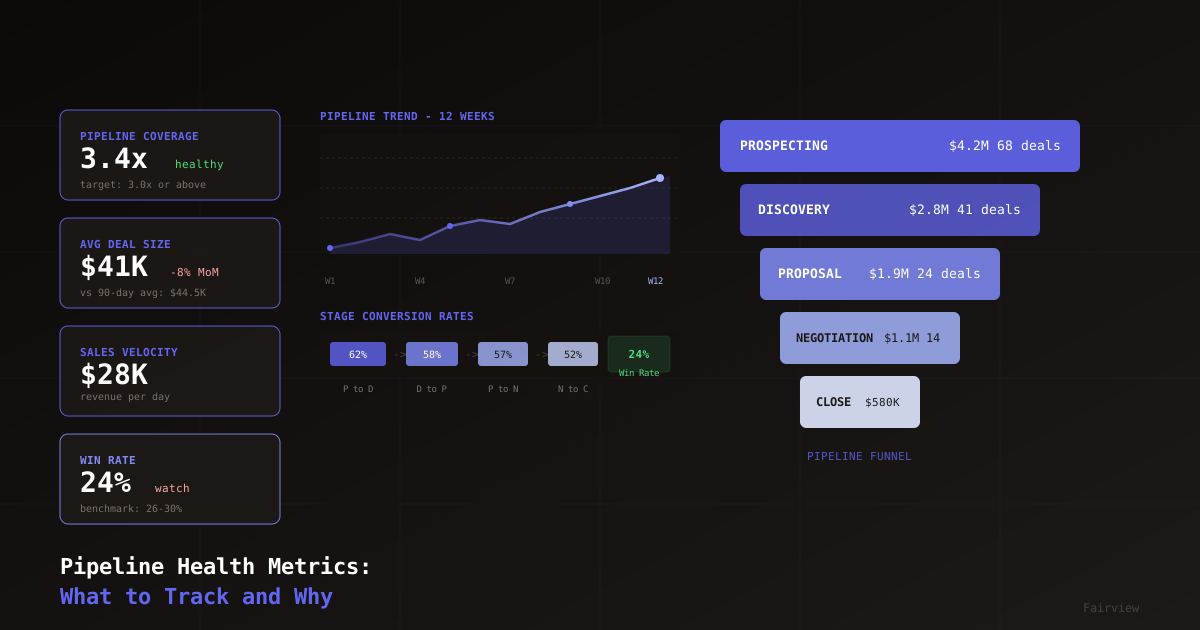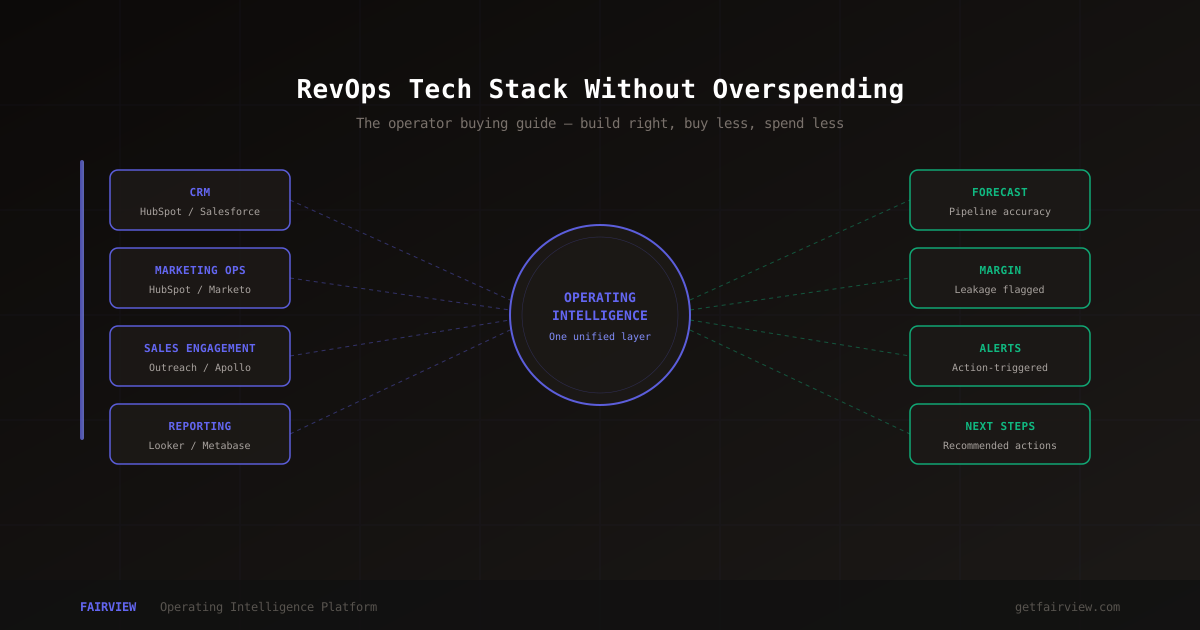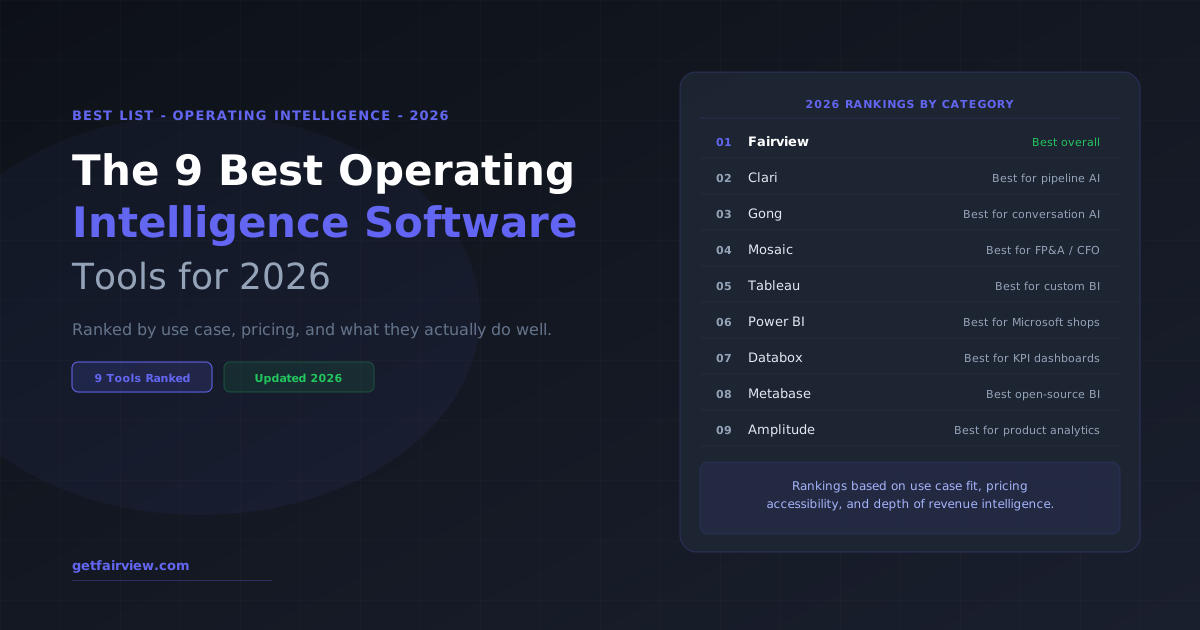
Not every tool in this category does the same thing. Here is a plain-language breakdown of the best operating intelligence platforms — what each one actually does, who it serves, and when it is the right choice.
Founder, Fairview
TL;DR
Operating intelligence software covers a range of tools from revenue analytics platforms to pipeline AI, BI tools, and FP&A software. The best choice depends on your role and use case: Fairview for revenue operators who need unified revenue, margin, and pipeline intelligence; Clari for enterprise pipeline AI; Gong for conversation intelligence; Mosaic for CFO-level financial planning; Tableau or Power BI for custom BI; Metabase for open-source data exploration.
How We Evaluated These Tools
Operating intelligence is a broad term. Vendors use it to describe everything from traditional BI dashboards to AI-powered revenue platforms to conversation intelligence tools. For this list, we focused on tools that help revenue operators — CFOs, CROs, RevOps leaders, and operators — understand how their business is performing across revenue, margin, pipeline, and related metrics.
Evaluation criteria: depth of revenue intelligence, ease of use for non-technical operators, setup time, pricing accessibility, integration breadth, and anomaly detection capability.
| Tool | Best For | Pricing Access | Setup Time |
|---|---|---|---|
| Fairview | Revenue + margin + pipeline (all-in-one) | Growth-stage flat | 1–2 days |
| Clari | Enterprise pipeline AI + deal inspection | $60K+/year | Weeks |
| Gong | Conversation intelligence + coaching | Enterprise | Days |
| Mosaic | FP&A, headcount planning, CFO layer | Enterprise | Weeks |
| Tableau | Custom BI dashboards, any data source | $15–$70/user + infra | 6–12 weeks |
| Power BI | Microsoft-native BI and reporting | $10–$20/user | Weeks |
| Databox | KPI aggregation dashboards | $47–$231/month | Hours |
| Metabase | Open-source SQL-first data exploration | Free (OSS) | Days |
| Amplitude | Product analytics, user behavior, retention | Event-volume based | Days |
The 9 Best Operating Intelligence Tools for 2026
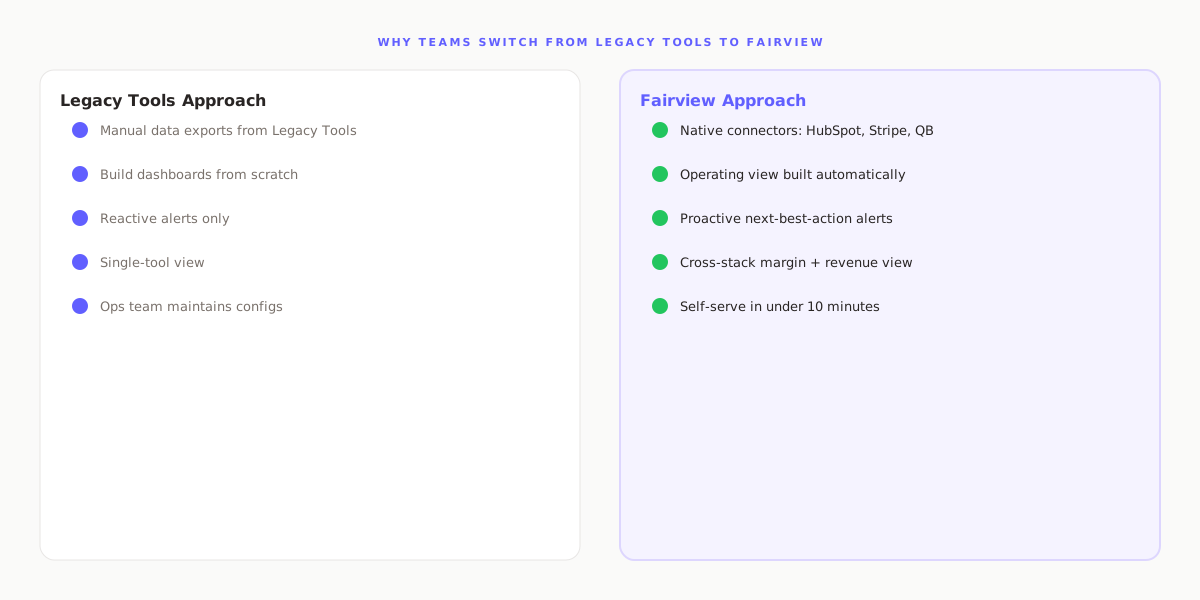
Fairview is a purpose-built revenue operating intelligence platform that connects your CRM, billing system, marketing data, and accounting into a unified real-time view. It surfaces the metrics that revenue operators need — MRR, ARR, margin by segment, pipeline health, and channel ROI — with AI-powered anomaly detection and no SQL required.
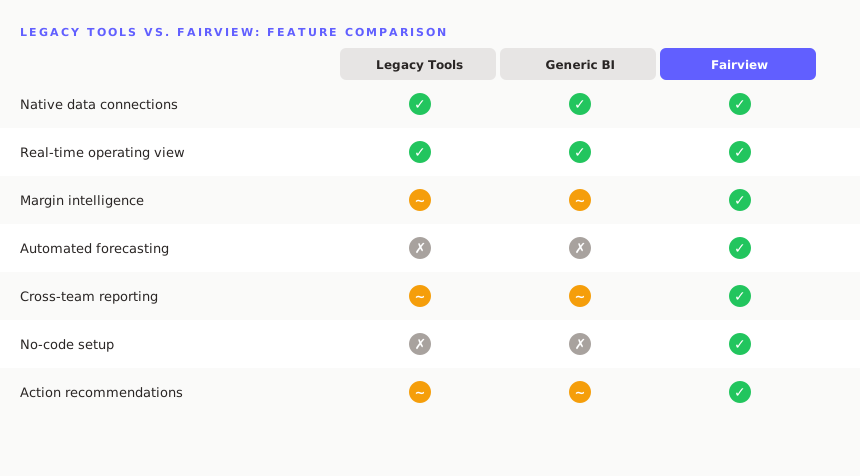
The core differentiator: Fairview was built specifically for the revenue operator workflow, not for data analysts. Setup takes 1–2 days (not 6–12 weeks). There is no blank canvas to fill — pre-built revenue intelligence is available from day one. When metrics move outside expected ranges, Fairview surfaces the anomaly automatically.
- Pre-built revenue intelligence (no dashboard building)
- AI anomaly detection across all metrics
- Works across CRM + billing + marketing + accounting
- Designed for operators, not analysts
- Not a general-purpose BI tool
- No product analytics / event tracking
- No call recording or conversation AI
Clari is an AI-powered revenue platform built for large sales organizations. Its core strength is pipeline inspection — the ability to apply AI deal-health scoring to hundreds of opportunities simultaneously, giving CROs and sales managers rep-level visibility into forecast risk. Clari's Revenue Platform also covers revenue cadences, call intelligence (Clari Copilot), and forecast management.
Clari is enterprise-priced and enterprise-scoped. Pricing typically starts at $60,000–$80,000/year for smaller teams and scales to $150,000+ for large enterprise deployments. The deal-level AI is genuinely best-in-class for organizations with 50+ reps and a mature CRM data foundation. For smaller or growth-stage teams, Fairview provides comparable revenue intelligence at a fraction of the cost.
- Best-in-class deal-level AI scoring
- Deep rep-level pipeline inspection
- Clari Copilot for call intelligence
- Enterprise pricing ($60K+ minimum)
- No margin or financial intelligence
- Complex implementation (weeks to months)
Gong is the market leader in conversation intelligence. It records, transcribes, and analyzes every sales call and customer interaction, surfacing coaching signals, deal risks, and win/loss patterns from what was actually said. Gong's AI identifies competitor mentions, talk-listen ratios, objection patterns, and next-step commitments across your entire call library.
Gong is not a revenue metrics platform — it does not track MRR, margin, or pipeline coverage. It is a conversation layer that gives sales leaders insight into what is happening in their reps' deals based on conversation data. Gong and Fairview are highly complementary: Fairview spots metric anomalies in revenue data, Gong diagnoses the conversations that explain why.
- Best-in-class conversation AI
- Coaching workflows for frontline reps
- Win/loss analysis from call data
- No revenue, margin, or pipeline metrics
- Call-only visibility (no financial data)
- Enterprise pricing
Mosaic is a strategic finance platform built for CFOs and finance teams. It specializes in financial planning and analysis (FP&A) — headcount planning, budget vs. actual tracking, scenario modeling, and board reporting. Mosaic connects to your ERP, HRIS, CRM, and billing systems to give finance teams a unified financial planning environment.
Mosaic is the CFO's tool. It is not a revenue operations platform — it does not surface pipeline health or marketing channel ROI. It is complementary to Fairview: Mosaic handles financial planning and budgeting, while Fairview handles real-time revenue and pipeline operating intelligence. See Fairview vs Mosaic for the detailed breakdown.
- Best-in-class financial planning features
- Scenario modeling and board reporting
- Headcount and budget management
- Finance-only, not RevOps
- No pipeline or revenue ops features
- Enterprise pricing
Tableau is the most flexible BI visualization tool available. It connects to virtually any data source, supports advanced custom visualizations, and allows analysts to build any dashboard they can conceptualize. Tableau is genuinely powerful — but that flexibility comes with significant cost and setup time.
The realistic Tableau cost (licenses + data infrastructure + analyst time) is $4,000–$10,000/month or more — not the sticker price. For revenue operators who need answers today, Tableau's 6–12 week implementation timeline to first meaningful insight is a significant barrier. See Fairview vs Tableau for the full cost analysis.
Power BI is Microsoft's BI platform, deeply integrated with Office 365, Azure, Dynamics, and Teams. At $10/user/month for Pro, it is the most affordable tier-one BI tool available. For organizations already running on Microsoft's stack, Power BI is a natural choice for building custom revenue dashboards.
The caveat: Power BI's low per-seat cost hides the analyst time required to build and maintain useful dashboards. An organization without a dedicated Power BI developer will struggle to get meaningful revenue insights without significant investment in skills and setup. See Fairview vs Power BI for the detailed comparison.
Databox is a KPI dashboard aggregation tool. It pulls metrics from 100+ data sources — HubSpot, Salesforce, Google Analytics, Meta Ads, Stripe — and displays them in pre-built or custom dashboards. Databox is popular with marketing agencies and growth teams that need a quick way to consolidate metrics from multiple tools into a single reporting view.
Databox's core limitation is depth: it aggregates metrics that tools already expose, but does not calculate cross-source intelligence like contribution margin, CAC payback, or pipeline health. It is a reporting layer, not an intelligence layer. See Fairview vs Databox for the breakdown.
Metabase is an open-source BI tool with 50,000+ organizational users. Its self-hosted version is free, and it provides strong SQL-first exploration capabilities for data and engineering teams. For growth-stage companies that need a low-cost way to explore their database, Metabase is frequently the first BI tool deployed.
The realistic cost of Metabase is higher than the sticker price suggests — analyst time to build and maintain dashboards is the main hidden cost. For revenue operators who need immediate intelligence without SQL, Metabase requires a data team intermediary. See Fairview vs Metabase for the full comparison.
Amplitude is the leading product analytics platform, used by product managers and growth engineers to understand user behavior inside digital products. It tracks events, measures retention, analyzes funnels, and runs experiments. Amplitude is not a revenue operating platform — it is a product intelligence platform.
Amplitude and Fairview serve different teams at the same company: Amplitude for the product team understanding user behavior, Fairview for the revenue team understanding business performance. See Fairview vs Amplitude for the detailed breakdown of where each fits.
How to Choose the Right Operating Intelligence Tool
The most common mistake when evaluating operating intelligence software is picking a category winner rather than a use-case winner. Clari is the best pipeline AI tool — but if you are a $10M ARR company without 50 reps or enterprise pricing tolerance, Clari is the wrong choice regardless of how good its technology is.
Use these questions to narrow your evaluation:
- Who is the primary user? Product managers → Amplitude. Finance/CFO → Mosaic. Sales leadership → Clari or Gong. Revenue operators (CFO + CRO + RevOps together) → Fairview.
- Do you need pre-built intelligence or a blank canvas? Blank canvas with maximum flexibility → Tableau or Metabase. Pre-built revenue intelligence ready in 1–2 days → Fairview.
- What is your real budget? Enterprise ($50K+/year) → Clari, Gong, or Mosaic. Growth-stage → Fairview, Databox, Power BI, or Metabase.
- Do you need margin intelligence? Only Fairview provides margin intelligence as a core feature in the revenue OI category. Tableau and Power BI can produce margin metrics if you build the models — but they do not come pre-built.
What is the best operating intelligence software in 2026?+
How is operating intelligence different from business intelligence?+
How much does operating intelligence software cost?+
See Fairview in Action
Revenue, margin, and pipeline intelligence in one view. No SQL, no dashboard building, no analyst needed. Live in 1–2 days.
Book a Demo