

TL;DR
- LTV has four inputs: AOV, frequency, contribution margin, and lifespan. None of them require a higher ad budget to move.
- Five levers lift LTV organically: repeat rate, repeat AOV, frequency, margin, retention. Pulling two at once is where the numbers start compounding.
- A 5 to 10 point lift in 90-day repeat rate typically moves 12-month cohort LTV by 15 to 40%, depending on AOV and margin.
- Measure every change per monthly cohort. Blended LTV averages the wins and losses into a number that barely moves.
- The fastest-reading lever is repeat AOV (30 to 60 days). The slowest-reading is retention (120 days or more) — and it compounds the longest.
Every ecommerce brand has a meeting where someone says "we need to grow LTV" and someone else answers "we need a bigger ad budget." Those are two different conversations. LTV is a contribution-margin number per customer. Ad spend buys customers. Confusing them is how brands spend a quarter raising CAC without moving LTV a dollar.
This is a practical guide to the opposite move: lift LTV while leaving the ad budget alone. Five levers, in the order most operators pull them, with realistic timeframes and the cohort view that tells you whether the growth is real. If you want the retention-metric glossary that sits under this piece, the retention metrics guide covers the definitions. This one focuses on what to do with them.
What LTV actually is, and why ads do not raise it
Definition
Customer lifetime value (LTV): the total contribution margin a customer generates over their observed relationship with the brand. LTV = average order value × purchase frequency × contribution margin % × expected lifespan. None of those four inputs care how you acquired the customer.
The ad budget sits upstream of LTV. It determines how many customers you buy and what CAC you pay to buy them, which together determine LTV:CAC. Spending more on ads brings in more customers at a similar LTV. It does not raise the LTV of the customer you already have. This is why a brand can double ad spend, hold CAC constant, and watch its LTV curve stay exactly where it was twelve months ago.
Growing LTV is a repeat-behavior problem. Every dollar added to lifetime value comes from a customer buying again, spending more per order, buying more frequently, on better margin, over a longer relationship. Acquiring a new customer costs roughly 5 to 7 times more than selling to an existing one, per widely-cited Bain & Company research surfaced in Harvard Business Review. The multiplier is not the point. The direction is: the next dollar of LTV almost always costs less than the next dollar of new-customer revenue.
The five levers that lift LTV organically
1. Repeat purchase rate
The share of customers who come back for a second order. Usually the biggest unlock on the list because the first-to-second transition is where 60 to 70 percent of lifetime value gets decided. Move this one 5 to 10 points and most LTV curves reshape themselves inside 90 days.
The levers that work are unglamorous. A post-purchase email sequence timed to replenishment cadence. An SMS flow for the two-week window after delivery. A first-order onboarding experience that explains the product well enough that the customer knows what problem it solves. None of it requires a media plan.
2. Repeat AOV
Order value on repeat purchases specifically. The fastest-reading lever on the list because bundles, tiered free-shipping thresholds, and subscribe-and-save upgrades show up in the data within a month. Aim for repeat AOV 10 to 20 percent above first-order AOV. Anything lower and the brand has a reorder-depth problem worth investigating.
The trap here: promo-driven AOV. A site-wide 20 percent code lifts AOV and erodes margin at the same time. The contribution-margin view is what separates real AOV growth from the kind that looks good for a month and then shows up in the quarterly close.
3. Purchase frequency
Orders per customer per year. Moves slower than the first two levers but compounds harder. For consumables, a replenishment reminder at 80 percent of the typical repurchase cycle is the highest-leverage flow most brands never build. For non-consumables, loyalty tiers and cross-category introductions are how frequency moves from 1.4 to 2.1 without a media budget.
Read the trend per cohort. A frequency uptick in the most recent three cohorts is a real signal. A blended uptick across all cohorts usually means a single cohort got aged into the window and is flattering the average.
4. Contribution margin on repeat orders
LTV is a margin number, not a revenue number. A cohort generating $240 of revenue at 28 percent contribution margin has an LTV of $67. The same cohort at 34 percent margin has an LTV of $82 with no change in customer behavior. Promo discipline, shipping cost negotiation, and mix toward hero SKUs are where this lever lives. Most brands leave 3 to 6 points on the table without realizing it.
5. Retention lifespan
The slowest-reading lever. How long a cohort keeps buying before it effectively stops. Winback flows, product refresh, and the unboxing quality of order two all matter here. The payoff shows up 6 to 12 months after the change. The compounding shows up for years. A lot of the LTV gap between good D2C brands and great ones lives in this lever, and it is why the great ones look patient to the outside.
Key insight
Pulling one lever lifts LTV. Pulling two at once is where the numbers start compounding. A 6 point repeat-rate gain paired with a 12 percent repeat-AOV lift typically doubles what either move would have done alone.
How LTV compounds when retention does the work
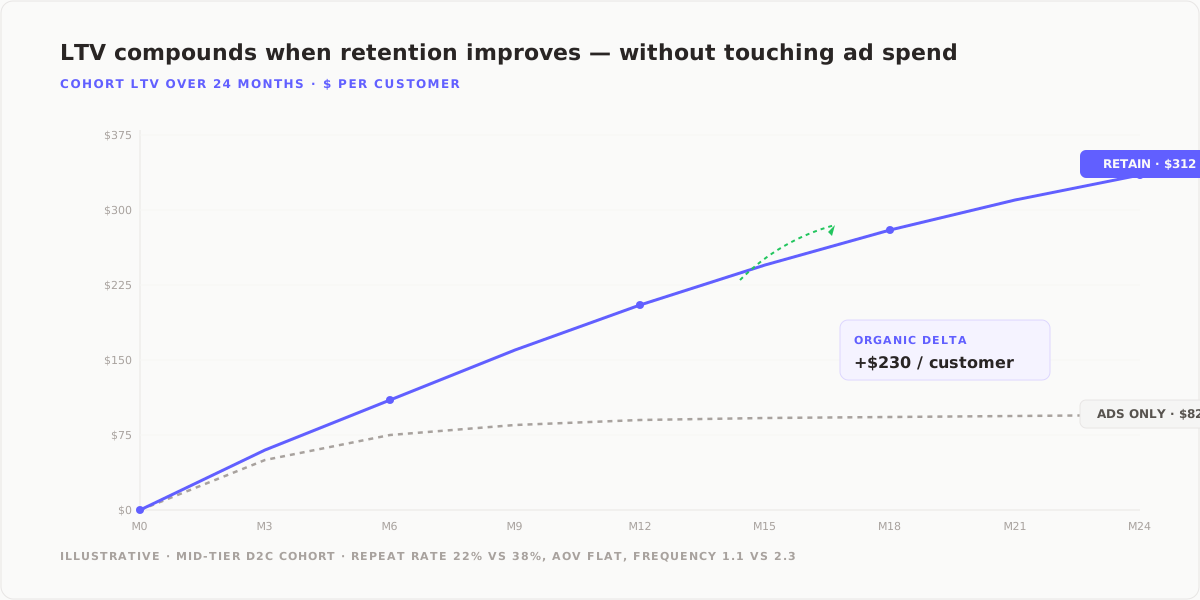
The two curves above are representative rather than from any single brand, but the shape is what most operators eventually recognize. The acquisition-only cohort reaches a plateau around month 9 and stays there. The retention-optimized cohort keeps adding revenue quarter after quarter because each repeat purchase increases the probability of the next one. That is the compounding part. It is also the part that does not show up until you plot LTV at 6, 12, and 24 months side by side.
A 90-day sequence operators usually run
Most brands that meaningfully lift LTV in a quarter do roughly this. It is not the only order that works, but it is the one that tends to produce readable results without the levers interfering with each other.
- Days 1 to 15. Fix the repeat-AOV lever first. Review bundle logic, free-shipping threshold, and subscribe-and-save terms. Ship the change and read repeat AOV weekly.
- Days 15 to 45. Ship or rebuild the post-purchase flow. Email plus SMS, timed to replenishment, segmented by first-order SKU. Target a 5 point gain in 60-day repeat rate on the next two acquisition cohorts.
- Days 45 to 75. Run a contribution-margin review. Identify promo codes and shipping lanes that quietly clip margin on repeat orders. Tighten or retire them.
- Days 75 to 90. Build the winback flow for customers past the expected repurchase window. This reads slowly but compounds for the rest of the year.
Quote-ready
The ad budget buys customers. Everything that happens after the first order determines what those customers are worth.
Four LTV mistakes that waste a quarter
- Reading blended LTV instead of cohort LTV. Blended is an average across every acquisition window and channel. The number that matters is the LTV of the last three monthly cohorts, trended against the three before.
- Moving too many levers at once. Ship bundles, SMS flow, winback, and a new subscribe-and-save tier in the same month and the cohort that follows is uninterpretable. Stagger by two to three weeks.
- Discounting the first order. A 25 percent first-order discount lowers CAC on paper and quietly drops the AOV of the repeat cohort because the customer anchors on the discount price. The LTV:CAC view should always be read alongside the discount rate.
- Confusing revenue LTV with margin LTV. Most analytics tools report the revenue version. Every decision worth making uses the contribution-margin version. If your dashboard does not separate them, assume the top-line number is 20 to 30 percent too high.
How Fairview helps operators grow LTV without ads
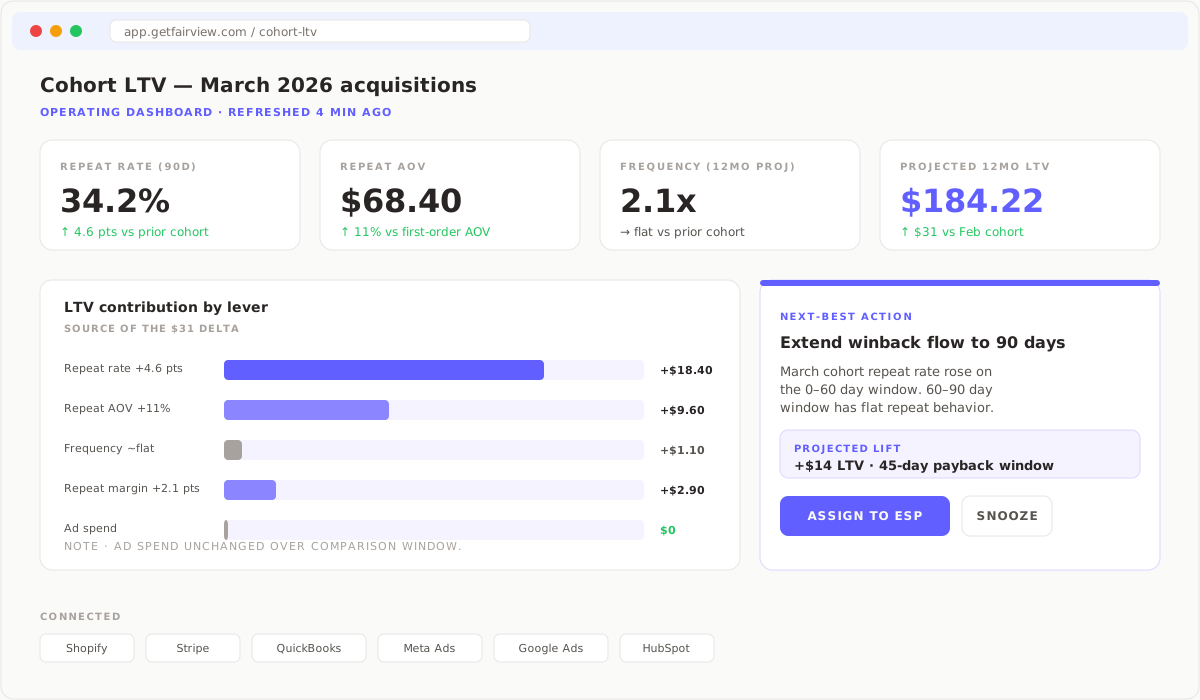
Fairview connects to Shopify, Stripe, QuickBooks, Xero, HubSpot, Salesforce, Pipedrive, Google Ads, Meta Ads, and HubSpot Marketing Hub through native OAuth. Margin Intelligence joins the order, subscription, and cost data and reports cohort LTV on a contribution-margin basis. The Operating Dashboard shows repeat rate, repeat AOV, frequency, margin, and projected 12-month LTV for every monthly cohort without a data warehouse project.
When a lever moves, Fairview attributes the change: the lift in projected LTV gets split across repeat rate, AOV, frequency, and margin so the team knows which work paid off. Next-Best Action takes that attribution and suggests the next lever to pull, with a projected LTV lift on the cohort that follows.
5 levers
None require ad spend
90 days
Typical cohort read cycle
5–7x
Cost of new vs repeat (Bain)
Key takeaways
- LTV has four inputs: AOV, frequency, margin, lifespan. Ad spend does not move any of them.
- Five levers grow LTV without ads: repeat rate, repeat AOV, frequency, margin, retention.
- Repeat AOV reads fastest (30 to 60 days). Retention reads slowest (120+ days) and compounds longest.
- Always read LTV per monthly cohort on a contribution-margin basis.
- Stagger lever changes by two to three weeks so the cohort data stays interpretable.
Keep reading the commerce series.
If this guide was useful, the retention metrics guide, the contribution margin by channel piece, and the LTV:CAC benchmarks post are the three that sit closest to this one.