TL;DR
SaaS pricing models include per-seat, flat-rate, usage-based, feature-tier, and hybrid models. Each has different implications for ARR predictability, expansion revenue, and conversion. This guide compares every major SaaS pricing model with examples and decision criteria.
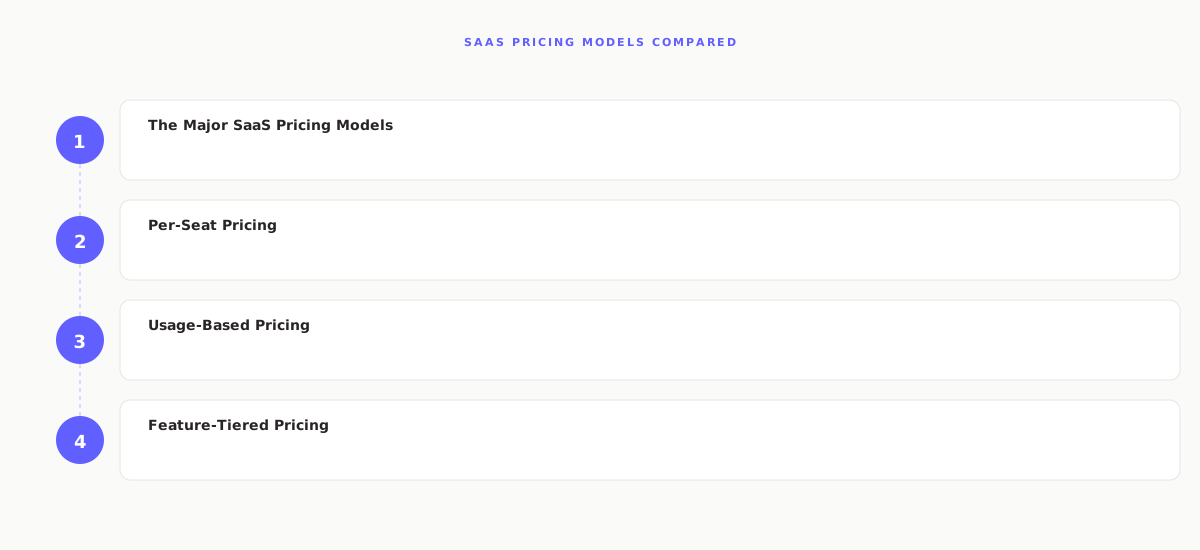
The Major SaaS Pricing Models
| Model | How It Works | Best For | Weakness |
|---|---|---|---|
| Per-seat | Price × number of users | Collaboration tools, CRM | Discourages broad adoption |
| Flat-rate | One price for all features | Simple products, early stage | No expansion lever |
| Usage-based | Price per API call, row, event | Infrastructure, data, API products | Unpredictable revenue |
| Feature-tiered | Good/Better/Best tiers | Most SaaS — versatile | Complex to package correctly |
| Hybrid | Seat + usage + base platform fee | Complex enterprise products | Hard to explain and sell |
| Outcome-based | Price tied to customer results | Professional services, some SaaS | Difficult to verify at scale |
Per-Seat Pricing
Per-seat pricing is the most common B2B SaaS model. It is easy to understand, easy to quote, and scales predictably with customer growth. The risk: buyers try to minimize seats. This can be addressed by combining per-seat pricing with a platform minimum (e.g., minimum 5 seats).
Usage-Based Pricing
Usage-based pricing (also called consumption pricing or pay-as-you-go) aligns cost with value delivered. Customers pay more as they use more — which creates natural expansion revenue. The challenge: revenue is harder to forecast and customers may constrain usage to control spend.
Feature-Tiered Pricing
Most common for SMB SaaS. Starter/Growth/Enterprise tiers separate customers by company size and value delivered. The key to effective tiering: each tier should have one or two clearly differentiating features that justify the price jump.
Want this automated?
Fairview surfaces revenue and margin metrics across your entire stack.
Book a Demo →When should I switch from per-seat to usage-based pricing?
Consider usage-based pricing when your customers' value scales with usage rather than team size — for example, analytics platforms where value scales with data volume, or communication tools where value scales with message volume.
How do I package features into pricing tiers?
Put the features your champion wants to use daily in the entry tier. Put the features that require organizational buy-in (admin controls, SSO, advanced reporting) in higher tiers. Never lock out a feature that is needed to get value from the product.
See It In Action
Fairview unifies pipeline, revenue, and margin into one operating layer.
Book a Demo