.svg)
TL;DR
- A sales QBR is a 90-minute quarterly meeting that reviews outcomes and commits changes — not a slide show.
- Use a fixed six-block agenda: numbers, pipeline, win teardown, loss teardown, skill gap, commits.
- Score six metrics: attainment, win rate, ACV, sales cycle, pipeline coverage, CAC payback.
- End with three named commits with dated owners. Without commits, the QBR was a status update.
- Fairview pre-builds the scorecard and teardown lists so the meeting is about decisions, not data assembly.
A sales QBR should be the most useful 90 minutes on the sales calendar. Most are not. They become slide theatre — every rep walking through their pipeline, nobody making a decision, and the team leaving with the same problems they walked in with.
The reason is usually structural, not cultural. Without a fixed agenda, a live dashboard, and required commits at the end, a quarterly business review collapses into a narrated pipeline tour. Fix those three things and the same people in the same room produce a different meeting.
This post gives you a sales QBR template that actually improves performance: the 90-minute agenda, the six-metric scorecard, the teardown format for wins and losses, and the commit structure that converts the meeting into next-quarter changes. It pairs with RevOps KPIs, CRM hygiene, and CAC payback.
What is a sales QBR?
Definition
Sales QBR: a 90-minute quarterly meeting in which sales leadership reviews the prior quarter's outcomes — attainment, pipeline health, wins, losses — identifies one skill gap, and commits named actions with dated owners for the coming quarter. The point is not reporting. The point is change.
A QBR is not a weekly pipeline review, a sales kickoff, or a forecast call. It is a structural review of what worked, what did not, and what to change. Weekly reviews manage this quarter. QBRs decide what the next quarter will be different.
Done well, the QBR is the one meeting where sales strategy, not sales execution, is discussed. Done badly, it is a three-hour pipeline parade.
The 90-minute sales QBR agenda
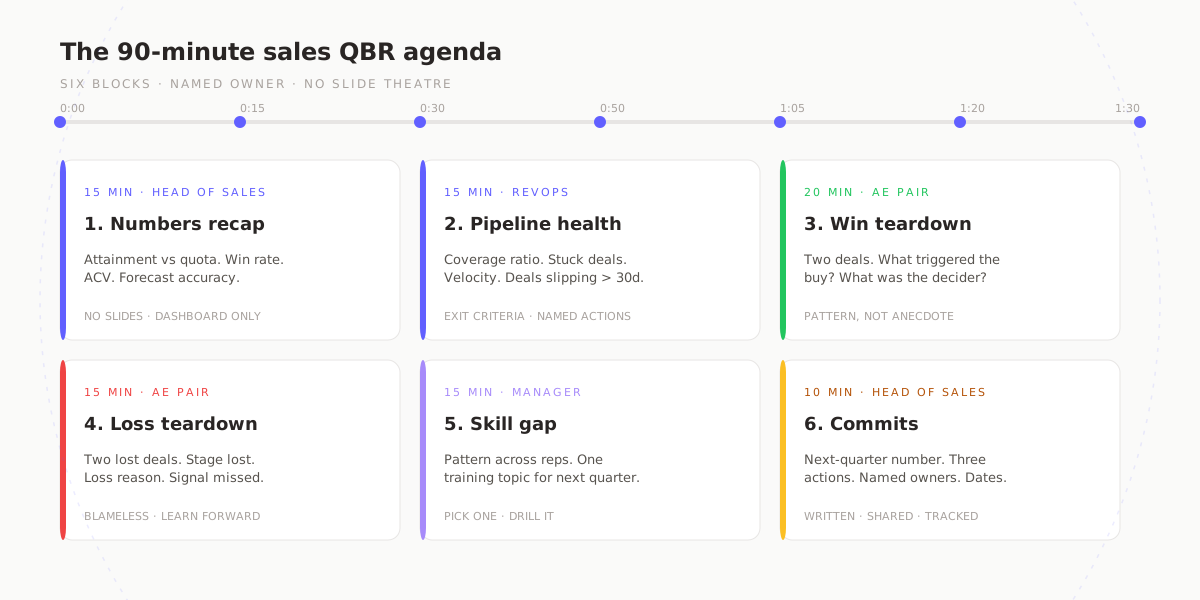
Ninety minutes is the upper bound. Any longer and the meeting drifts into storytelling. Below is the block-by-block agenda a typical $10–30M ARR B2B org can run without modification:
- Numbers recap — 15 min, head of sales. Attainment vs quota, win rate, ACV, forecast accuracy. Dashboard only, no slides.
- Pipeline health — 15 min, RevOps. Coverage ratio, stuck deals, velocity. Stage-by-stage exit-criteria health.
- Win teardown — 20 min, rotating AE. Two recent closed-wons. What triggered the buy? What was the decider? What can the team copy?
- Loss teardown — 15 min, rotating AE. Two closed-losts. Which stage did it die in? What signal was missed?
- Skill gap — 15 min, manager. One pattern across reps. One coaching topic for the next quarter.
- Commits — 10 min, head of sales. Three named actions, owners, dates. Committed live, not emailed later.
Key insight
Ban slides. The single change that lifts QBR quality more than any other is replacing every slide deck with a live dashboard and a shared Google Doc for commits.
The sales QBR scorecard
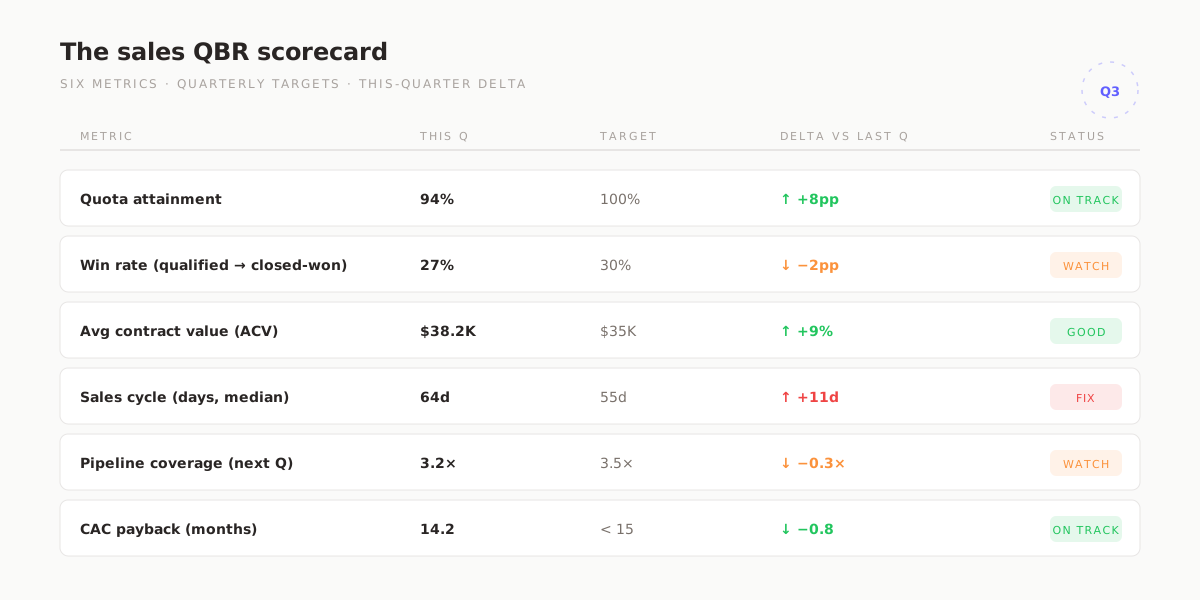
Resist the temptation to put 20 metrics on the scorecard. Six is enough to diagnose the quarter. Every additional metric dilutes the conversation.
| Metric | Why it belongs |
|---|---|
| Quota attainment | Ground truth. Everything else explains this. |
| Win rate (qualified → closed-won) | Measures sales execution independent of volume. |
| Average contract value | Segment drift or discount-pressure early warning. |
| Median sales cycle | Leading indicator for next-quarter capacity. |
| Pipeline coverage (next Q) | Forward-looking health check. Target 3–4×. |
| CAC payback | Links sales outcomes back to unit economics. |
Show each metric three ways: current value, target, and delta from last quarter. No trend charts in the scorecard — trend charts slow the meeting down and invite debate about the axis.
How to run the win and loss teardown
The teardown is where the meeting earns its keep. The format matters.
The rules:
- Two wins, two losses — no more. Depth over coverage.
- AEs rotate each quarter. New teardowners mean new angles.
- Every teardown answers the same four questions.
- Blameless. The point is pattern, not performance review.
- Notes go into a shared doc during the meeting. No slides.
The four questions per deal:
- What triggered the process? Inbound signal, outbound, referral, event. Name the source.
- Who made the call? Buyer role, number of stakeholders, decider. Was the map correct?
- What was the actual decider? Feature, price, timing, competitor, relationship. Be honest.
- What would we do differently next time? One change. Written down. Picked up into commits if it generalizes.
Quote-ready
Teardowns surface patterns that CRM fields never capture. The CRM says "lost to competitor"; the teardown says "lost because the buyer's deployment lead joined in week 6 and asked for SSO we could not ship."
Commits: the output that matters
A QBR without commits is a status meeting. Commits are specific, named, dated, and small enough to ship.
Good commits:
- "Sam shadows three discovery calls with Priya by May 15 and runs five calls using the same script."
- "RevOps tightens Stage 3 exit criteria to require confirmed budget + decision-maker by April 30."
- "Head of sales commits the Q4 number at $5.6M with 3.8× pipeline coverage secured by June 1."
Bad commits:
- "We will improve discovery." — no owner, no date, not measurable.
- "Marketing will send more leads." — marketing was not in the room and did not commit.
- "Everyone will focus on pipeline hygiene." — everyone = no one.
Cap commits at three per QBR. Four is already too many to actually land. Track them at the top of the next QBR — open with "what did we commit last quarter and what happened?"
QBR vs weekly pipeline review
These are different meetings. Treating them as the same is how QBRs become long pipeline reviews.
| Weekly pipeline review | Quarterly business review | |
|---|---|---|
| Purpose | Move this quarter's deals | Change next quarter's system |
| Horizon | Days | Months |
| Output | Next-best actions on named deals | Three committed changes for next quarter |
| Length | 30 min | 90 min |
| Decision style | Tactical | Structural |
How Fairview prepares the QBR automatically
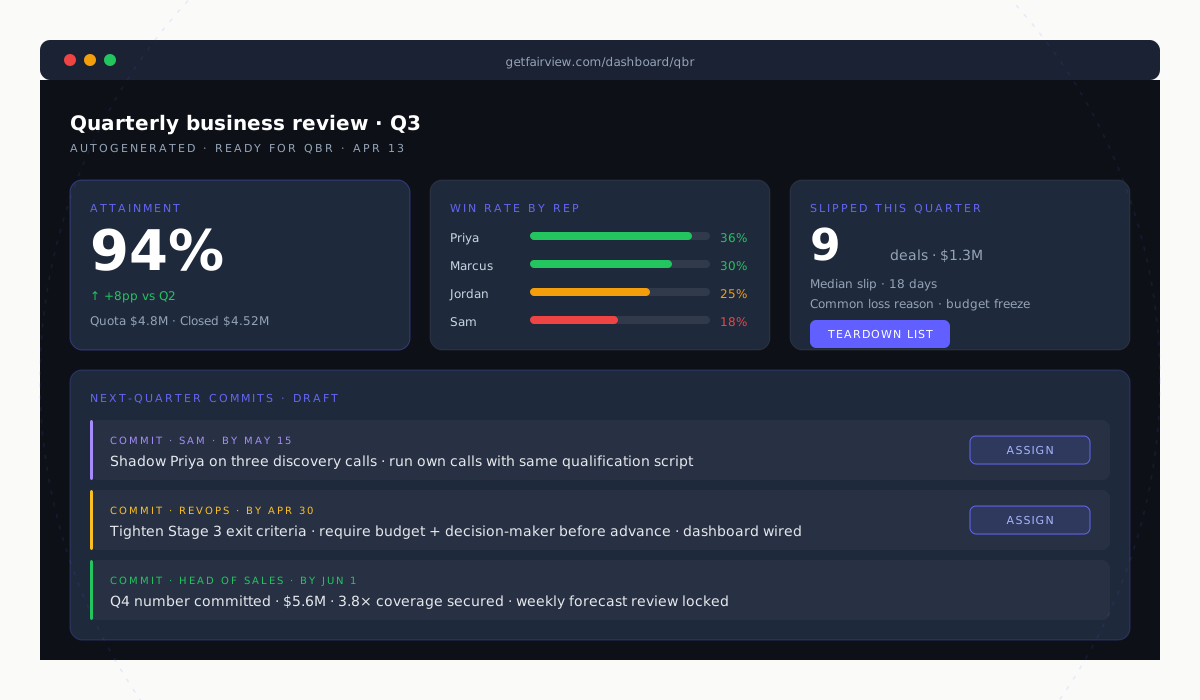
Fairview connects to HubSpot, Salesforce, and Pipedrive via native OAuth, plus Stripe for closed-won recognition. Once connected, the operating dashboard builds the QBR scorecard and the teardown candidate list the Friday before the meeting. No manual pivoting the night before.
When the meeting opens, Fairview surfaces the three specific deals worth tearing down (largest win, most recent loss, longest slipped deal) and drafts next-quarter commits from the observed pattern: "Median sales cycle stretched 11 days. Stage 3 exit criteria are the likely driver. Propose a commit to tighten qualification." The team edits and commits live.
See pricing and tiers for the plan that fits your stack.
90 min
Fixed, not negotiable
6 metrics
On one scorecard
3 commits
Named owners and dates
Key takeaways
- A sales QBR is 90 minutes, structured, and output-driven.
- Ban slides. Replace with a live dashboard and a shared commit doc.
- Six metrics on the scorecard, not 20. Attainment, win rate, ACV, cycle, coverage, CAC payback.
- Two wins, two losses, four questions each. Blameless.
- Three commits, named owners, dated. Reviewed at the top of the next QBR.
Walk into your next sales QBR with the scorecard already built.
Connect your CRM and Stripe. Fairview returns the QBR scorecard, teardown candidates, and draft commits on day one. 14-day trial, no card required.
Frequently asked questions
A sales QBR is a 90-minute quarterly business review in which sales leadership reviews the prior quarter's outcomes — attainment, pipeline, wins, losses — and commits named actions for the next quarter. Its output is three dated commitments, not a meeting summary.
Ninety minutes. Anything longer drifts into slide theatre and storytelling. Six agenda blocks — numbers, pipeline, win teardown, loss teardown, skill gap, commits — fit 90 minutes cleanly when a live dashboard replaces decks.
Six: quota attainment, win rate on qualified deals, average contract value, median sales cycle length, pipeline coverage for next quarter, and CAC payback period. Each metric shows the current value, the target, and the delta vs last quarter. More than six dilutes the conversation.
Head of sales, frontline managers, RevOps lead, and two AEs rotating in to present one win and one loss. The CEO joins when strategic decisions (ICP changes, territory cuts, quota recalibration) are on the table. Marketing attends the pipeline block if coverage is off.
A weekly pipeline review is tactical — it moves the current quarter's named deals forward. A QBR is structural — it reviews prior-quarter outcomes and commits changes to the system for next quarter. Weekly reviews produce next-best actions; QBRs produce committed changes with owners and dates.
Letting it become a slide presentation. When every rep prepares 20 slides of their pipeline, the QBR turns into narrated storytelling with no decisions. The fix is structural: ban slides, use a live dashboard, assign two teardowns per quarter, and end with three committed actions.