.svg)
TL;DR
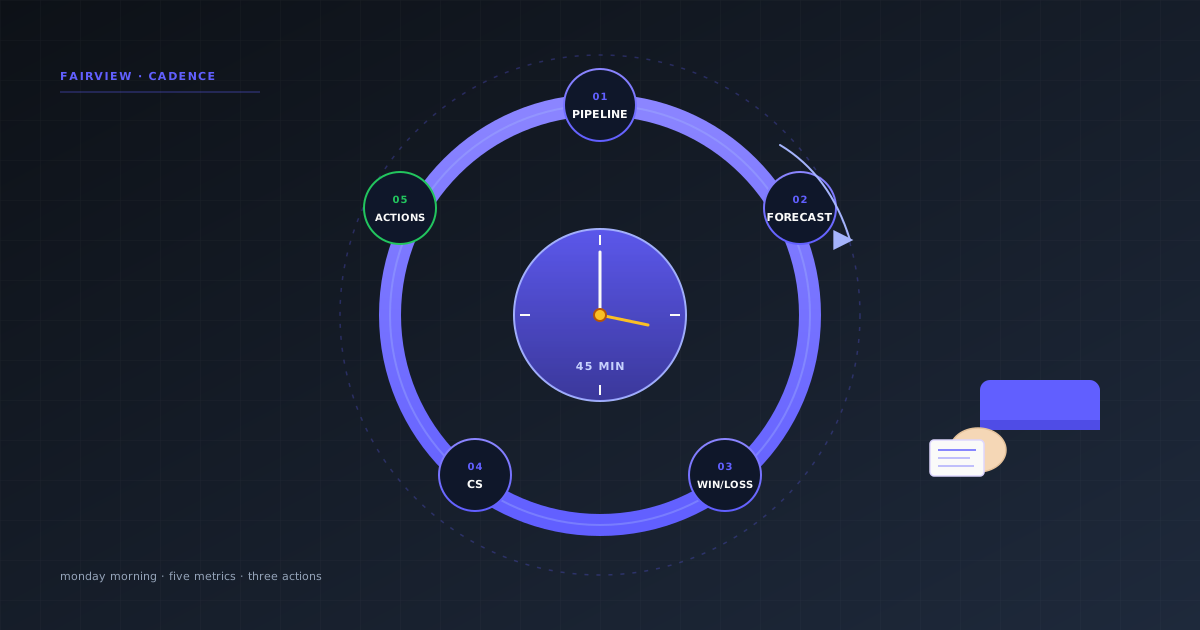
- A weekly revenue review is a 45-minute meeting where GTM leaders look at the same five metrics and commit to named actions.
- The five metrics: pipeline coverage, forecast vs commit, win rate, sales cycle, net new ARR.
- Publish the numbers 24 hours before the meeting so the hour is spent on decisions, not data review.
- Output is 3–5 named actions with owners and deadlines. Status updates are not output.
- Fairview auto-generates the weekly operating report, so the review starts with one trusted source of truth.
A weekly revenue review is the operating heartbeat of a B2B company. Done well, it turns Monday morning into the moment a leadership team aligns on what broke last week and what ships this week. Done poorly, it turns into a 90-minute status theater that everyone dreads.
Most weekly reviews drift toward theater for the same reason. The numbers arrive five minutes into the meeting, each leader walks through their own deck, half the room hears metrics they cannot reconcile, and nothing concrete leaves the room. Eight weeks later, the forecast misses and nobody saw it coming.
This post is the weekly revenue review template that actually changes behavior: the agenda, the five metrics, the roles, and the copy-paste structure. Pair it with the pillar on revenue operations and the RevOps KPI set.
What is a weekly revenue review?
Definition
Weekly revenue review: a 45- to 60-minute recurring meeting where the GTM leadership team looks at the same five metrics, discusses variances, and commits to the actions required before the next review. It is the operating cadence that turns RevOps KPIs into behavior change.
The purpose is decisions, not status. If the meeting ends without named actions and owners, it was a briefing. Briefings can happen over async Slack. The weekly review is worth the calendar time only when something changes because of it.
The 45-minute agenda
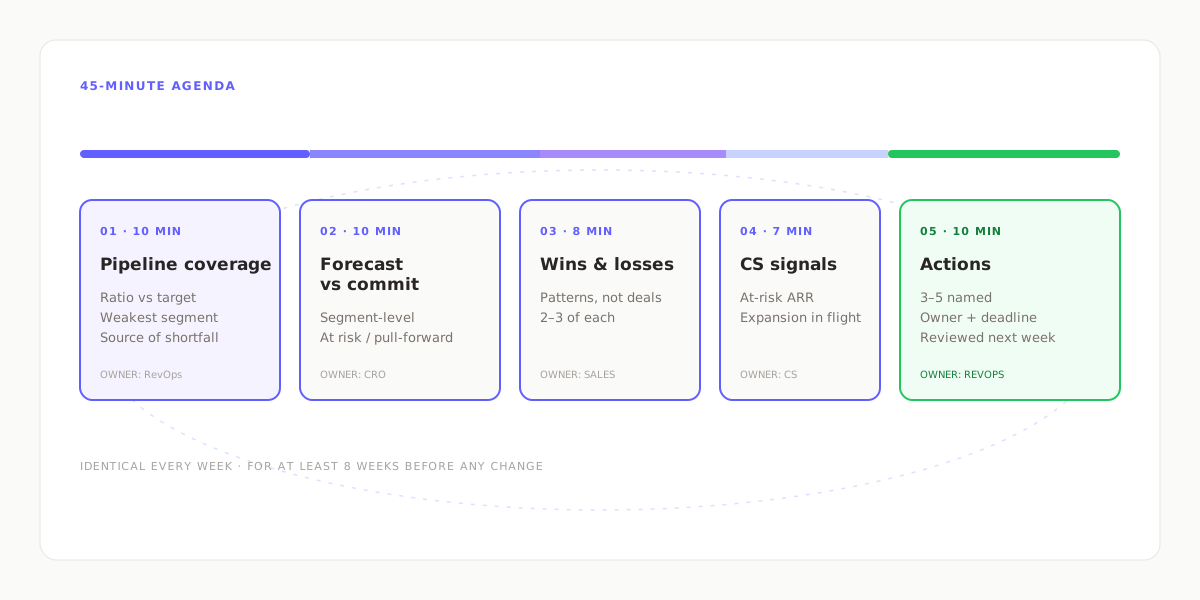
- Pipeline coverage · 10 min. Current coverage vs target, movement since last week, where the gap is (segment, source, stage). Owner: RevOps lead.
- Forecast vs commit · 10 min. Segment-level forecast, what is at risk, what is pulling forward. Owner: CRO or VP Sales.
- Wins & losses since last review · 8 min. 2–3 wins with pattern, 2–3 losses with pattern. No individual deal walk-throughs.
- Customer success signals · 7 min. At-risk accounts, expansion in flight, health score drops. Owner: VP CS.
- Actions · 10 min. 3–5 named actions with owners and deadlines for next review. RevOps lead captures.
Keep the agenda identical for eight weeks before changing anything. The point of a weekly operating rhythm is that the team stops asking "what are we looking at" and starts asking "what is different from last week."
The five metrics that matter
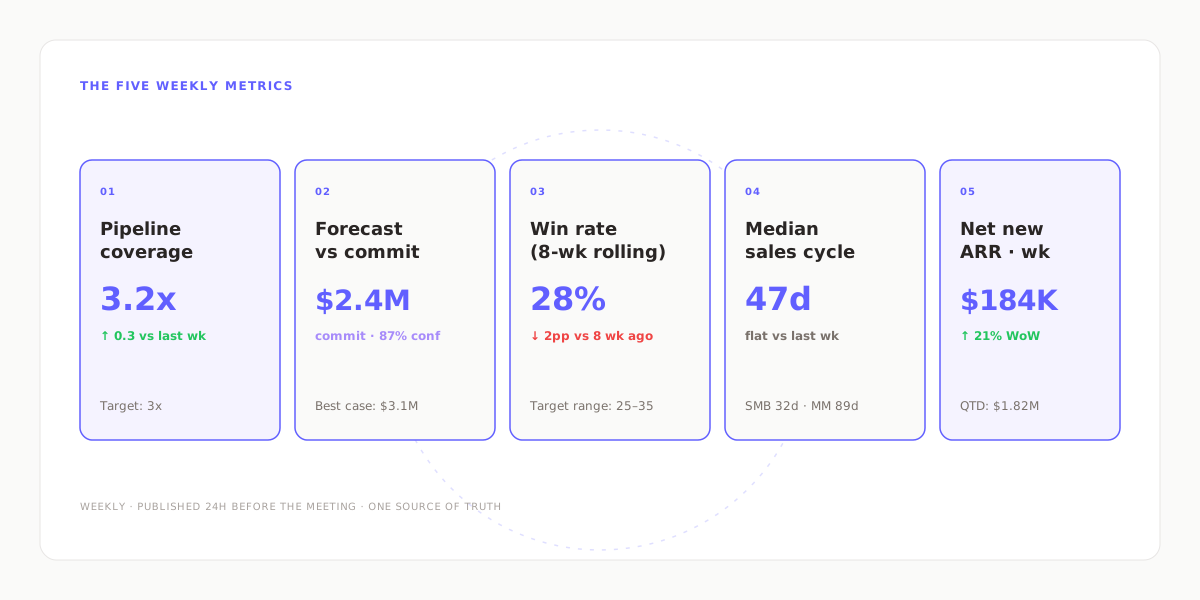
- Pipeline coverage vs target. Open pipeline ÷ quarterly target. Trend week over week matters more than the absolute number.
- Forecast vs commit. Segment-level forecast with risk called out. Include pull-forward and slip candidates.
- Win rate (rolling 8 weeks). Weekly win rate is noisy; the rolling 8-week median gives you a signal you can trust.
- Average sales cycle. Median days from opp creation to close, segmented by size. Expansion or contraction is an early-warning signal.
- Net new ARR this week. The single output metric. Everything above is why; this is what.
Key insight
Pick five metrics the whole room will defend, and do not add a sixth until one drops off. Scope creep in the agenda is how weekly reviews die.
Who should be in the room
| Role | Cadence | Why |
|---|---|---|
| CRO / VP Sales | Weekly | Owns forecast, pipeline, deals at risk |
| VP Marketing | Weekly | Owns pipeline generation and lead quality |
| VP Customer Success | Weekly | Owns retention and expansion signals |
| RevOps lead | Weekly (facilitator) | Publishes data, captures actions, keeps time |
| CEO | Optional weekly | Stage-dependent; often better in monthly |
| CFO | Monthly, not weekly | Too operational for weekly attendance |
Keep attendance under six people. Seven-plus turns the meeting into performance. If more people want in, create a read-only async summary for them.
The copy-paste template
Attendees: CRO, VP Marketing, VP CS, RevOps
1. PIPELINE COVERAGE (10m)
Coverage: [ratio] · target [ratio] · Δ [+/-]
Weakest segment: [name] at [ratio]
2. FORECAST vs COMMIT (10m)
Commit: [$] Best case: [$] Gap: [$]
At risk: [deals] Pull-forward: [deals]
3. WINS & LOSSES (8m)
Wins: [patterns] Losses: [patterns]
4. CS SIGNALS (7m)
At-risk ARR: [$] Expansion in flight: [$]
5. ACTIONS BY NEXT REVIEW (10m)
[action] — [owner] — [deadline]
[action] — [owner] — [deadline]
[action] — [owner] — [deadline]
Publish this document 24 hours before the meeting with the numbers already filled in. The meeting hour is then for discussion and decisions, not for reading.
Five mistakes that kill the review
- Reviewing data in the meeting. If the numbers are new to attendees, the first 20 minutes get burned on reading. Publish 24 hours ahead.
- Changing metrics every week. The value of a weekly review is the compounding familiarity with five numbers. Replace a metric only when it stops being load-bearing.
- Inviting too many people. Six or fewer. Larger groups turn the meeting into status theater and silence dissent.
- Ending without actions. If no one leaves with a named task and a deadline, the meeting was a briefing in disguise.
- Letting the numbers disagree. Marketing, sales, and CS arriving with different totals is the single fastest way to lose the room. One source of truth or nothing.
Quote-ready
The weekly revenue review is the meeting a RevOps team cannot win without and cannot be respected if it runs badly.
How Fairview generates the weekly review automatically
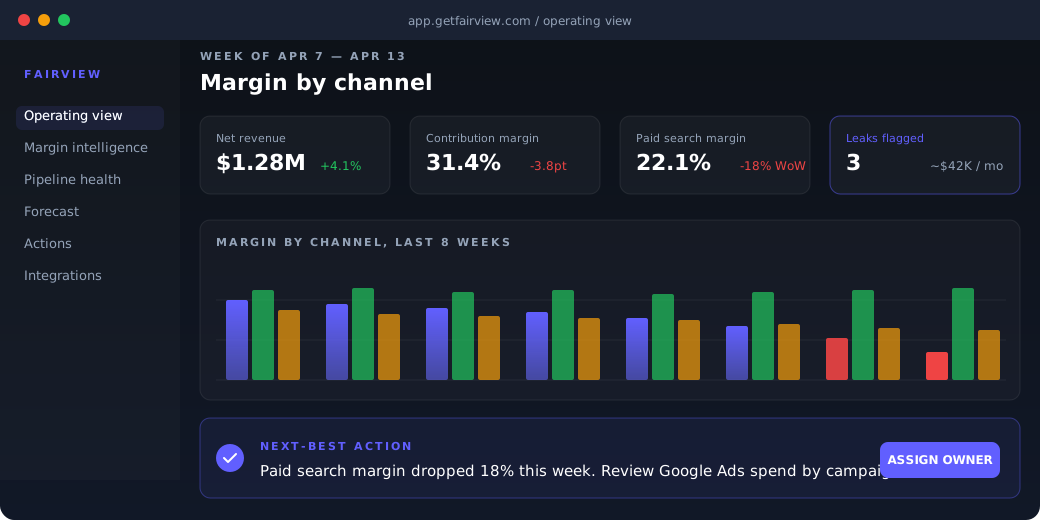
The hard part of a weekly review is not the meeting; it is getting five trusted numbers in one place by Sunday evening. Fairview connects natively to HubSpot, Salesforce, Pipedrive, Stripe, QuickBooks, Xero, Google Ads, and Meta Ads, and the Weekly Operating Report auto-generates every Sunday with the five metrics, the variance calls, and the deal movement since last review.
The Forecast Confidence Engine flags where the commit is optimistic before the room reads it. The Operating Dashboard lets any attendee click into the segment driving the variance.
See pricing and tiers for the plan that fits your RevOps cadence.
Sunday 6pm
Report lands in inbox weekly
5 metrics
Same agenda every week
45 min
Ideal meeting length
Key takeaways
- A weekly revenue review is a 45-minute decision meeting, not a status briefing.
- Five metrics: pipeline coverage, forecast vs commit, win rate, sales cycle, net new ARR.
- Publish the numbers 24 hours early. The hour is for decisions.
- Output is 3–5 named actions with owners and deadlines.
- Keep the agenda identical for eight weeks before changing anything.
Get your weekly revenue review auto-generated.
Connect your CRM, billing, and ad platforms. Fairview delivers the five-metric report to your inbox every Sunday. 14-day trial, no card required.
Frequently asked questions
A weekly revenue review is a recurring 45- to 60-minute meeting where marketing, sales, and customer success leaders look at the same five metrics, discuss variances, and commit to the actions needed before the next review. It is the operating heartbeat of a RevOps function and turns KPIs into behavior.
45 minutes is ideal, 60 minutes maximum. Reviews that run longer turn into status updates rather than decisions. If 45 minutes is not enough, the data is not ready or the wrong people are in the room.
The CRO or VP of Sales, VP of Marketing, Head of Customer Success, and the RevOps lead. Six people or fewer total. Add the CFO monthly, not weekly. Larger attendance turns the meeting into theater and silences the dissent the review depends on.
Five metrics: pipeline coverage versus target, forecast versus commit, win rate (rolling 8 weeks), median sales cycle, and net new ARR or new customer count. Deeper diagnostics belong in the monthly review; keep the weekly view tight so decisions can actually be made in 45 minutes.
Three to five named actions with owners and deadlines before the next review. Not status, not summaries, not slideware. If no action leaves the meeting, the meeting did not happen and should probably be replaced with an async update.
Put the meeting on the calendar for the same 45-minute slot each week. Pick five metrics you will defend. Publish the numbers 24 hours before so the meeting is for decisions, not data review. Keep the agenda identical for eight weeks to build operating muscle memory before changing anything.