.svg)

TL;DR
- Scaling a D2C brand without destroying margins is a stage problem. Each revenue band has a different margin target and a different risk profile.
- Target contribution margin: > 40% (under $1M), > 30% ($1–5M), > 28% ($5–15M), > 25% ($15–50M).
- Five traps eat margin during scaling: blended-ROAS scaling, SKU sprawl, discount dependency, fulfillment creep, channel cannibalization.
- Treat margin as a constraint, not a consequence. Review it weekly by channel and SKU, not quarterly as an afterthought.
- Fairview's operating view tracks margin, CAC payback, and at-risk revenue in real time across Shopify, Stripe, and ad platforms.
Most D2C brands that scale past $5M and then unwind do not fail because revenue stopped growing. They fail because growth stopped being profitable and nobody noticed in time. Revenue is loud. Margin is quiet. When the two disagree, the quiet one wins.
This post is a pillar — the operator's field guide to scaling D2C without the margin collapse that kills so many brands between $5M and $20M. It covers the four scaling stages and their margin targets, the five traps that cause most of the damage, the weekly cadence that catches problems early, and the spoke posts that go deeper on each piece.
It pairs with how to find profit leaks, contribution margin by channel, CAC payback, and SKU-level profitability.
Why D2C margin collapses at scale
Definition
Scaling without destroying margin: growing revenue while keeping contribution margin inside a healthy band. For D2C, that means subtracting COGS, shipping, payment processing, ad spend, and variable support from every revenue dollar and watching the remainder per channel and per SKU, weekly.
The $5M–$20M band kills more D2C brands than any other. Shopify's own data and industry summaries show the pattern: a founder proves PMF, raises a round, scales paid, the single winning SKU becomes a catalog of 40 SKUs, fulfillment costs rise, and blended ROAS starts hiding channel-level losses (Shopify enterprise, 2024).
The collapse is rarely dramatic. It is a point of margin per quarter, compounding. A 33% contribution-margin brand at $8M is a healthy business. The same brand at $14M with a 21% contribution margin is on fire — revenue is double, cash is worse.
The four stages of scaling a D2C brand
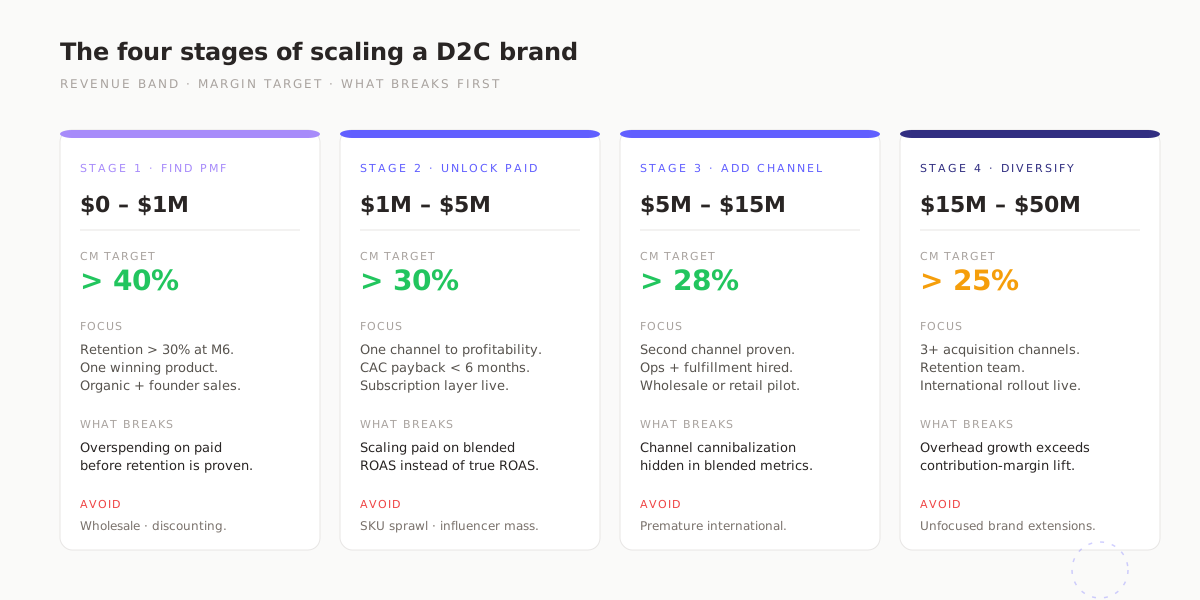
Stage 1 — $0 to $1M: Find PMF. The only goal is proving that a segment of customers comes back. Contribution margin target: above 40%. Focus: retention above 30% at month six, one winning product, organic and founder-led sales. The trap is overspending on paid before retention is proven — you cannot outspend a retention problem.
Stage 2 — $1M to $5M: Unlock paid. Prove one acquisition channel works at scale. Contribution margin target: above 30%. Focus: CAC payback under six months, a subscription layer if the product supports it, email and SMS retention loops. Watch for scaling paid on blended ROAS instead of true ROAS by channel — this is where most brands first start lying to themselves.
Stage 3 — $5M to $15M: Add a channel. Contribution margin target: above 28%. One channel carries the business in Stage 2; two should carry it in Stage 3. Focus: a second acquisition channel proven to profitability, ops and fulfillment hires, wholesale or retail pilots. The risk is channel cannibalization masked in blended revenue — wholesale grows, D2C-direct drops in the same regions, total revenue looks steady, and margin quietly falls.
Stage 4 — $15M to $50M: Diversify. Contribution margin target: above 25%. Three or more acquisition channels, a dedicated retention team, international rollouts. The enemy here is overhead growth outrunning contribution-margin lift — new hires, new offices, new tooling, all absorbing margin that the P&L records as "operating leverage" but is actually operating drag.
Key insight
Every stage has a permission slip: you cannot graduate to the next one until the current stage's margin target is stable for two quarters. Brands that jump stages almost always pay it back in a margin collapse within four quarters.
Five margin traps to watch for
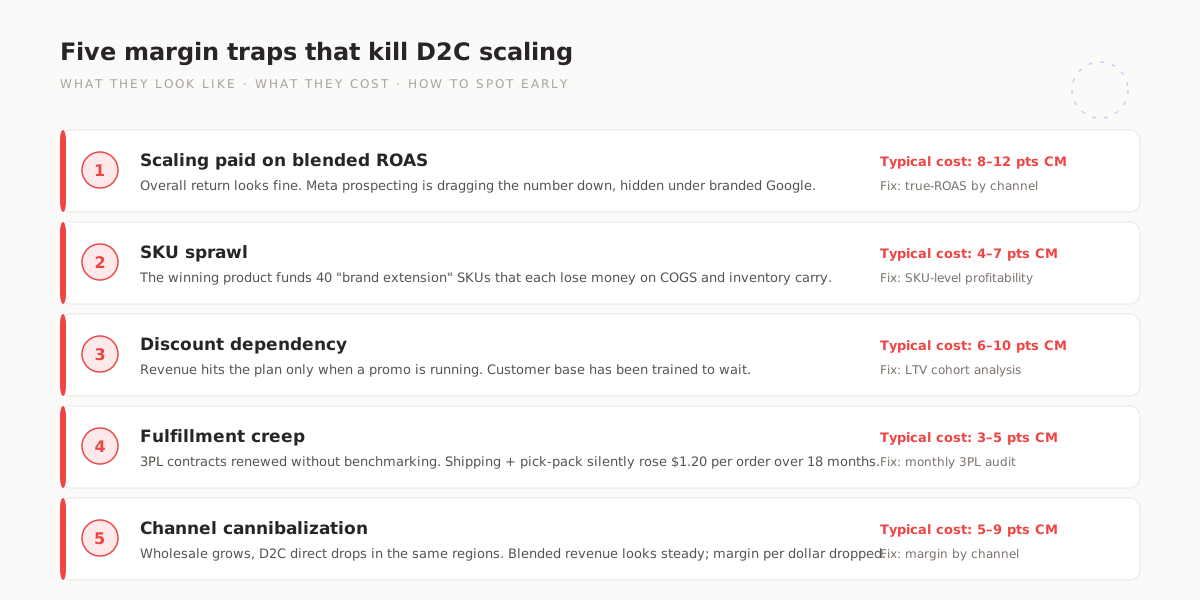
- Scaling paid on blended ROAS. Blended ROAS looks fine. Meta prospecting is dragging it down, hidden under branded Google. Typical cost: 8–12 points of contribution margin. Fix: true-ROAS by channel, weekly.
- SKU sprawl. The winning product funds 40 brand-extension SKUs that lose money on COGS and inventory carry. Typical cost: 4–7 points. Fix: SKU-level profitability review monthly; delist or reprice anything contribution-negative.
- Discount dependency. Revenue only hits plan when a promo is running. The customer base has been trained to wait. Typical cost: 6–10 points. Fix: cohort LTV by acquisition promo depth; cap promo calendar.
- Fulfillment creep. 3PL contracts renew without benchmarking. Shipping plus pick-and-pack silently rose $1.20 per order over 18 months. Typical cost: 3–5 points. Fix: monthly 3PL audit, quarterly RFP threat.
- Channel cannibalization. Wholesale grows, D2C direct drops in the same regions. Blended revenue looks steady; margin per dollar dropped. Typical cost: 5–9 points. Fix: margin by channel, weekly.
The weekly margin cadence
Margin problems are not a quarterly reporting issue. They are a weekly operating issue. Brands that stay profitable through scaling run the same loop every Monday:
- Blended contribution margin, delta vs last week. Three points or more, anywhere, triggers a review.
- Margin by channel. Any channel below the stage threshold gets a named action or a spend cap.
- CAC payback by channel. Any channel stretched past the target payback goes on a watch list for two weeks, then loses budget.
- Top 5 at-risk SKUs. SKUs with negative contribution margin get a delist or reprice decision inside two weeks.
- Subscription and retention cohort. Any downward trend in month-six retention is a strategic flag, not a tactical one.
The cadence is not complicated. It is sustained. Brands that lose margin almost always let the weekly review become a monthly review, then a quarterly panic.
Quote-ready
You cannot scale a D2C brand on quarterly margin reports. By the time the quarter closes, the damage is priced in; the only choice left is explaining it to the board.
Subscription, retention, and the LTV question
Subscription is often treated as a magic fix. It is not. For products with genuine replenishment logic — consumables, skincare, pet food, coffee — subscription lifts LTV dramatically and shortens CAC payback. For products without replenishment logic — apparel, one-time electronics, novelty — bolting on subscription raises churn and creates acquisition incentives that fight each other.
Retention is the underpriced lever at every stage. A 15-point lift in month-six retention is worth more to contribution margin than a 15-point drop in CAC, because retention compounds and CAC does not.
Practical test before investing in a retention stack: look at the cohort that bought twelve months ago and measure what fraction made a second order. If that fraction is below 30%, the retention opportunity is real and your LTV math is probably too optimistic.
How Fairview keeps D2C margin in view
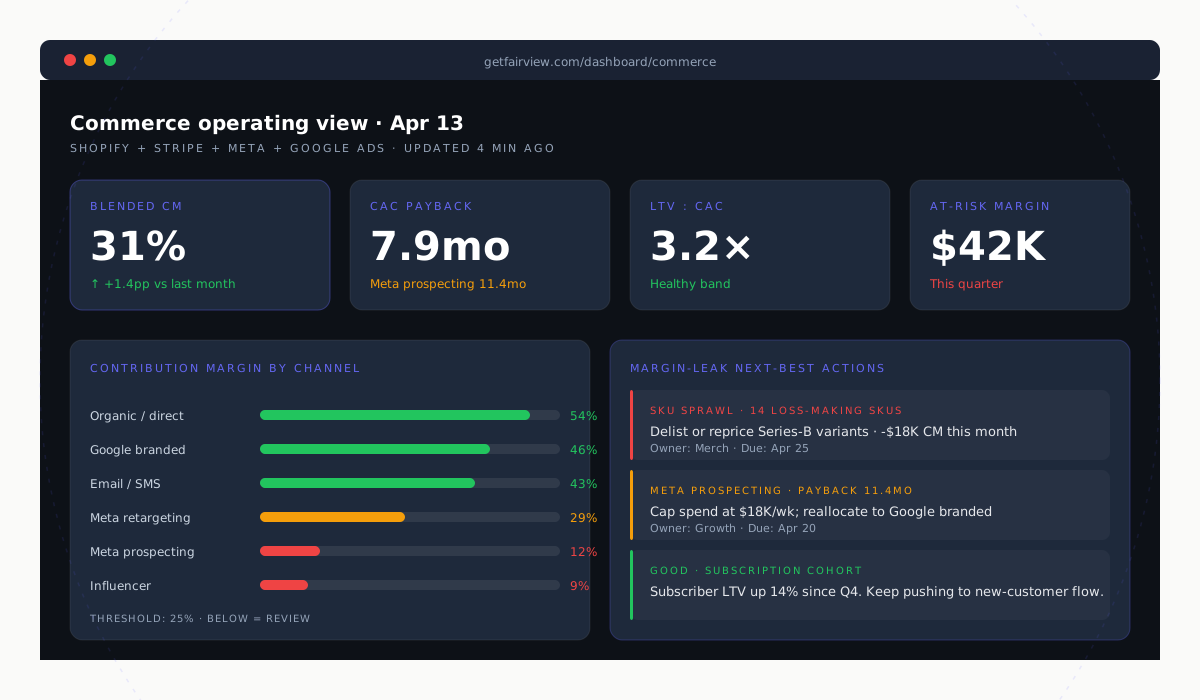
Fairview connects to Shopify, Stripe, QuickBooks or Xero, Google Ads, and Meta Ads via native OAuth. Once connected, Margin Intelligence reconstructs contribution margin by channel and by SKU, daily. The Forecast Confidence Engine tracks CAC payback per cohort against your stage target.
When a margin trap fires, Fairview writes a named next-best action: "Meta prospecting payback stretched from 8.2 to 11.4 months. AOV down from $58 to $49. Growth owner: cap spend at $18K/week and review landing-page mix by April 20." That arrives in the Monday operating brief before the weekly meeting — so the meeting is about decisions, not data wrangling.
See pricing and tiers for the plan that fits your stack.
Daily
Contribution margin by channel + SKU
Per cohort
CAC payback curves, not blended averages
Named
Actions with owner + date, not reports
Key takeaways
- Scaling a D2C brand without destroying margins is a stage-by-stage discipline, not a one-time decision.
- Margin targets step down as scale rises: 40% → 30% → 28% → 25%.
- Five traps explain most scaling failures: blended ROAS, SKU sprawl, discount dependency, fulfillment creep, cannibalization.
- Review margin weekly — by channel, by SKU, by cohort. Quarterly is too late.
- Subscription helps only when replenishment logic is real. Retention compounds; CAC does not.
Scale without guessing which channel is eating your margin.
Connect Shopify, Stripe, and your ad platforms. Fairview returns contribution margin by channel and SKU, CAC payback by cohort, and the three actions that matter most this week. 14-day trial, no card required.
Frequently asked questions
Scale by stage, with a clear contribution-margin target at each one. Above 40% from zero to $1M, above 30% from $1–$5M, above 28% from $5–$15M, above 25% from $15–$50M. Treat margin as a constraint rather than a consequence. Review it weekly by channel and SKU, not quarterly as an afterthought.
Five traps account for most of the damage. Scaling paid on blended ROAS rather than true ROAS by channel. SKU sprawl where brand-extension SKUs lose money on COGS and inventory carry. Discount dependency that trains customers to wait. Fulfillment cost creep from unbenchmarked 3PL contracts. Channel cannibalization when wholesale quietly replaces D2C-direct revenue at lower margin.
Contribution margin — not gross margin — above 30% in the $1–$5M band, sliding toward 25% as overhead grows past $15M. Contribution margin matters more than gross margin for D2C because shipping, payment processing, and variable support are material costs that gross-margin calculations miss. A healthy D2C brand can see what each channel and each SKU contributes after those costs.
After the first channel has reached CAC payback under six months with contribution margin above 30% for two consecutive quarters. Adding a second channel before the first is stable usually dilutes both and makes diagnosis impossible — you will not be able to tell whether a margin drop came from the new channel, the old channel, or cannibalization between them.
Weekly at the blended level, weekly per channel, monthly per SKU. Quarterly cohort reviews catch LTV and retention drift. Brands that lose margin almost always let the weekly review become monthly, then quarterly, until the next panic. A short structured review every Monday is cheaper than any number of quarterly strategy retreats.
No. Subscription helps LTV and CAC payback only when the product has real consumption or replenishment logic — consumables, skincare, pet food, coffee. Bolting subscription onto a one-time purchase product inflates churn and creates acquisition incentives that fight each other. Test replenishment behavior on the current base before adding subscription scaffolding.