.svg)
TL;DR
- Track seven pipeline health metrics weekly: coverage, stage conversion, win rate, cycle time, aging, slip rate, forecast accuracy.
- Healthy coverage sits at 3–4× quota. Below that, the team needs more pipe; above 5×, the pipe is probably inflated.
- Stage conversion is the diagnostic. Drops between two specific stages show exactly where deals die — and which skill or motion to fix.
- Slip rate is the earliest warning sign. When it crosses 20% in a month, the forecast is already miss-bound unless action happens that week.
- Read the vitals together, not separately. Coverage alone lies; coverage + velocity + slip + forecast accuracy tells the true story.
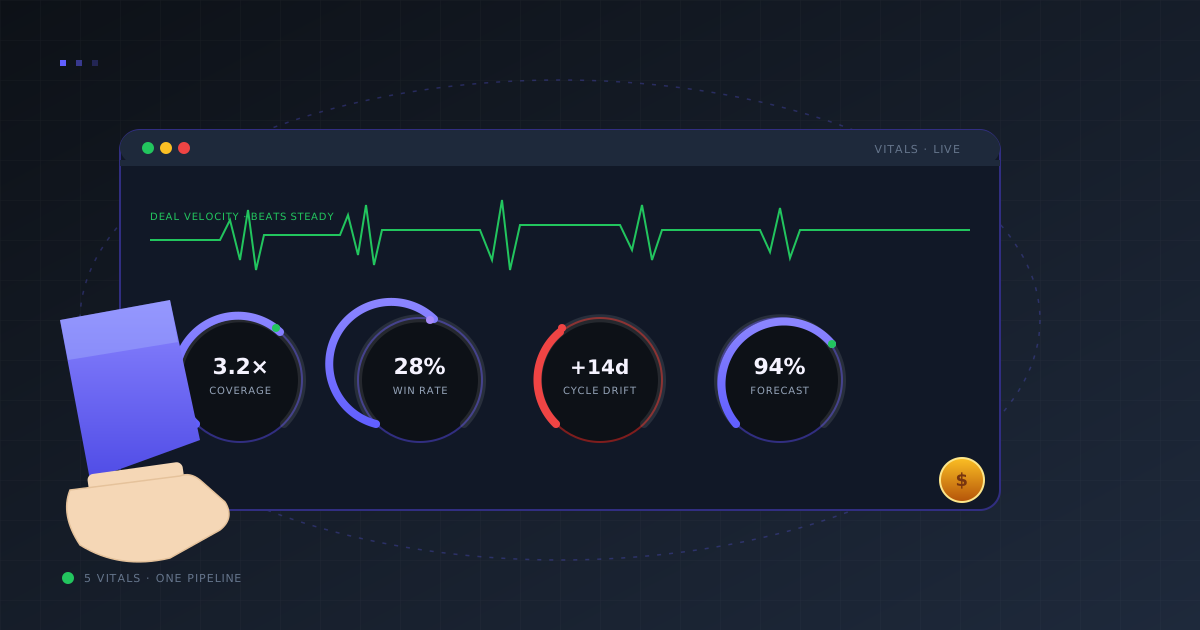
Pipeline health metrics are the weekly vitals of a sales pipeline — the small set of numbers that tell you whether the quarter will land or miss. Read them together and you can see a miss coming four weeks out. Read only the totals and you will see it on the last day.
Most sales leaders track two numbers: pipeline dollars and closed-won. That is enough to report on; it is not enough to manage. When coverage looks fine but proposal-stage conversion has dropped seven points, the forecast is already compromised — and the blended total will not show it for another three weeks.
This guide covers the seven metrics every RevOps team should track weekly, the formulas, the healthy bands, and the stage-conversion diagnostic that tells you exactly where pipeline leaks. Pair it with What Is RevOps for the org companion.
What are pipeline health metrics?
Definition
Pipeline health metrics: the weekly indicators that tell a RevOps team whether the pipeline is on track to hit the quarter. The core seven are pipeline coverage, stage conversion rate, win rate, sales cycle length, deal aging, slip rate, and forecast accuracy.
Think of them as patient vitals. No single reading diagnoses anything; together, they tell a story. Coverage at 3.2× looks fine until you notice proposal conversion dropped from 55% to 42% — at which point the 3.2× becomes tight, not healthy.
The top-quartile public SaaS companies tracked in the Scale Venture Partners SaaS benchmark hit forecast within plus or minus 5% on a two-week horizon. That accuracy is downstream of how tightly they read these seven metrics every Monday.
The seven pipeline health metrics
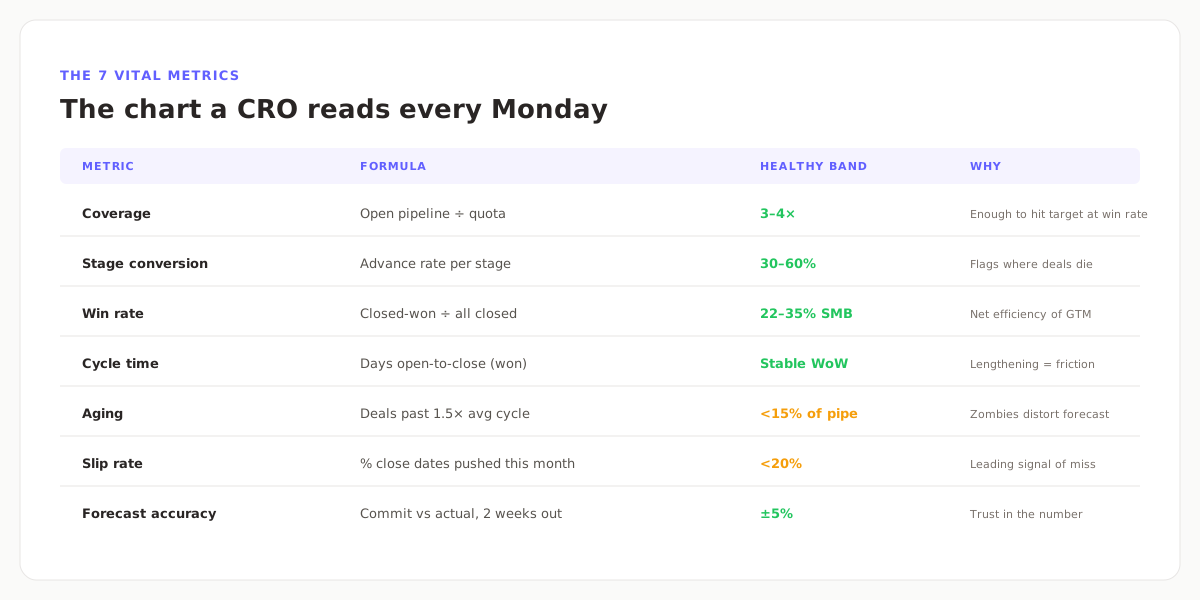
1. Pipeline coverage
Formula: open pipeline ÷ quota for the period. Healthy band: 3–4× for most B2B teams. Below 3× and the team is gambling on win rate; above 5× and either the pipe is inflated or stage definitions have drifted.
2. Stage conversion rate
Formula: deals that advance from stage N to stage N+1 ÷ deals entering stage N. Healthy ranges vary by motion but typically 30–60% per stage in SaaS. The diagnostic value is comparing stage-to-stage within your own team over time, not against external benchmarks.
3. Win rate
Formula: closed-won ÷ (closed-won + closed-lost). SMB: 22–35%. Mid-market: 18–28%. Enterprise: 15–25%. Consistency matters more than the absolute number; a win rate that swings ten points quarter over quarter usually means a disqualification problem, not a selling problem.
4. Sales cycle length
Formula: average days from opportunity created to closed-won. Track as a median, not a mean — one 200-day enterprise deal drags the mean up and hides what is happening in the middle of the pipe. A lengthening cycle is the second-earliest warning sign of a miss.
5. Deal aging
Formula: deals open longer than 1.5× the average cycle ÷ total open deals. Healthy: under 15% of the pipe. Zombie deals distort coverage — they look like pipeline but never close. HBR research on sales enablement shows the best teams archive or disqualify aging deals aggressively rather than letting them sit.
6. Slip rate
Formula: deals whose close date was pushed this month ÷ deals that had a close date this month. Healthy: under 20%. Above 30% and the forecast is already miss-bound. This is the earliest leading indicator on the list and the one most teams under-read.
7. Forecast accuracy
Formula: (commit − actual) ÷ actual, absolute value, measured two weeks out. Healthy: ±5%. This is the output metric — it is what the other six predict.
Coverage alone lies. Read the vitals together.
Any single metric can be gamed or misread. Read them in combinations:
- Coverage 4× + win rate falling → pipeline is inflated. Clean before scaling spend.
- Coverage 3× + slip rate over 25% → miss is already likely. Trigger deal-desk this week.
- Cycle length +10 days + conversion down at one stage → friction is isolated. Fix the one stage, not the whole pipe.
- Forecast accuracy under 85% → the CRM does not reflect reality. The data model, not the pipeline, is the problem.
Key insight
Pipeline coverage is the metric teams stare at. Slip rate is the metric that predicts whether the quarter lands.
Diagnose a leak: the stage-conversion drill-down
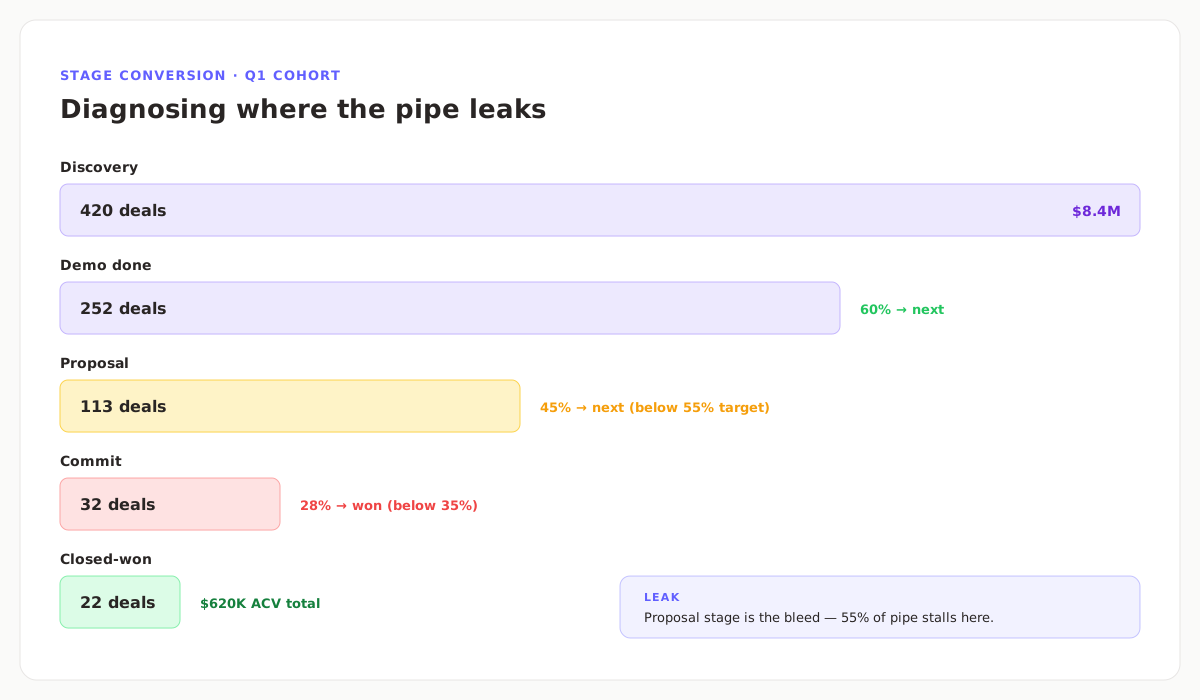
When forecast accuracy slips or coverage holds but revenue softens, the stage-conversion drill-down shows where. Build it as a cohort: every deal that entered Discovery in a given quarter, tracked all the way through.
The diagram above shows a classic pattern. Discovery-to-Demo is healthy at 60%. Demo-to-Proposal drops to 45% — below the 55% target. Proposal-to-Commit is the bleed: 28%, when healthy is 50–60%. The fix is not “more pipeline.” The fix is fixing the Proposal stage — pricing pushback, legal review, procurement friction, or a missing economic buyer.
Drill-downs like this take 20 minutes with clean CRM data and three days without. Which is why pipeline hygiene (see the RevOps tech stack guide) is the foundation.
The weekly operating rhythm
Knowing the metrics is worth nothing without a weekly read. The rhythm that works:
- Monday 9am — revenue review. All seven metrics in one dashboard. 30 minutes, led by the RevOps lead, attended by the CRO, VP Sales, VP Marketing, VP CS.
- Tuesday — deal desk. Every deal above a $ threshold that slipped or is past-due gets reviewed one by one. The output is a named owner and a next-step per deal.
- Wednesday — stage-drop drill-down. If any stage-conversion rate dropped week-over-week, run the cohort analysis. Identify the specific skill or motion problem.
- Thursday — pipeline grooming. Zombie deals (over 1.5× cycle) get disqualified or re-staged.
- Friday — commit call. Based on the week’s movement, update the two-week-out commit. This is where forecast accuracy gets earned.
Companies that run this rhythm weekly catch drift inside seven days. Companies that review only monthly find out on the 28th that the month is lost — two days before month-end, when nothing can be done.
Five common pipeline-metric mistakes
- Tracking coverage only. The biggest single mistake. Coverage without slip rate is a lagging view of a leading problem.
- Mixing stage-entry and stage-in-flight counts. Conversion math breaks if you mix cohorts. Always use deals that entered the stage in a period, not deals currently sitting in it.
- Averaging cycle time when medians are right. One long deal distorts the mean. Report median days for ops; keep mean for finance models.
- Ignoring win rate by segment. Blended win rate hides a 45% SMB segment and a 12% enterprise segment that should be handled by different playbooks.
- Reviewing monthly. Seven days is the catch-window. Four weeks is the retrospective.
How Fairview tracks pipeline health automatically
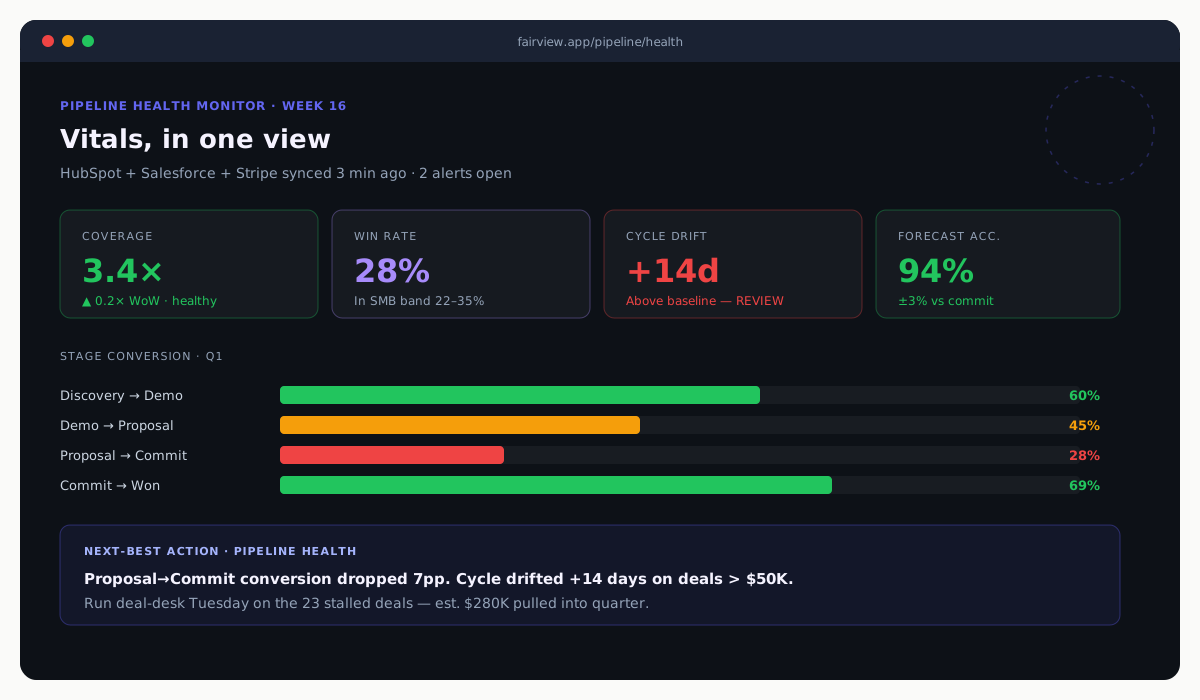
Fairview connects to HubSpot or Salesforce, pulls the deal history, and computes all seven vitals on a daily refresh. Stage-conversion cohorts are built automatically, so the Wednesday drill-down is a dashboard read, not a three-day analyst project.
When any vital crosses a threshold a RevOps lead sets, Fairview writes a named next-best action into the Monday operating report with an estimated dollar impact — the same pattern used in the profit leak detection framework.
See pricing and tiers or the product overview for a closer look at the Pipeline Health Monitor.
7
Vitals tracked weekly
7 days
Typical catch-window for drift
±5%
Forecast accuracy at 2 weeks out
Key takeaways
- Seven pipeline health metrics together tell the story. Any one alone can mislead.
- Slip rate is the earliest warning sign. When it crosses 20%, the quarter is in trouble.
- Stage conversion is the diagnostic. It tells you where the leak is, not just that there is one.
- Track weekly. The rhythm (Monday review, Tuesday deal desk, Wednesday drill-down) is what changes outcomes.
- Forecast accuracy is downstream. If it is low, the fix is upstream — in CRM hygiene and stage definitions.
Read your pipeline like a vitals monitor, not a rear-view mirror.
Connect HubSpot or Salesforce. Fairview returns the seven pipeline health metrics on day one, with alerts when any vital drifts. 14-day trial, no card required.
Frequently asked questions
Pipeline health metrics are the weekly indicators that show whether a sales pipeline is on track to hit the quarter. The core seven are pipeline coverage, stage conversion rate, win rate, sales cycle length, deal aging, slip rate, and forecast accuracy.
A pipeline coverage of 3 to 4 times quota is the healthy band for most B2B SaaS teams. Below 3× and a team is relying on win rate luck to hit; above 5× often means pipeline inflation or stage definitions that are too loose. Read coverage alongside slip rate and stage conversion for a true picture.
SMB B2B teams typically run 22 to 35 percent win rates, mid-market 18 to 28 percent, and enterprise 15 to 25 percent. A win rate that holds steady across quarters is usually a better signal than the absolute number — consistency means the qualification and sales motion are working together.
Slip rate is the percentage of deals whose close date was pushed to a later period during the current month or quarter. Below 20% is healthy; above 30% is a leading signal of a quarter miss. Track it weekly — it is the earliest of the seven vitals to move when something in the deal cycle breaks.
Weekly at a minimum. A Monday revenue review with the full seven-metric view catches drift in seven days rather than a month. Month-end reviews are diagnostic; weekly reviews are what actually change rep behavior and forecast accuracy in the current quarter.
Coverage is a size metric: open pipeline dollars divided by quota. Velocity is a speed metric: (open opps × win rate × average deal size) divided by sales cycle length. Coverage tells you if there is enough pipeline; velocity tells you if it will close fast enough. Read both alongside slip rate for the full picture.