.svg)
TL;DR
- A balanced DTC channel mix is roughly 35–45% paid, 15–25% email/SMS, 20–30% organic, 5–15% affiliate, 3–10% retargeting — tuned by stage.
- Paid wins volume. Email wins margin (60–78% contribution). Organic compounds. Each channel plays a role; none wins alone.
- The mix shifts with revenue stage. Launch is 60–75% paid; maturity is roughly 30% paid with organic and email carrying the rest.
- Rebalance weekly on CAC and margin, not on gut. The trigger: blended CAC up 10% WoW or contribution margin down 3 points in a month.
- Measure channel contribution margin, not ROAS. ROAS hides COGS, fees, and fulfillment; contribution margin shows what actually lands in the bank.
DTC channel mix strategy is the practice of allocating marketing budget across paid, email, organic, affiliate, and retargeting so that each channel earns its share on CAC and contribution margin. Done well, the blended picture gets cheaper and more profitable as the brand scales. Done badly, every channel looks fine on its own while the blended number quietly erodes.
Most DTC brands are over-indexed on paid social. When iOS privacy changes and rising CPMs took a bite out of paid performance, brands with 60%+ of their budget in Meta and Google discovered their “owned” channels were neither owned nor producing enough volume. The fix was not to cut paid; it was to rebalance the mix.
This guide covers benchmark mixes by revenue stage, CAC and margin bands per channel, a weekly rebalance rule, and the five common allocation mistakes. Pair it with contribution margin by channel for the math the mix decisions sit on top of.
What is a DTC channel mix?
Definition
DTC channel mix: the percentage split of a brand’s marketing spend across paid media, email/SMS, organic, affiliate, and retargeting — tuned by stage and judged on blended CAC and contribution margin rather than per-channel ROAS.
The mix is not a vanity metric. It determines whether the brand compounds (organic and email rising) or stays dependent on paid auction dynamics that a platform change can destroy overnight. Every quarter a founder delays rebalancing is a quarter of blended CAC rising quietly.
Per a Shopify commerce trends report, DTC brands that hit 30%+ repeat purchase rate almost always run email at 15%+ of their channel mix and contribution margin above 35%. The correlation is not accidental — the mix drives the outcome.
Channel economics: the benchmark table
Paid social and search — the volume channel
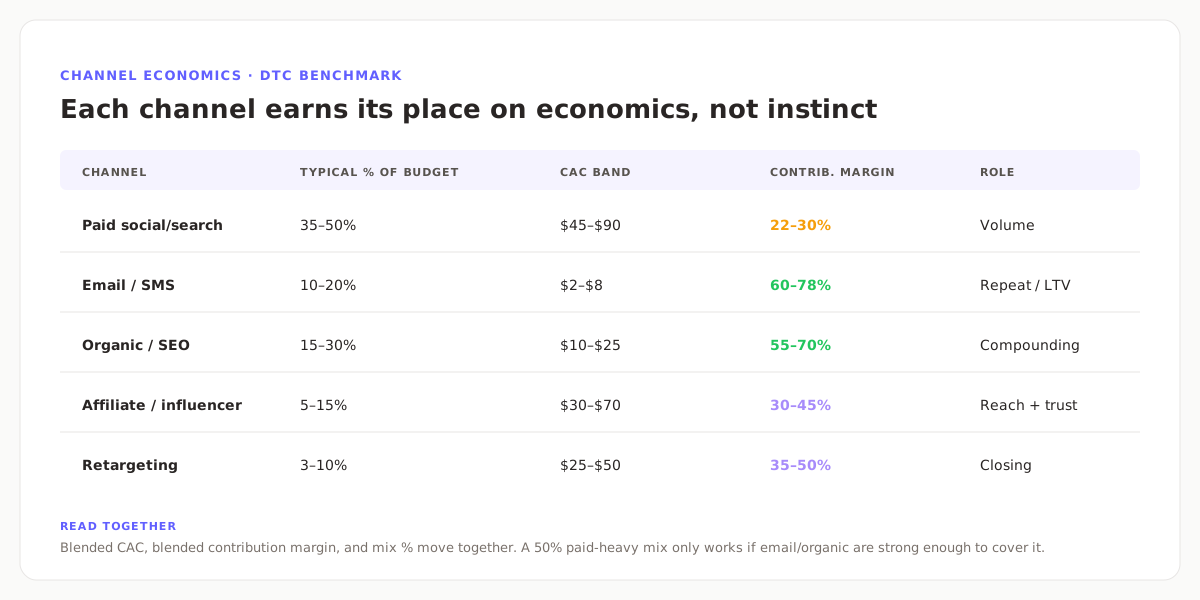
Typically 35–50% of budget. CAC band $45–$90 depending on category. Contribution margin 22–30% after COGS, fees, and fulfillment. Paid’s job is volume at a predictable CAC; it is not supposed to be the most profitable channel.
Email and SMS — the margin channel
Typically 10–20% of budget but 30–50% of profit. CAC under $10 because acquisition cost is near zero once the list is built. Contribution margin 60–78%. Brands that under-invest here usually do it because they confuse “low spend” with “unimportant.”
Organic and SEO — the compounding channel
Typically 15–30% of budget when measured honestly (content, team, tooling, not just ad spend). CAC $10–$25, contribution margin 55–70%. Pays back on a 6–18 month horizon, not a 7-day one, which is why it gets cut first in bad quarters and regretted first in good ones.
Affiliate and influencer — the trust channel
5–15% of budget. CAC $30–$70, contribution margin 30–45%. Best used for category expansion or to reach audiences paid cannot access cleanly. Less a margin lever than a reach-plus-trust lever.
Retargeting — the closing channel
3–10% of budget. CAC $25–$50, contribution margin 35–50%. Best kept small. Retargeting spend that climbs past 10% usually signals a leaky funnel that should be fixed upstream rather than re-marketed.
Key insight
The brand that wins is rarely the one with the lowest paid CAC. It is the one whose email and organic mix is tall enough to dilute paid CAC into a blended number that fits the unit economics.
How the mix evolves as revenue scales
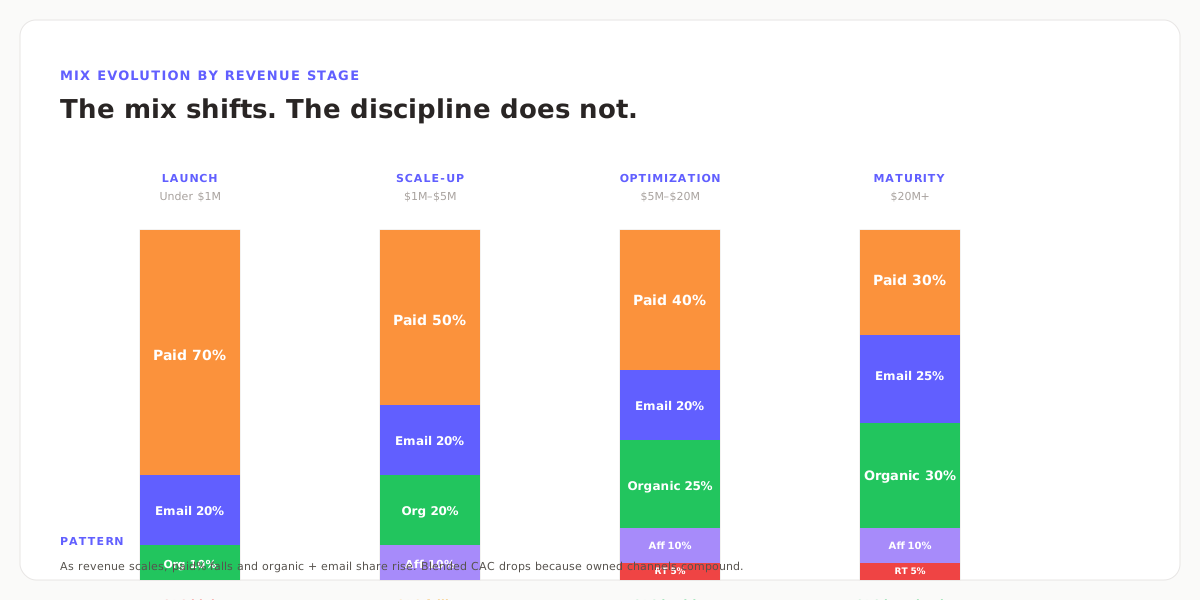
Launch (under $1M). 60–75% paid. No list yet, no organic authority, no affiliate relationships. Paid is the only reliable volume lever. Blended CAC is high on purpose; the mission is to learn which creative works and who the customer is.
Scale-up ($1M–$5M). Paid falls to 45–55%. Email kicks in at 15–20%. Organic and affiliate begin to matter. Blended CAC starts dropping because repeat purchasers arrive from email and content begins ranking.
Optimization ($5M–$20M). Paid 35–42%. Email 18–22%. Organic 20–28%. Affiliate 8–12%. Retargeting 3–7%. This is the mix most operators should aim at as a steady state.
Maturity ($20M+). Paid drops to 25–32%. Organic and email together carry the majority of contribution margin. Best-in-class brands hit blended CACs under $30 with this mix.
The weekly rebalance rule
Do not rebalance the structural mix every week — that is a trap that leads to chasing last week’s winner. Rebalance on three triggers:
- Blended CAC up more than 10% WoW for two consecutive weeks. Pull paid spend; shift 3–5% of the budget toward email and organic investment.
- Blended contribution margin down 3+ points in a month. Run a channel-level drill on contribution margin by channel to find which channel is dragging. Fix that channel before touching the mix.
- A single channel crosses 50% of budget. That is concentration risk. Cap paid at 50%, affiliate at 20%, retargeting at 10%. Caps apply even when the channel is performing.
Daily micro-adjustments to paid spend are fine — that is what paid bidding is for. Structural mix shifts happen at a monthly or quarterly cadence, triggered by these three rules, not by vibes.
Five common DTC channel mix mistakes
- Measuring by ROAS, not contribution margin. ROAS hides COGS, fees, and fulfillment. A 3× ROAS channel can still lose money. Always measure channel economics on contribution margin.
- Under-investing in email. The most common and most expensive mistake. Every 1% of budget moved from paid to email typically lifts blended contribution margin 0.4–0.6 points.
- Treating organic as free. Organic has real costs — content, SEO tools, team — that should sit in the mix even though no media dollars move. Otherwise it never gets funded properly.
- Chasing last week’s winner. Paid performed 12% better last week? Do not reallocate 20% of next week’s spend. Wait for two weeks of signal before any structural move.
- Running retargeting above 10%. If retargeting is carrying the mix, the real problem is a leaky first-touch funnel, not a retargeting opportunity. Fix upstream.
How Fairview tracks channel mix automatically
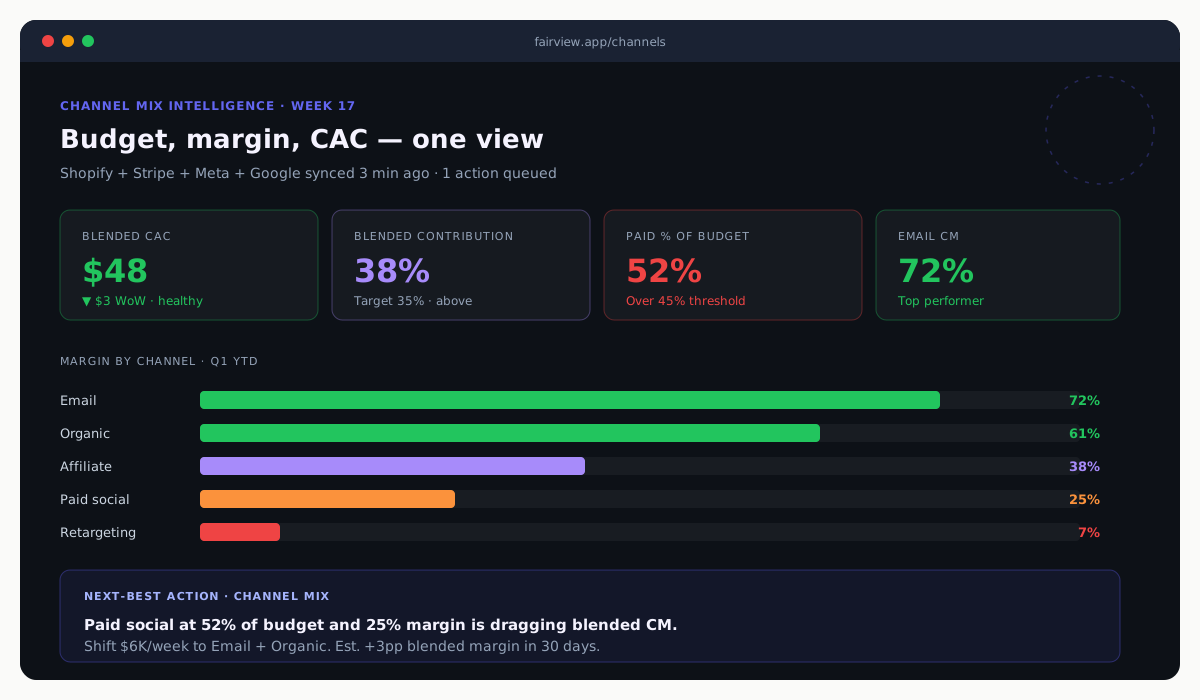
Fairview pulls revenue and orders from Shopify and Stripe, ad spend from Meta and Google, and COGS and fulfillment from QuickBooks or Xero. It computes blended CAC, blended contribution margin, and channel-level margin on a daily refresh.
When blended CAC crosses the rebalance threshold, Fairview writes a named next-best action into the Monday operating report — the same pattern used in the weekly revenue cadence. The recommendation includes the exact dollar shift and the expected margin impact.
See pricing and tiers or the product overview for how the channel mix view looks in practice.
5
Channels tracked by margin
Daily
Blended CAC + CM refresh
3–5pp
Typical blended CM lift after rebalance
Key takeaways
- Aim for roughly 35–45% paid, 15–25% email, 20–30% organic, 5–15% affiliate, 3–10% retargeting — then tune by stage.
- The mix shifts from paid-heavy at launch to organic+email-heavy at maturity. Trying to hold a “mature” mix too early under-funds paid volume.
- Measure channel economics on contribution margin, not ROAS. ROAS hides the costs that matter.
- Rebalance on triggers: blended CAC up 10% WoW, blended CM down 3pp in a month, or any single channel past 50%.
- Email is the most under-funded, highest-margin channel at most DTC brands. Every 1% shifted from paid to email lifts blended CM 0.4–0.6 points.
See your real channel mix — and where to rebalance it.
Connect Shopify, Stripe, Meta, and Google. Fairview returns blended CAC, channel margin, and a named rebalance recommendation on day one. 14-day trial, no card required.
Frequently asked questions
A healthy DTC channel mix for a growing brand typically sits around 35–45% paid, 15–25% email/SMS, 20–30% organic, 5–15% affiliate, and 3–10% retargeting. The exact split depends on revenue stage — paid weighs heaviest at launch, organic and email rise as the brand matures.
At launch (under $1M), expect 60–75% of spend in paid. Between $1M and $5M, email and organic rise to 30–40% combined. Past $10M, organic and email together typically overtake paid by share of contribution margin, even when paid still holds the largest budget line.
Between 10% and 20% of the marketing budget. Email produces 60–78% contribution margin at most DTC brands because acquisition cost is near zero once the list is built. Under-investing in email is the most common mistake in DTC channel mix.
Typical bands: paid social $45–$90, email $2–$8, organic $10–$25, affiliate $30–$70, retargeting $25–$50. Blended CAC under $50 is strong for most categories; over $80 often signals paid-heavy drift that calls for a rebalance.
Weekly for paid spend levels, monthly for the structural mix between paid / email / organic / affiliate / retargeting. Rebalance the mix when blended CAC rises more than 10% in a single week or blended contribution margin falls more than 3 points in a month.
Organic is not free — it costs content production, SEO tooling, and opportunity cost on team time. A healthy DTC mix invests 20–30% of marketing spend into the team, content, and infrastructure that produces organic traffic, because the compounding margin pays back for years rather than weeks.